Coral Reef Workshop at Papua Paradise Eco Resort in Raja Ampat 2025
Marine biology up close: 4 workshops focusing on coral reef ecology and species identification
As part of the Coral Reef Workshop, four different 2-day workshops took place from May 17–31, 2025 at the Papua Paradise Eco Resort on Pulau Birie / Raja Ampat / Indonesia. The workshops were led by marine biologist Stephan Moldzio.
* Sampling & microscope sessions
* Identification of fish, corals, and invertebrates
*I nvestigating the interrelationships within the coral reef
* Raja Ampat Special: seagrass meadows and mangroves
For the workshops, Stephan had prepared extensive workshop materials specifically tailored to Raja Ampat:
booklets for all four workshops, comprehensive identification and information materials, underwater identification slates, species lists, as well as microscope and sampling equipment.
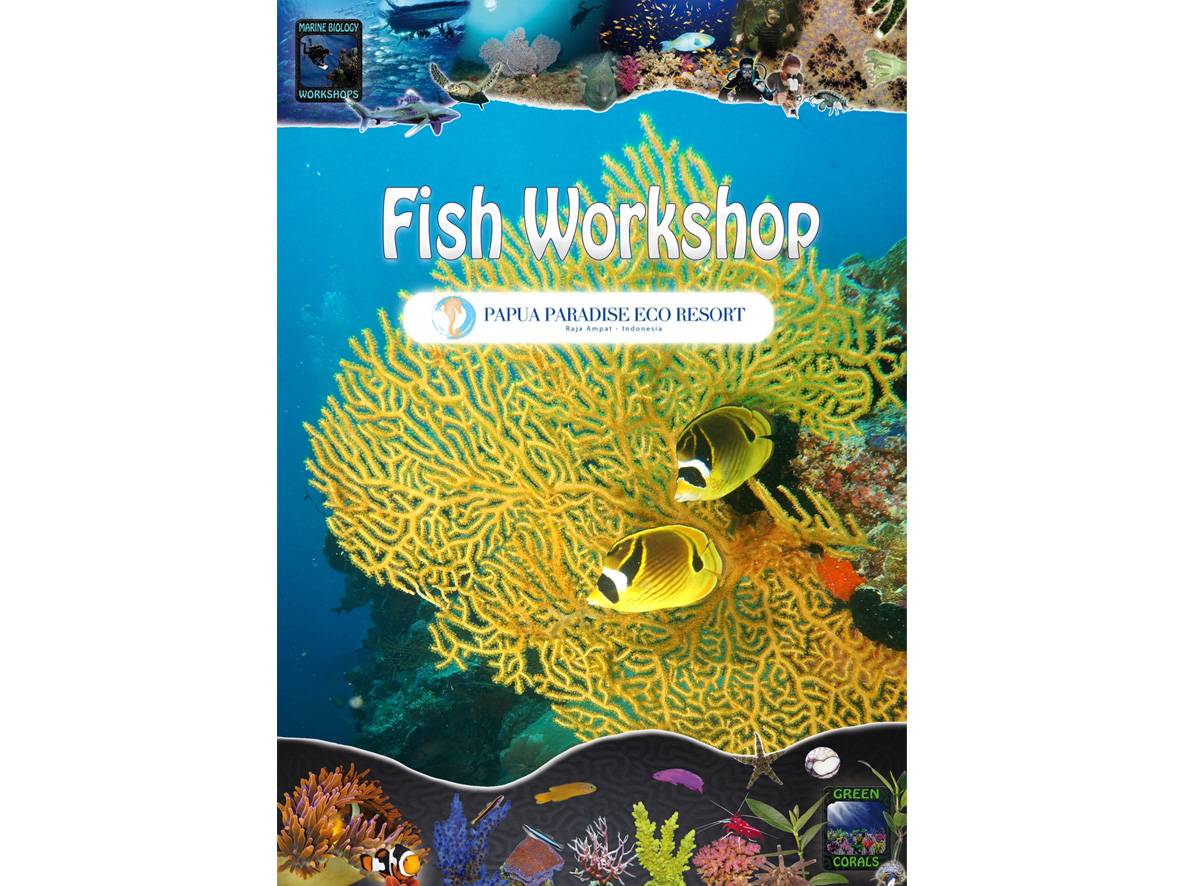
FISH – WORKSHOP
Fish Workshop in Raja Ampat – Recognizing fish families, species identification, behavior, and biology
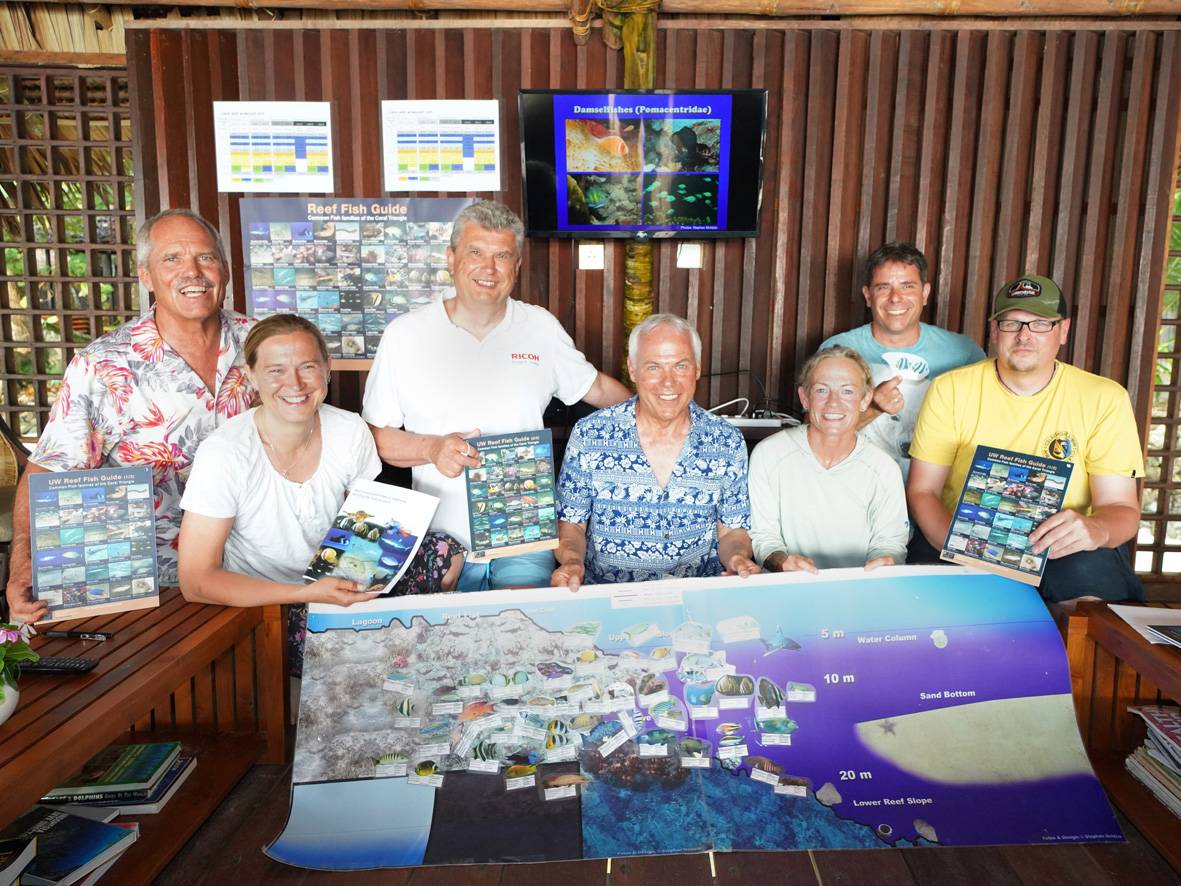
TheTDuring the Fish Workshop, the participants explored the fascinating world of fishes – the focus was on the identifying characteristics of the different families and their ways of life. In the morning, two dives at different sites were on the program. We were able to take the underwater reef fish guides with us, featuring photos of the 60 most important fish families. The fish species observed during the dives were later identified and attached as “plastic fish” onto a reef display board. On the first evening, Stephan gave a presentation titled “Fishes of the Indo-Pacific”, in which he used numerous images to explain the specific features, lifestyles, and behaviors of the different fish families. An entertaining and educational fish quiz completed the workshop.
At the end, the participants received their certificate of participation for this first part of the Coral Reef Workshop.
An unforgettable experience for all fish enthusiasts and ocean lovers!
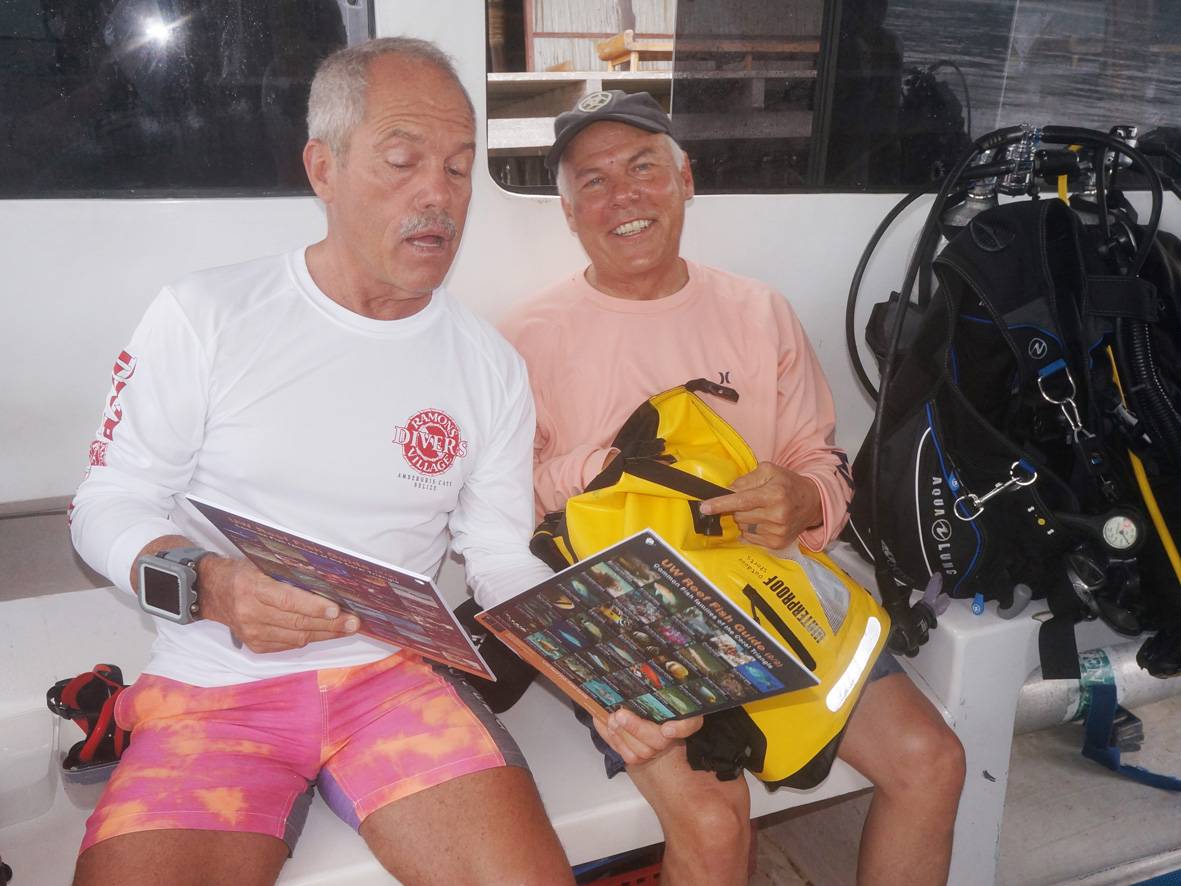
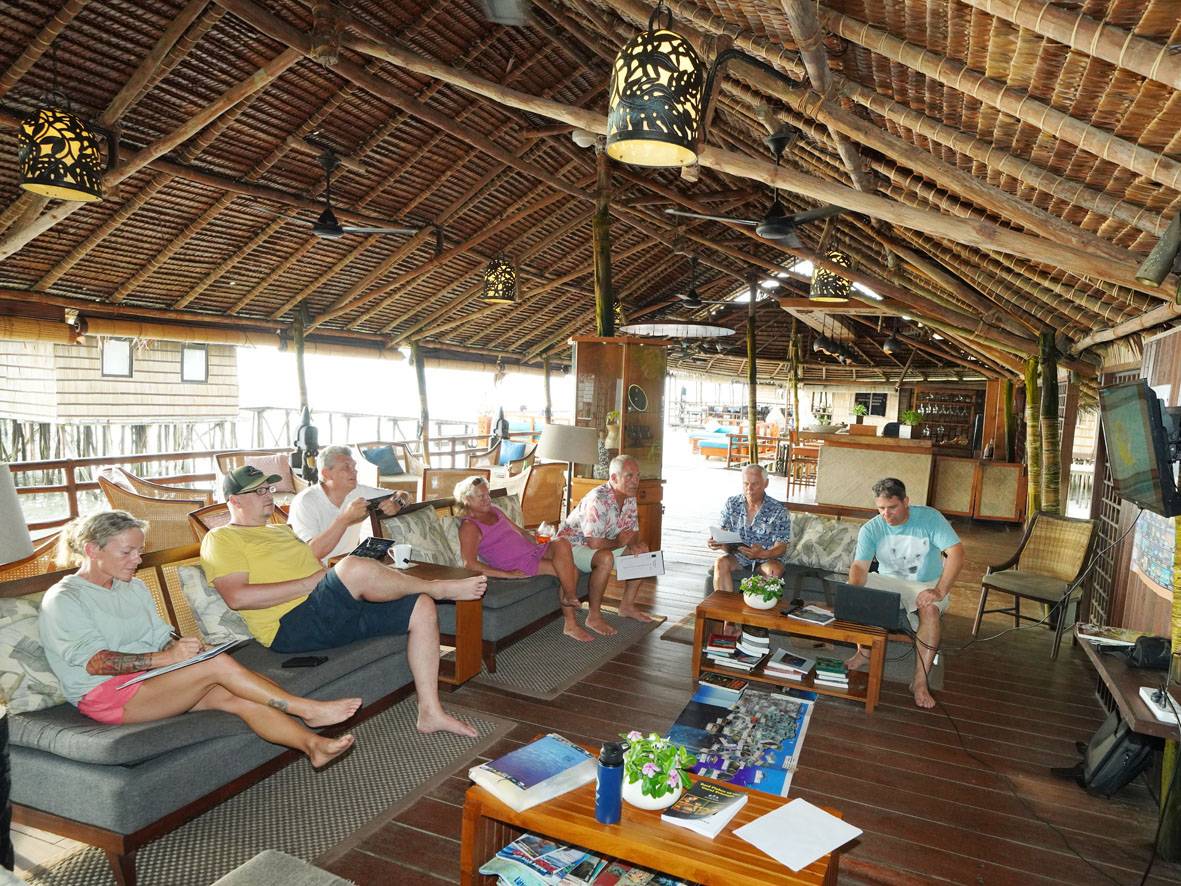
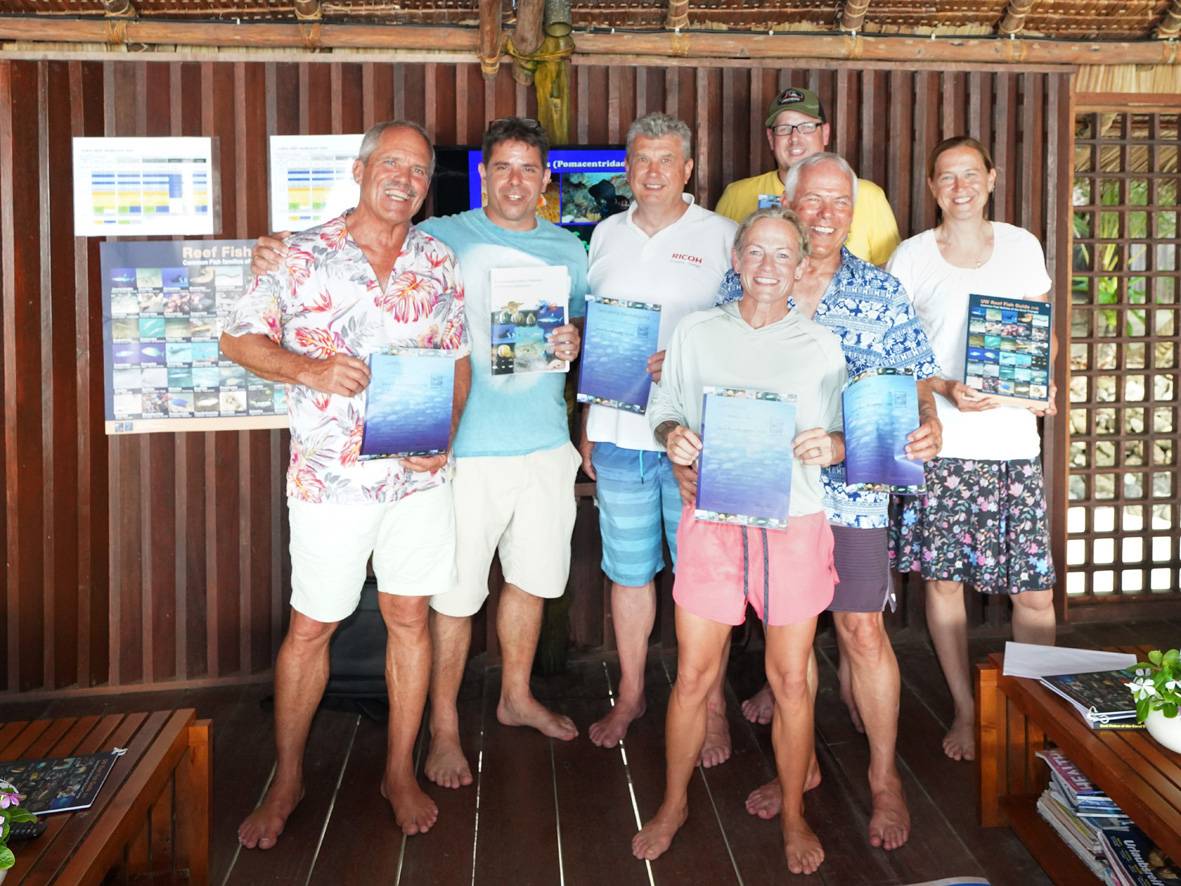
During the dives, we explored the fish diversity of Raja Ampat
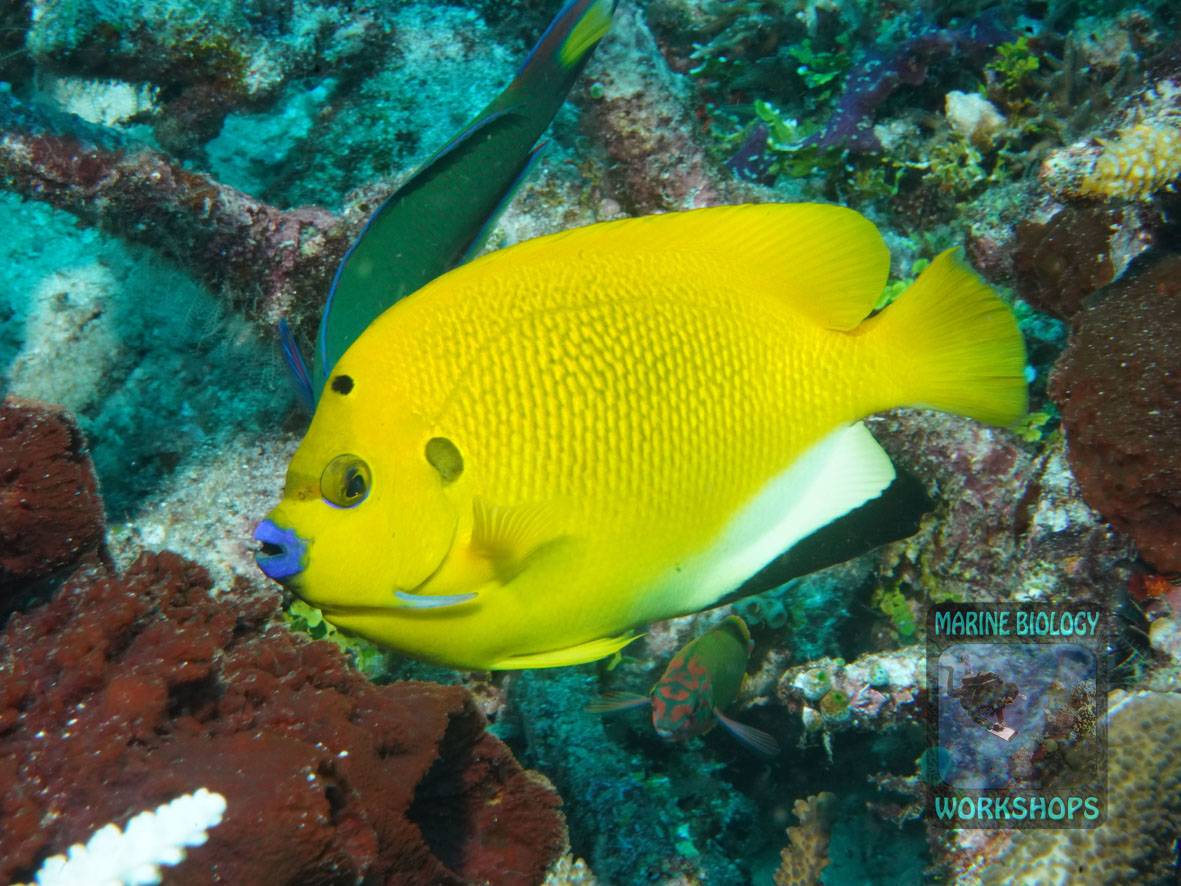
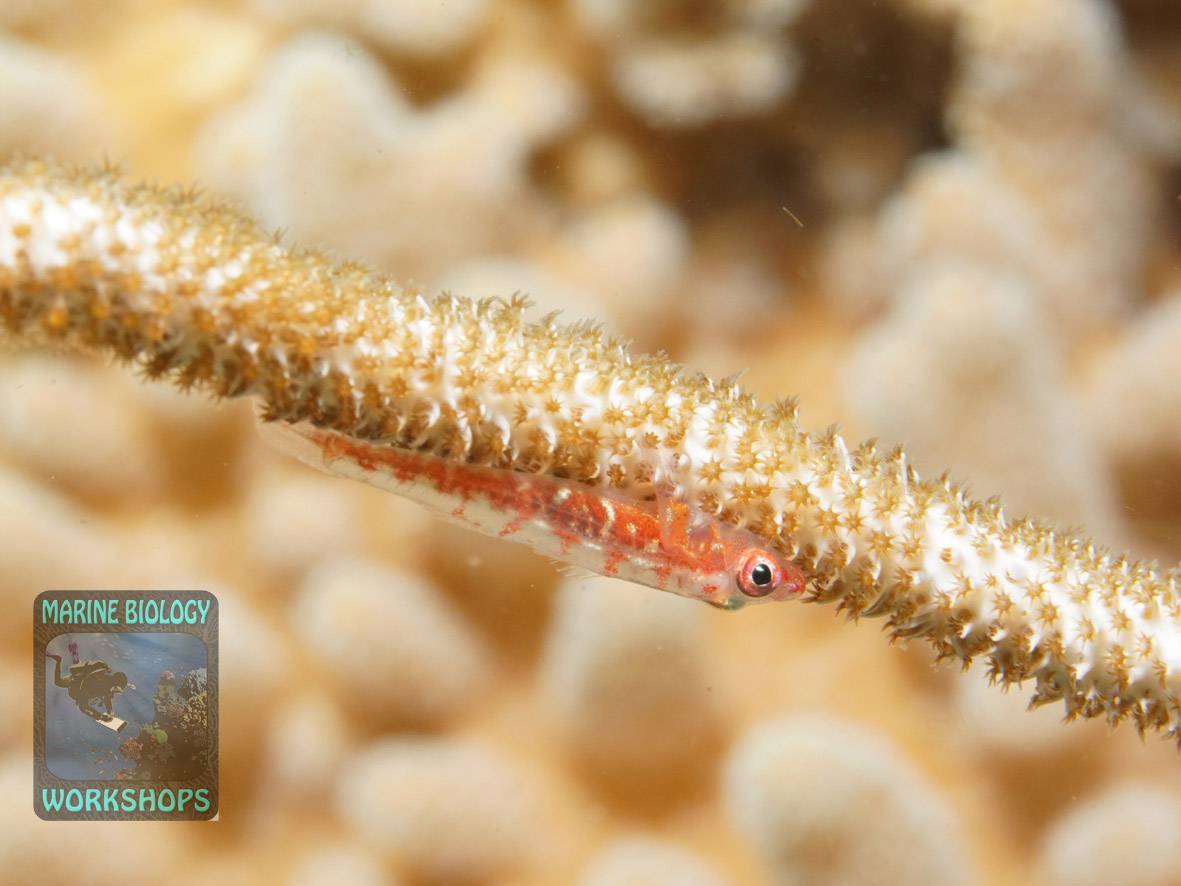
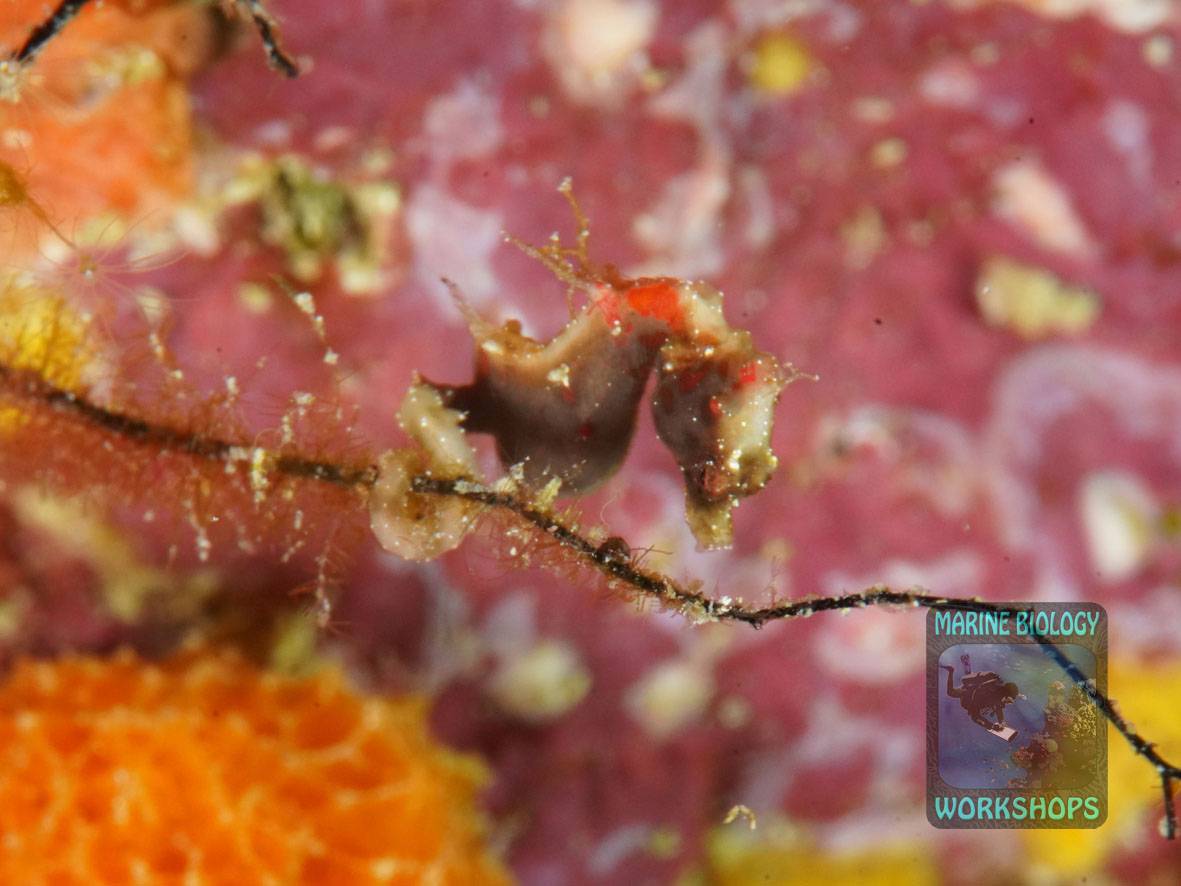

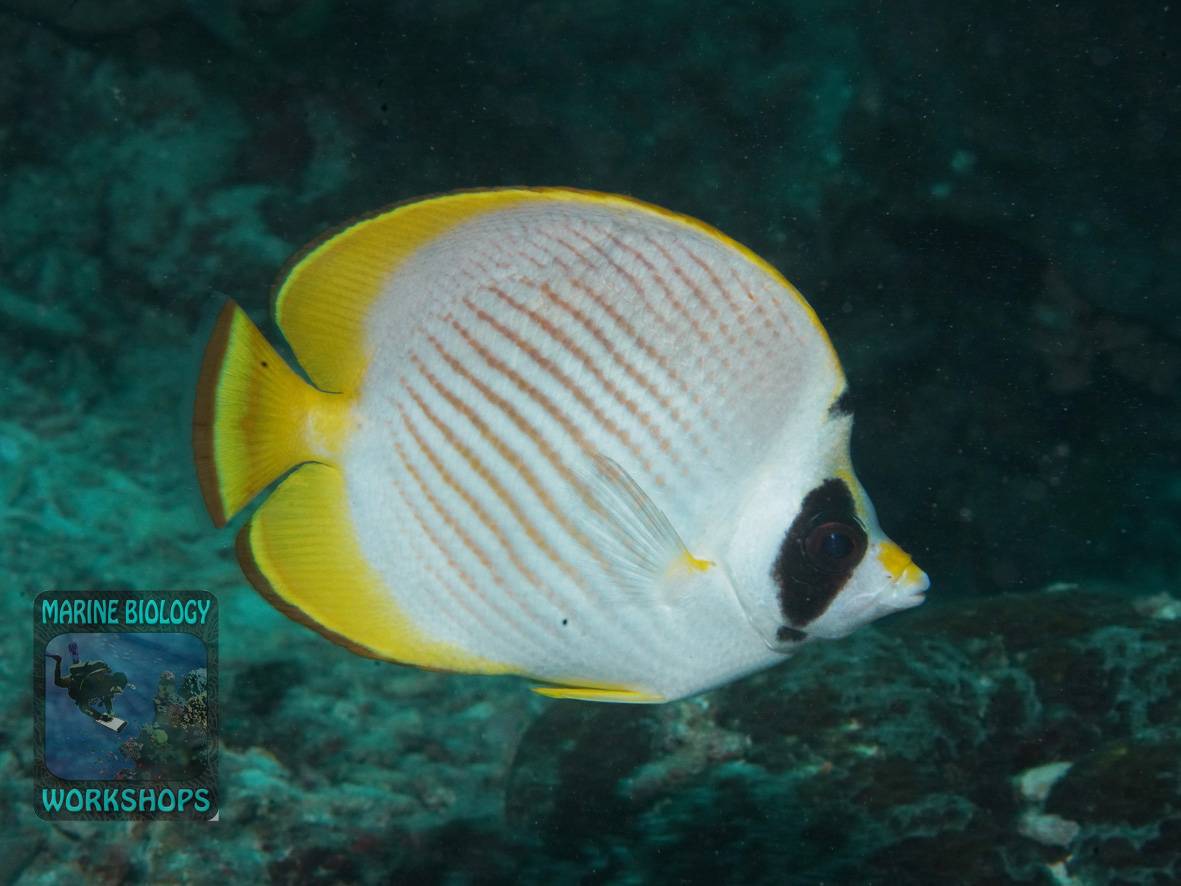
Angelfish can be easily recognized by the spine on the lower edge of their gill cover. The three-spot angelfish (Apolemichthys trimaculatus) is diurnal and feeds mainly on the abundant sponges and sea squirts.On the elongated whip corals (Junceella sp.), a closer look is worthwhile, as they are often inhabited by the tiny wire-coral goby (Bryaninops loki). The dwarf seahorse, only 1.7 cm long (Hippocampus pontohi), prefers to live on hydroid polyps and Halimeda algae. It is so perfectly camouflaged that it was only described in 2008! Its relative, the zebra pipefish (Dunckerocampus dactyliophorus), prefers to live in caves and under overhangs and feeds on small crustaceans.

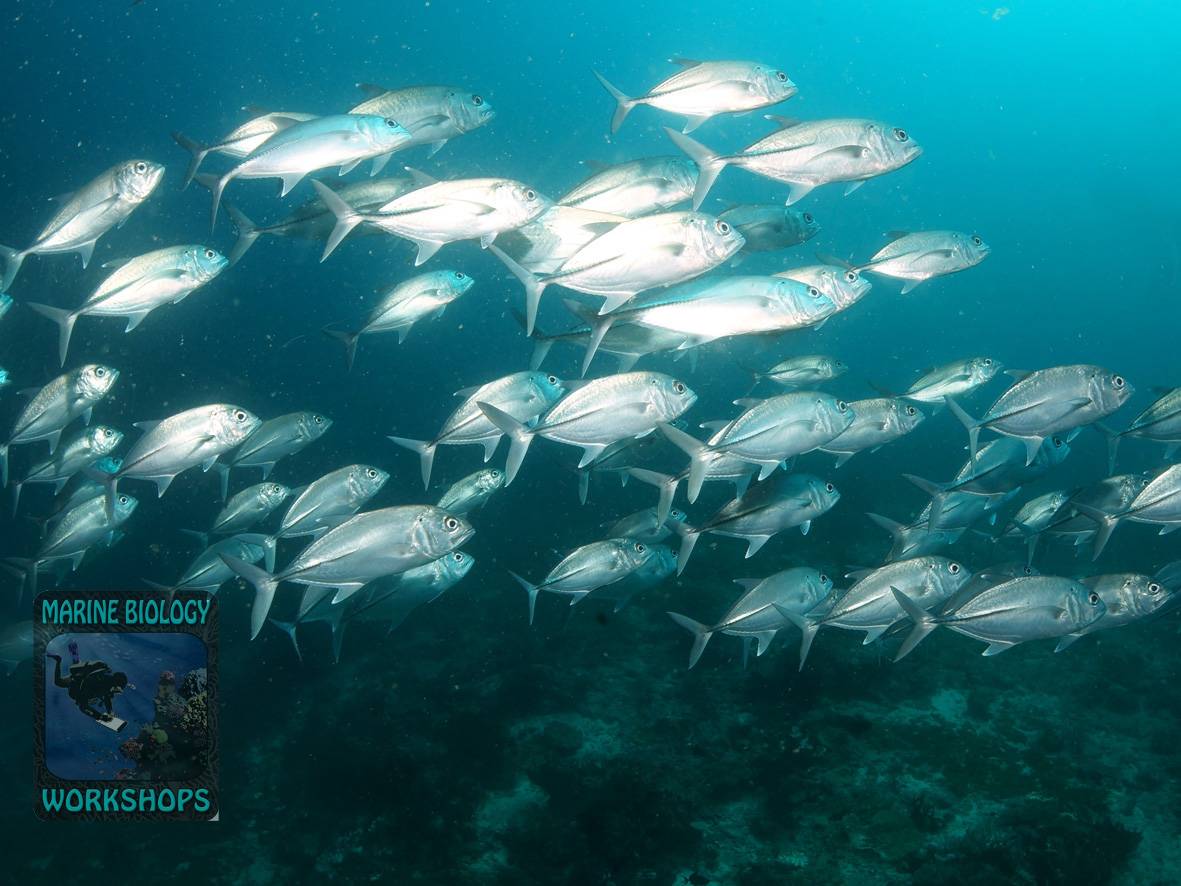
A fast predator of the open water, patrolling along the reefs, is the Bigeye Trevally (Caranx sexfasciatus).
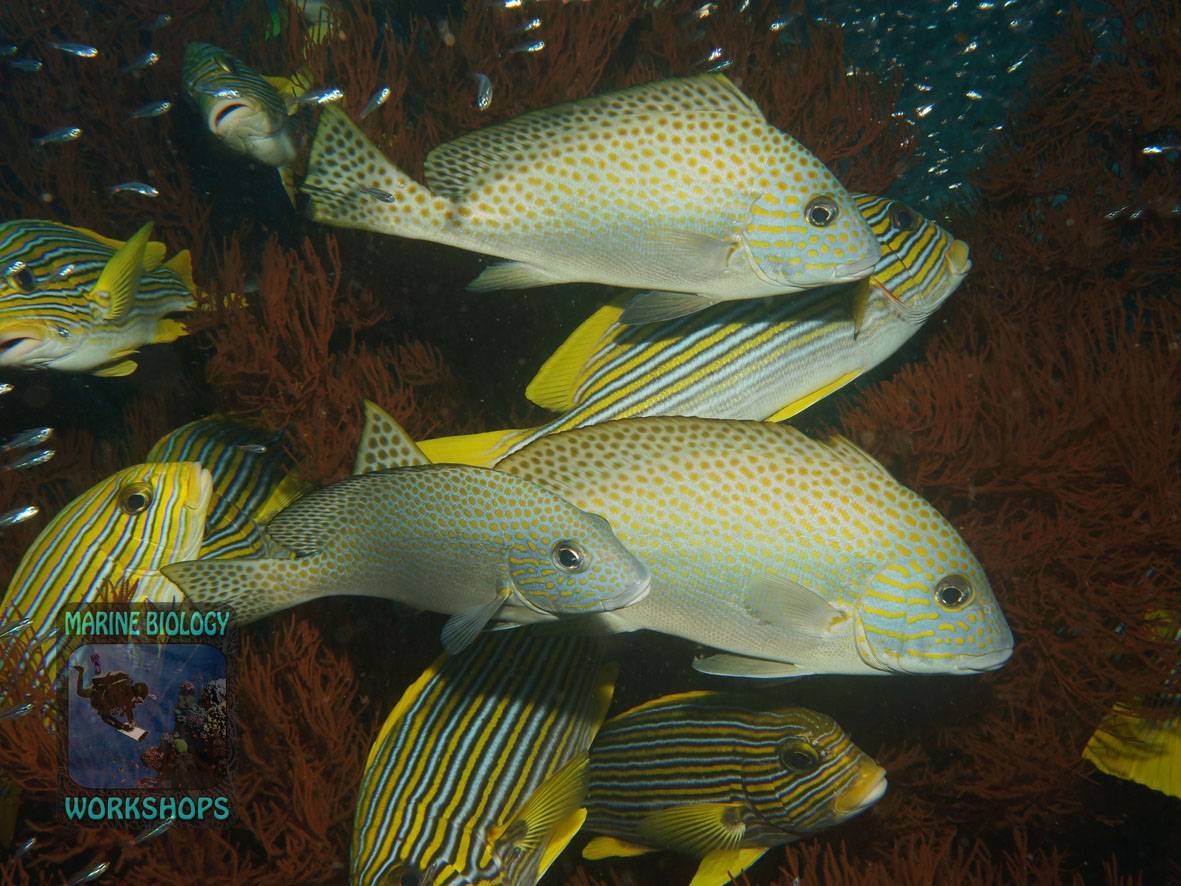
At a large Black Coral (Antipathes dichotoma), there are two different species of sweetlips (Plectorhinchus spp).
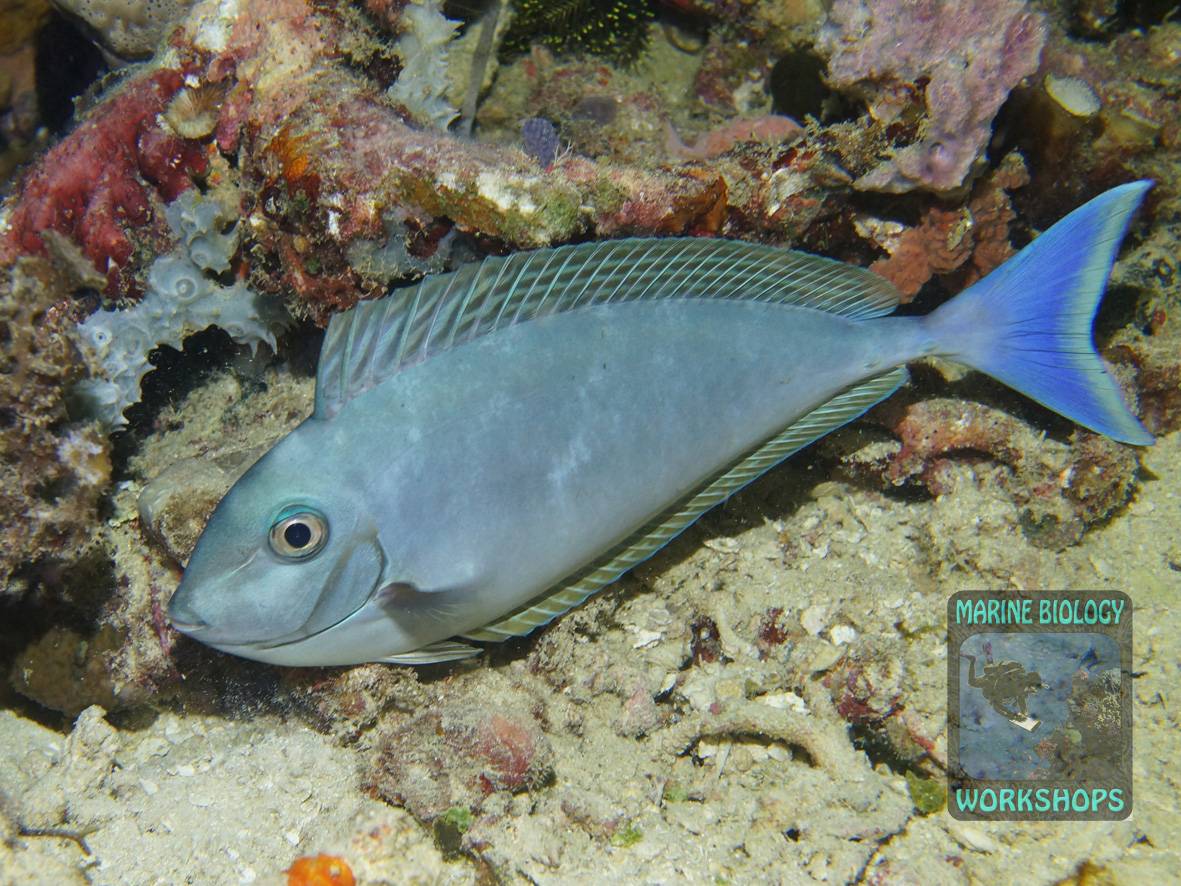
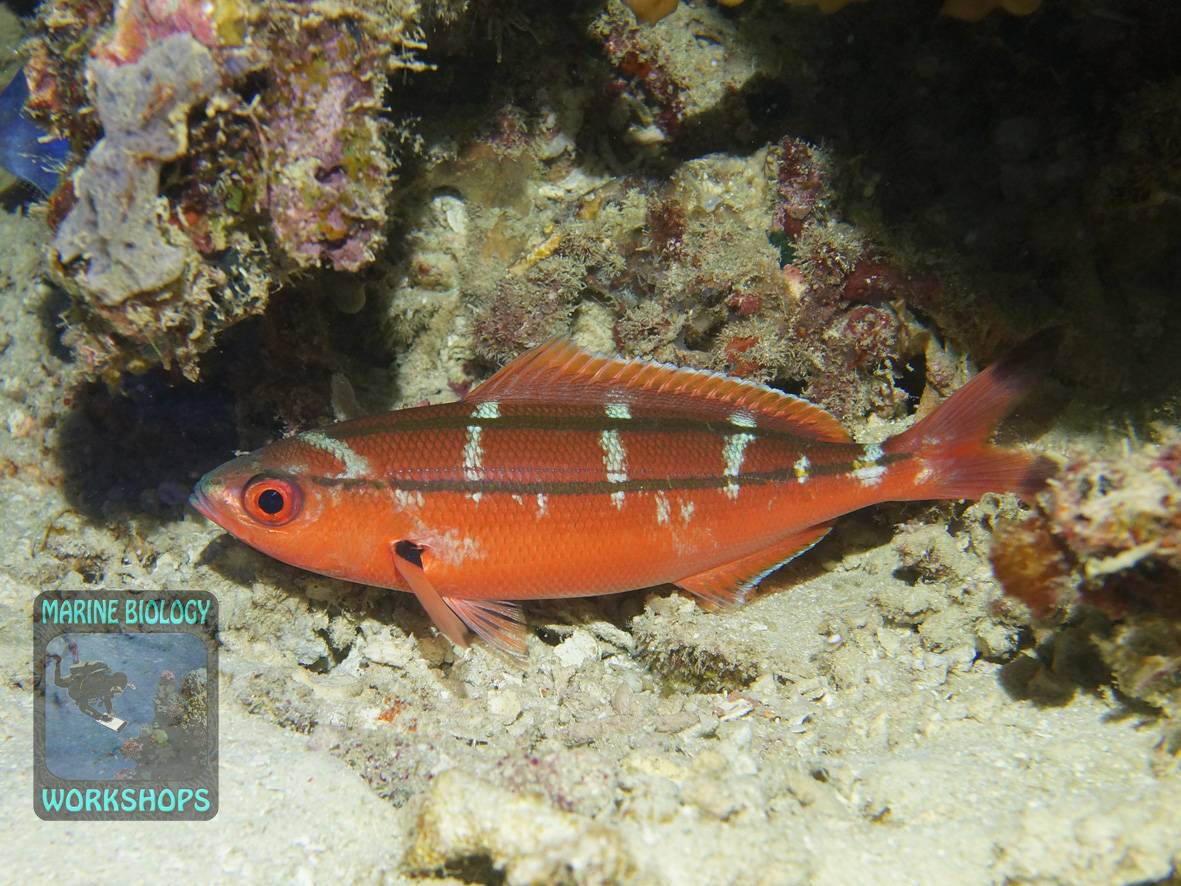
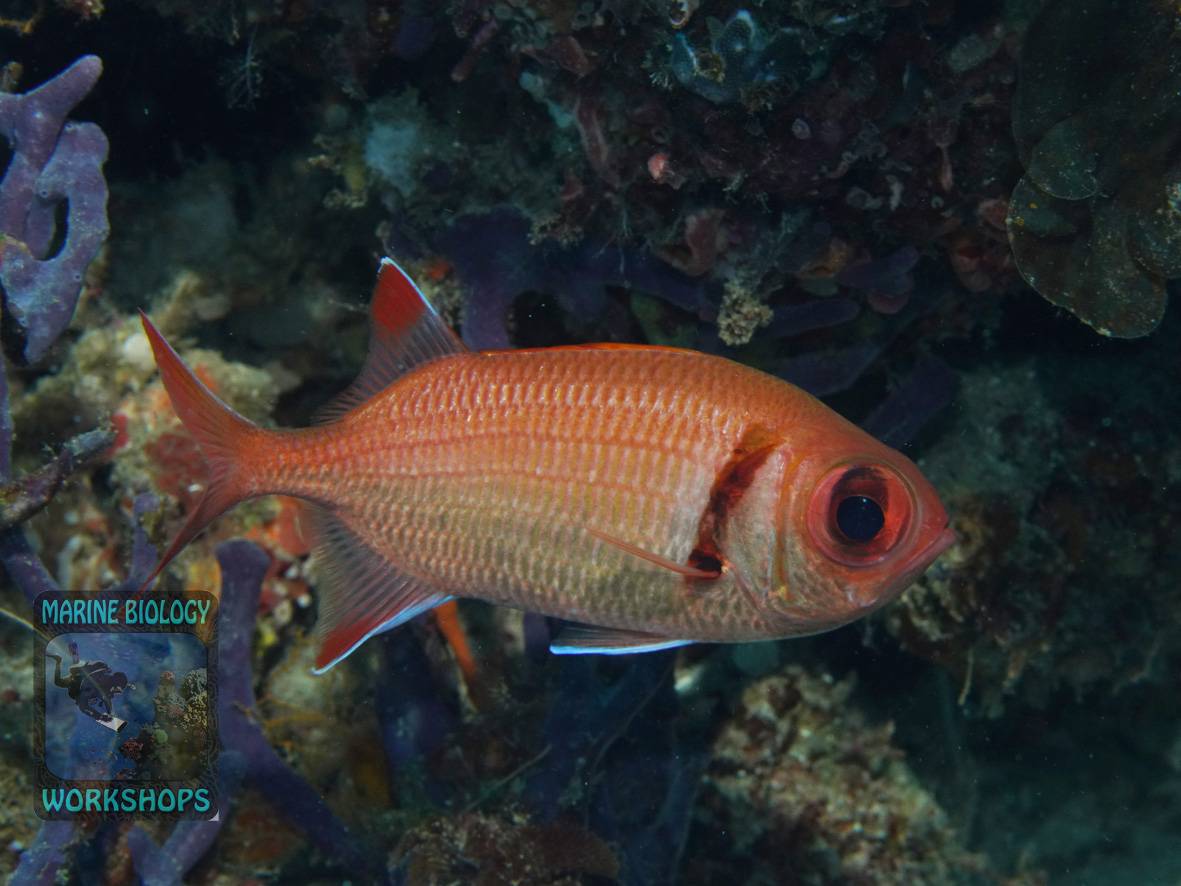
Also very well camouflaged is the Blue-spotted Stingray (Neotrygon kuhlii) from the stingray family, which feeds on invertebrates and fish living in the sand. During a night dive, we discover a resting Bluespine Unicornfish (Naso hexacanthus), which, like all surgeonfish, carries scalpel-like blades at the base of its tail for defense. The Two-stripe Fusilier (Pterocaesio digramma) swims during the day in open water near the reef and is light blue in color, with two yellow longitudinal stripes. Its night coloration, however, is red, with two dark longitudinal stripes. Also red-colored is the nocturnal Soldierfish (Myripristis murdjan). It should be noted that red coloration at night, without artificial light, appears as deep black.
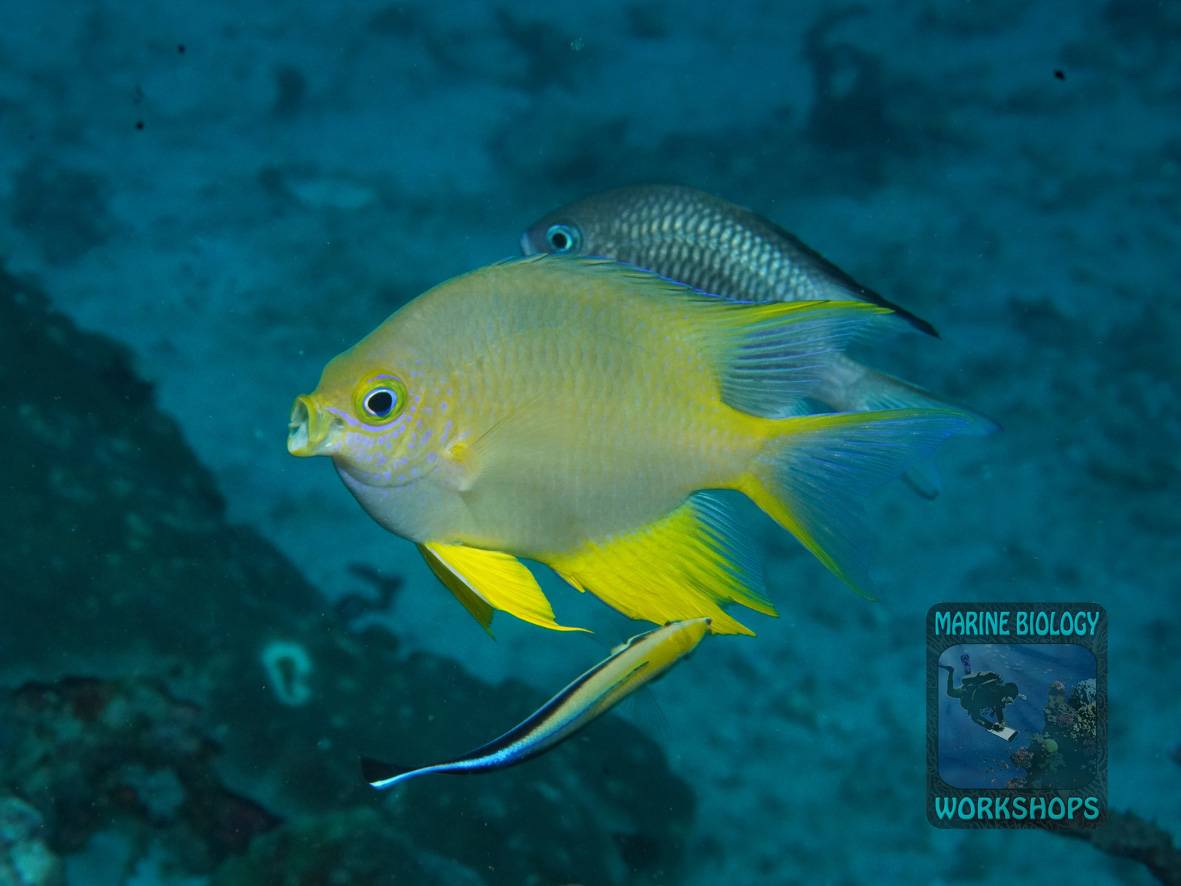
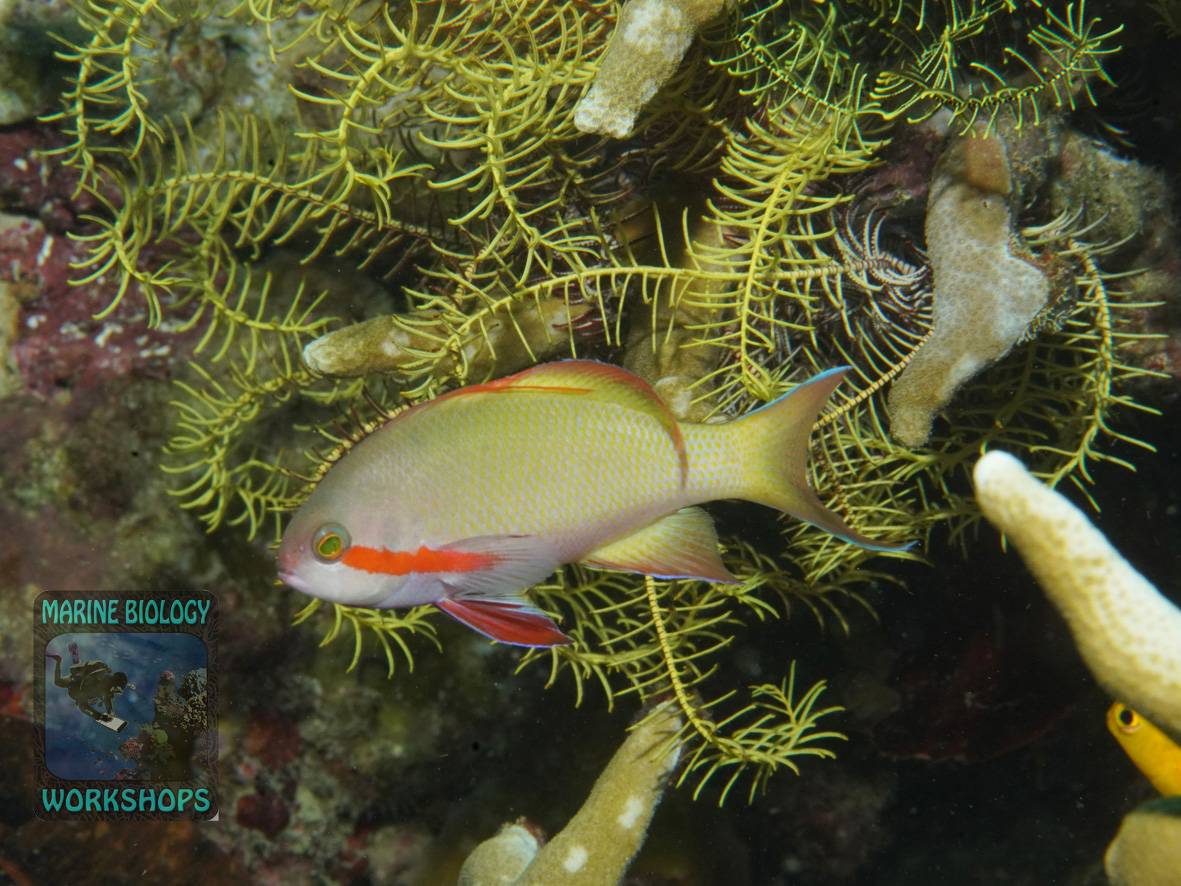
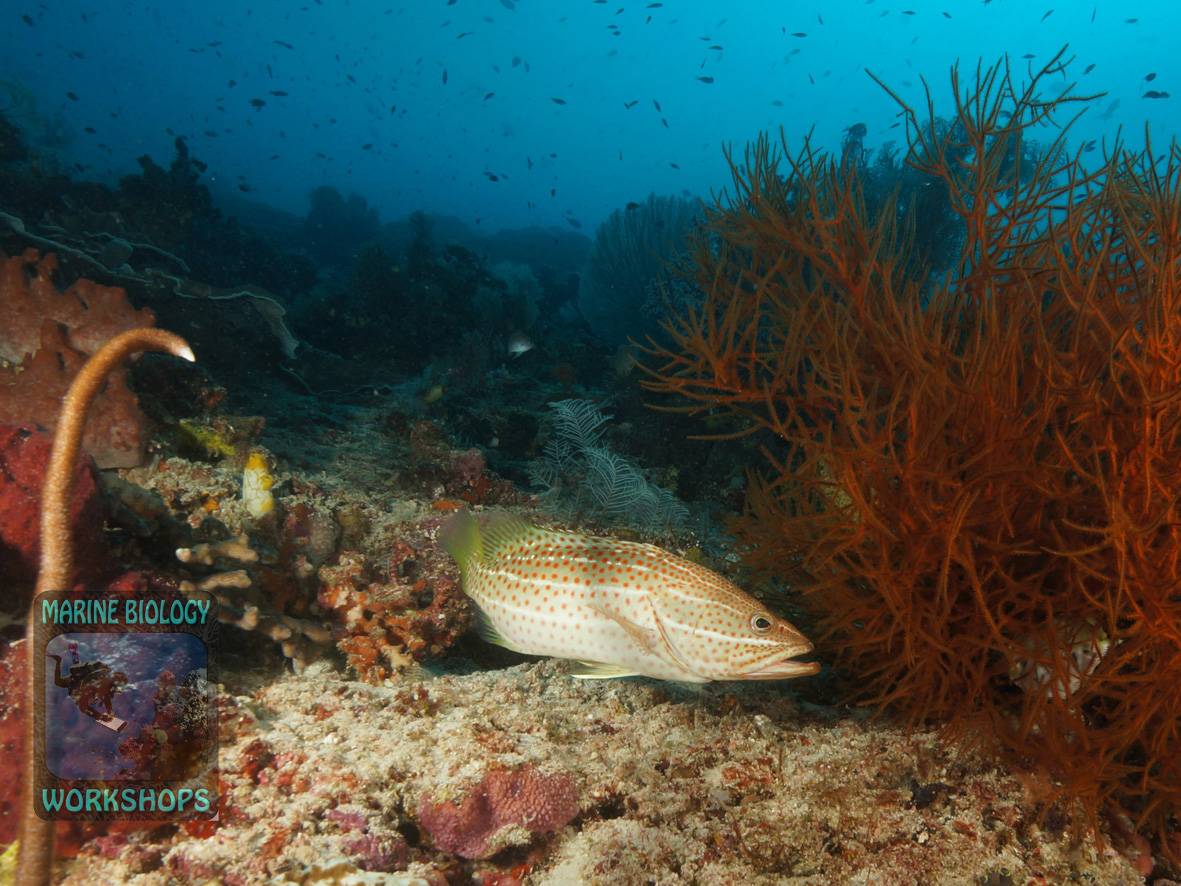
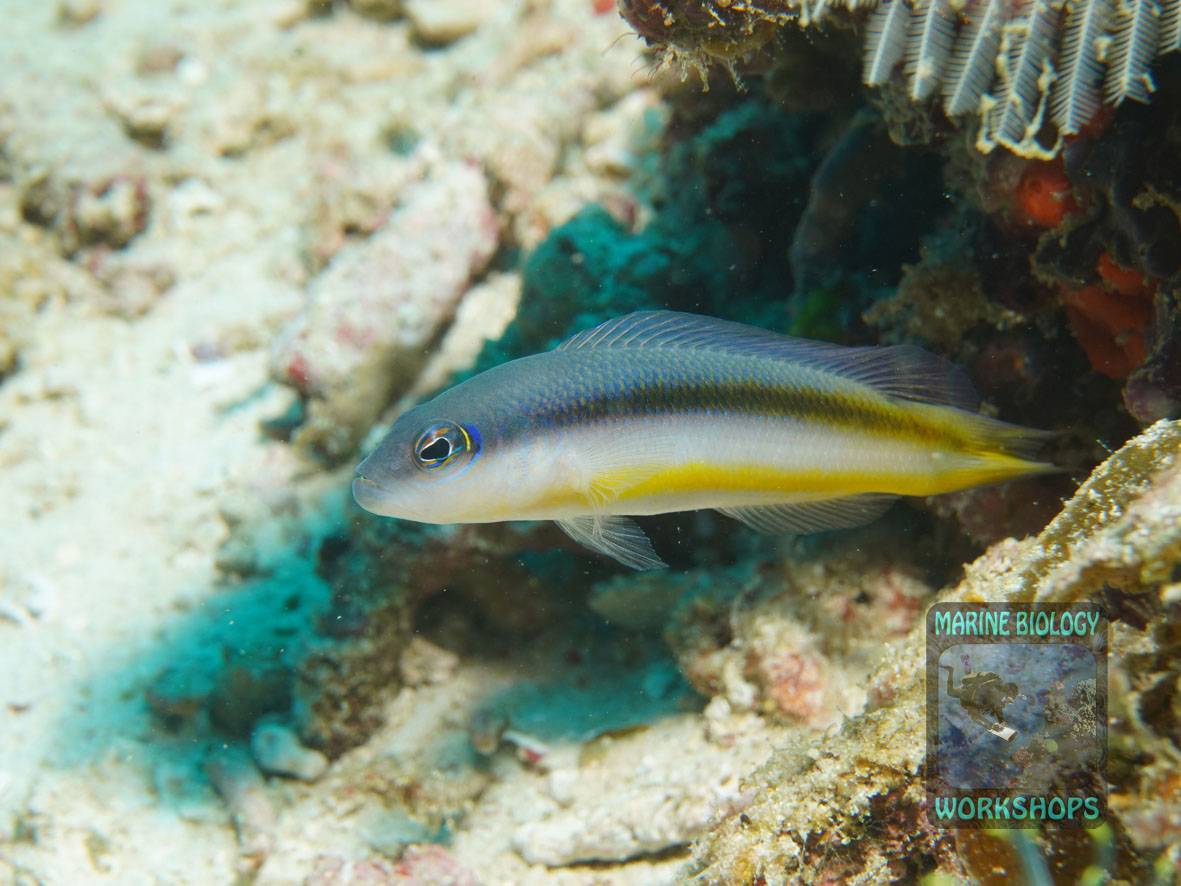
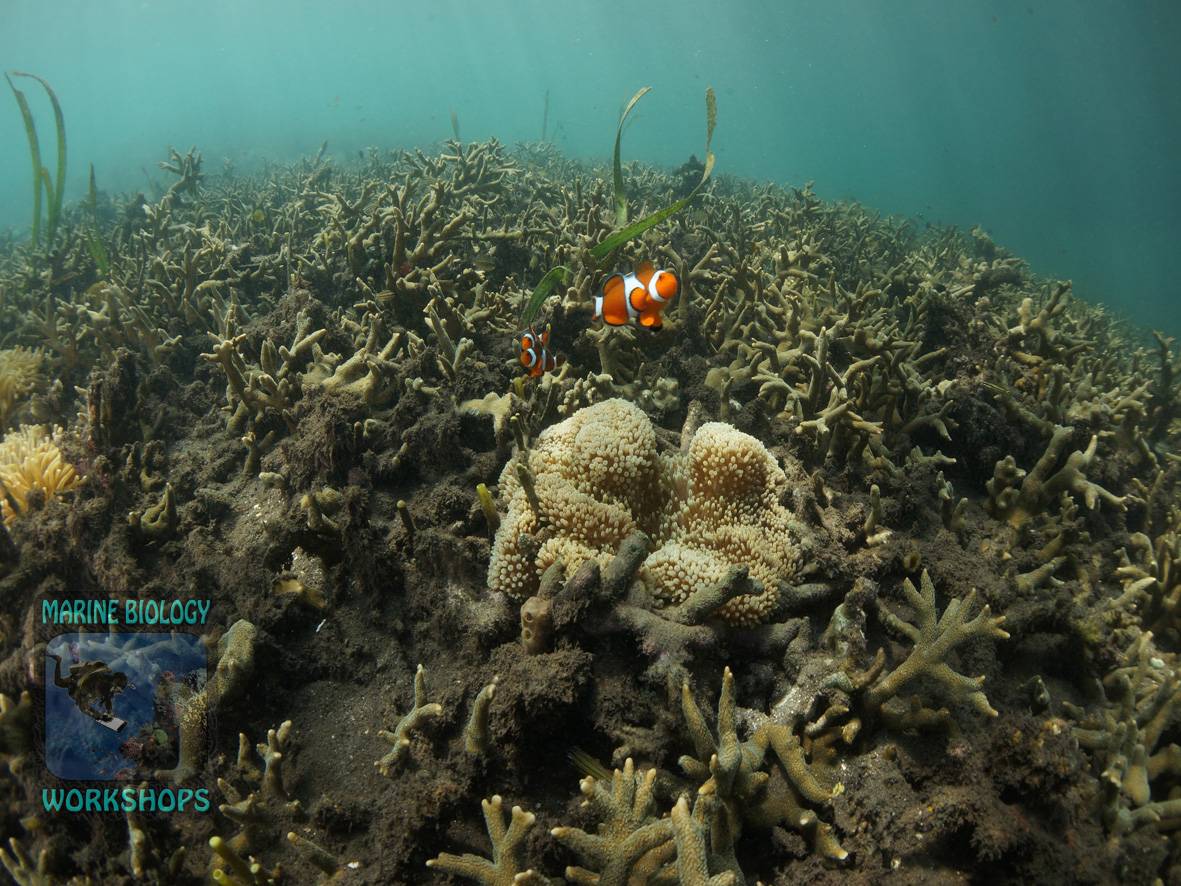
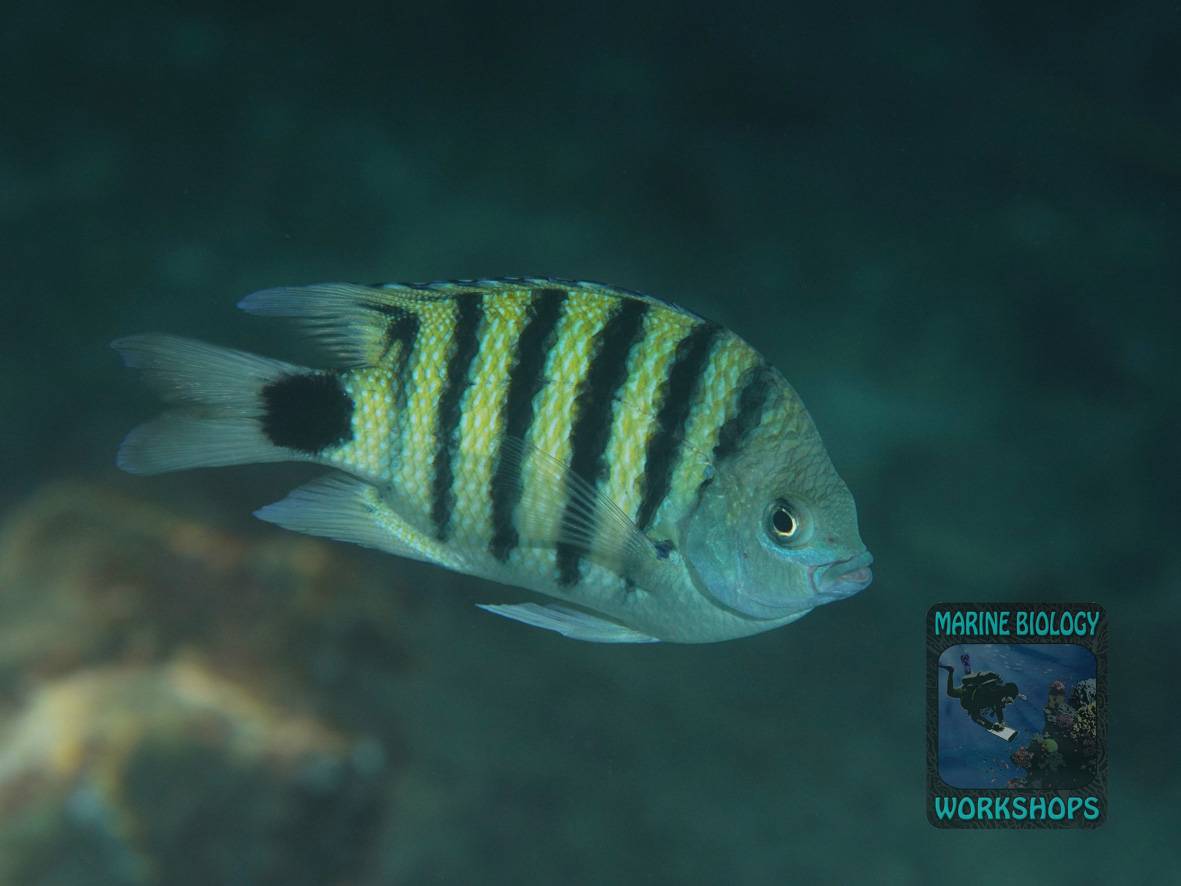
The Clown Anemonefish (Amphirion ocellaris) snuggles into the stinging tentacles of the Magnificent Anemone (Radianthus magnifica), with which it lives in symbiosis. It belongs to the extremely species-rich family of damselfish, like the Golden Damselfish (Amblyglyphidodon aureus), which is currently being cleaned of parasites by a Cleaner Wrasse (Labroides dimidiatus). The Green Anthias (Pseudanthias huchtii) lives in harem groups of one or more males and many females, closely associated with the reef. These small anthias are very closely related to the much larger groupers, such as the Slender Grouper (Anyperodon leucogrammicus). The Raja Ampat Dottyback (Pseudochromis ammeri) is, as the name suggests, an endemic species found only in the Raja Ampat islands.

CORAL – WORKSHOP
Coral Workshop Successfully Completed – Coral Identification, Fluorescence Diving & Coral Reef Ecology
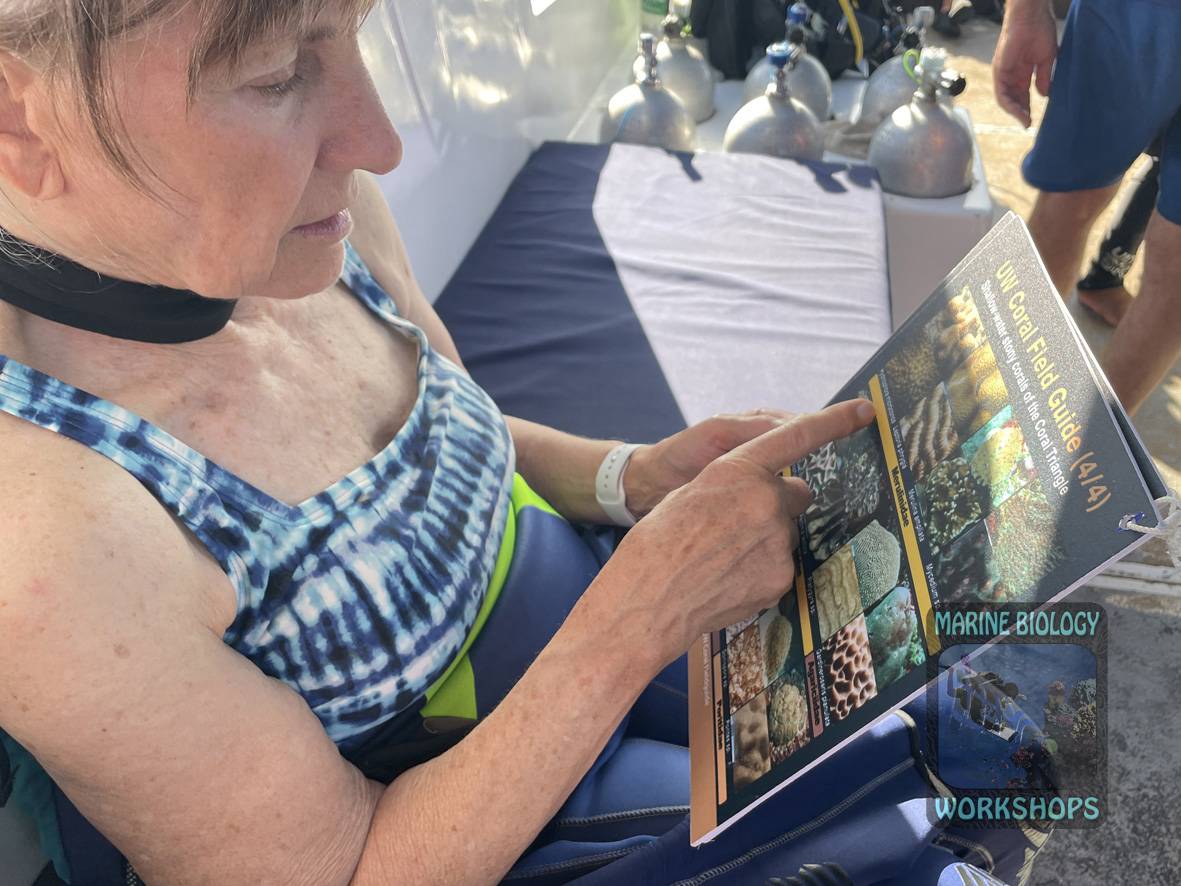
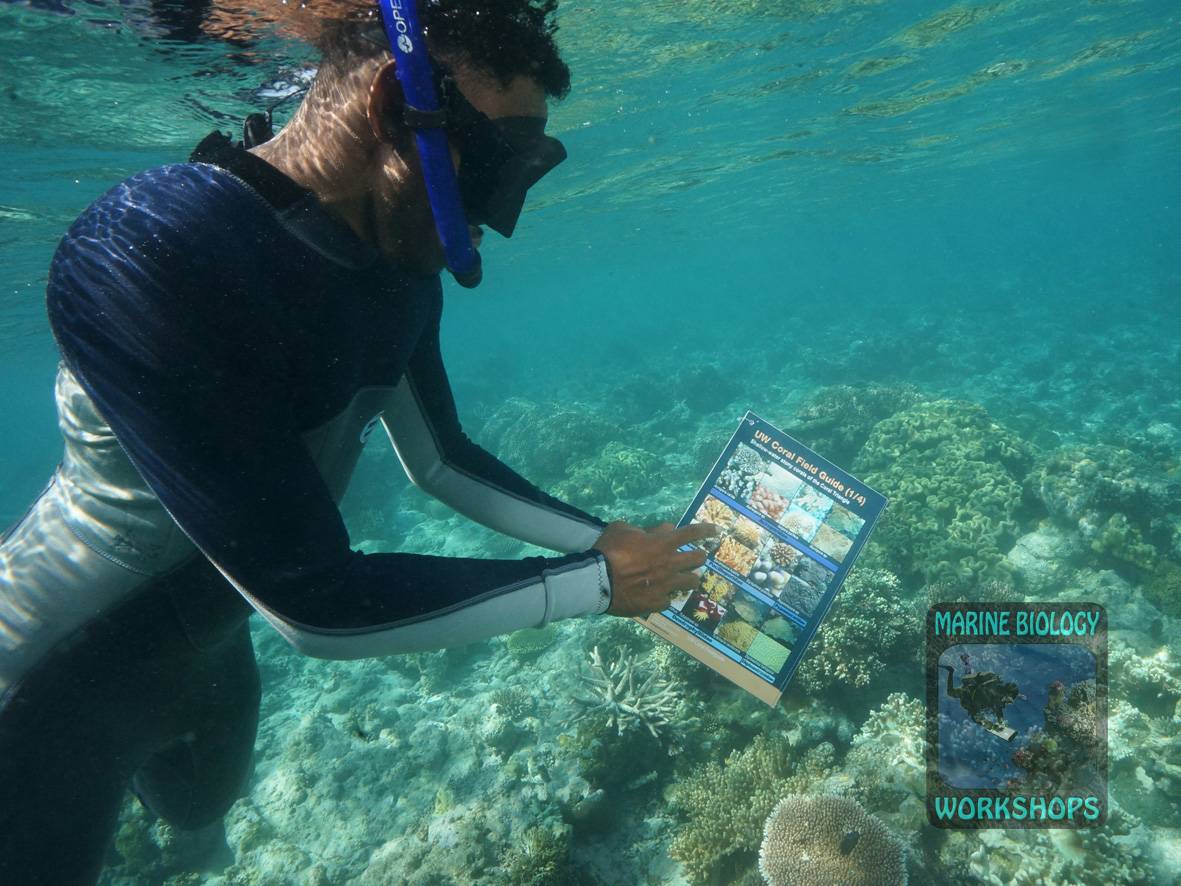
During the CORAL WORKSHOP, the second in the course of the Coral Reef Workshop participants learned about the ecology of coral reefs, the biology of corals, and how to identify corals down to the genus level – even underwater directly on the reef, with the UW Coral Field Guide in hand!
Corals are a fascinating group of animals that, with their calcareous skeletons, create the habitat of the coral reef in the first place – forming a breathtaking, highly complex ecosystem with immense biodiversity.
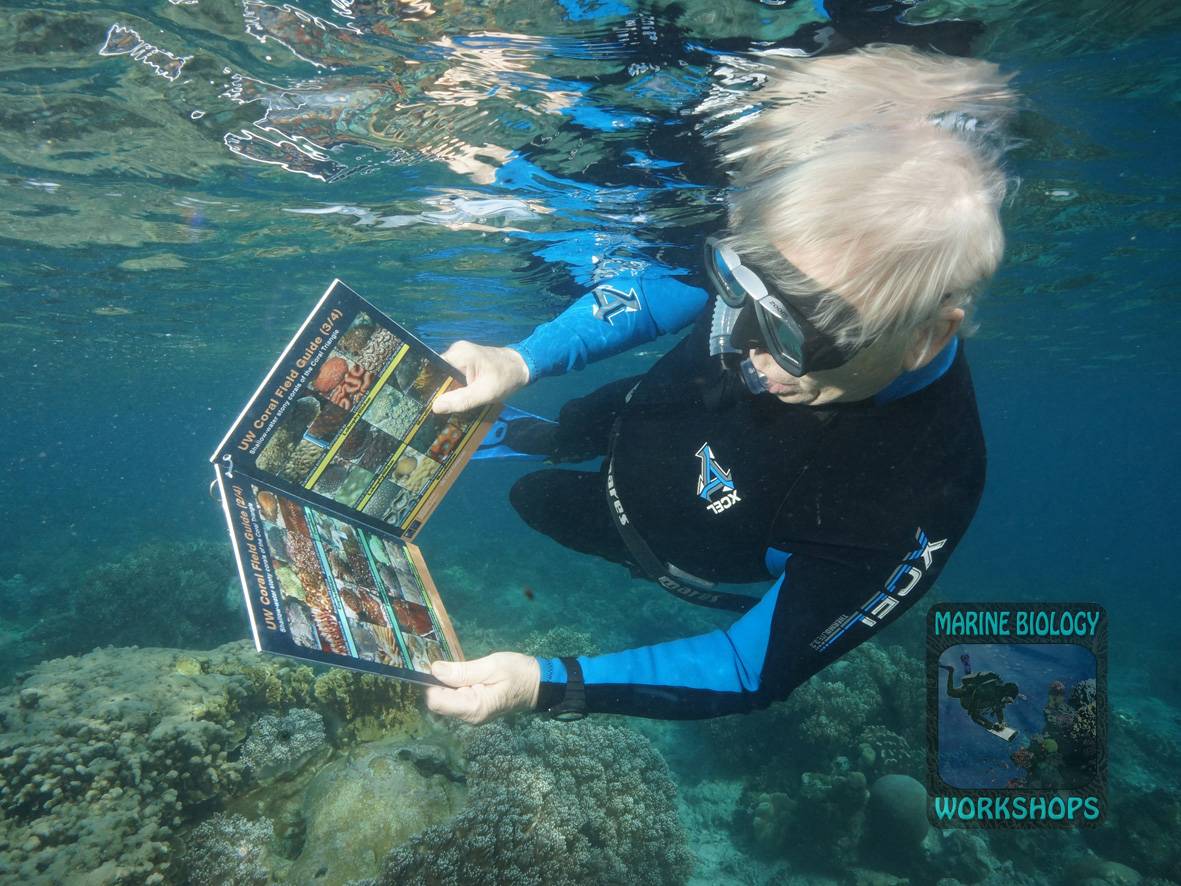
During the day, we completed two dives each, focusing on the corals—their different growth forms, structures, and occurrences. With the help of the UW Coral Field Guide, we also attempted genus identification and continued this work on land. On the first evening, a fluorescence night dive was on the program. On the final evening, there was an exciting presentation: “Corals – the Architects of the Reefs”, as well as a coral quiz to test the knowledge gained.
Between the two workshop days, we took a trip to the famous Fam Islands.
At the end, the course participants received their completion certificates. A heartfelt thank-you to all participants for your interest and enthusiasm!
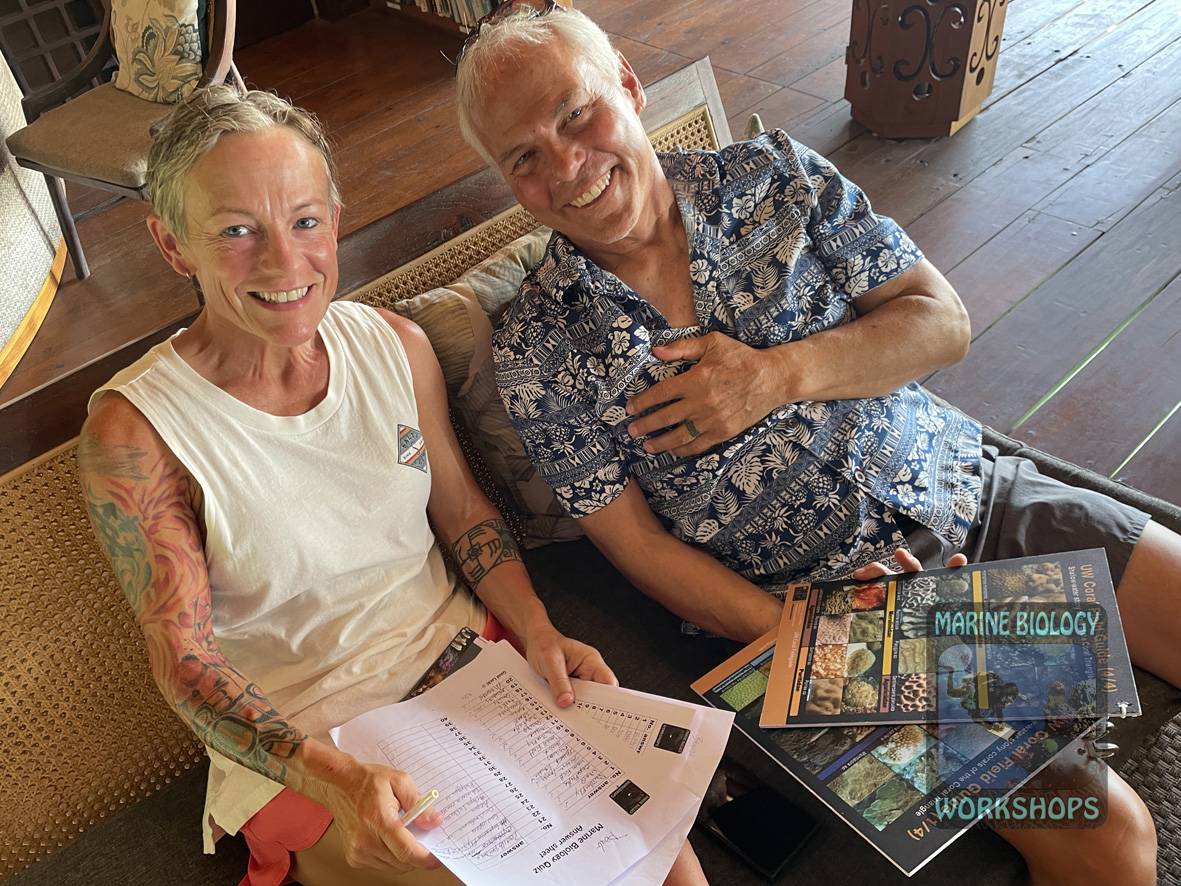
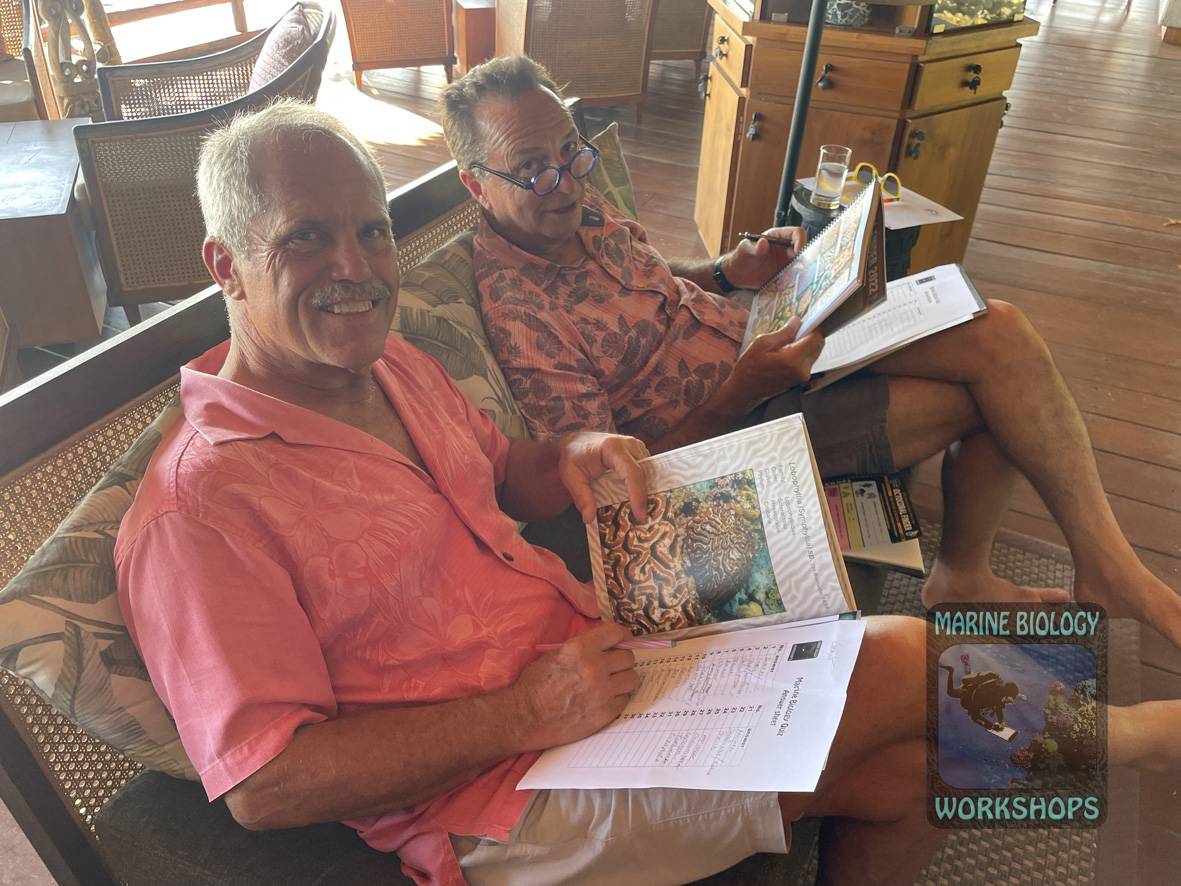
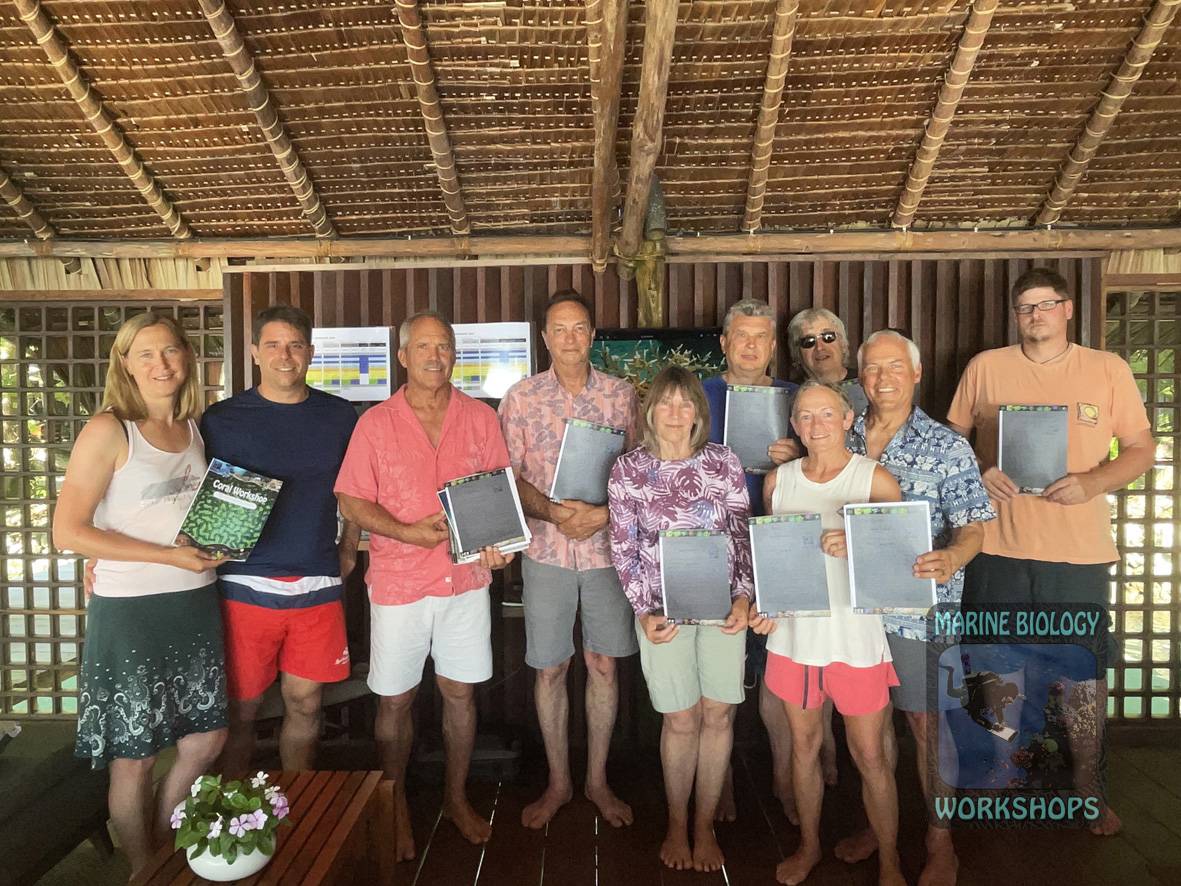
Identifying and experiencing corals: Discoveries during the night dive
Stony corals (Scleractinia) belong to the six-rayed anthozoans (Hexacorallia) and have six-fold symmetry, which applies to the number of tentacles and walls (septae and costae).
For genus and species identification in stony corals (Scleractinia), the delicate skeleton, the structure of the coral cups (corallites), the development of the corallite walls, septae, and other skeletal elements are important.
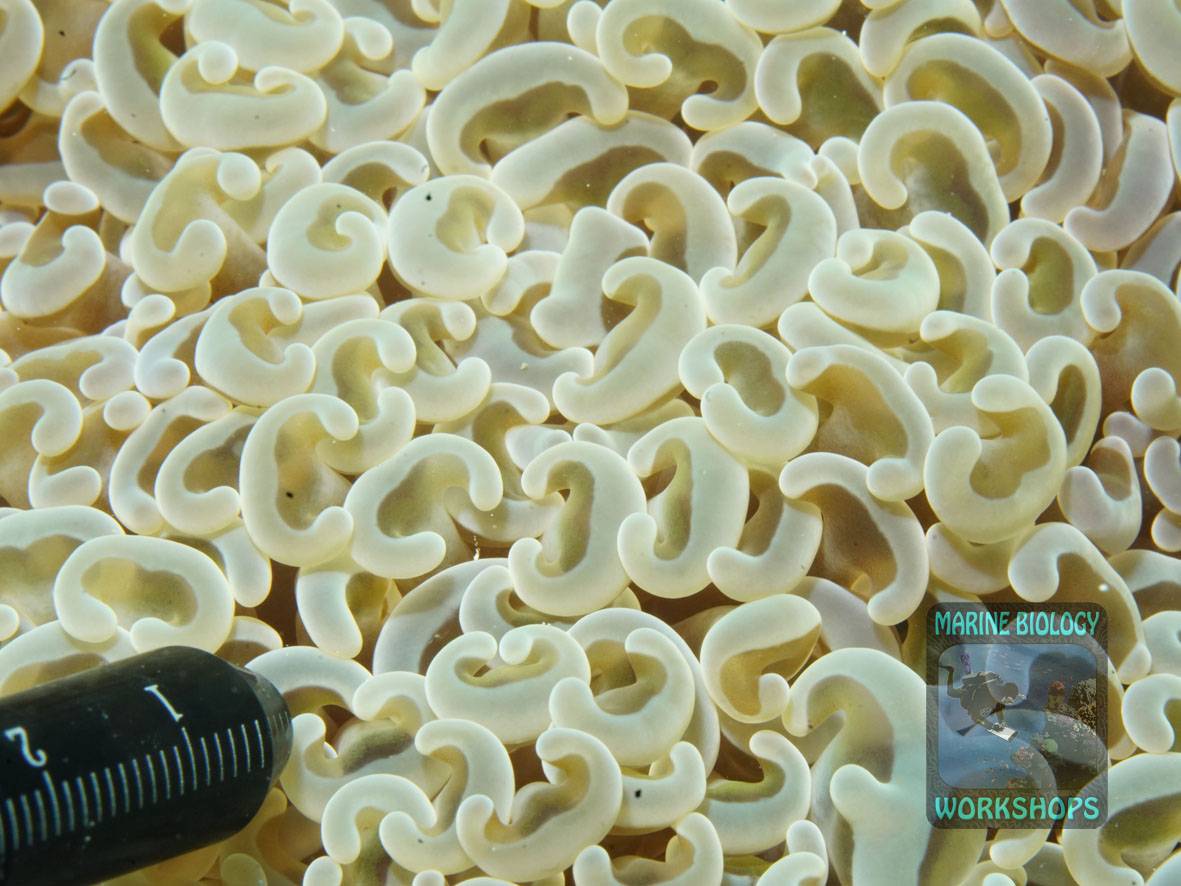
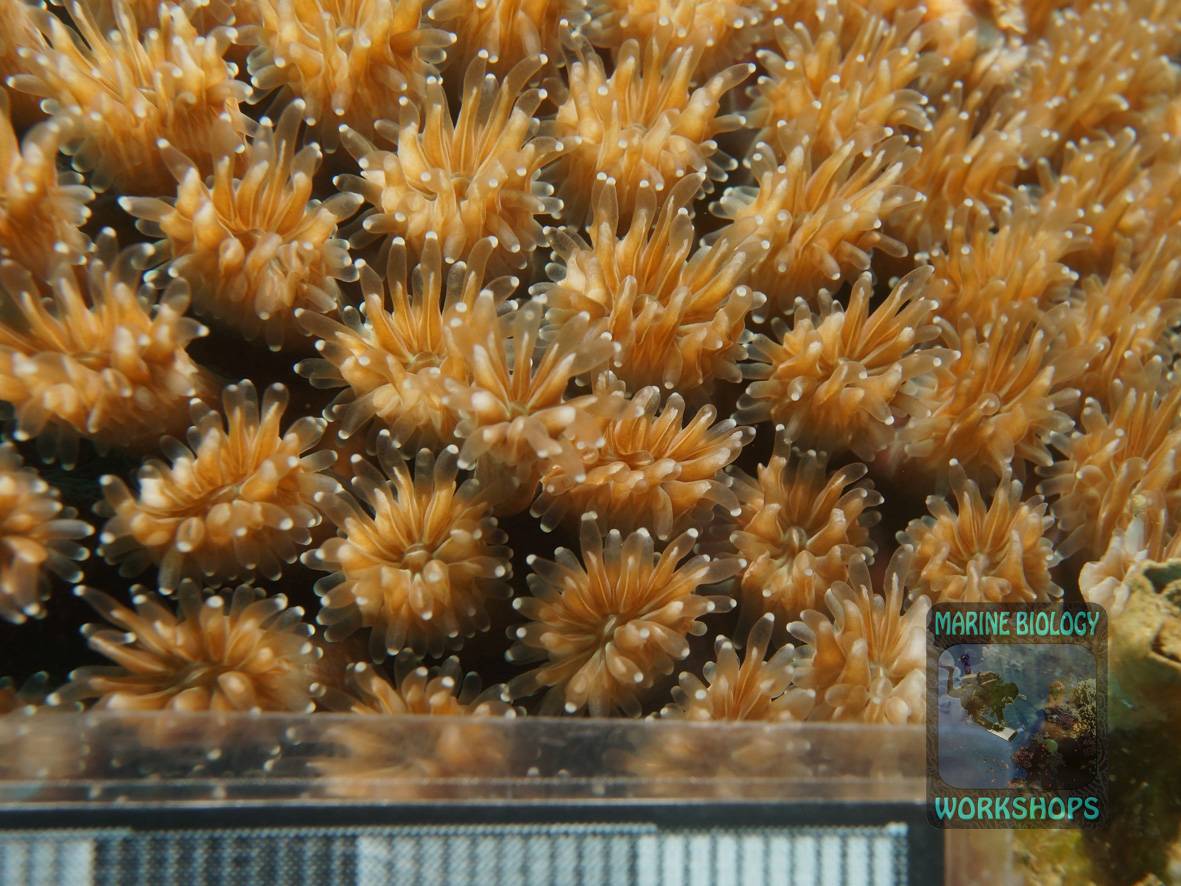
The polyps of the Hammer Coral (Fimbriaphyllia ancora) with their anchor- or hammer-shaped tentacles are open during the day. The Crystal Coral (Galaxea fascicularis) also has polyps open during the day, which can sting strongly. It can evert so-called “sweeper tentacles” from its stomach and thus “digest” other nearby corals from a distance. What remains is the bare coral skeleton.
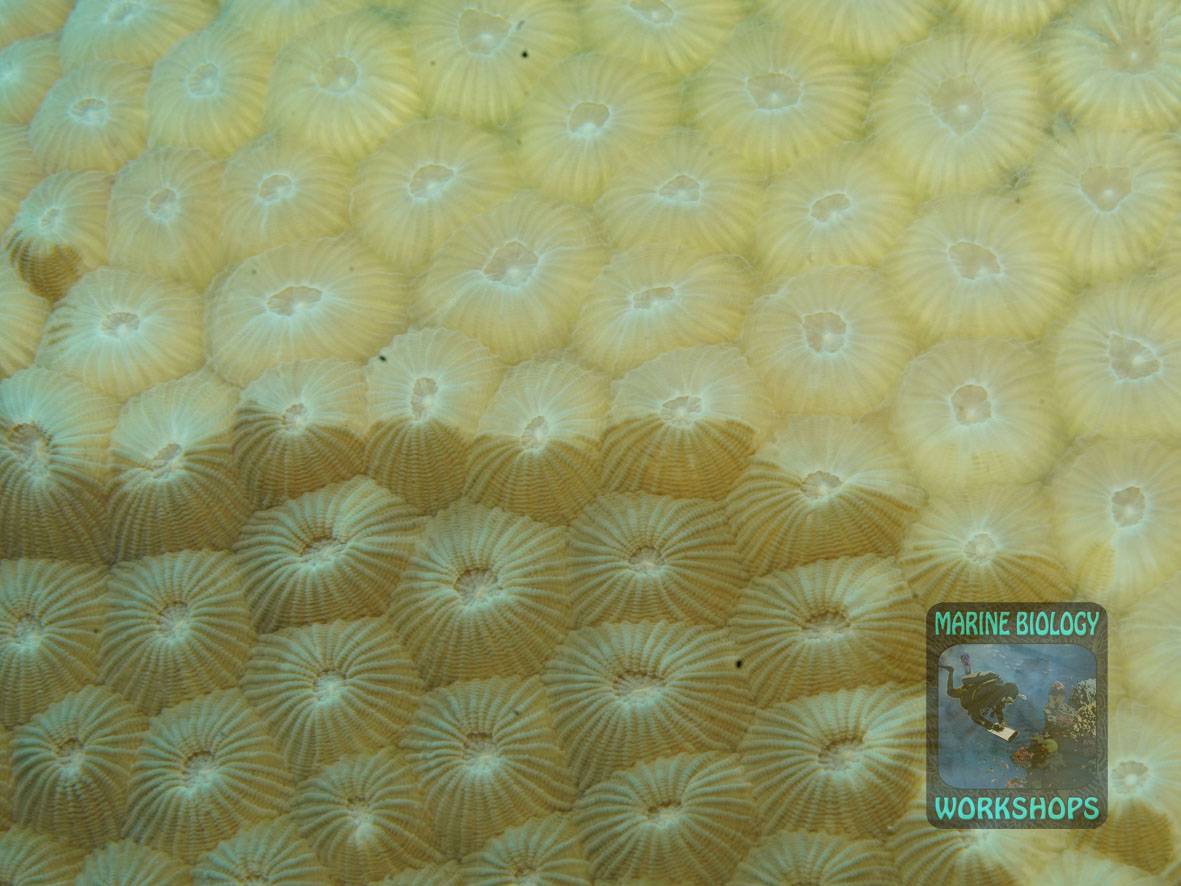
The only representative of its family is the massive honeycomb coral (Diploastrea heliopora), recognizable by its distinctive hexagonal polyp structure. In this image, it is partially bleached and partially intact.
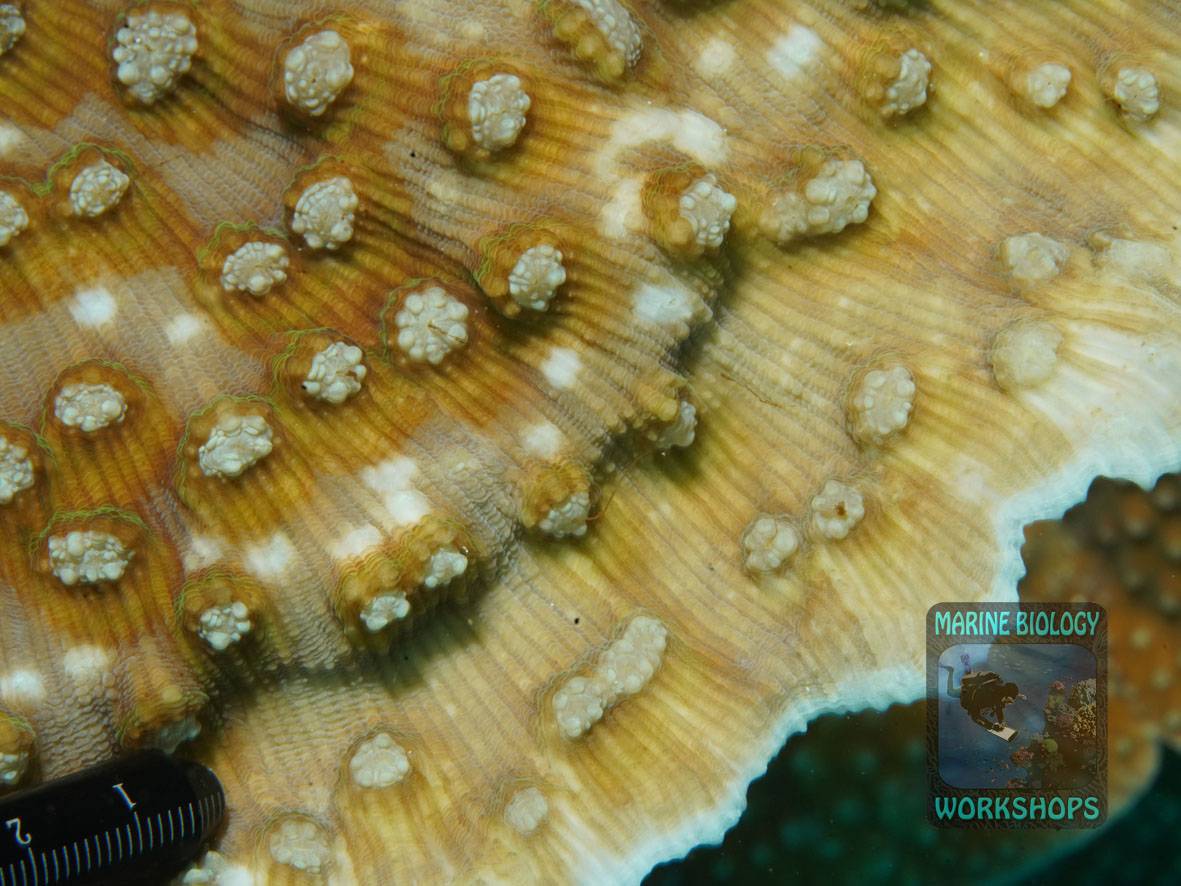
The large-polyp stony coral (Echinophyllia sp.) has a plate-like growth form. The bright edge indicates the growth zone.
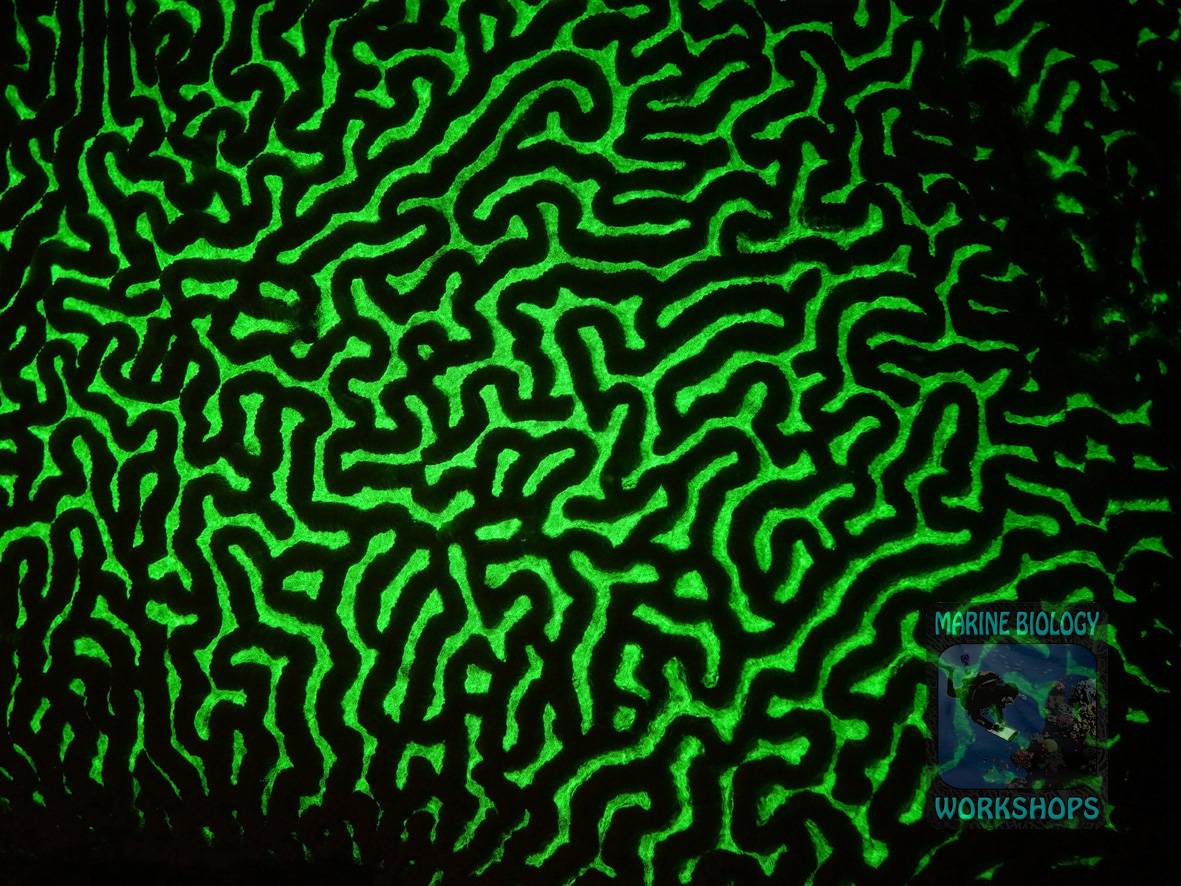
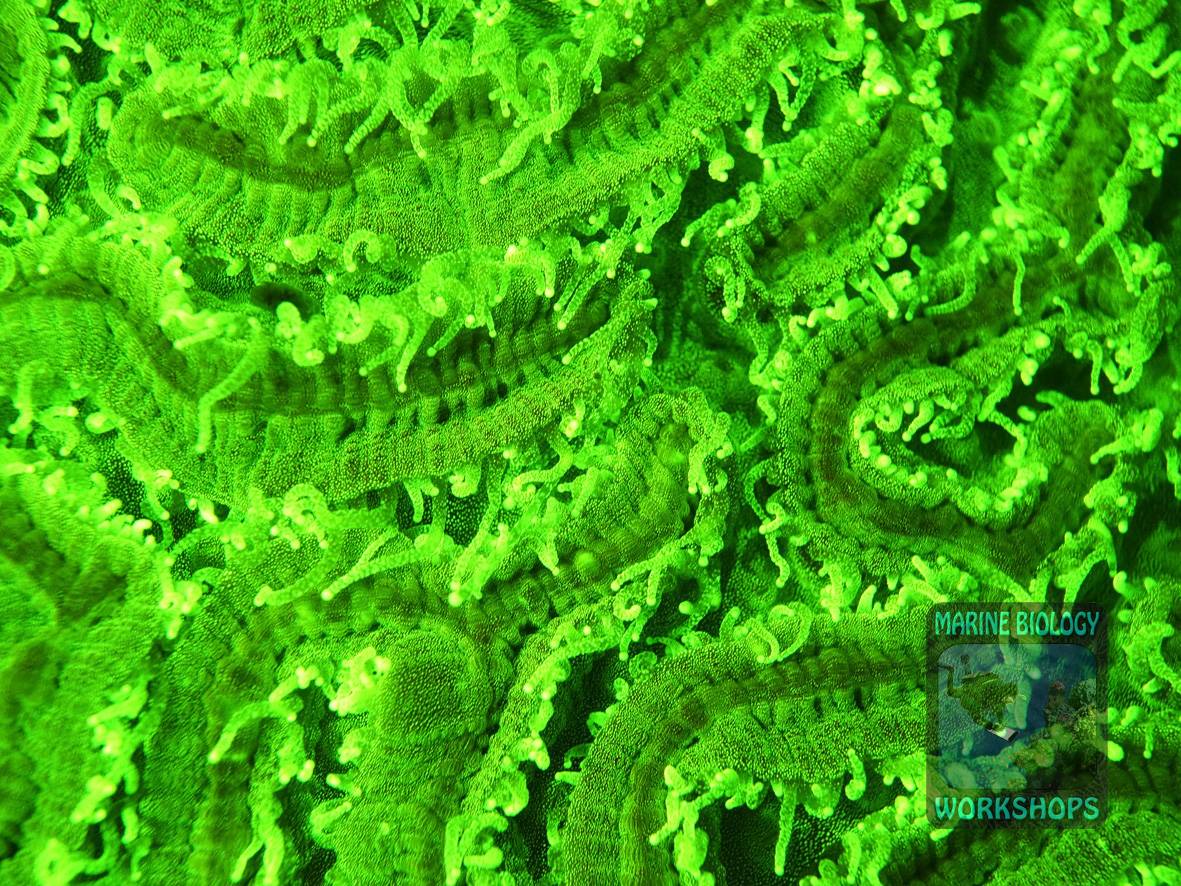
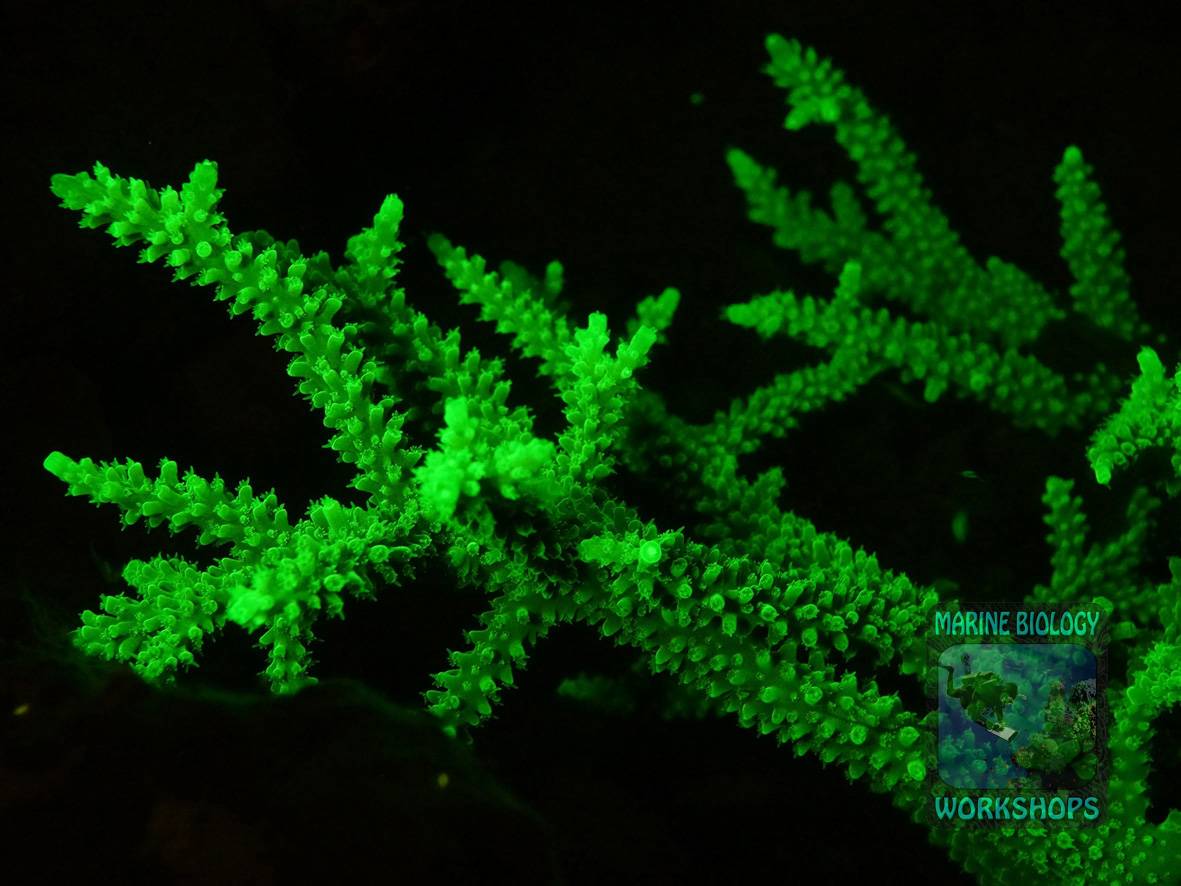
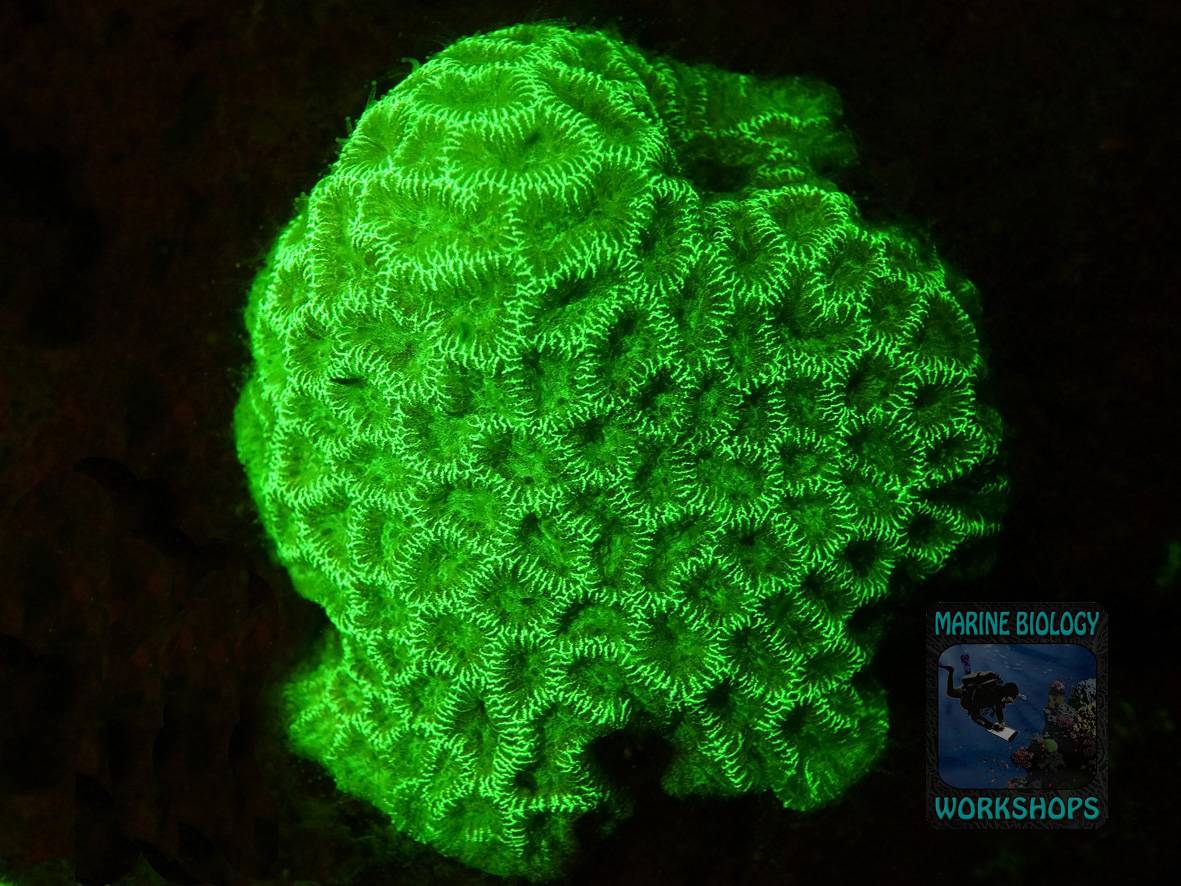
The highlight of the first evening: a fluorescence night dive! Under blue light and with yellow filters, the corals glowed in an intense green.
In the phenomenon of fluorescence, short-wavelength, high-energy light is absorbed by fluorescent pigments, and the absorbed energy is immediately re-emitted as light with a longer wavelength and lower energy.
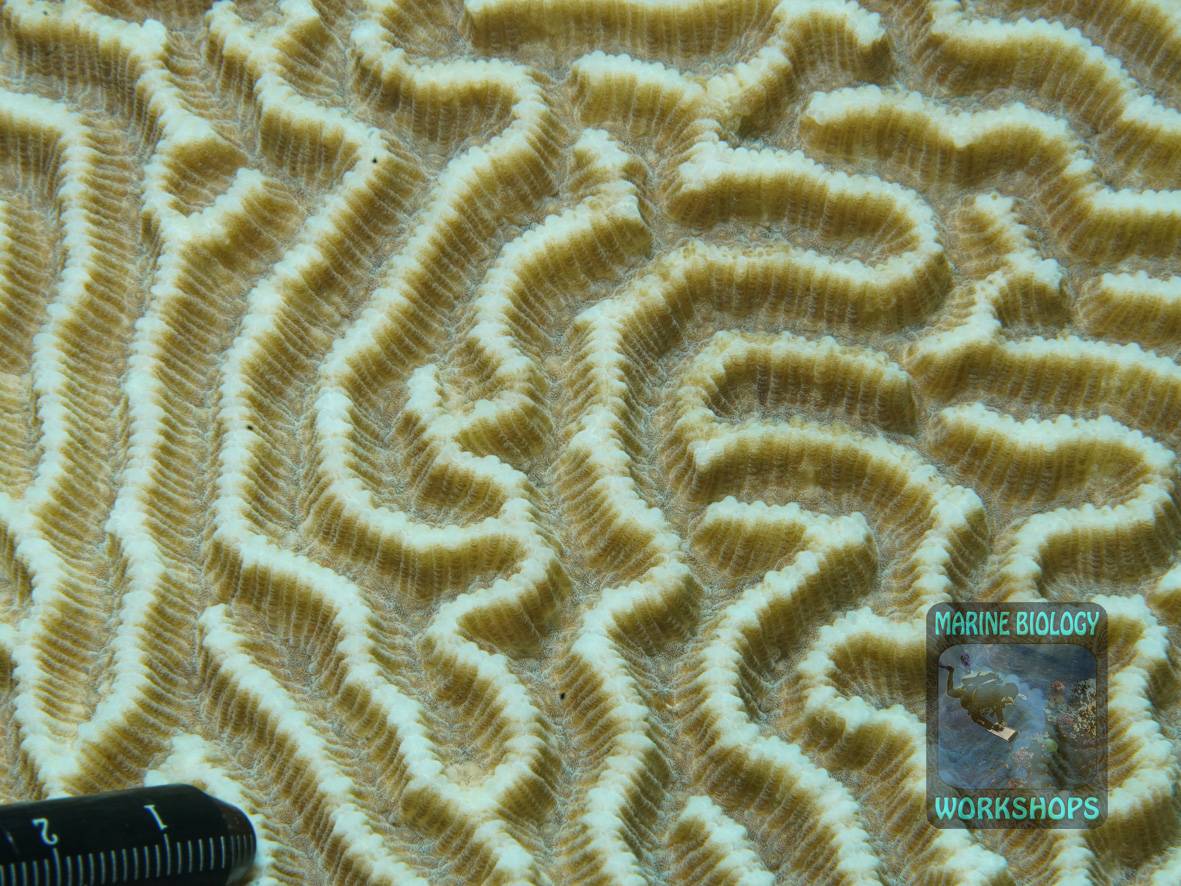
The Brain Coral (Platygyra sp.) has meandering polyp valleys, which are created because the polyps grow laterally, but a cross-division does not occur. This way, there are several mouths within the “valleys.”
In many corals, the polyps are closed during the day and only extend at night to catch plankton.
Breathtaking Island Landscape of the Fam Islands
Between the workshop days, we explored the breathtaking island landscape of the Fam Islands. This is a group of islands located slightly west in the strait between Batanta and Waigeo. The reefs here are characterized by continuous currents and relatively nutrient- and plankton-rich conditions, which result in exceptionally lush coral growth and abundant fish life.
Filter feeders such as gorgonians, soft corals, black corals, sponges, and sea squirts, as well as crinoids, bivalves, tube worms, and hydrozoans, are particularly common here. Of course, there are also a wide variety of zooxanthellate stony corals, such as Acropora spp., and various large-polyp stony corals (LPS = Large Polyp Scleractinians.
After the first two dives, we stopped for lunch on a small island called Piaynemo. A long wooden staircase led from the swampy lowlands through the middle of the rainforest to the world-famous Piaynemo viewpoint. The staircase melted seamlessly into the rainforest, with even spaces left for young trees to sprout through the structure.
At the top, we enjoyed magnificent views of the many small, overgrown karst islands surrounded by shallow lagoons and reefs. The Fam Islands were declared a UNESCO Geopark in 2023 due to their unique geology and ecology.
After our lunch break, we went on a third dive at ‘Batu Rufus’.
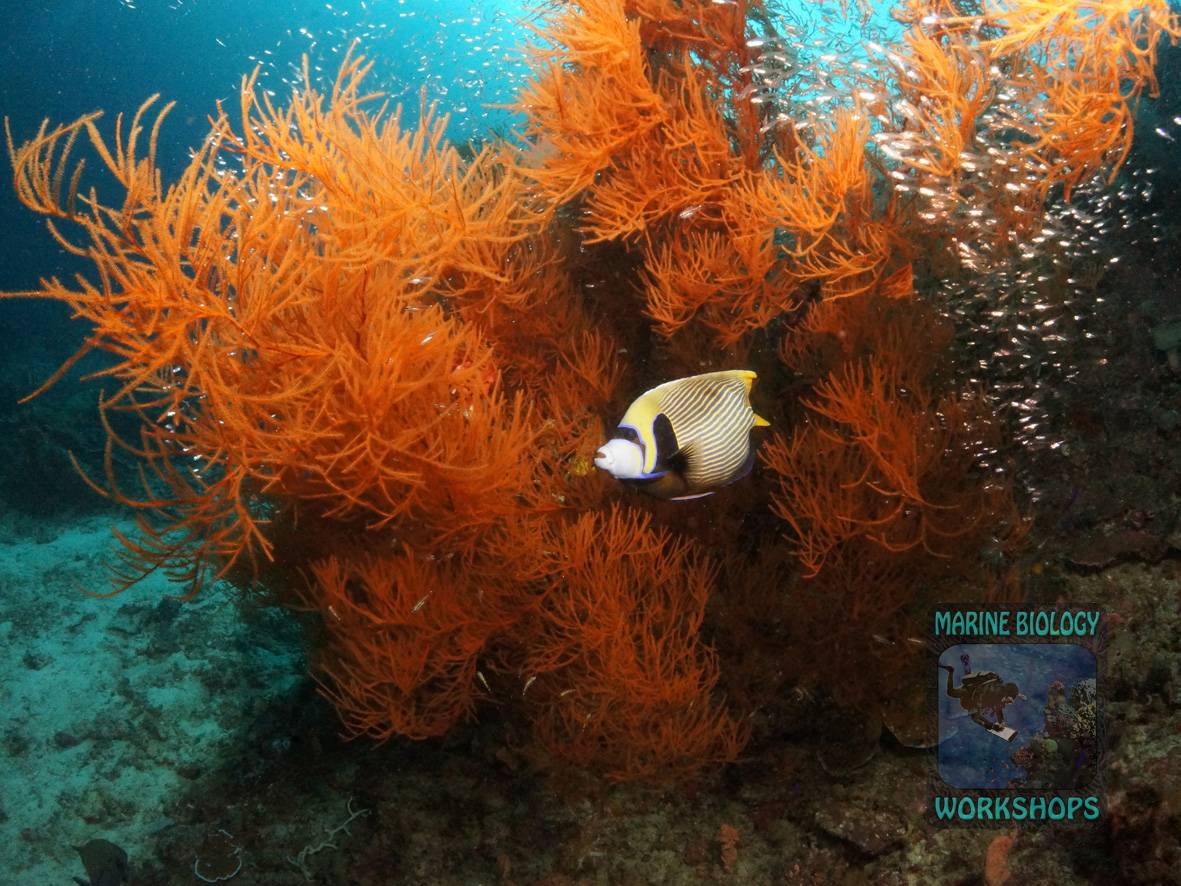
Emperor angelfish in black coral, Fam Islands – Fam Slope, Raja Ampat
Imperator Kaiserfisch vor Schwarzer Koralle, Fam Islands, Raja Ampat
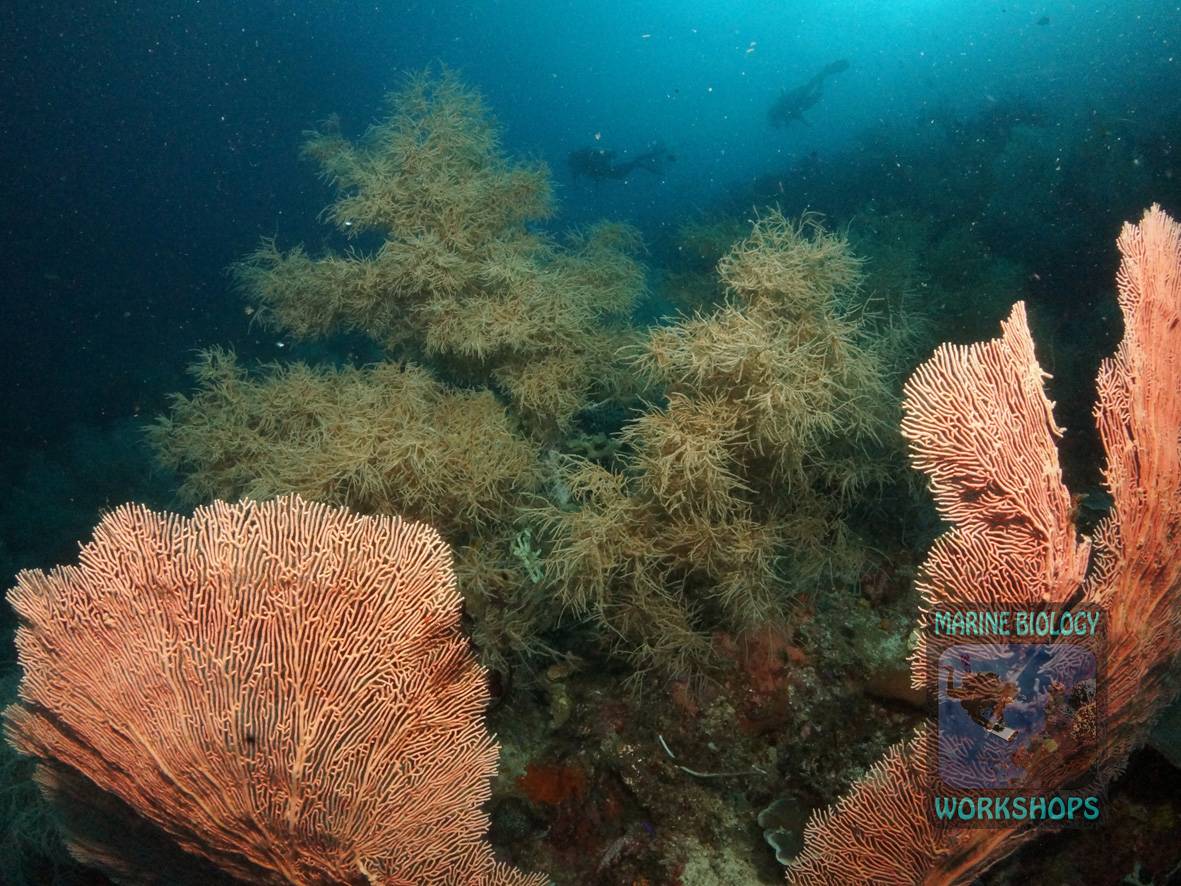
Dive spot Fam Slope, Fam Islands / Raja Ampat
Tauchplatz Fam Slope, Fam Islands / Raja Ampat
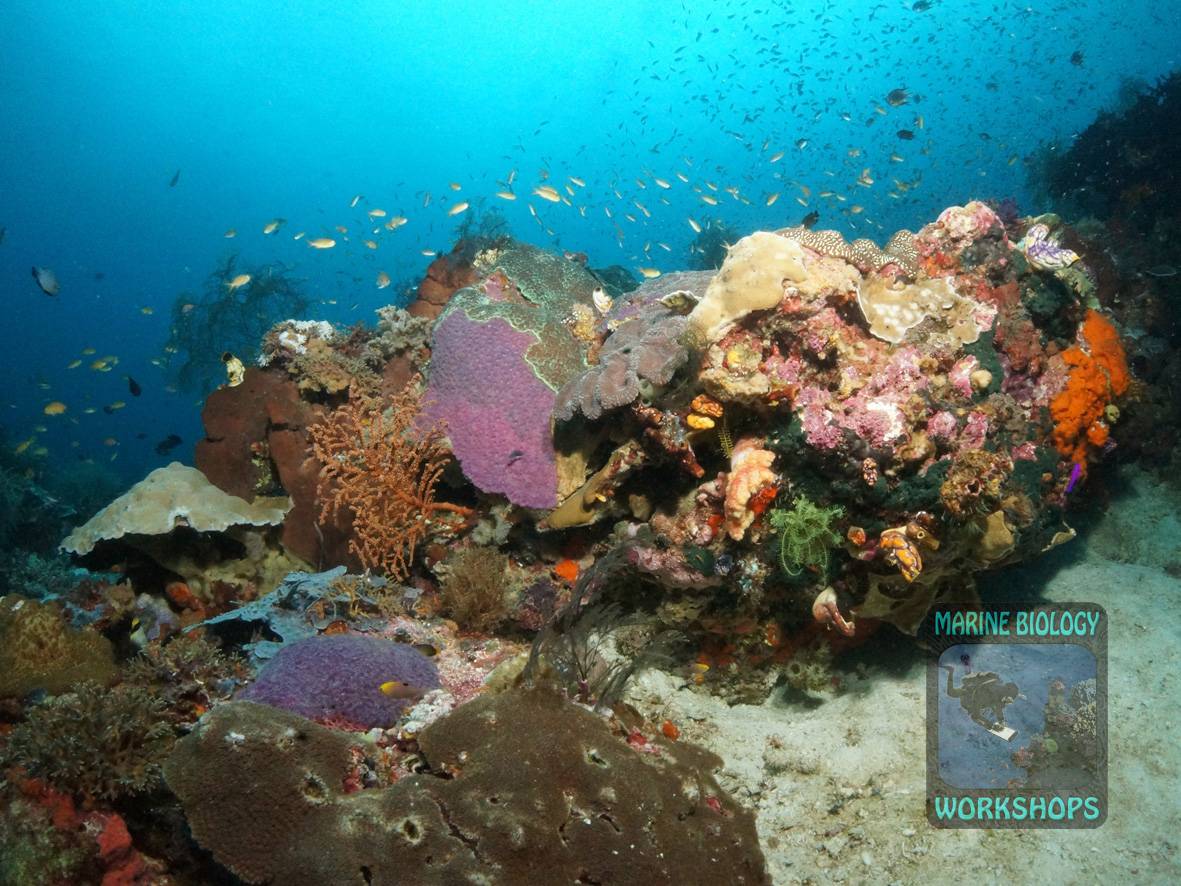
Dive spot Melissa´s Garden, Fam Islands / Raja AmpatDSC03348
Tauchplatz Melissa´s Garden, Fam Islands / Raja Ampat
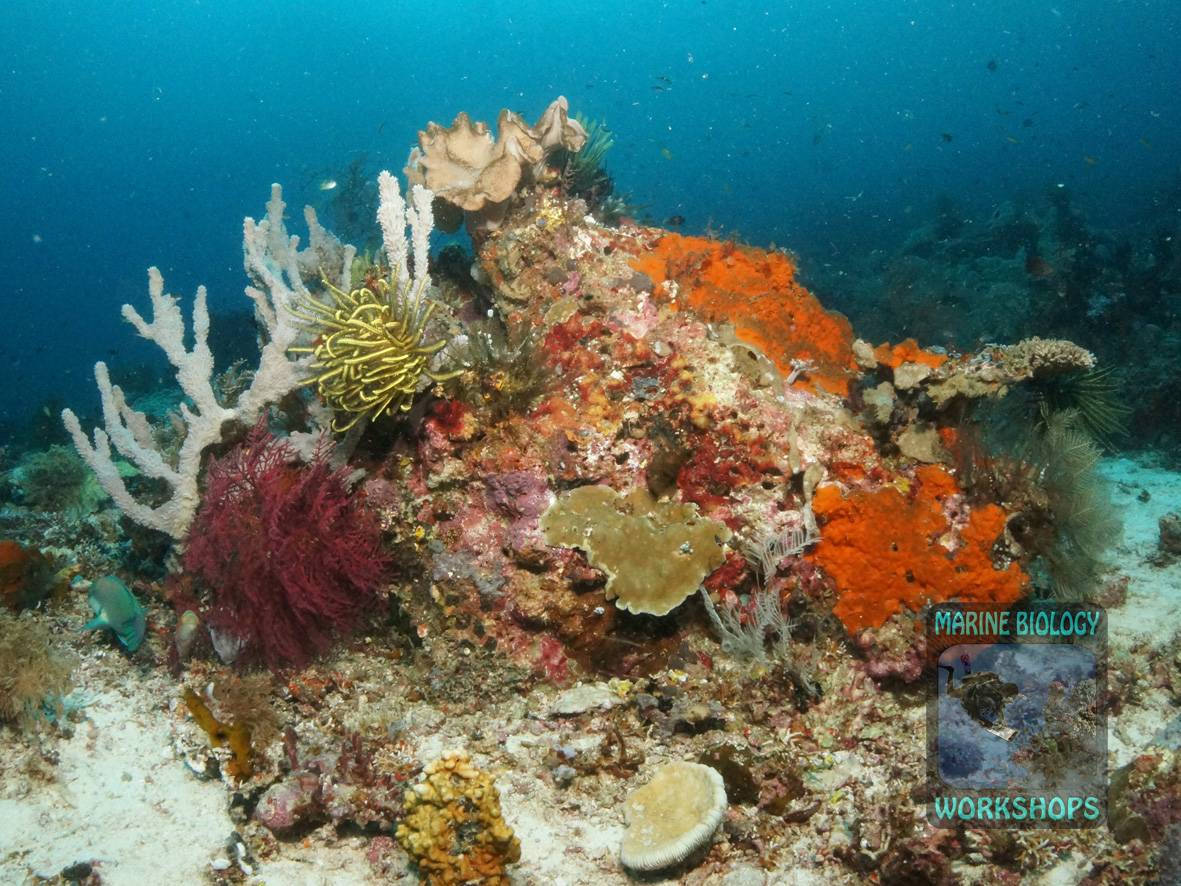
Dive spot Melissa´s Garden, Fam Islands / Raja Ampat
Tauchplatz Melissa´s Garden, Fam Islands / Raja Ampat
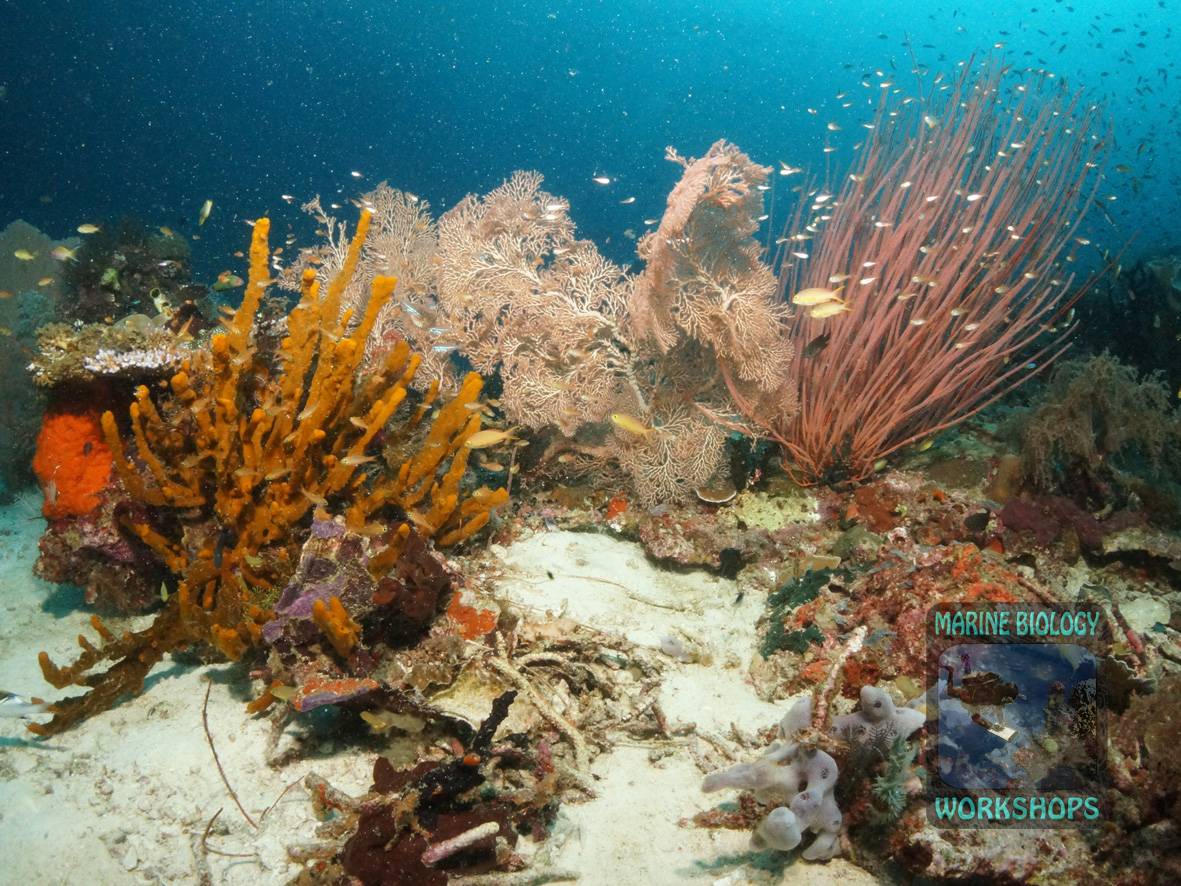
Dive spot Melissa´s Garden, Fam Islands / Raja Ampat
Tauchplatz Melissa´s Garden, Fam Islands / Raja Ampat
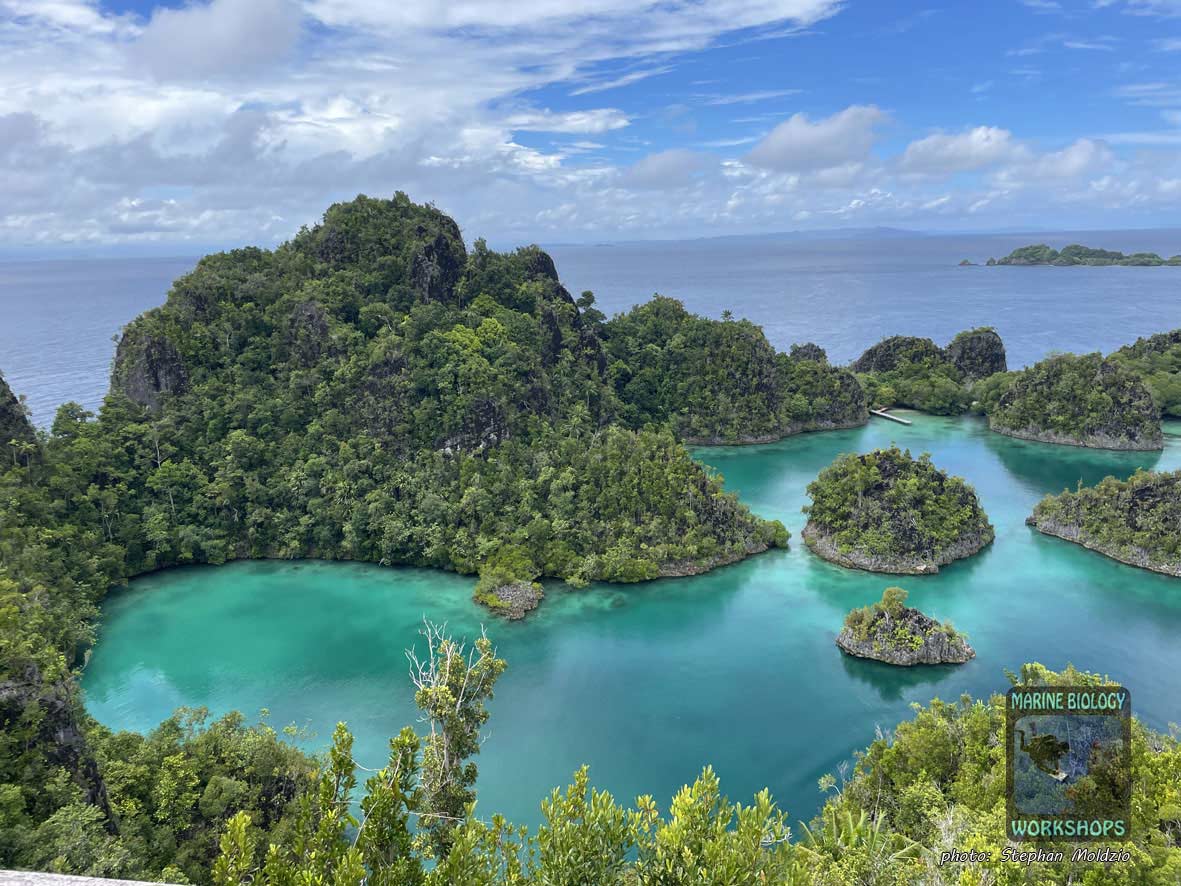
Viewpoint Fam Islands, Raja Ampat
Aussichtspunkt Fam Islands, Raja Ampat
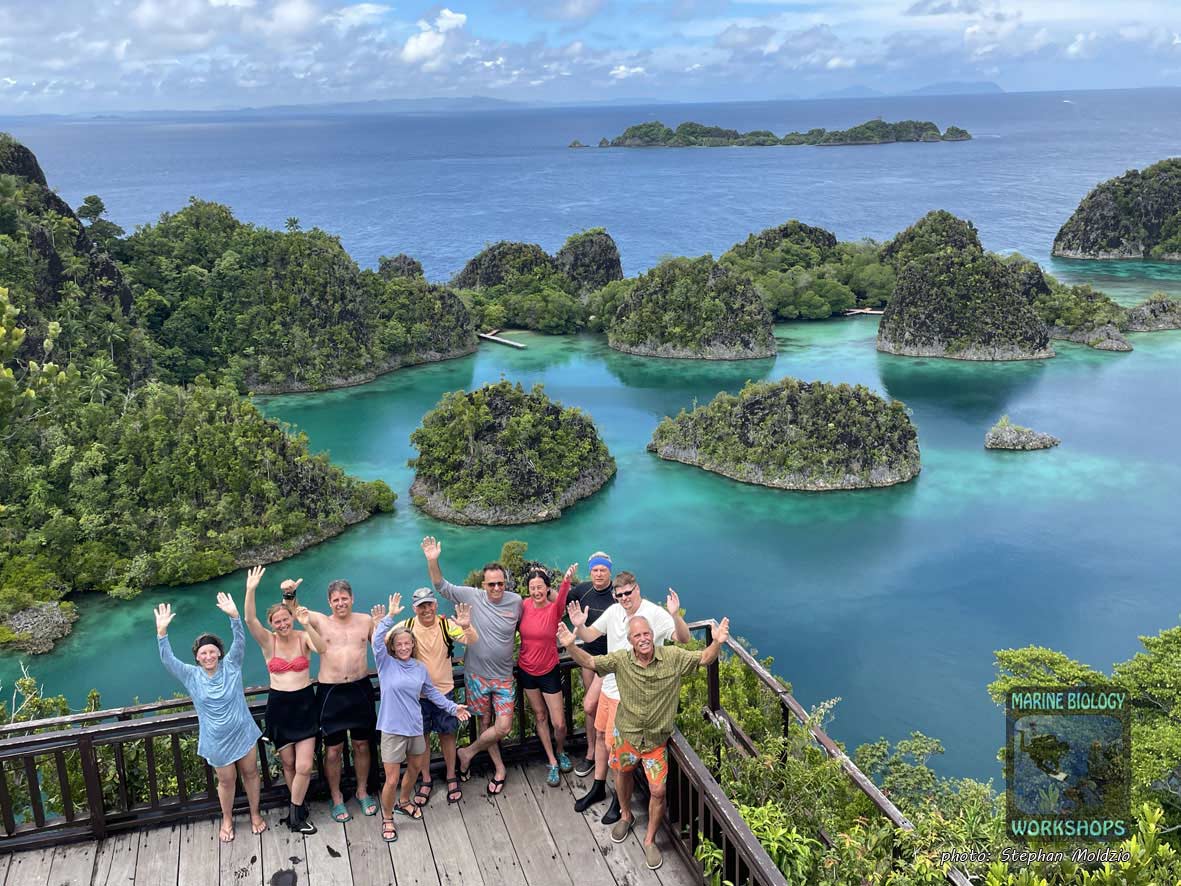
Marinebiology group at viewpoint Fam Islands, Raja Ampat
Marinebiology Gruppe am Aussichtspunkt Fam Islands, Raja Ampat
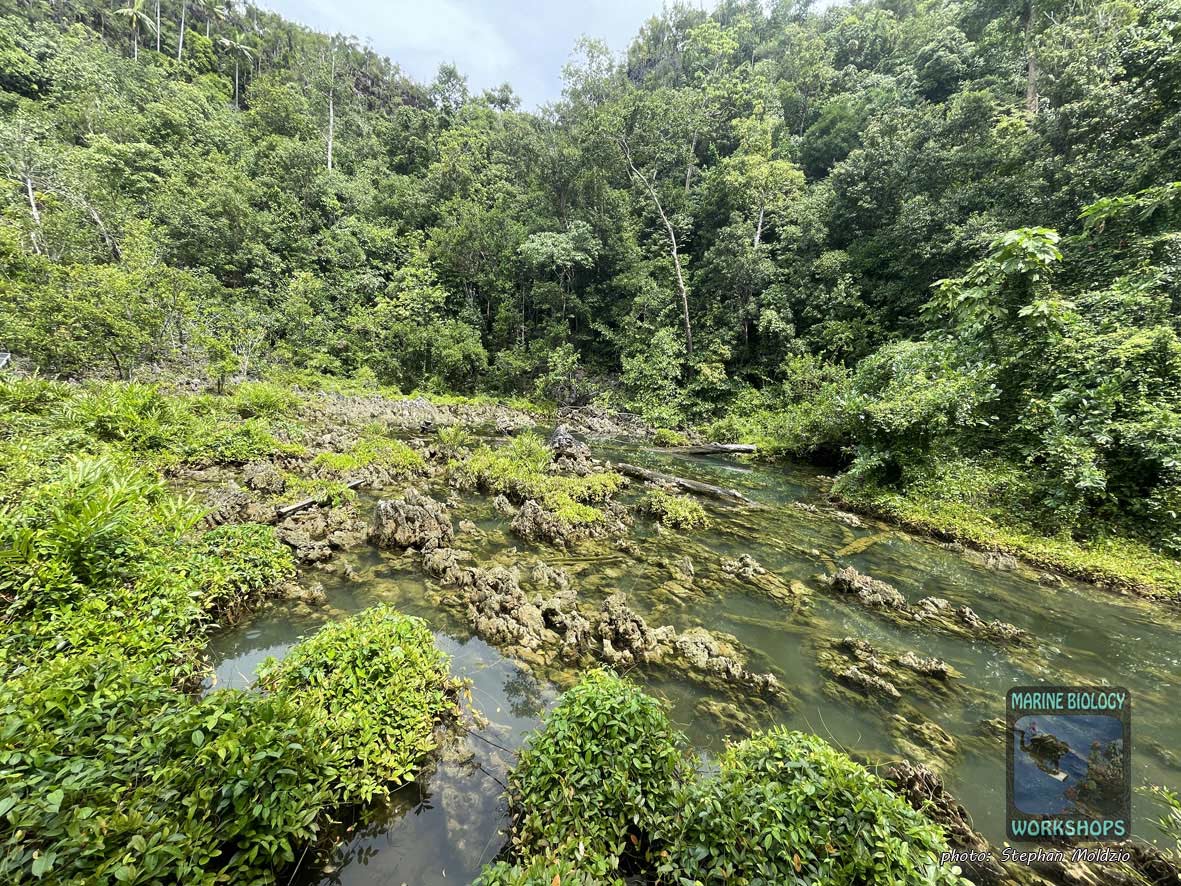
Swamp at Fam Islands, Raja Ampat
Sumpf bei den Fam Islands, Raja Ampat
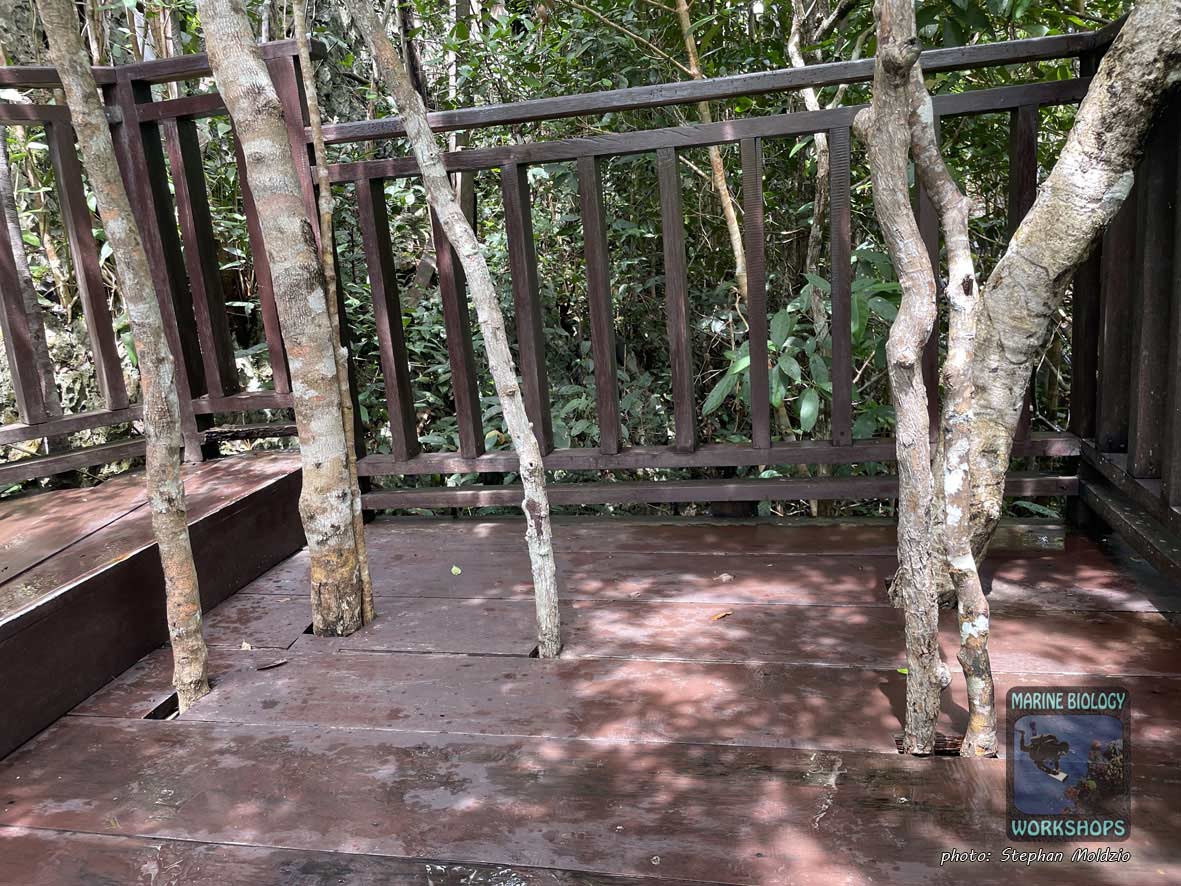
Stairway to Viewpoint at Fam Islands, Raja Ampat
Treppe zum Aussichtspunkt Fam Islands, Raja Ampat
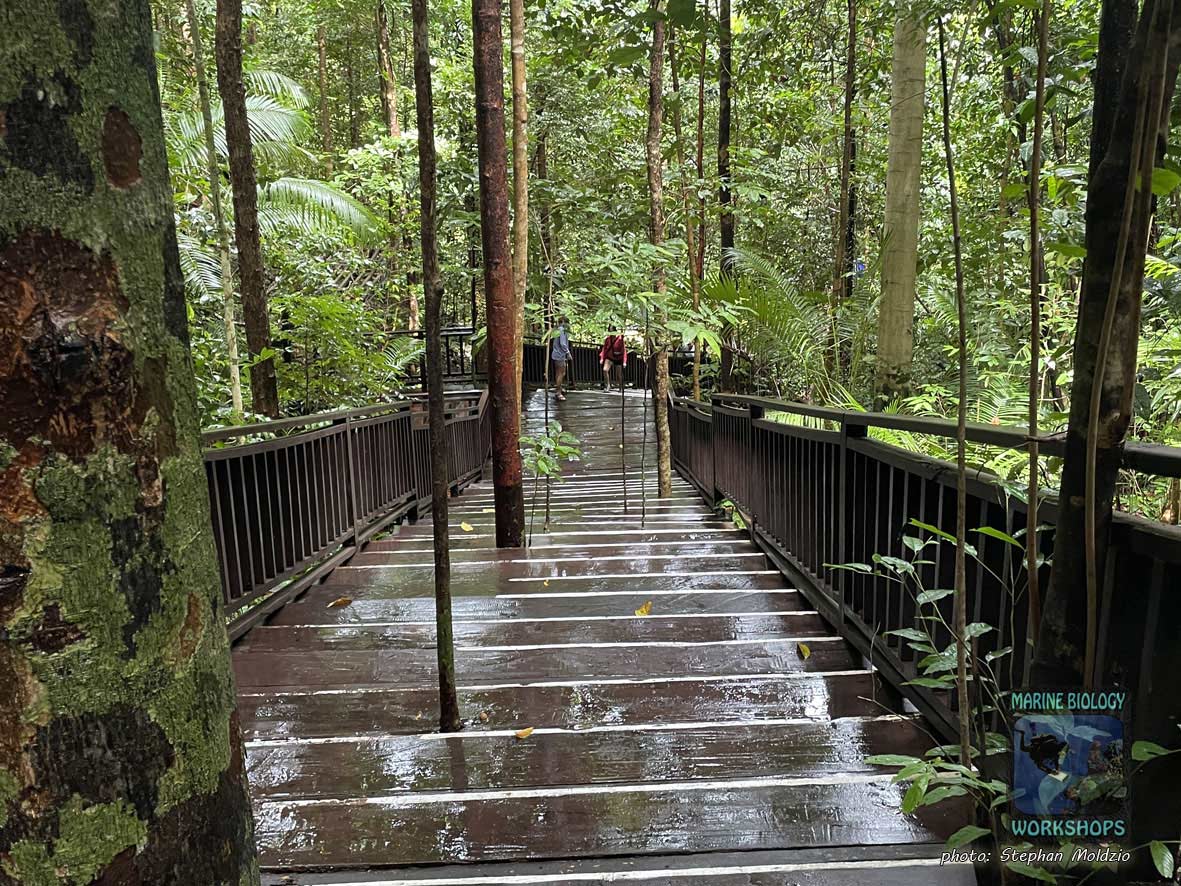
Stairway to Viewpoint at Fam Islands, Raja Ampat
Treppe zum Aussichtspunkt Fam Islands, Raja Ampat
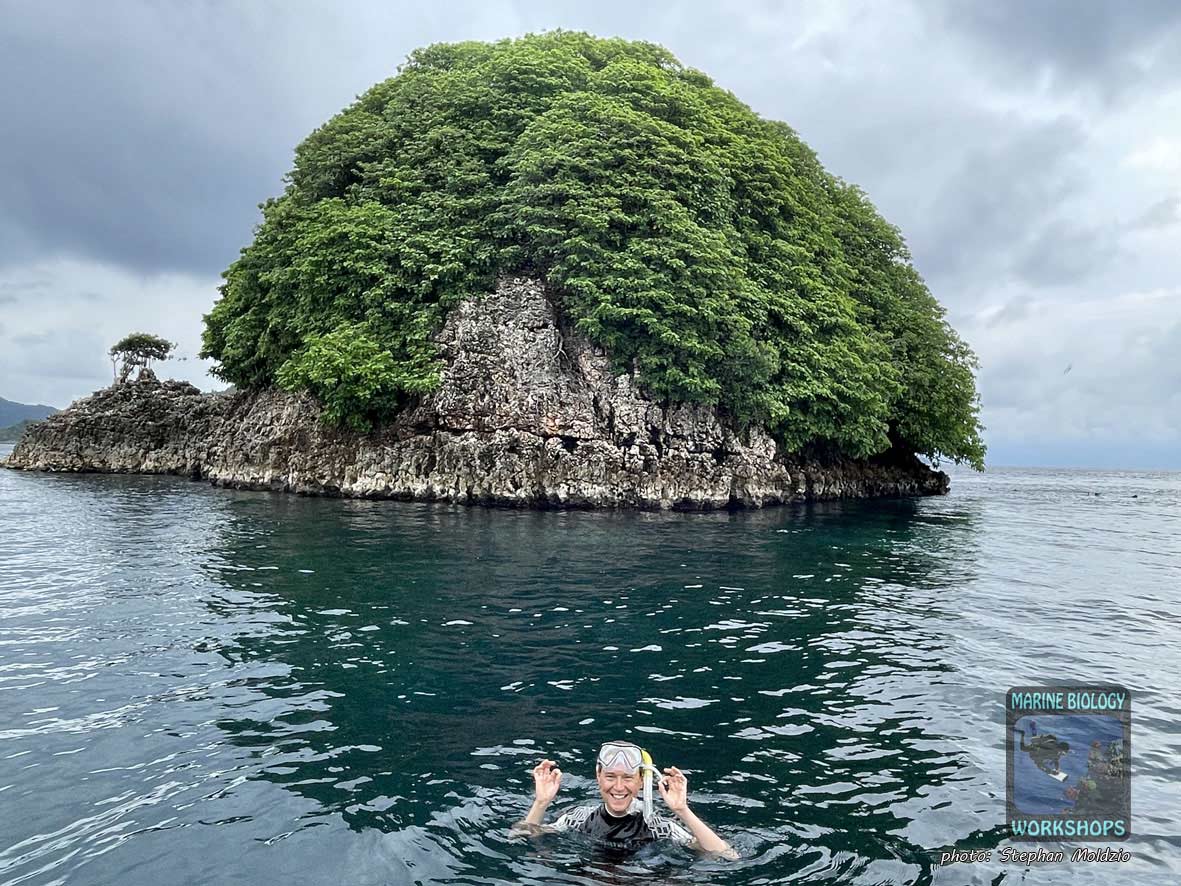
Snorkeler at Fam Islands, Raja Ampat
Schnorchlerin bei den Fam Islands, Raja Ampat
INVERTEBRATE WORKSHOP
Fascination Invertebrates: Diverse body plans and lifestyles, lecture, sampling & microscopy
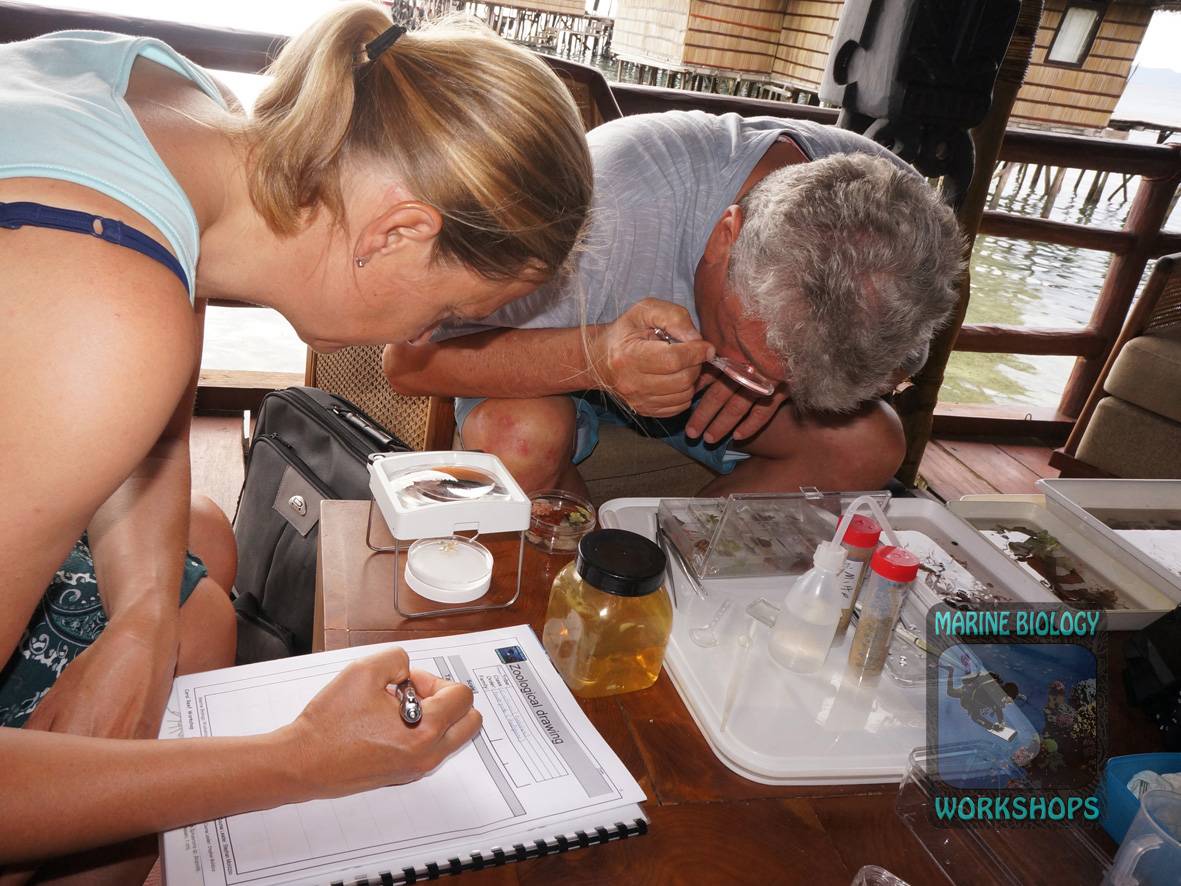
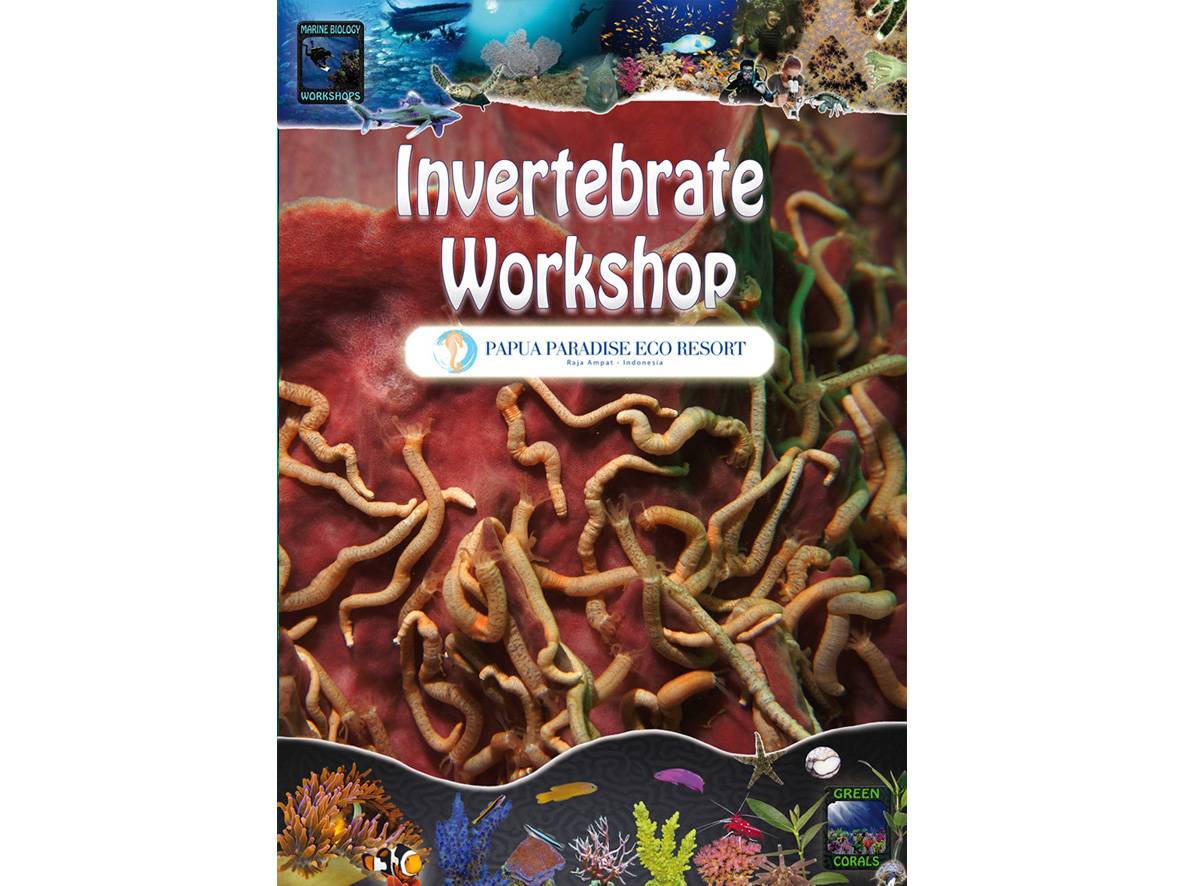
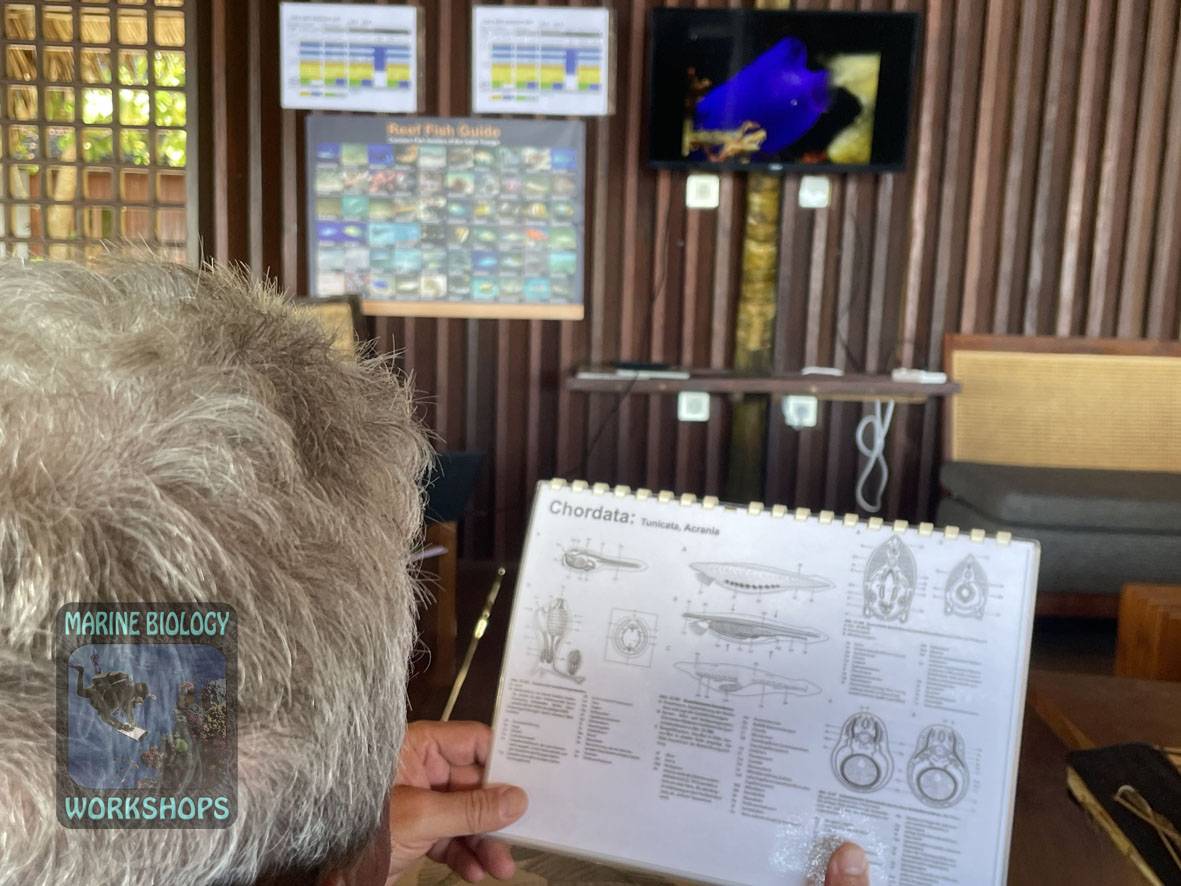
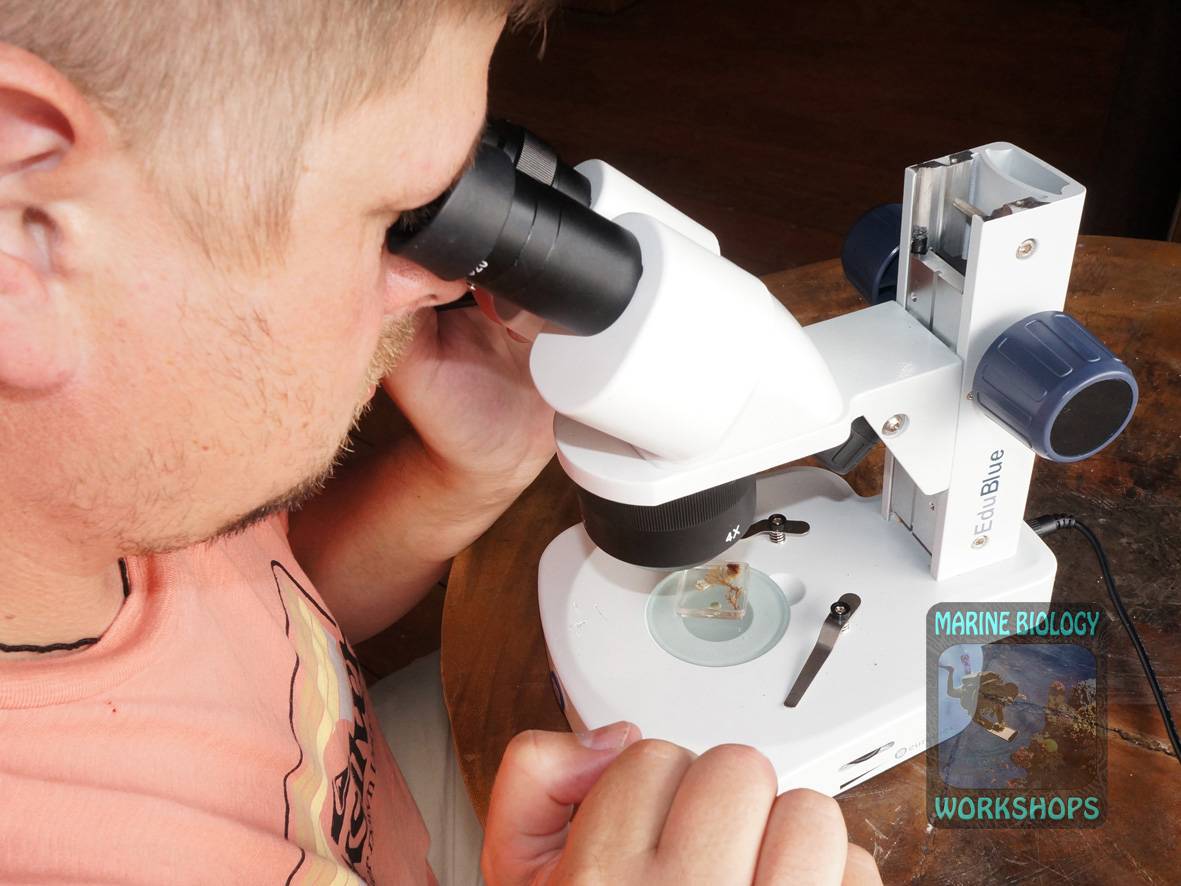
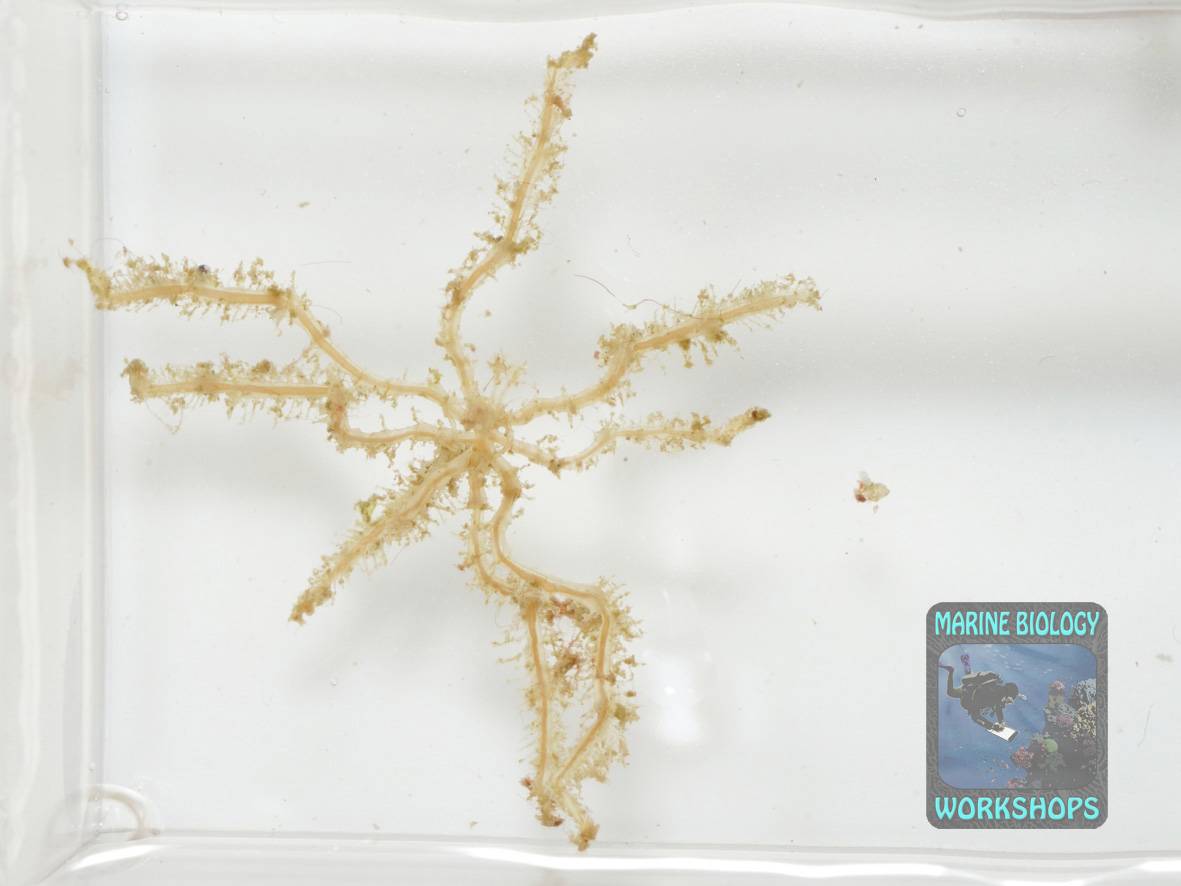
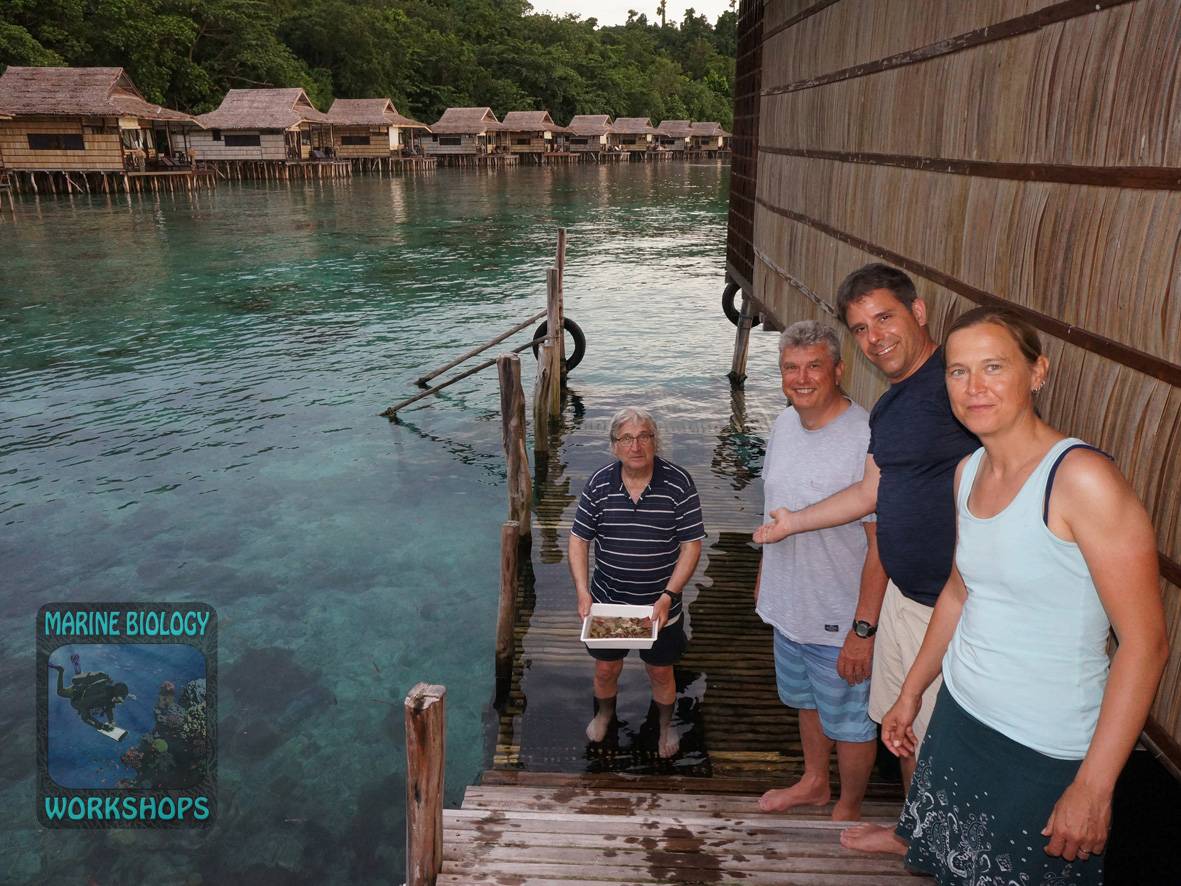
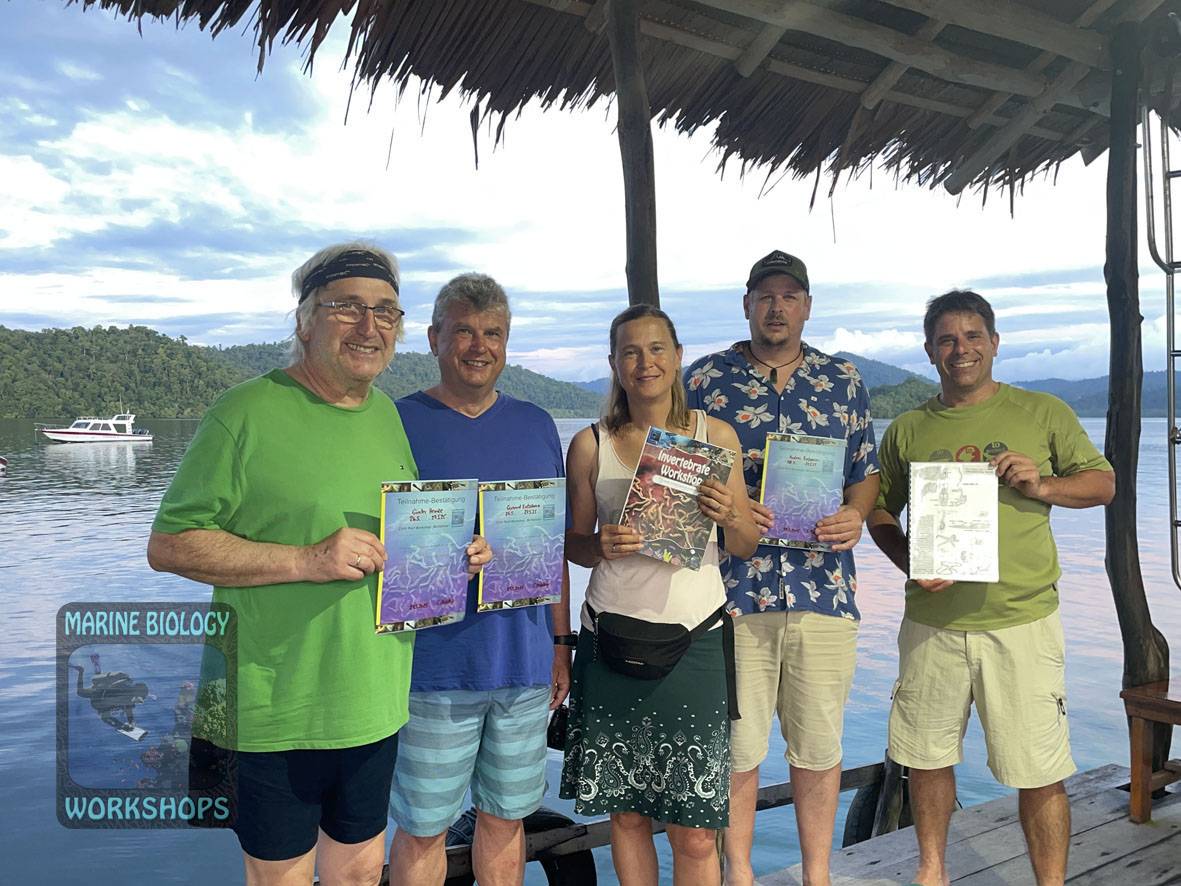
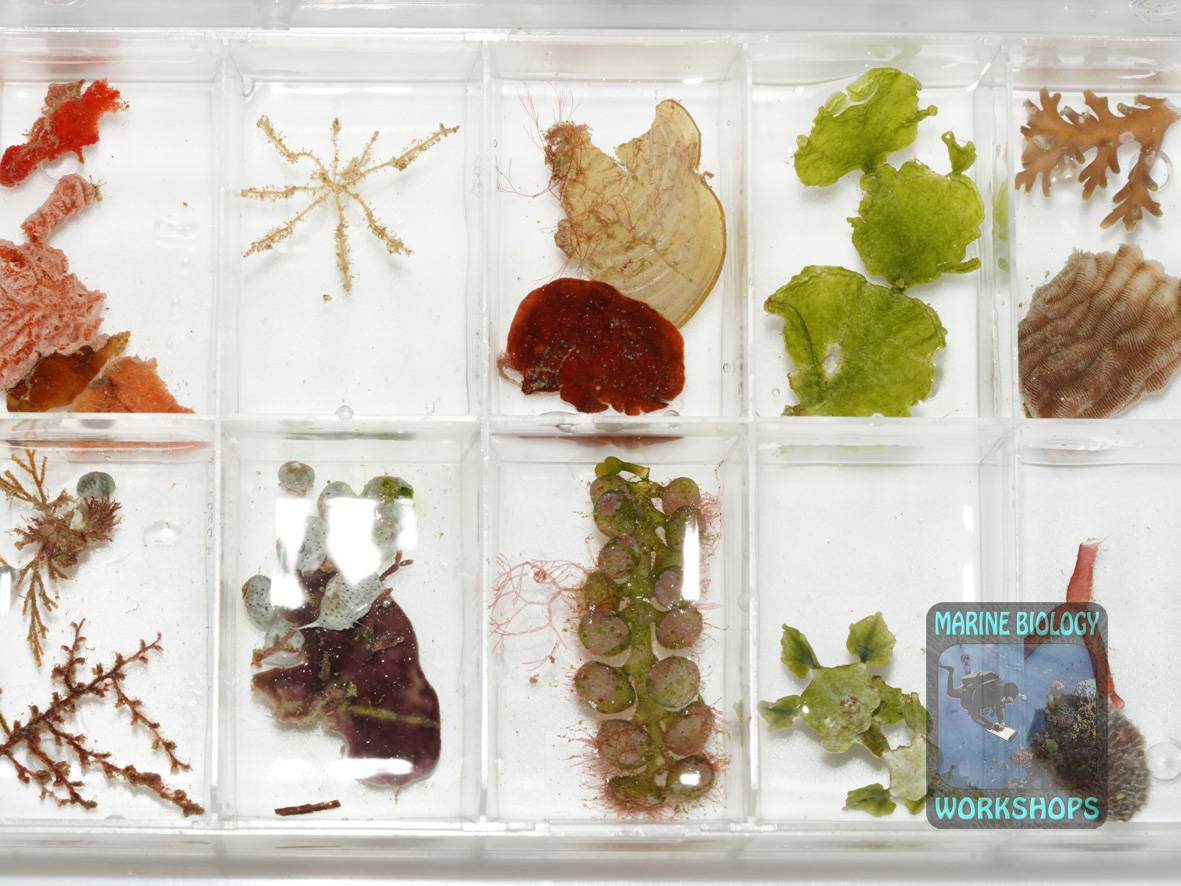
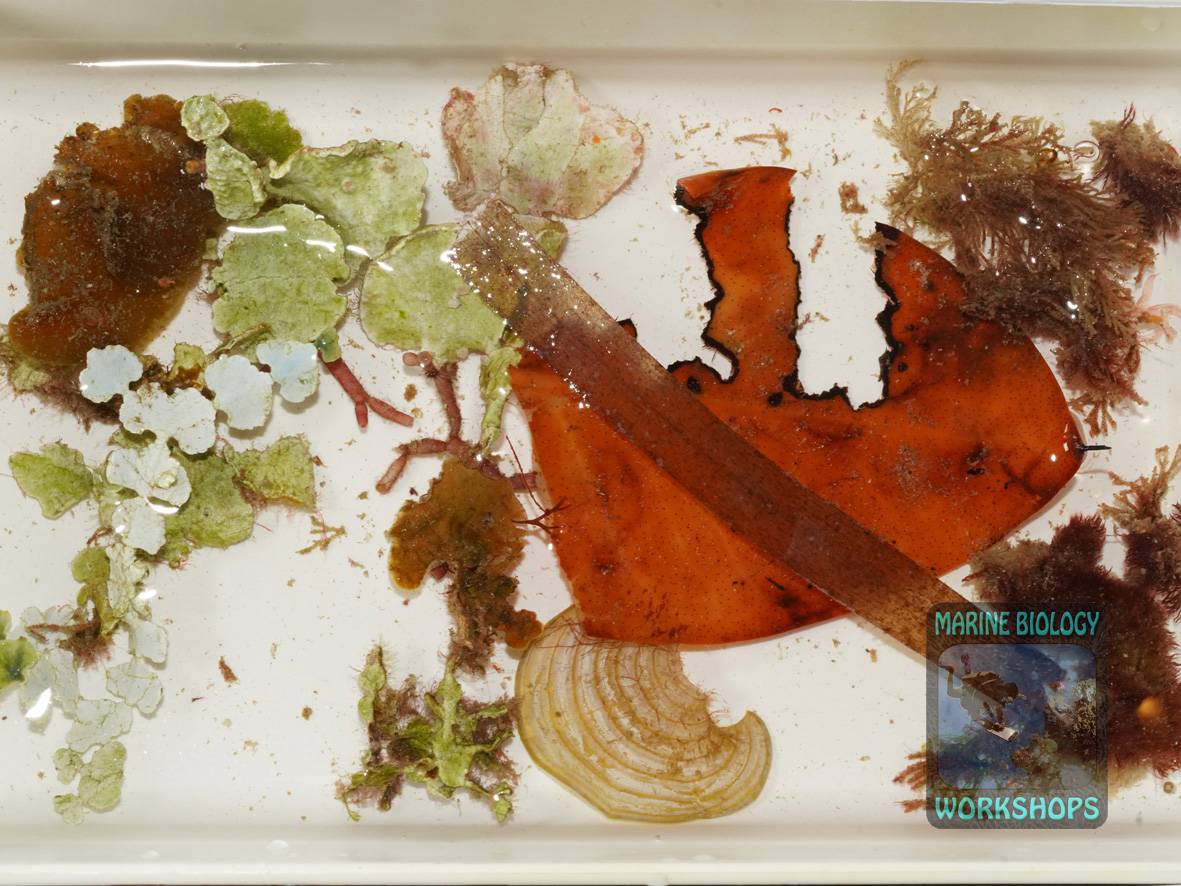
In the Invertebrate Workshop, we explored the different groups of invertebrate marine animals in detail. During our dives, we collected samples from the sandy bottom, algae, and rubble, which we later examined under the stereomicroscope. We also took fascinating photos through the microscope. We created a sampling protocol in which the identified groups were documented, and each participant made a detailed zoological drawing of a selected organism. On the evening of the second day, there was a lecture on the ecology of coral reefs titled “Coral Reef Ecosystems,” which gave us a deeper insight into the interrelationships, function, and importance of coral reefs.
At the end of this third part of the Coral Reef Workshop, all participants received a certificate of participation.
Exploring the bizarre world of invertebrates.
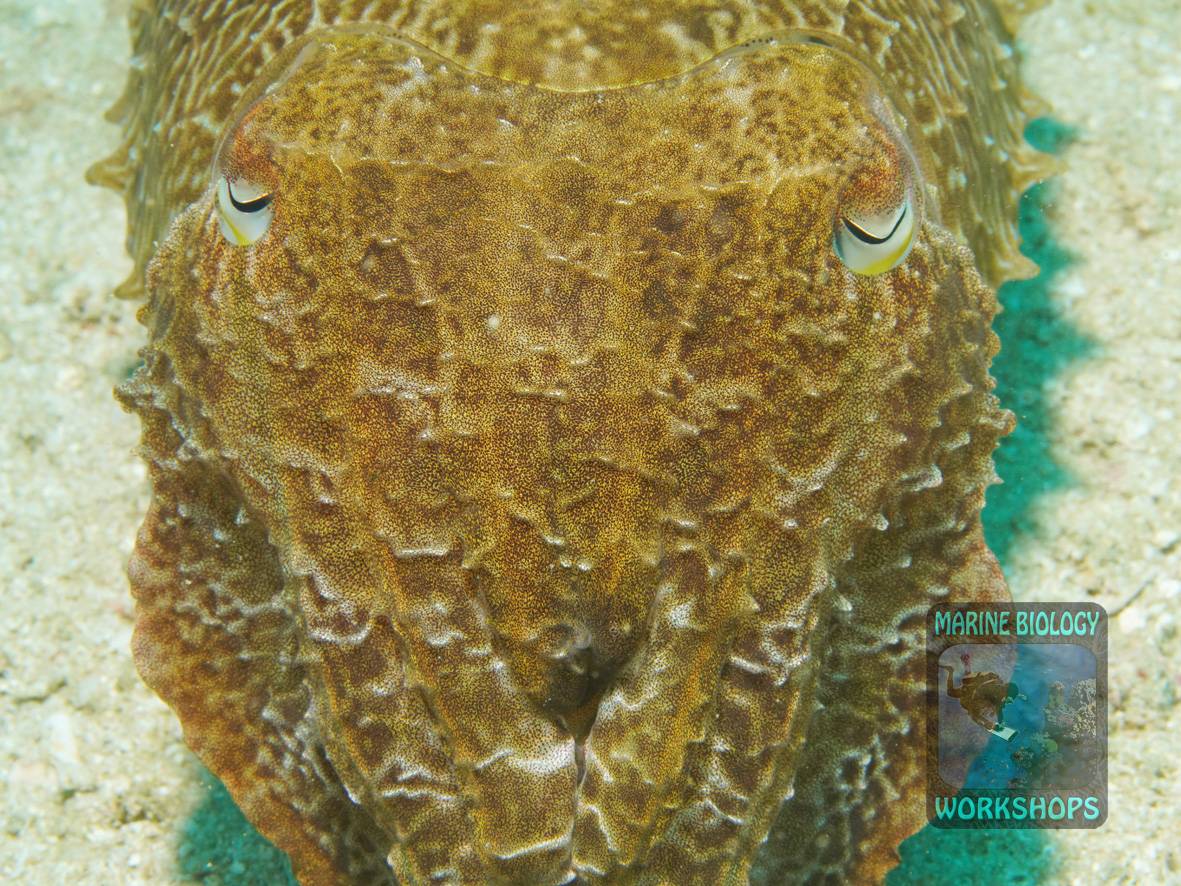
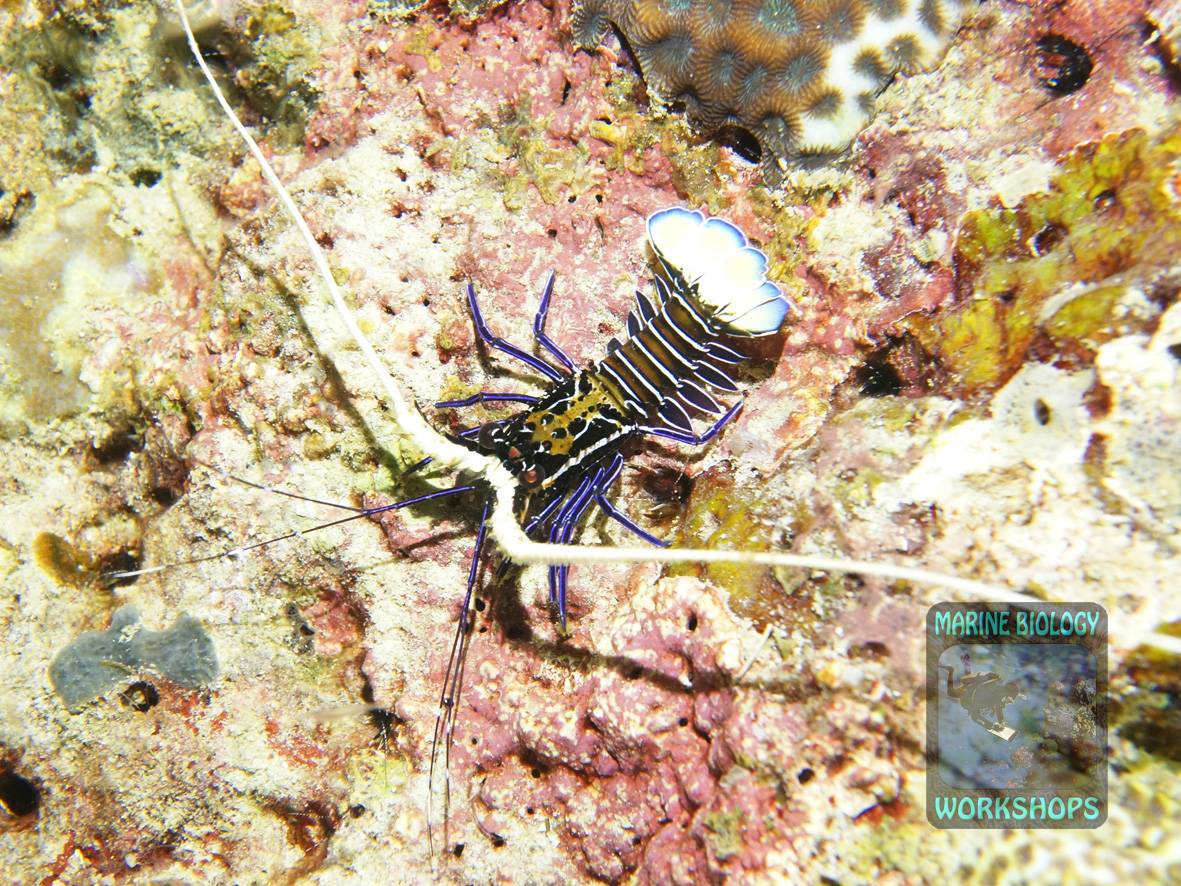
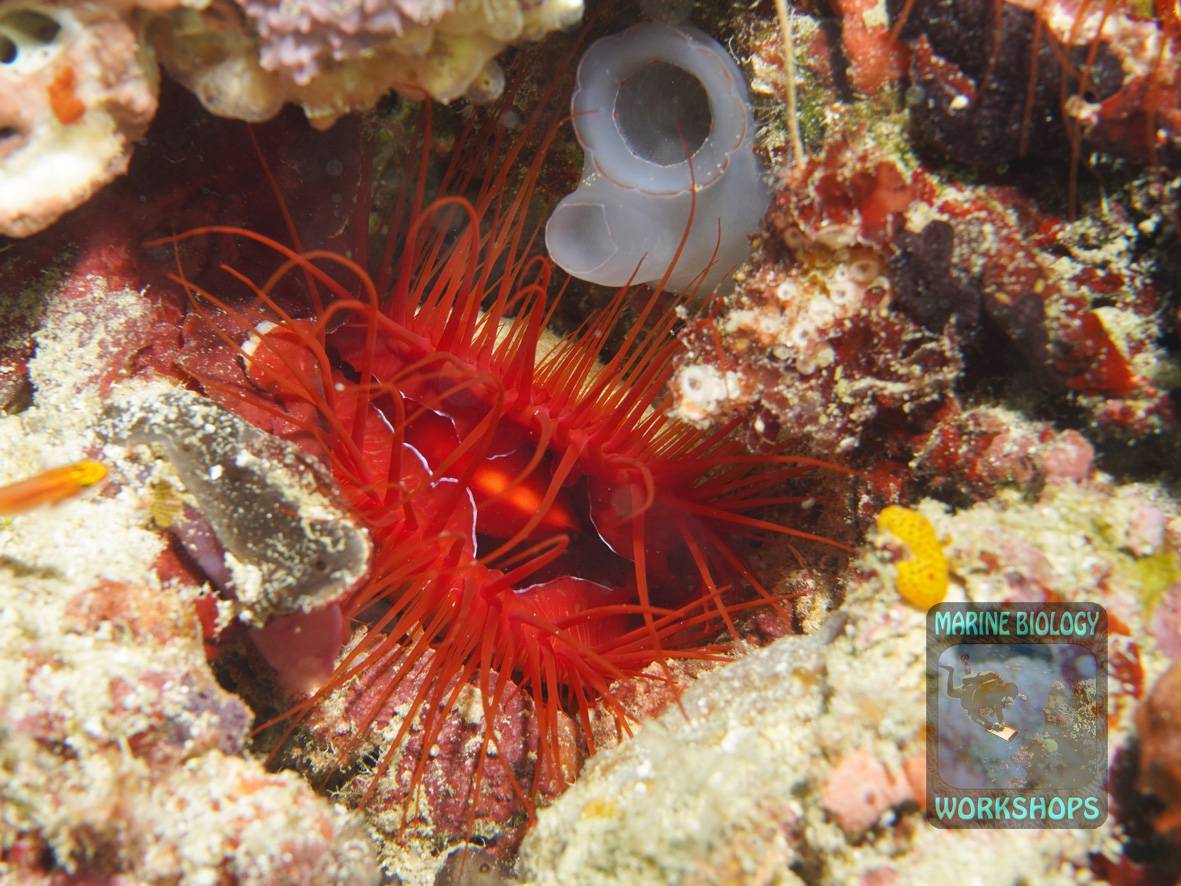
A particular highlight was the night dive on the first day, during which we encountered a variety of nocturnal invertebrates, including crustaceans, snails, starfish, sea urchins, and others.
Also, a Broadclub Cuttlefish (Ascarosepion latimanus) was on the hunt for unsuspecting crustaceans – its favorite prey – such as the Painted Spiny Lobster (Panulirus versicolor). It catches them with its two rapidly extended elongated feeding arms, while the eight shorter arms hold the prey, which it then crushes and eats with its sharp beak. In a crevice, we discovered a Electric Flame Scallop (Ctenoides ales), It is also called the “Disco Clam” because its mantle flaps glow or flash in bright iridescent colors.
However, this is not bioluminescence but light reflection caused by a highly mirrored tissue structure, which the clam can move rapidly, creating the flashing effect.
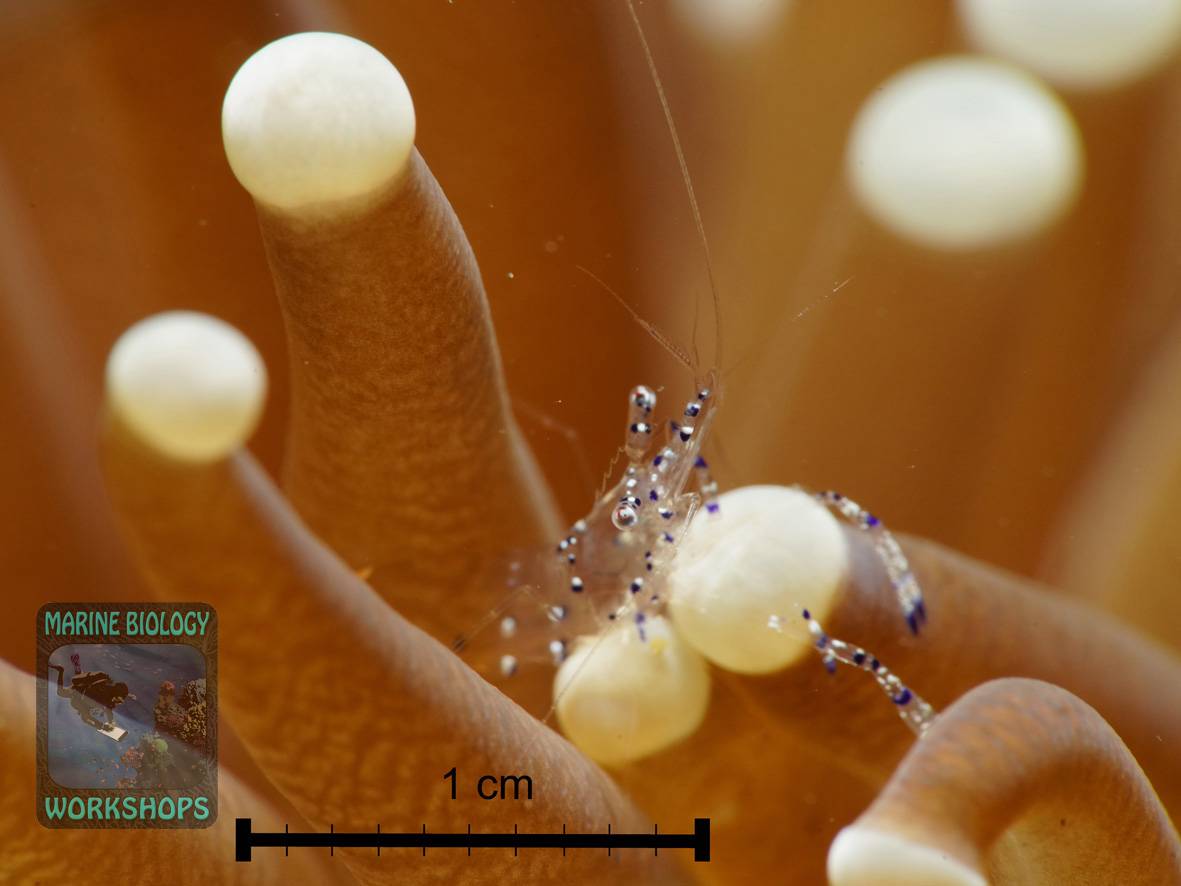
A partner shrimp (Ancylomenes venustus) lives among the stinging tentacles of a mushroom coral (Heliofungia actiniformis). It is immune to the coral’s venom.
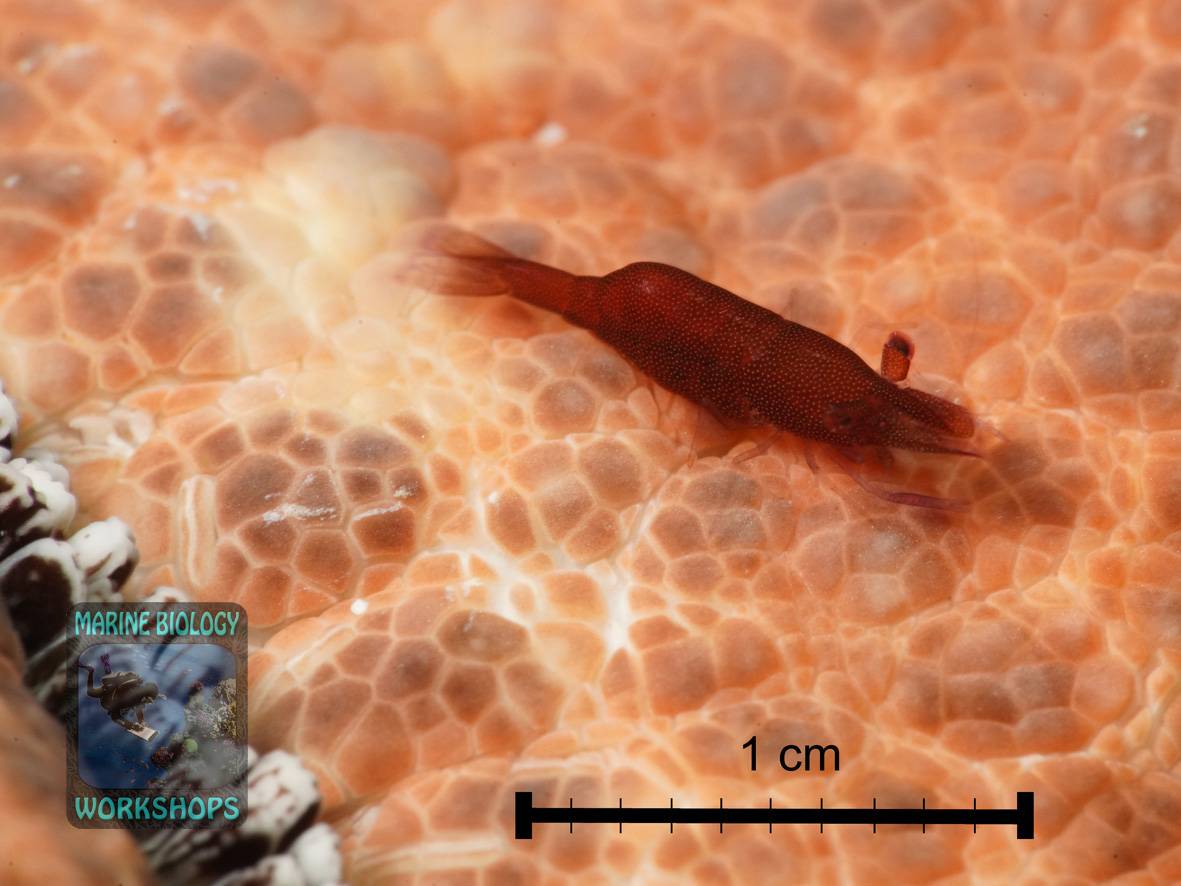
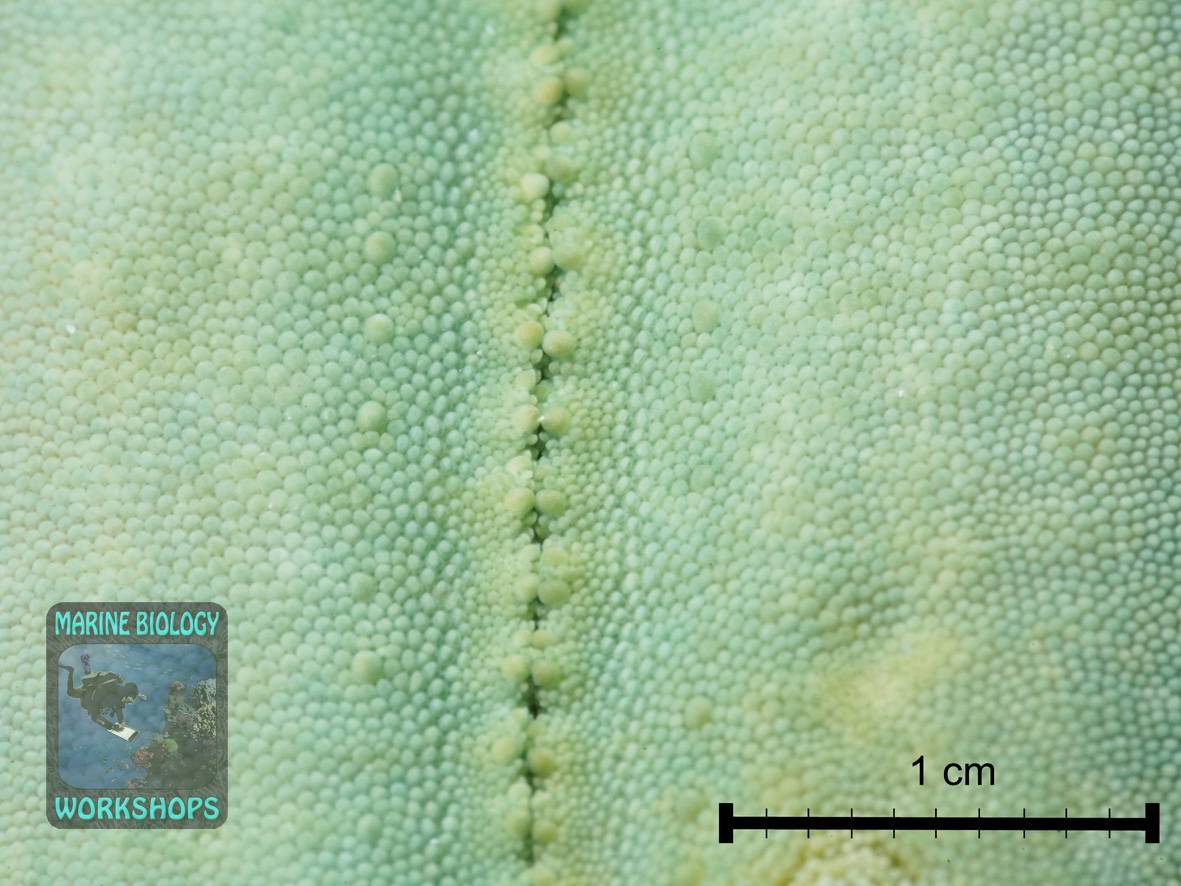
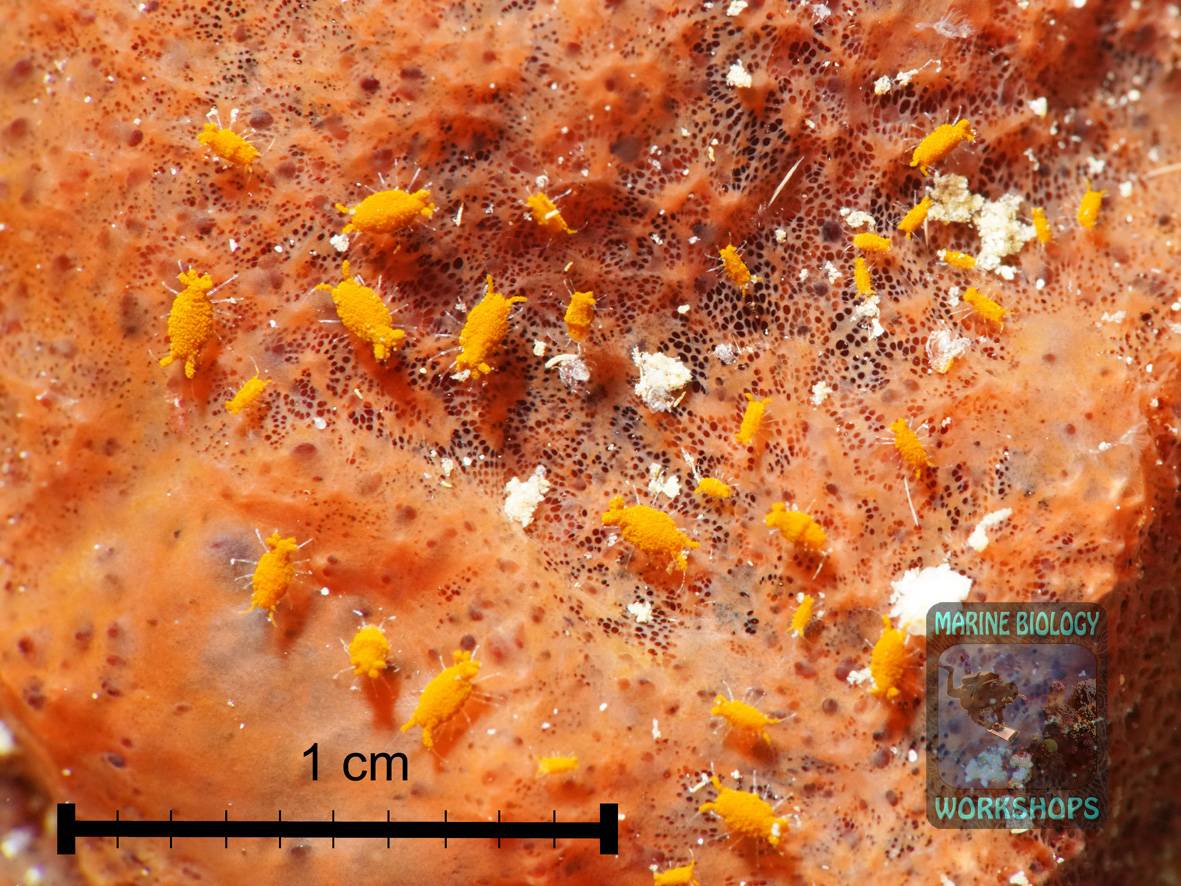
Another fascinating shrimp is the Starfish Shrimp (Zenopontonia soror), which lives in association with various larger starfish. It finds shelter, usually on their underside next to the ambulacral groove and the tube feet of the starfish. Another commensal, or “freeloader,” is the tiny Sponge Isopod. It lives on sponges and feeds on organic particles that settle on the surface of the filter feeder. Also, the small Polydorella bristle worms from the order Spionida live on the surface of sponges. With their paired tentacles, they also feed on trapped particles. Their feeding method is referred to as “substrate licking.”
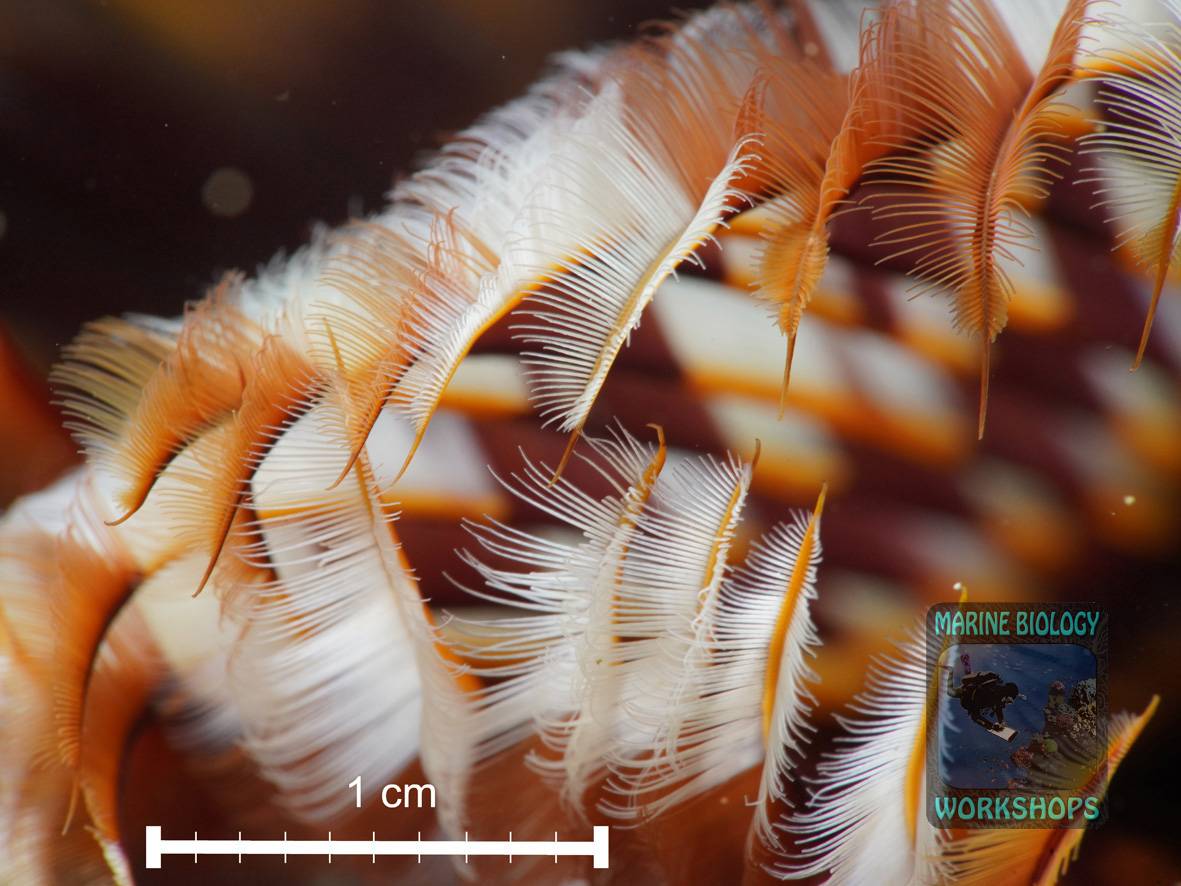
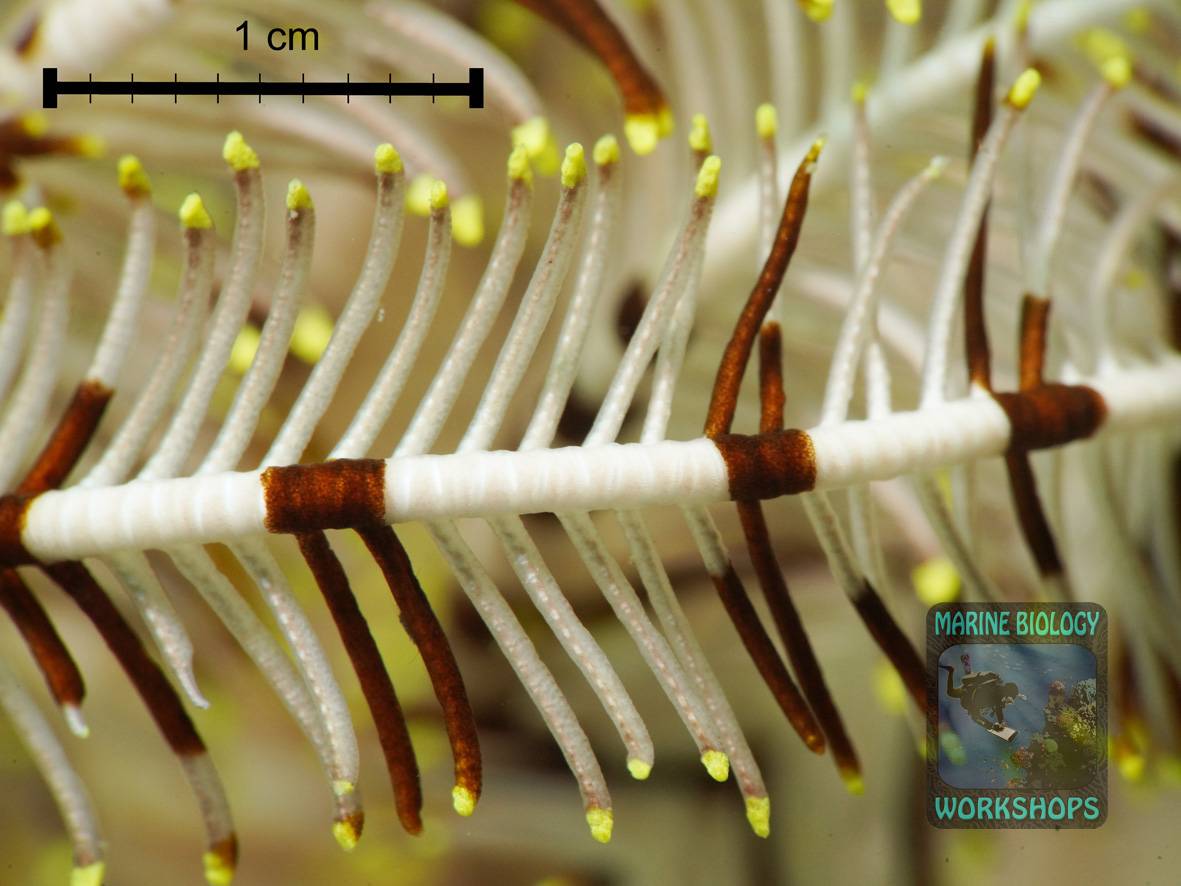
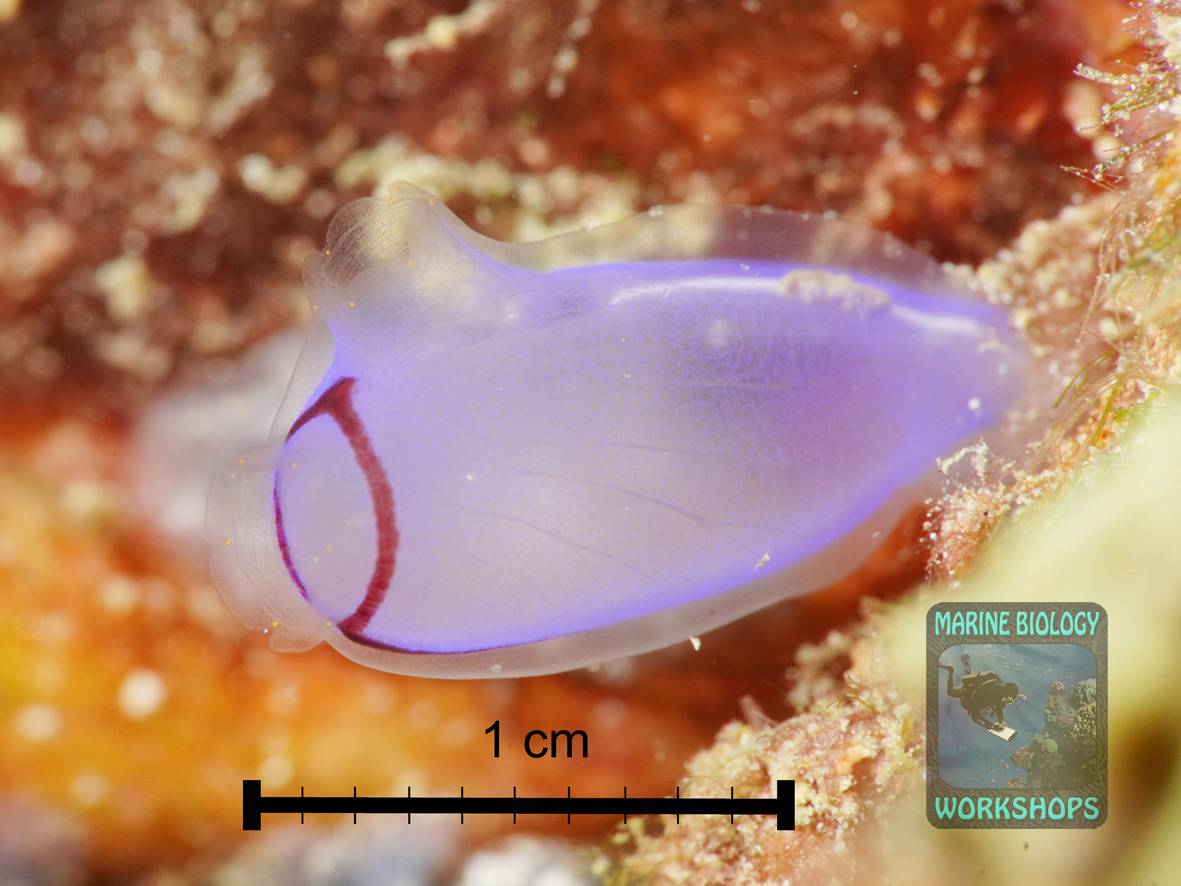
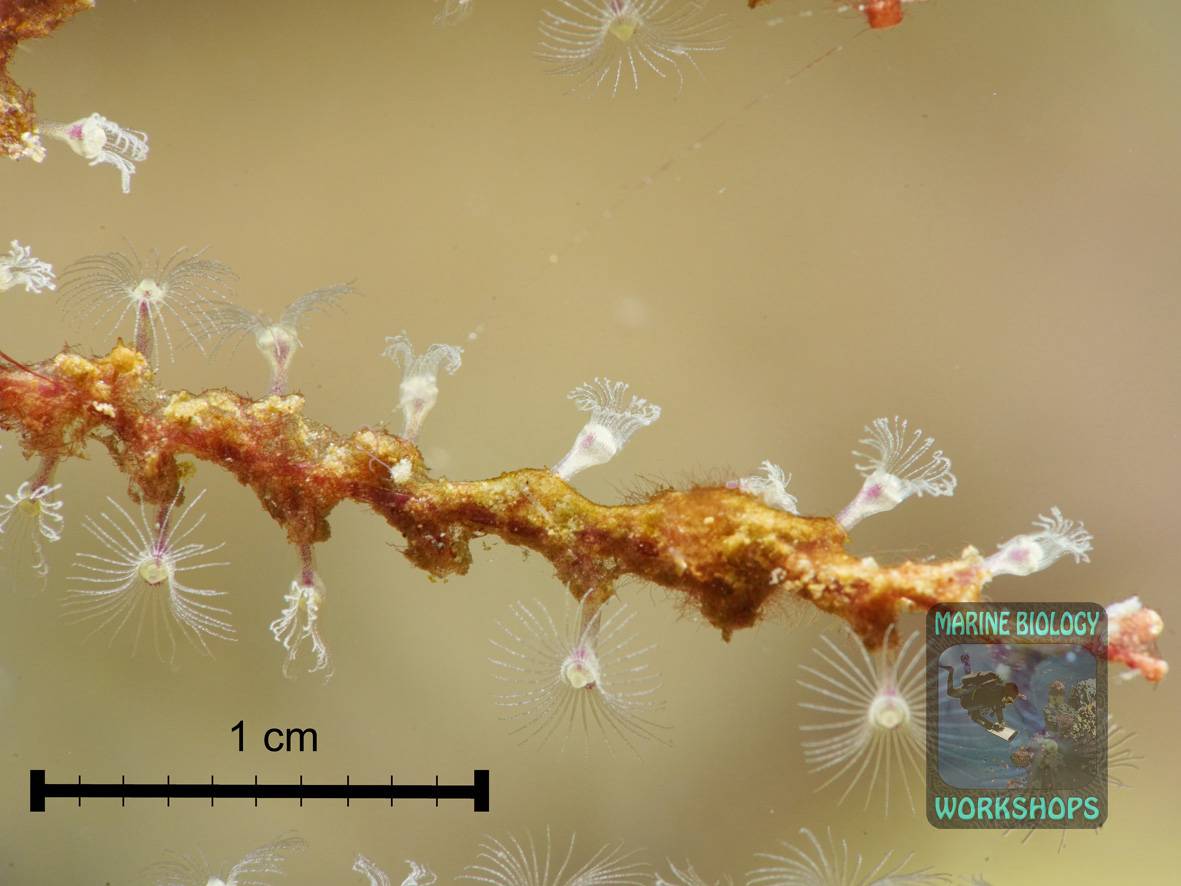

Another bristle worm is the Tube Worm (Sabellastarte sp.), which filters the finest plankton from the water with its delicate feather crown. The feeding arms of the Feather Star (Comatulidae) are noticeably coarser. It also filters plankton from the water and preferably emerges from the reef at night. The Sea Squirt (Rhopalaea sp.), on the other hand, continuously pumps water through its body and filters the plankton contained in it through its pharyngeal gut.
The hydroid polyps, which belong to the cnidarians (Cnidaria), actively catch plankton from the water, hold it with their tentacles, and paralyze it with their stinging cells before consuming it. The feeding method of these animals is referred to as “filter feeder.”
These were just a few insights into the extremely fascinating and bizarre world of invertebrates, which, with countless groups and lifestyles, are an essential part of the coral reef.
It is definitely worth taking a closer look at them, for example at the next Invertebrate Workshop!
RAJA AMPAT-WORKSHOP
Raja Ampat Workshop – Discovering mangroves, seagrass, and coral reefs as a connected ecosystem
The focus of the RAJA AMPAT WORKSHOP at the Papua Paradise Eco Resort & Gangga Divers was on the fascinating mangrove ecosystem and its close connection to adjacent habitats such as seagrass meadows and coral reefs.
At two different locations around Pulau Birie and the neighboring island Pulau Yarweser, we explored these unique habitats during extensive snorkeling excursions. Before the workshop, Stephan, together with the experienced dive guide Munandar, explored some suitable sites in the mangroves and selected them as the workshop locations.
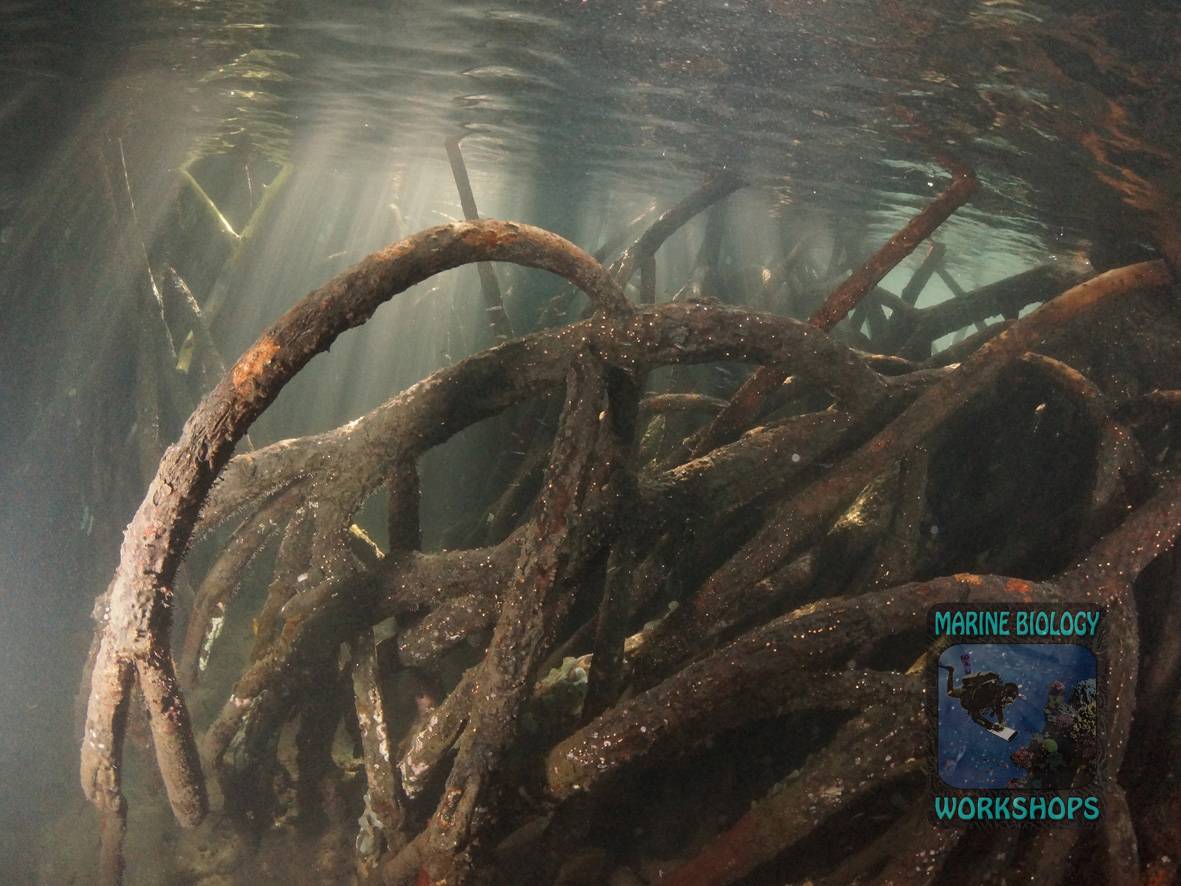
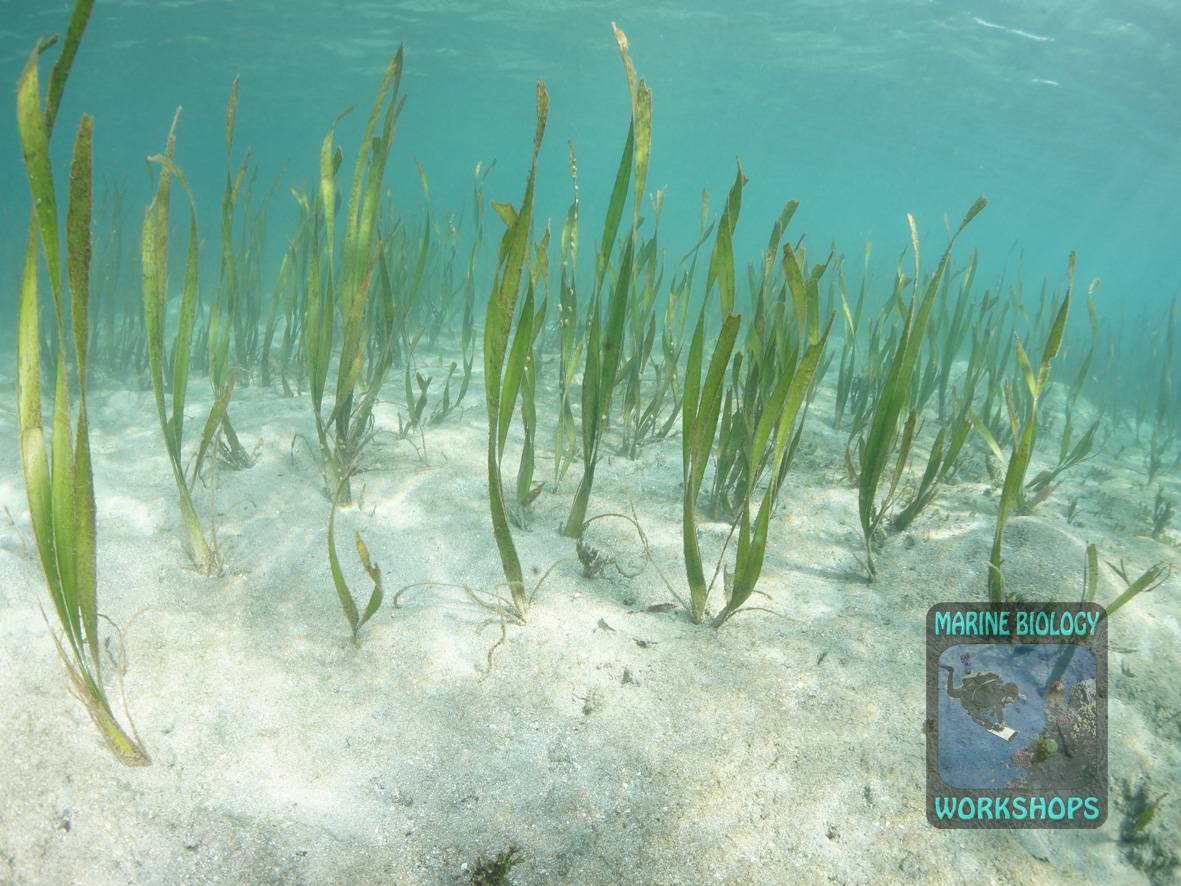

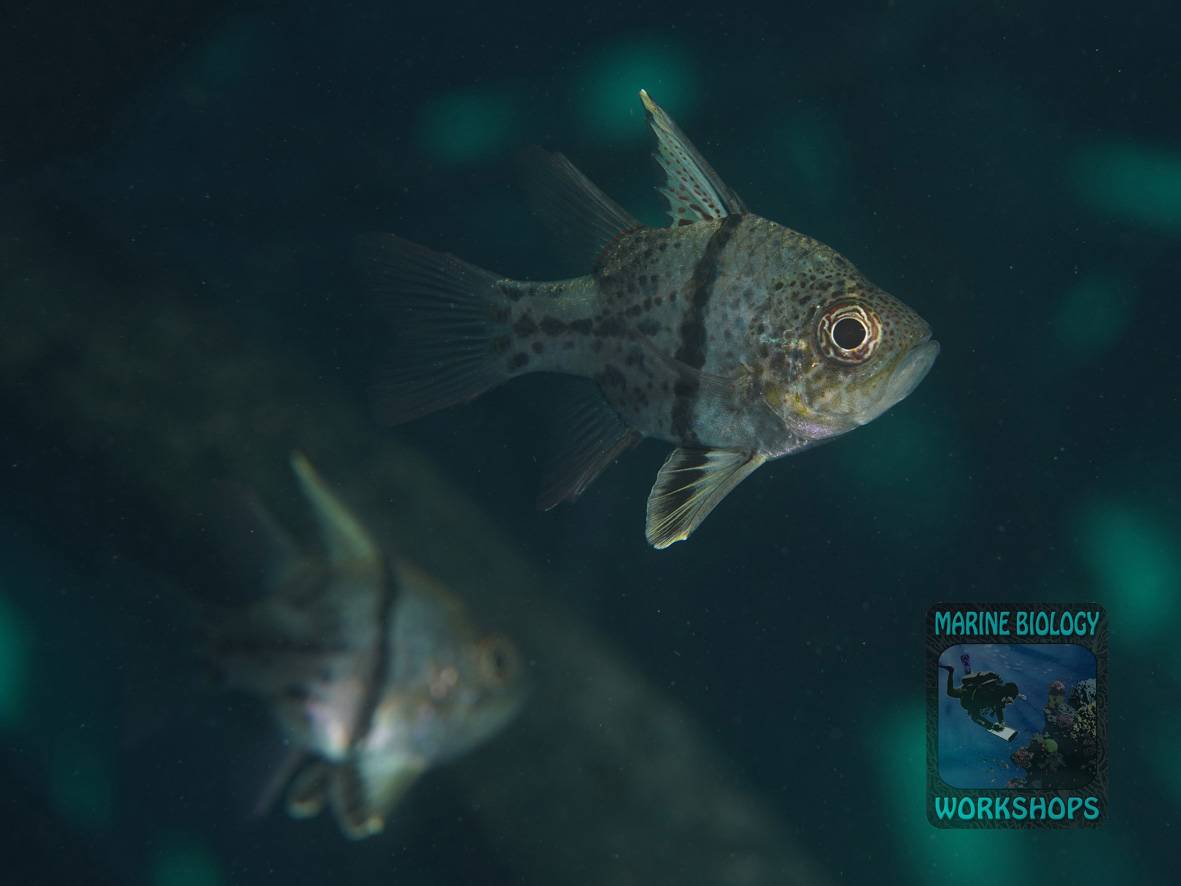
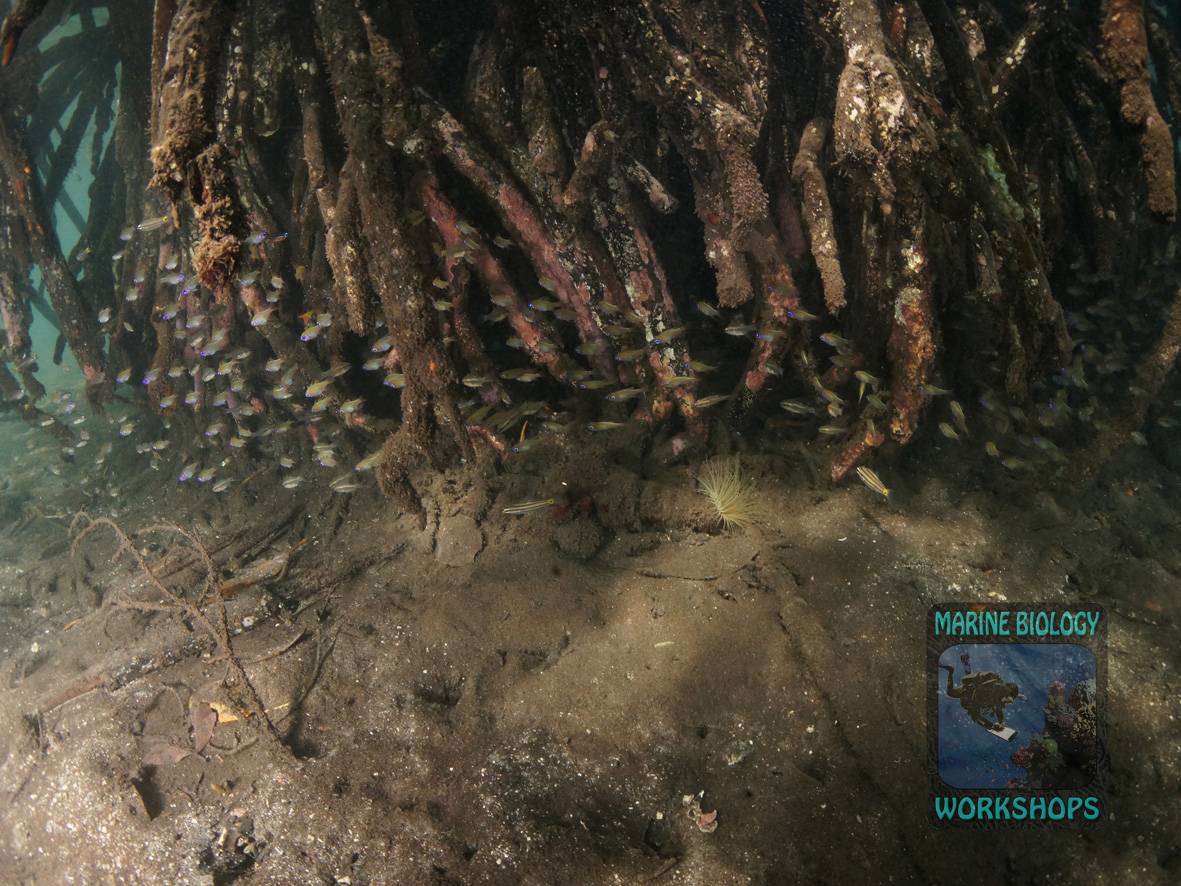
During our snorkeling expeditions we encountered a variety of mangrove inhabitants: archerfish, cardinalfish, juvenile reef fish, mangrove jellyfish, spiny lobsters – and even a sea snake and a young blacktip reef shark gliding through the mangroves.
We studied the ecological importance of mangroves – their role in the nutrient cycle, as a refuge and nursery for reef fish and other marine organisms, in coastal protection, and their many other valuable ecosystem services.
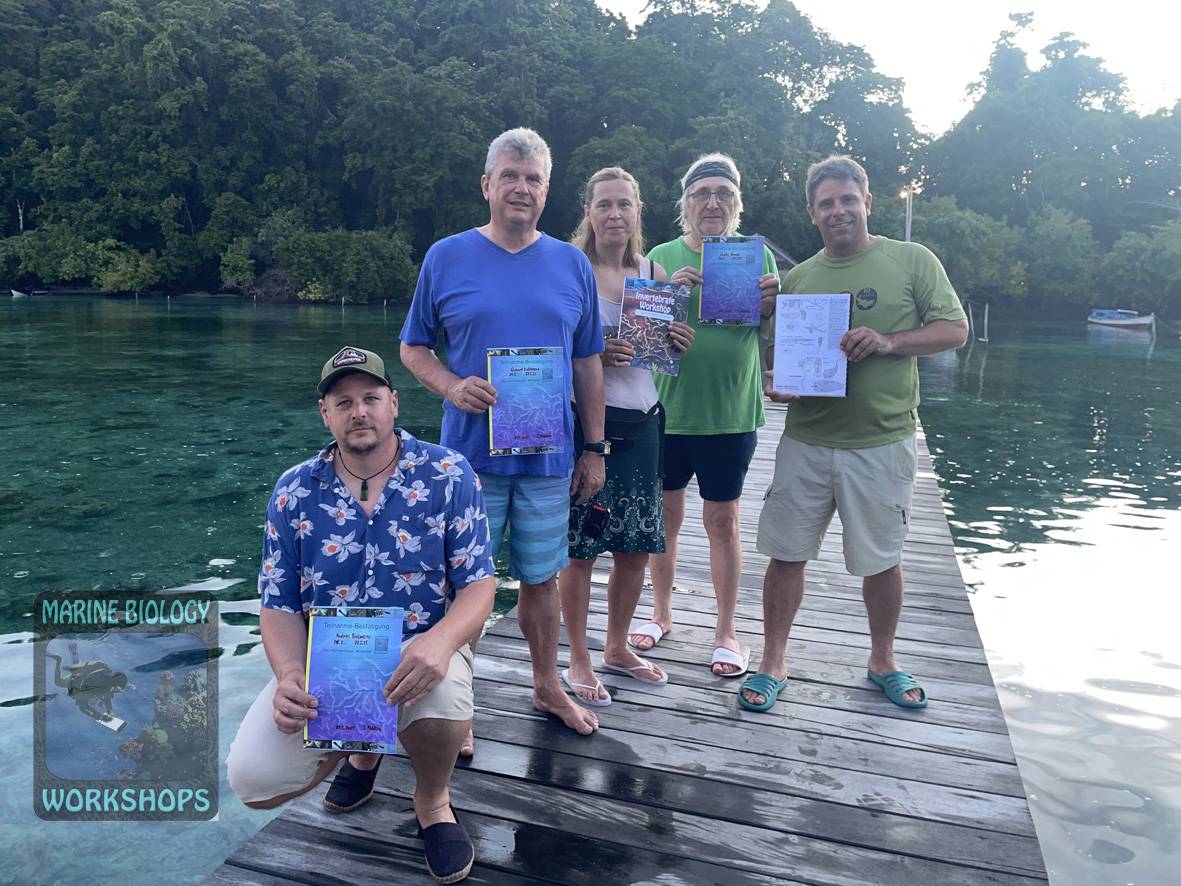
At the end of the workshop, all participants received a certificate – the conclusion of an inspiring and educational experience in the heart of one of the most biodiverse marine regions in the world!
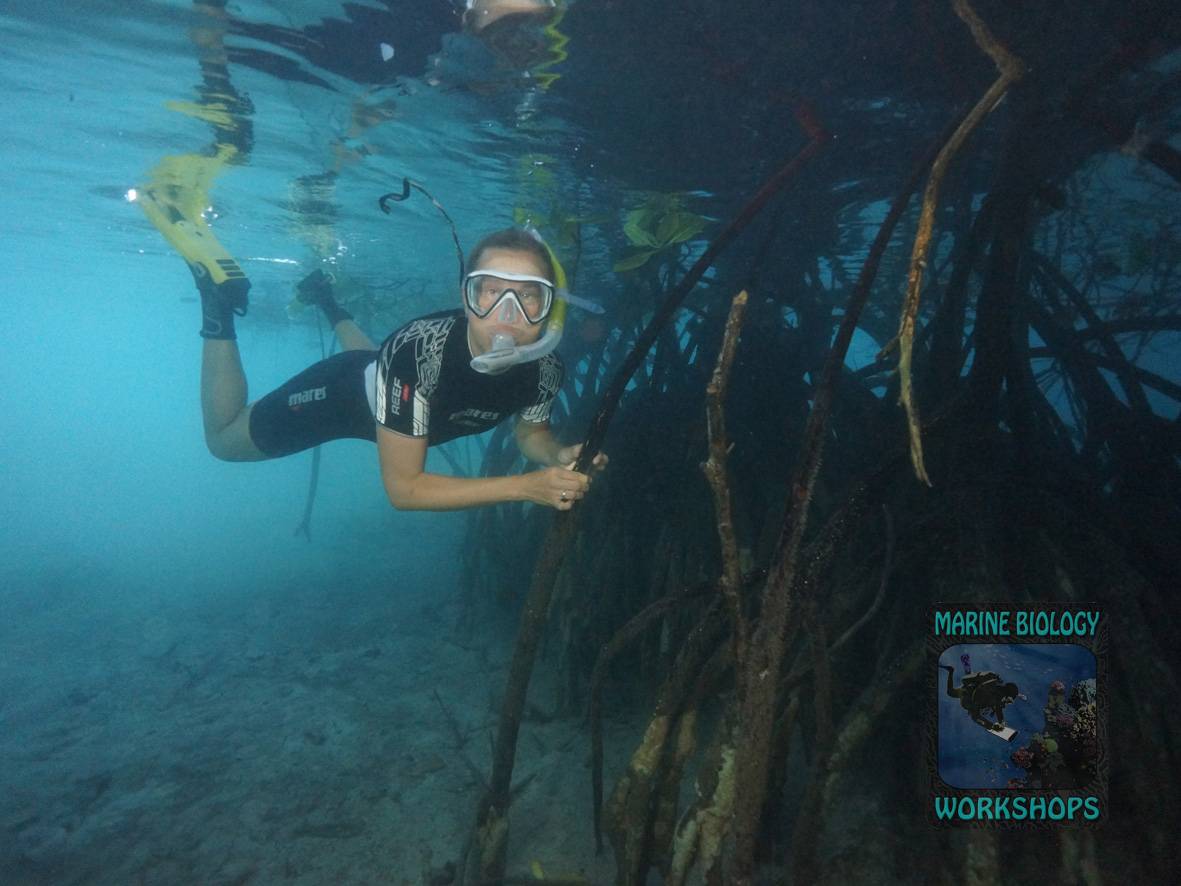
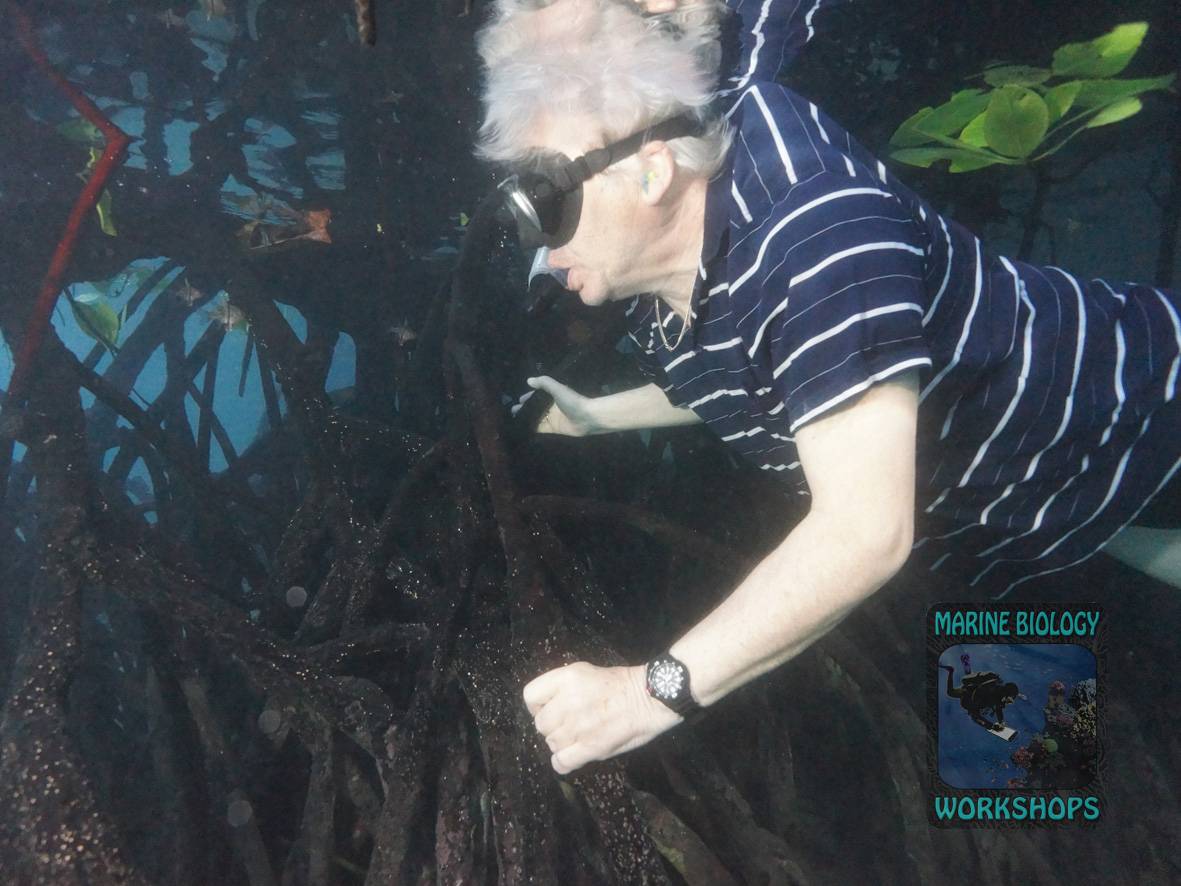
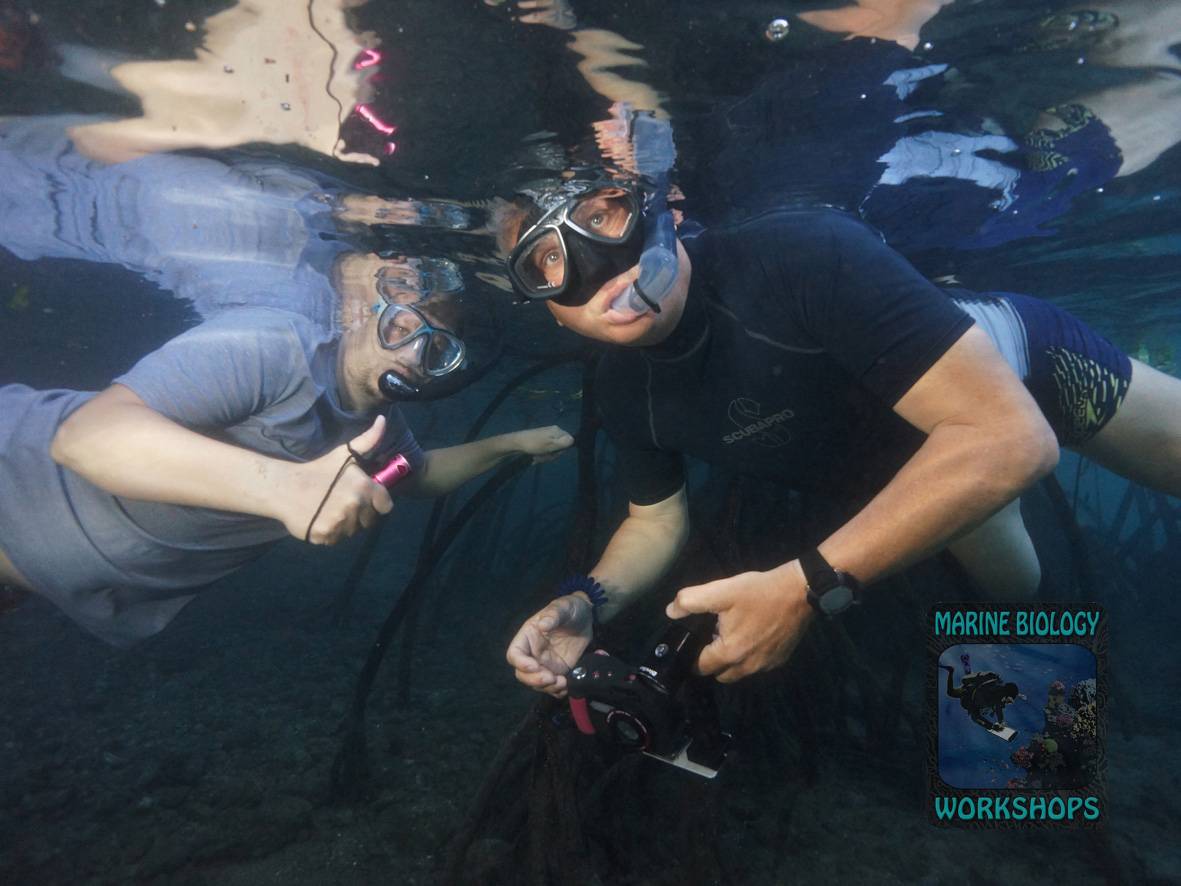
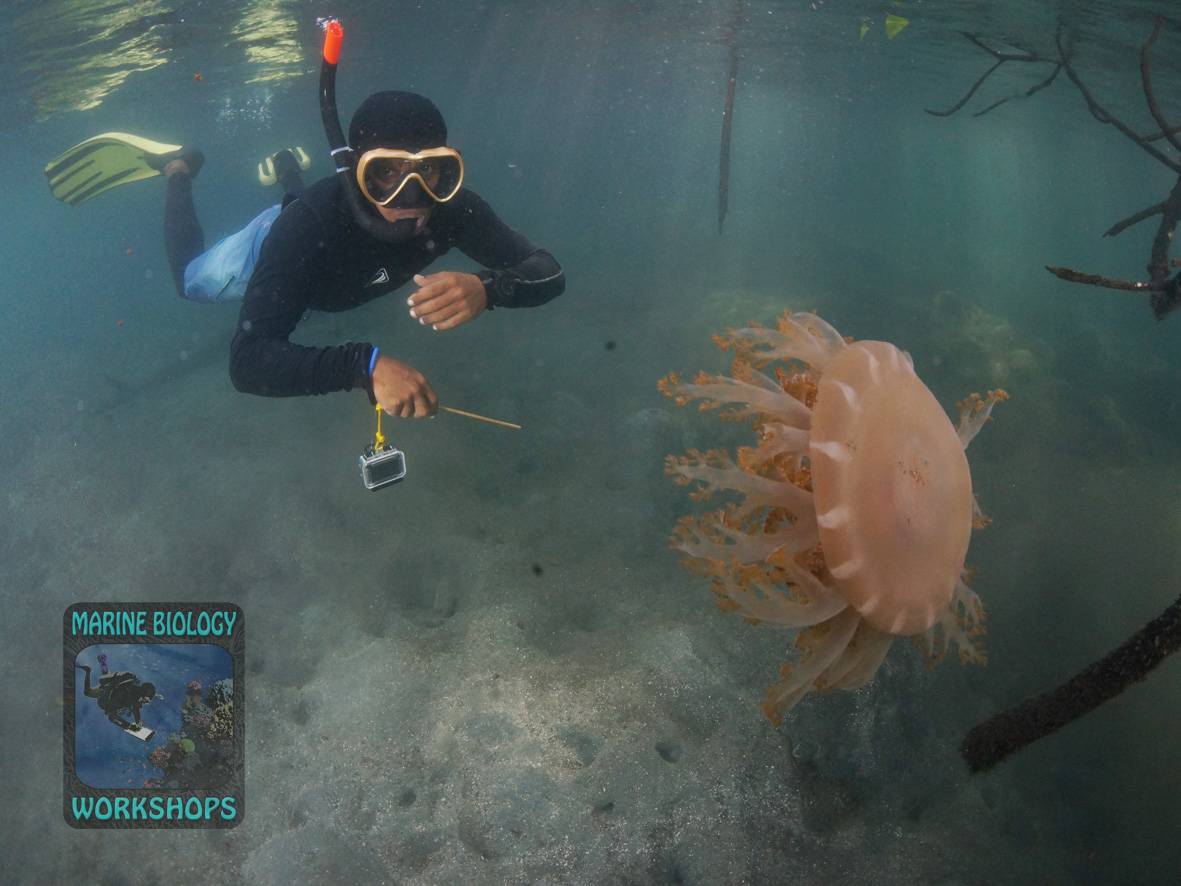
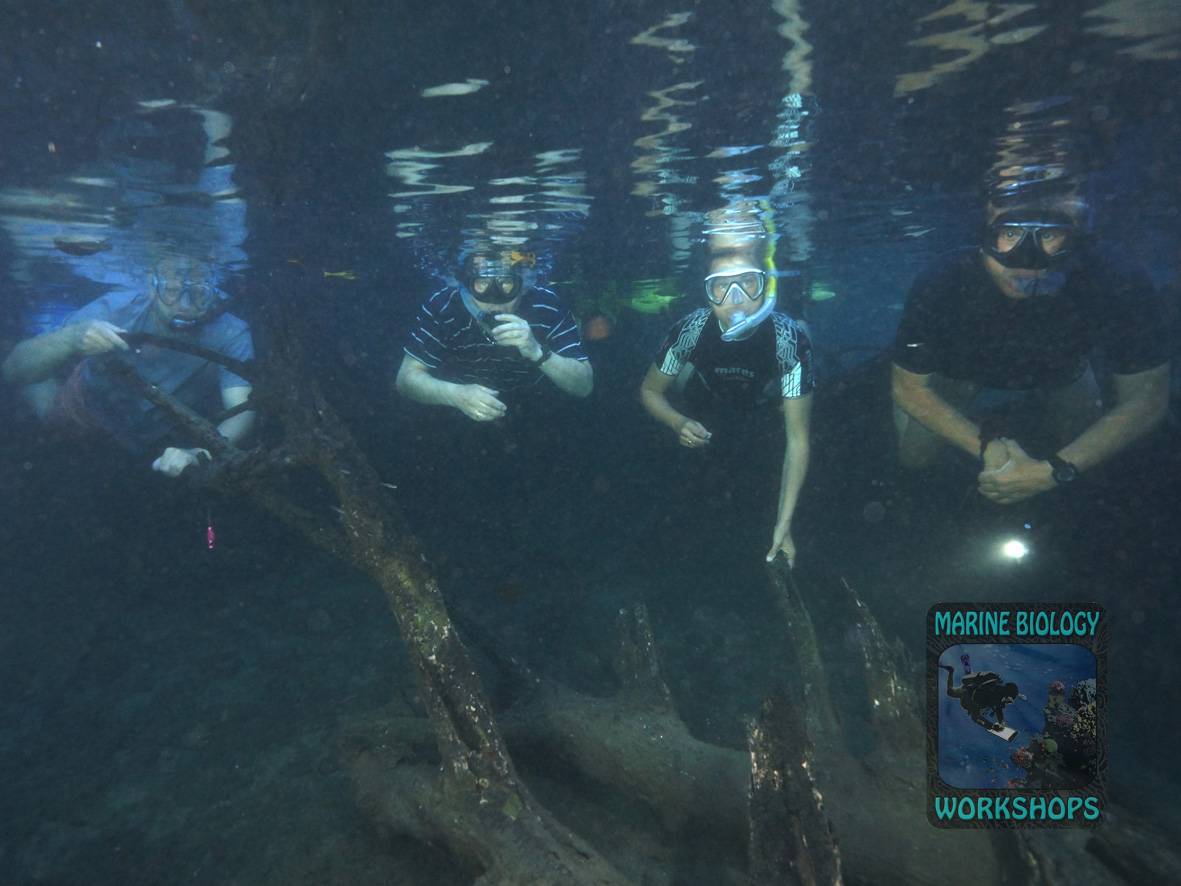
Exploring a connected habitat with mask and snorkel
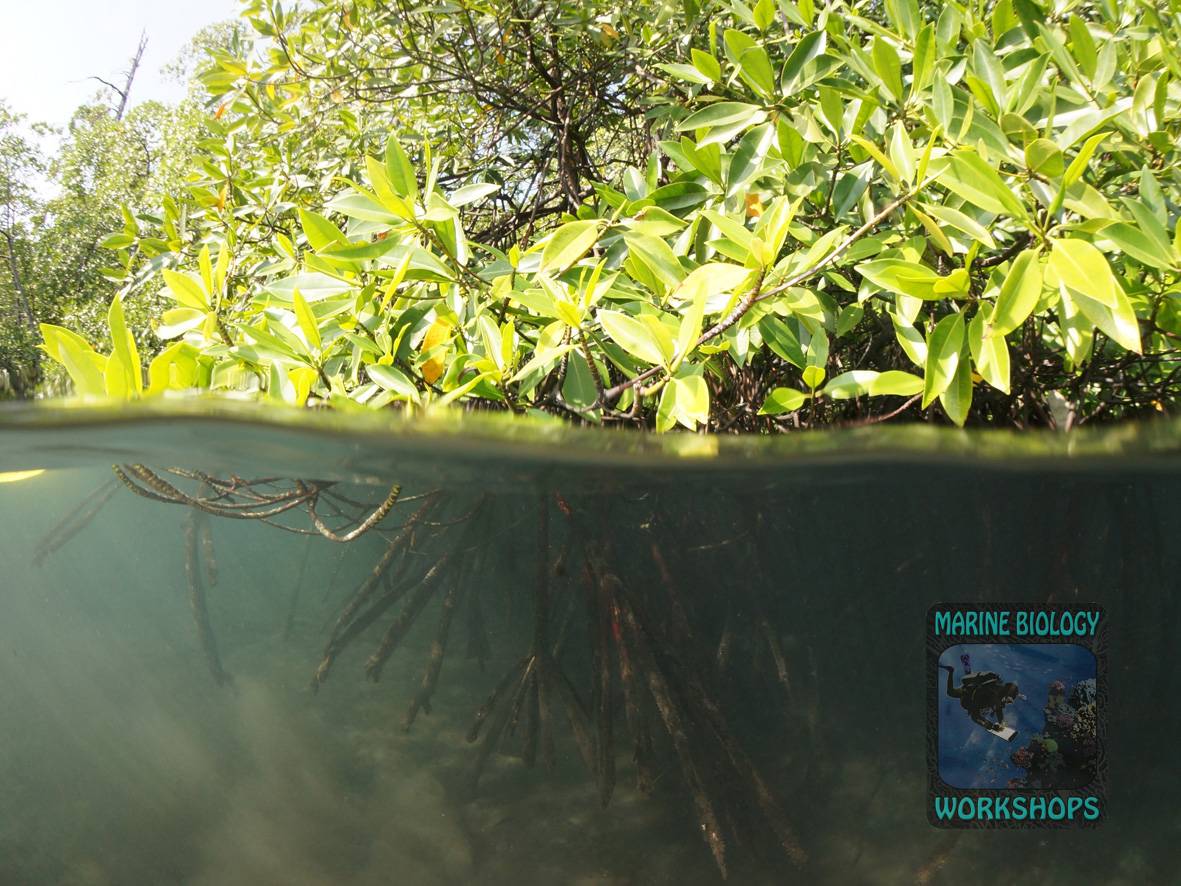
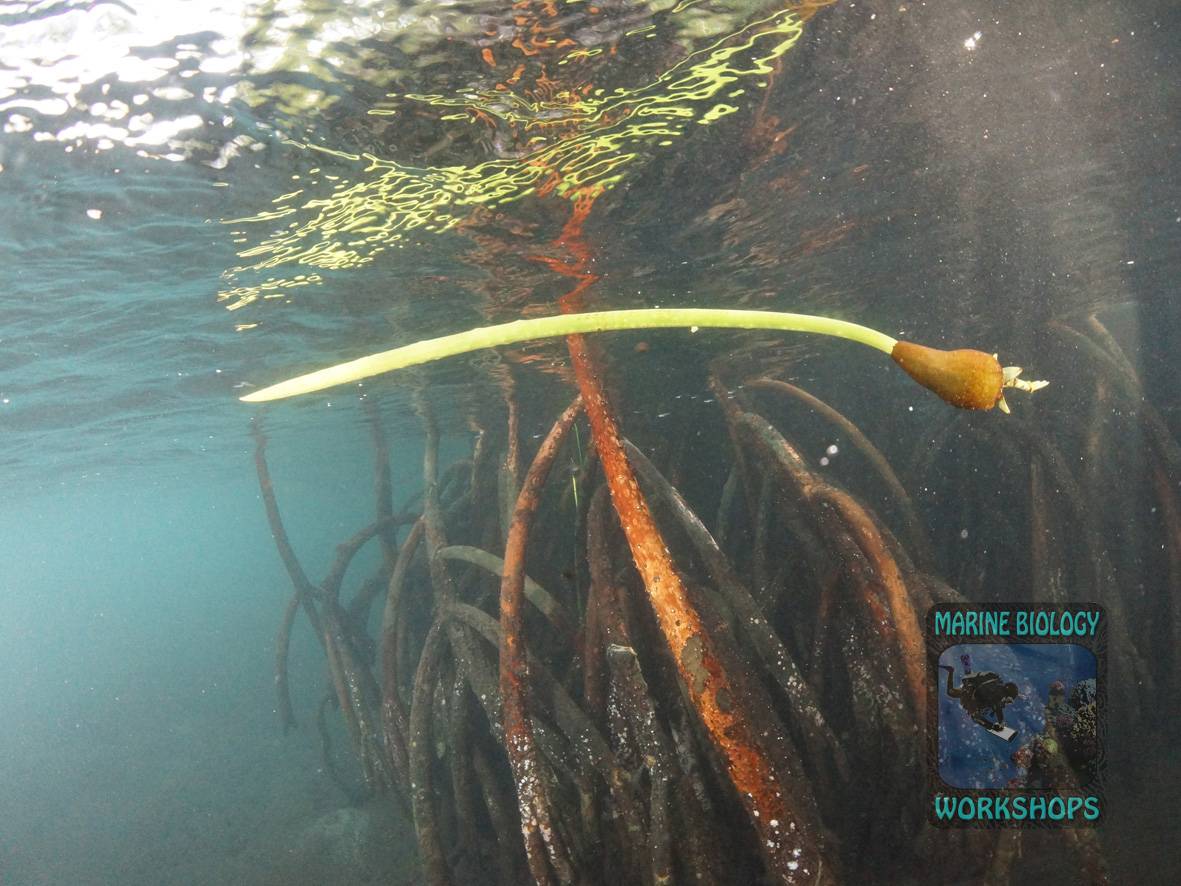
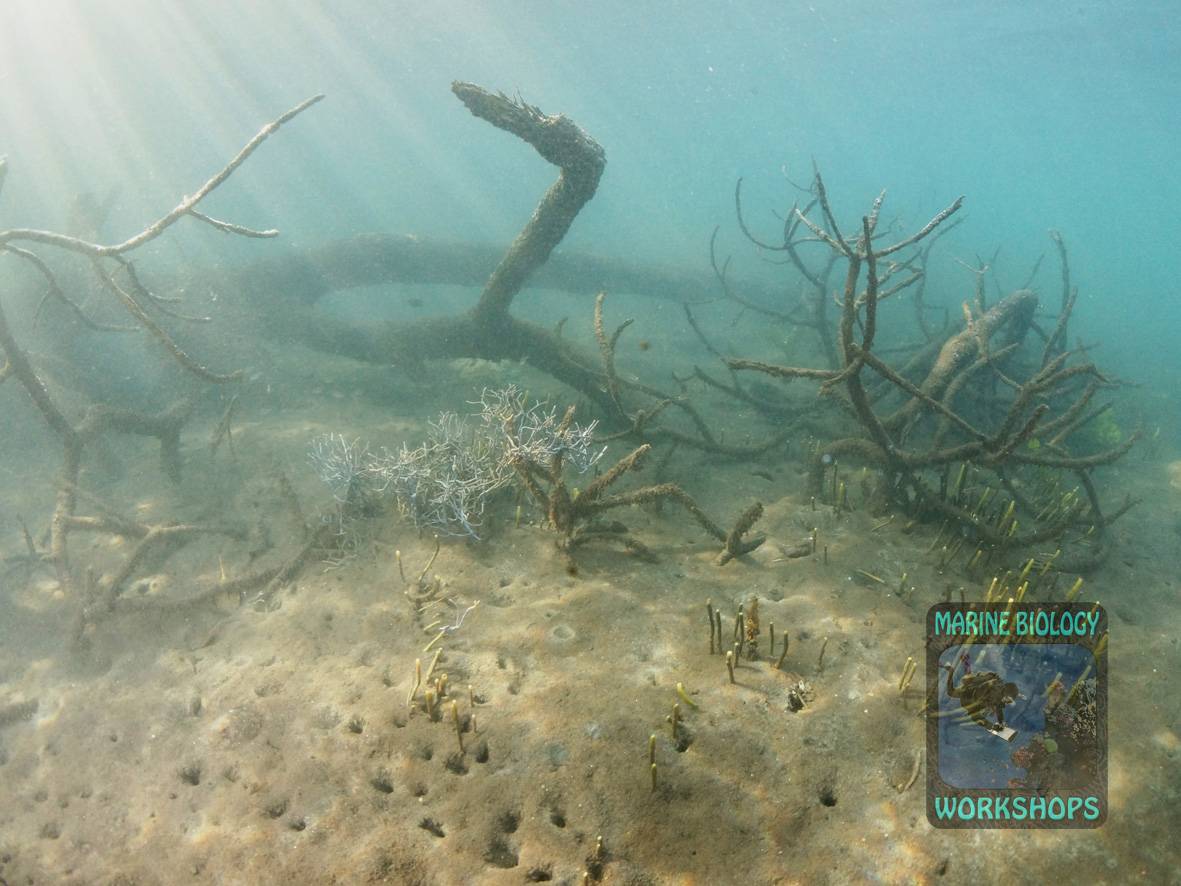
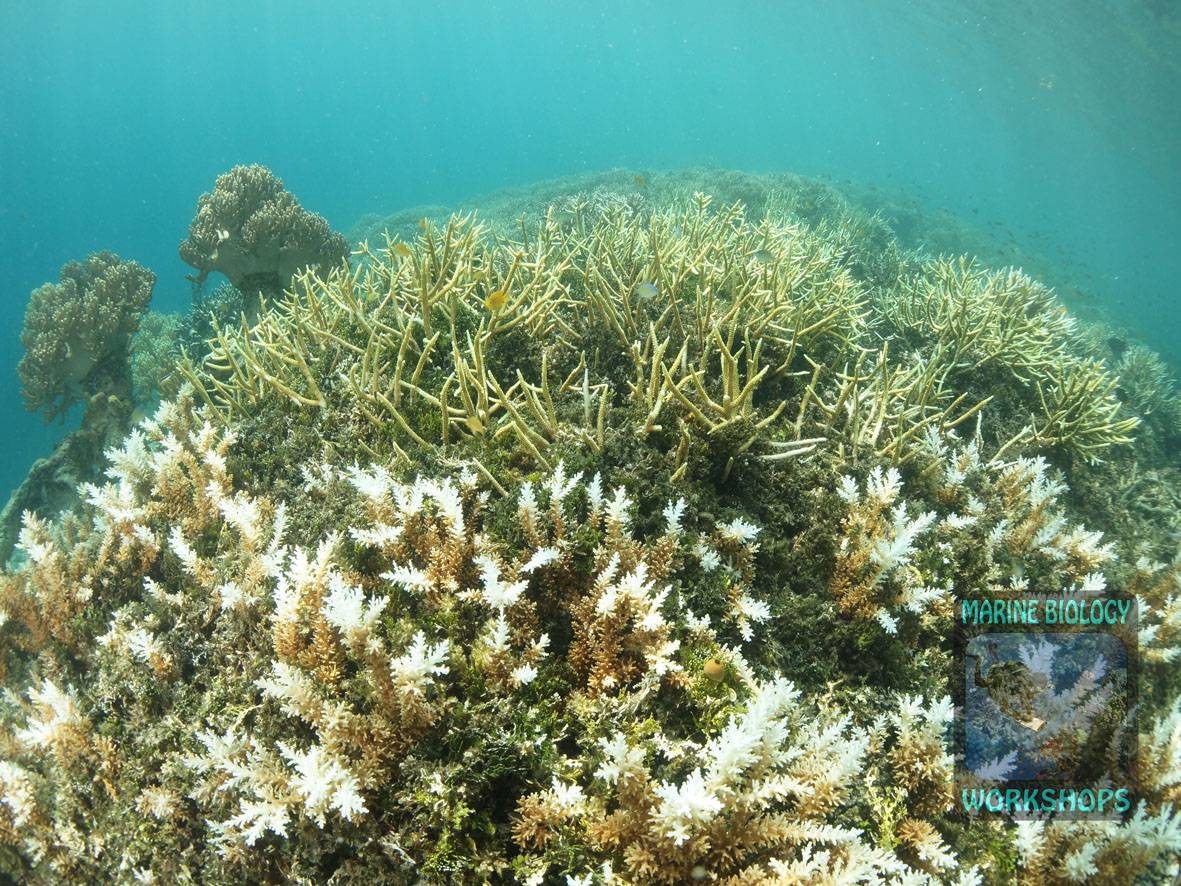
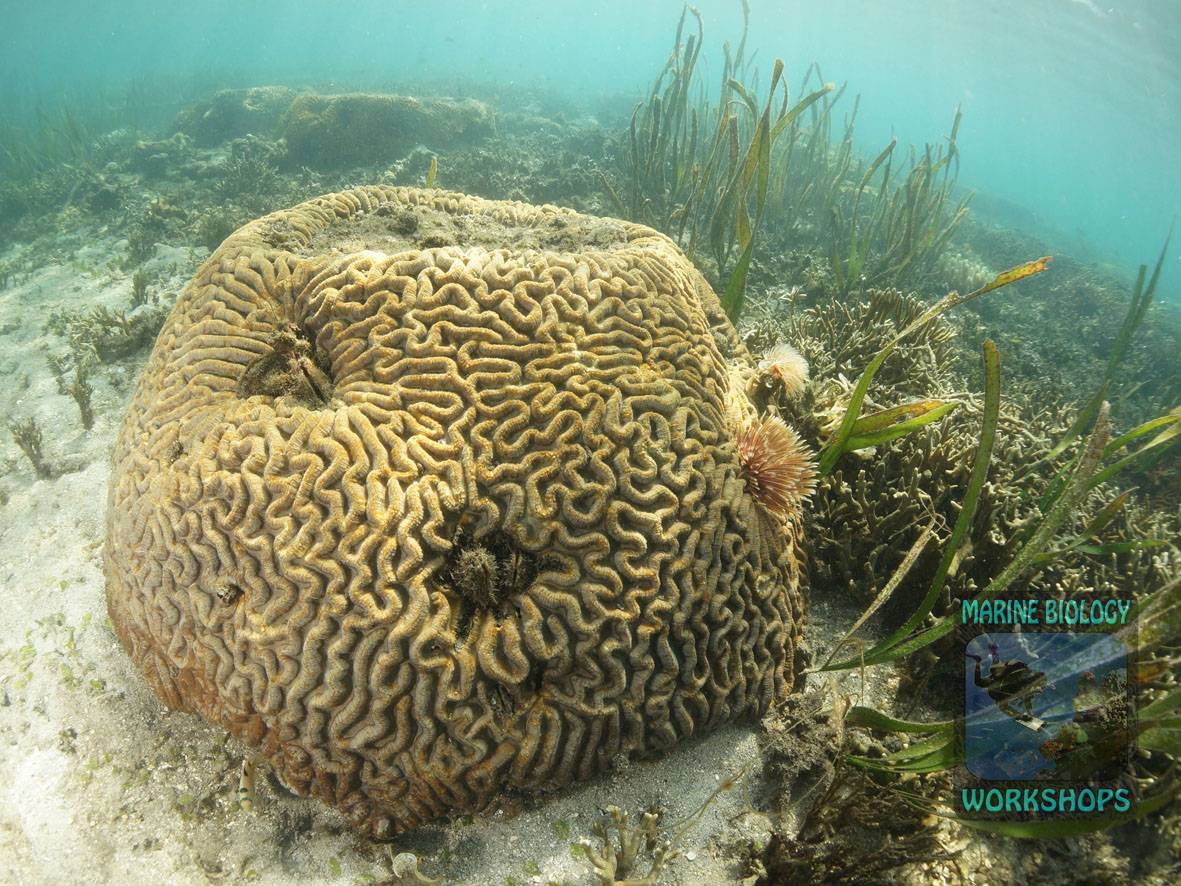
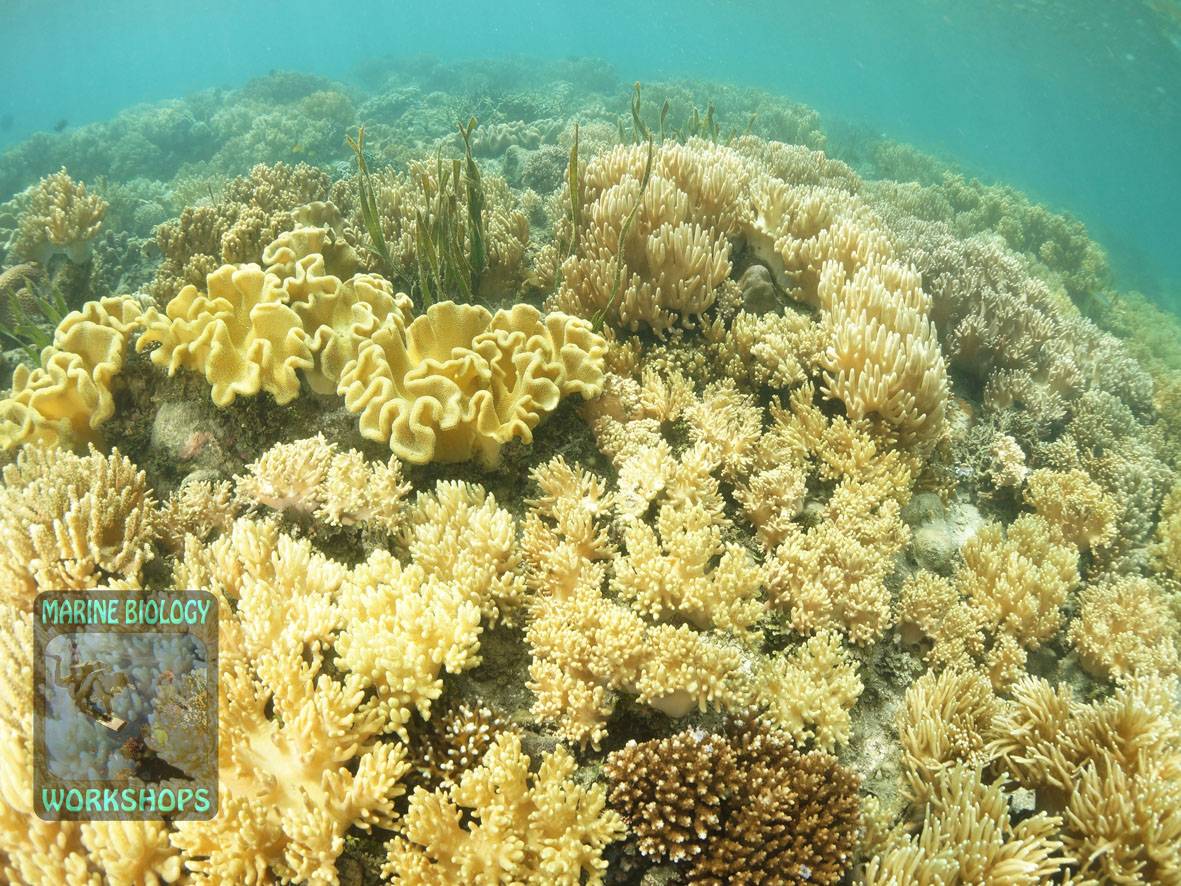
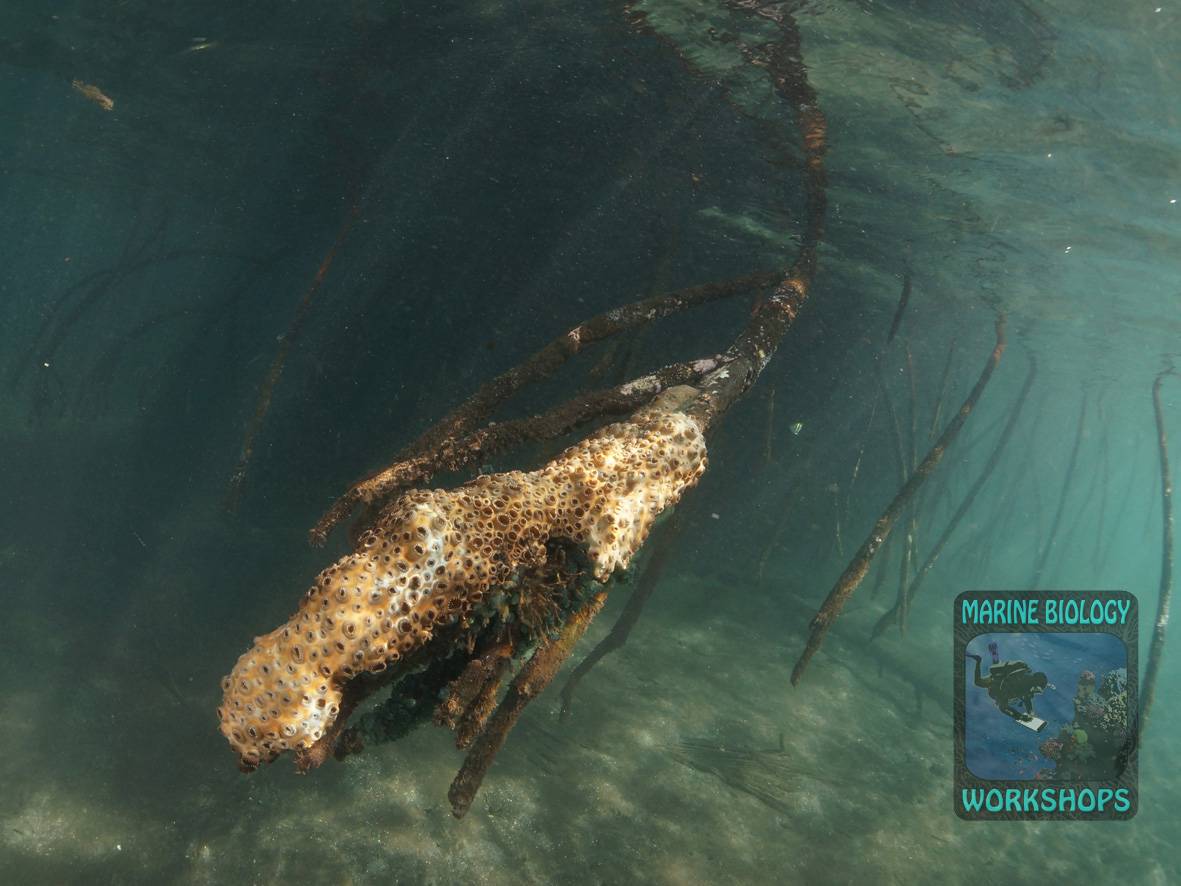
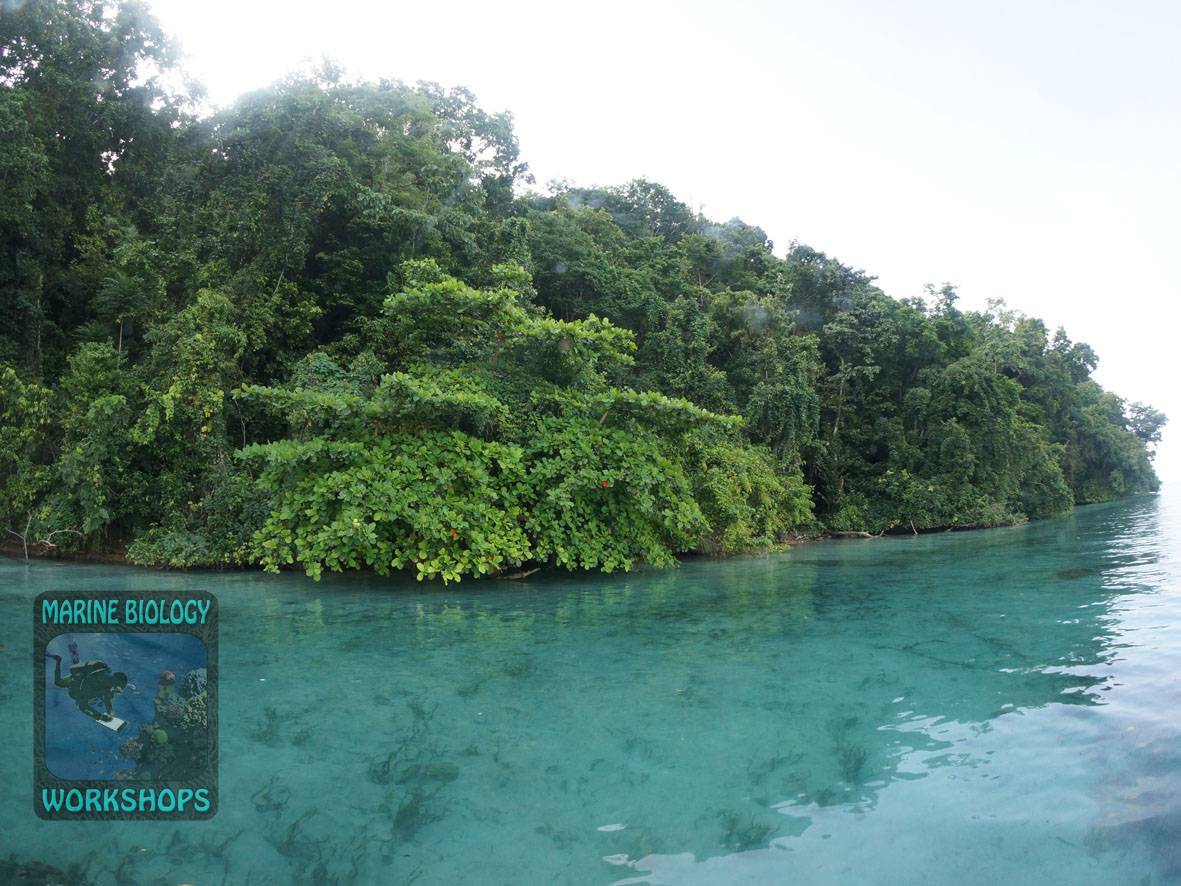
Mangroves often have the reputation of being a useless, inaccessible swamp full of dangerous animals and blood-sucking insects, and they are certainly not standard excursion destinations for divers and snorkelers. Sometimes canoe tours are offered, as a kind of supplementary excursion program. But exploring the mangroves underwater with mask and snorkel? In fact, mangroves represent a dynamic and extremely important ecosystem, teeming with life. Mangroves are the bridge between land and sea. Those who dare to explore the mangrove habitat underwater are rewarded with fascinating insights into a mysterious, peculiar community of life. However, some important things must also be taken into consideration.
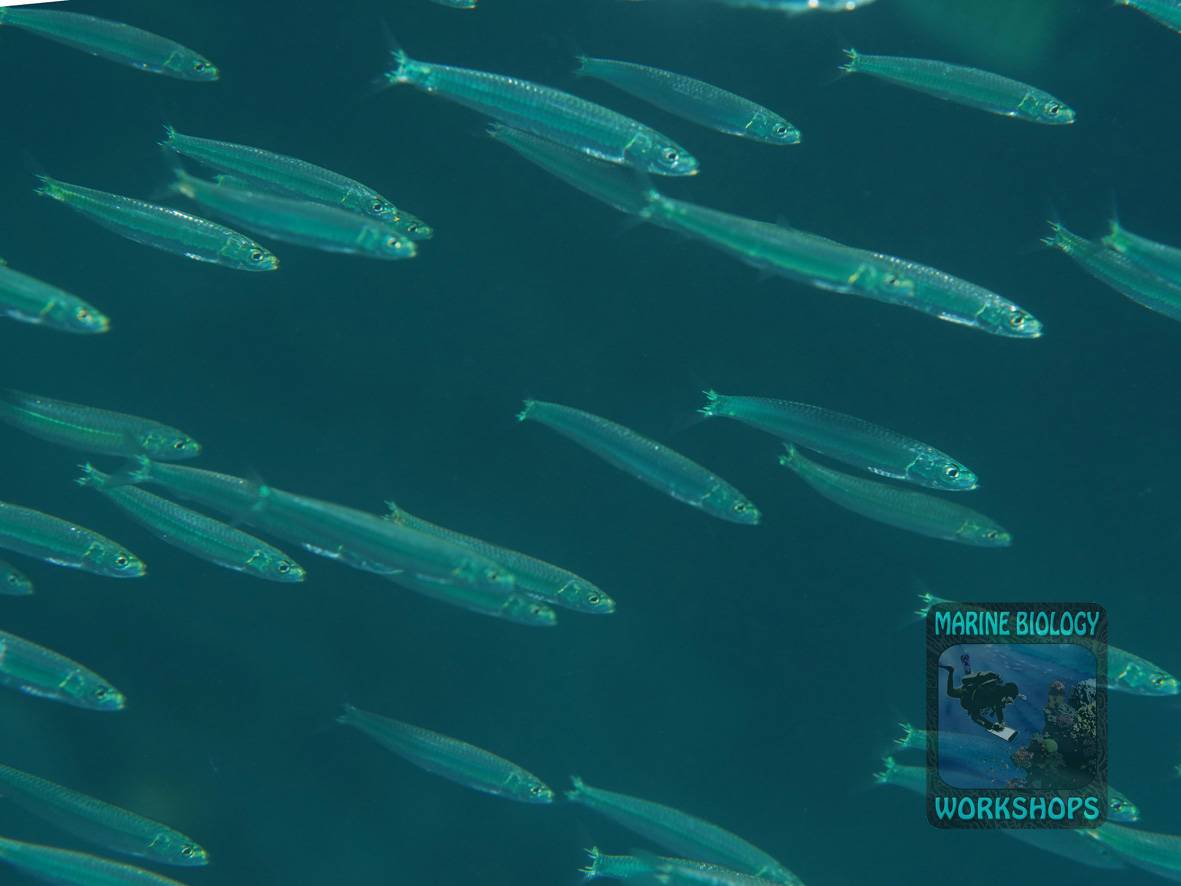
Among the fish, we encounter numerous specialized mangrove inhabitants, such as archerfish, halfbeaks, or certain cardinalfish. The Banded Archerfish (Toxotes jaculatrix) is very shy; you have to remain calm or even stay motionless for a while to observe it as it patrols alertly and swiftly through the tangle of stilt roots. However, many species familiar from the coral reef also live here. In particular, juvenile individuals of various larger reef fish – from butterflyfish and surgeonfish, to snappers and triggerfish, and even sharks: mangroves rightly deserve their reputation as a “nursery” for reef fish!

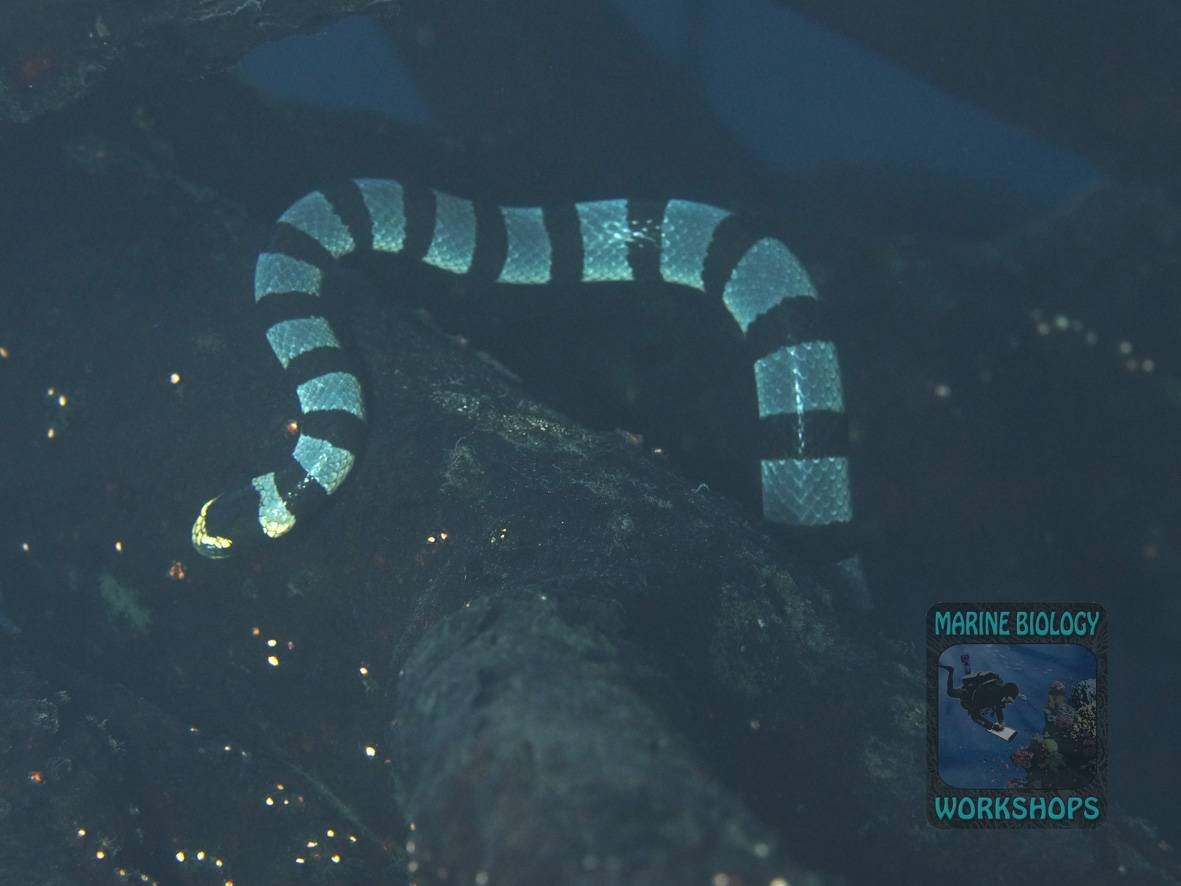
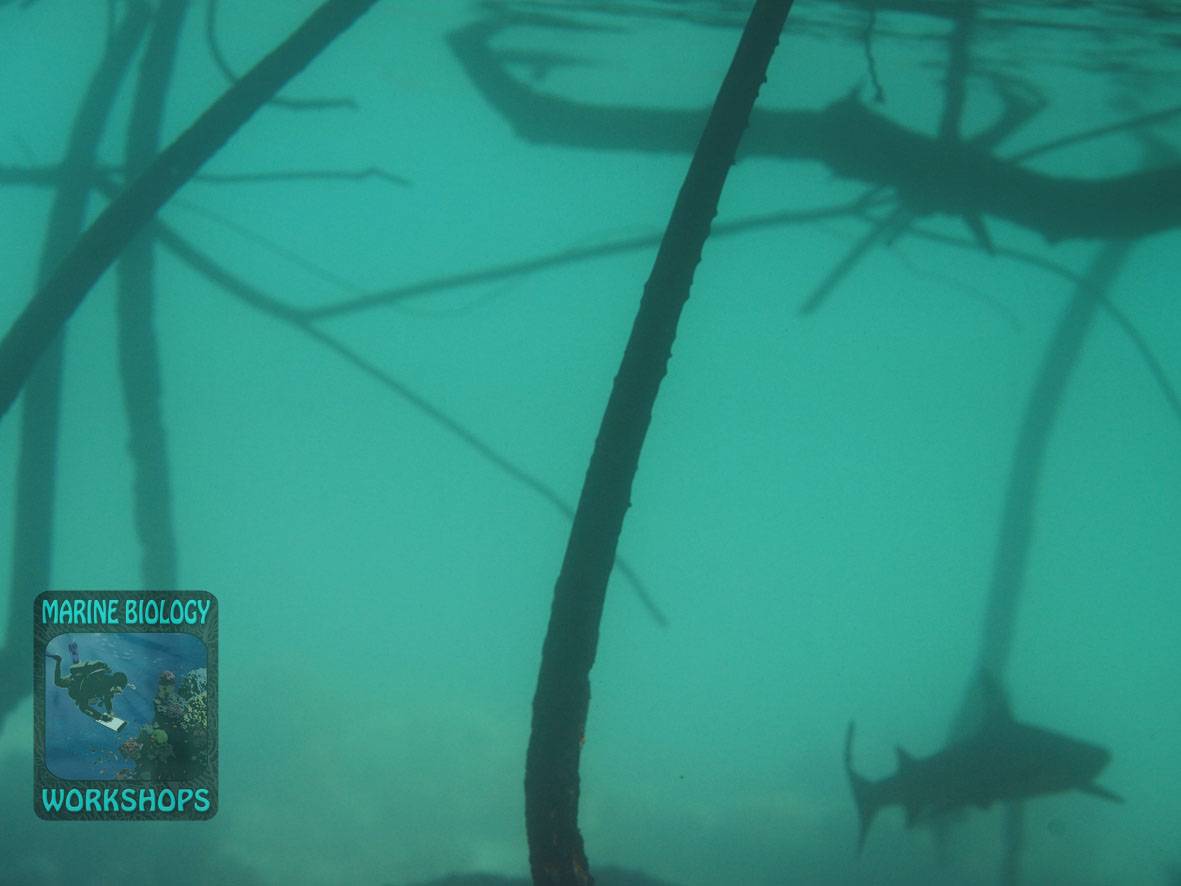
Suddenly, a young, approximately 80 cm long blacktip reef shark swims past us – and is just as quickly gone! In a tangle of mangrove stilt roots, we discover a Yellow-lipped Sea Krait: (Laticauda colubrina). This nocturnal animal rests here to hunt fish at night, which it paralyzes with its potent neurotoxin before consuming. It is not aggressive toward humans and would only use its venom in self-defense.
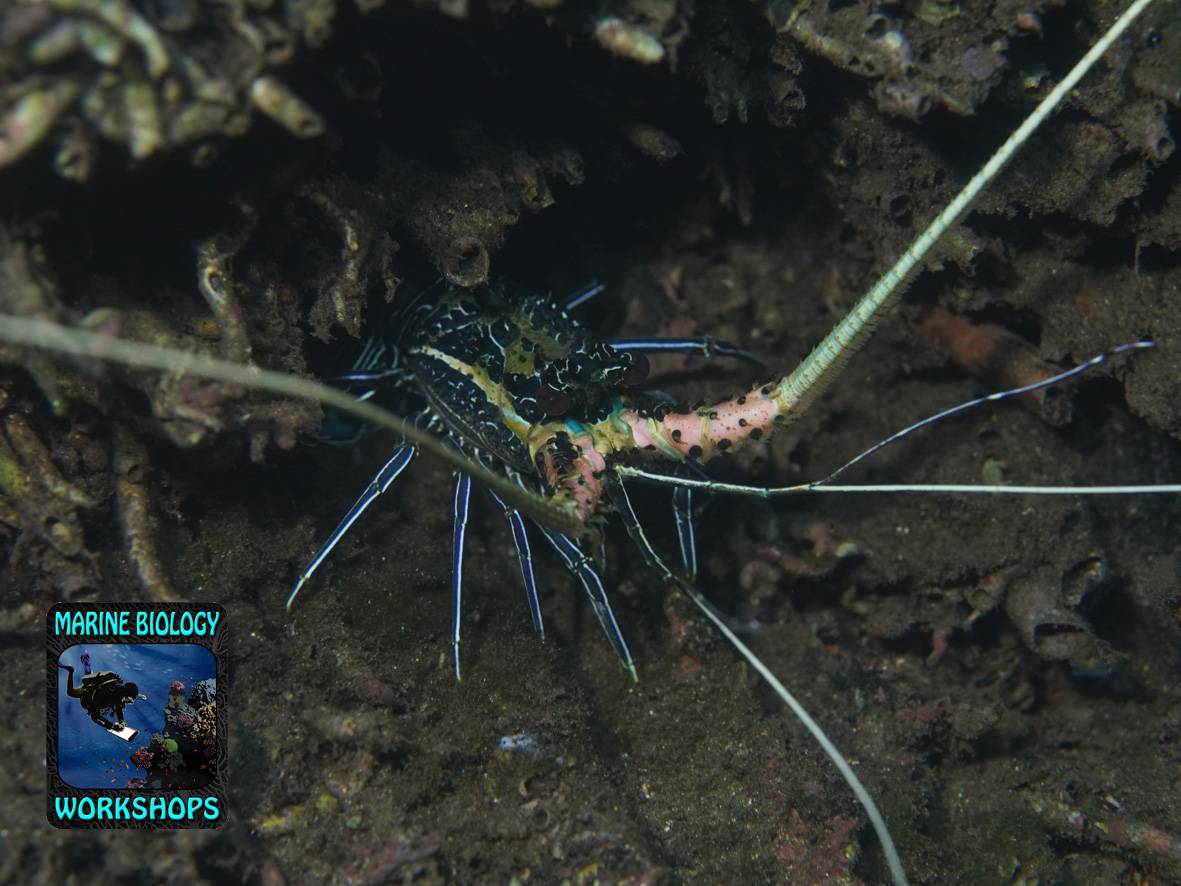
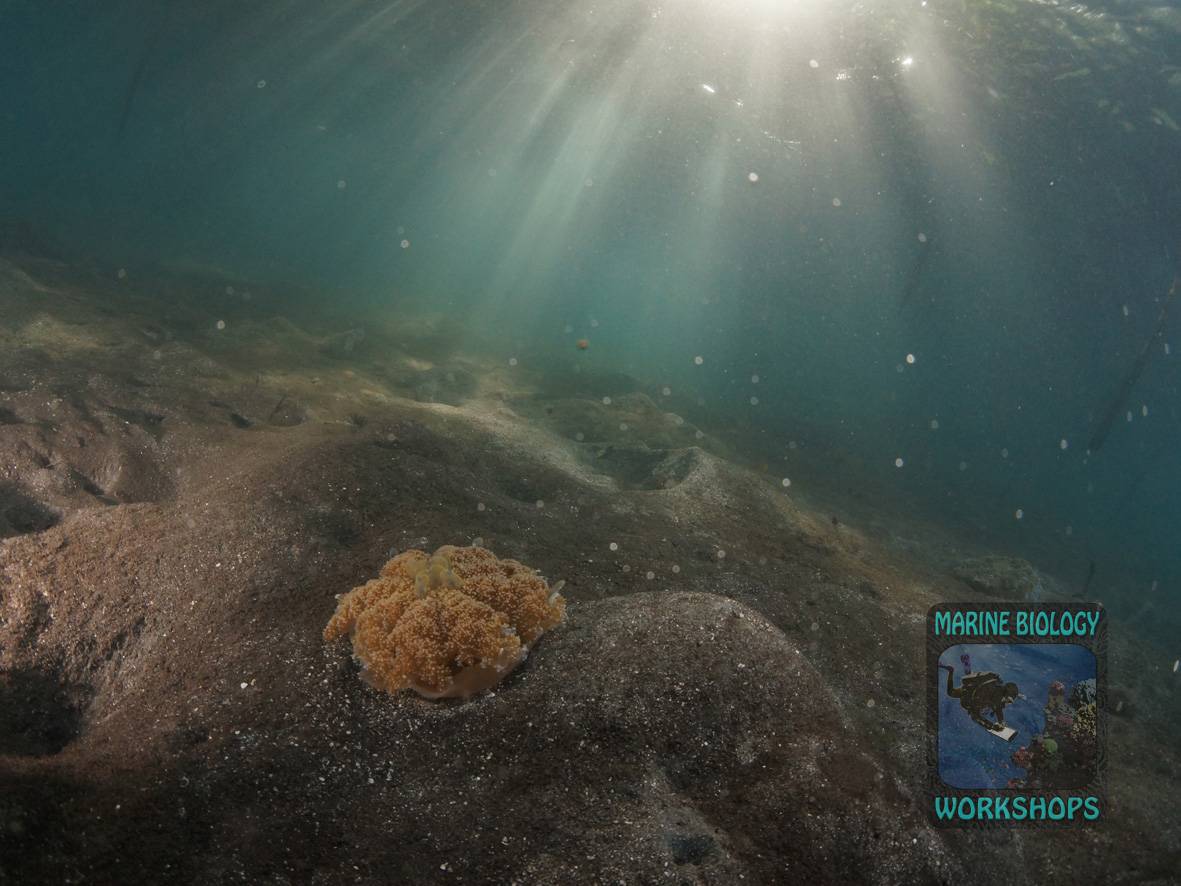
Under a massive tree trunk in the water, a large, also Painted Spiny Lobster (Panulirus versicolor) is hiding. The Mangrove Jellyfish (Cassiopea sp.) is a typical inhabitant of mangroves and seagrass meadows, lying “upside down” on the sediment with its bell.
During the two weeks at Papua Paradise Eco Resort, we spent an exceptionally exciting and eventful time getting to know this very special region. Our focus during the workshops was, of course, below the water’s surface. But we also explored the fascinating nature on land, taking excursions through the rainforest, visiting waterfalls on Batanta Island, and observing the spectacular natural phenomenon of the impressive Papuan hornbills (Rhyticeros plicatus) flying at dusk from Pulau Birie to the neighboring island to roost.
The workshops were a complete success, and we gained countless impressions.
The nature and landscapes of Raja Ampat are truly unique, not only underwater but also on land.
Many thanks to the team at Papua Paradise, especially to our dedicated dive guides Roby, Munandar, and Hanky! 😊


