The second Nordriff trade fair, held on September 12 and 13, 2026, was once again a great success at the Klimahaus Bremerhaven:
A wonderful meeting place in northern Germany for marine aquarium enthusiasts, people interested in science, and sustainable aquarium keeping.
A good mix of exhibitors, from major manufacturers and coral breeders to technology enthusiasts and innovative start-ups, along with a varied programme of engaging talks, workshops and a raffle, attracted interested visitors from all over Germany.
Nordriff has now taken place for the second time and has continued to develop and grow. It is wonderful to have an established marine aquarium trade fair in northern Germany!
The entire organisation, from set-up to dismantling, went smoothly. A big thank you to the two organisers, Kai Petersen and Oliver Nigge, and the whole support team!
The atmosphere among visitors and exhibitors was positive throughout. All the hard work was worth it!
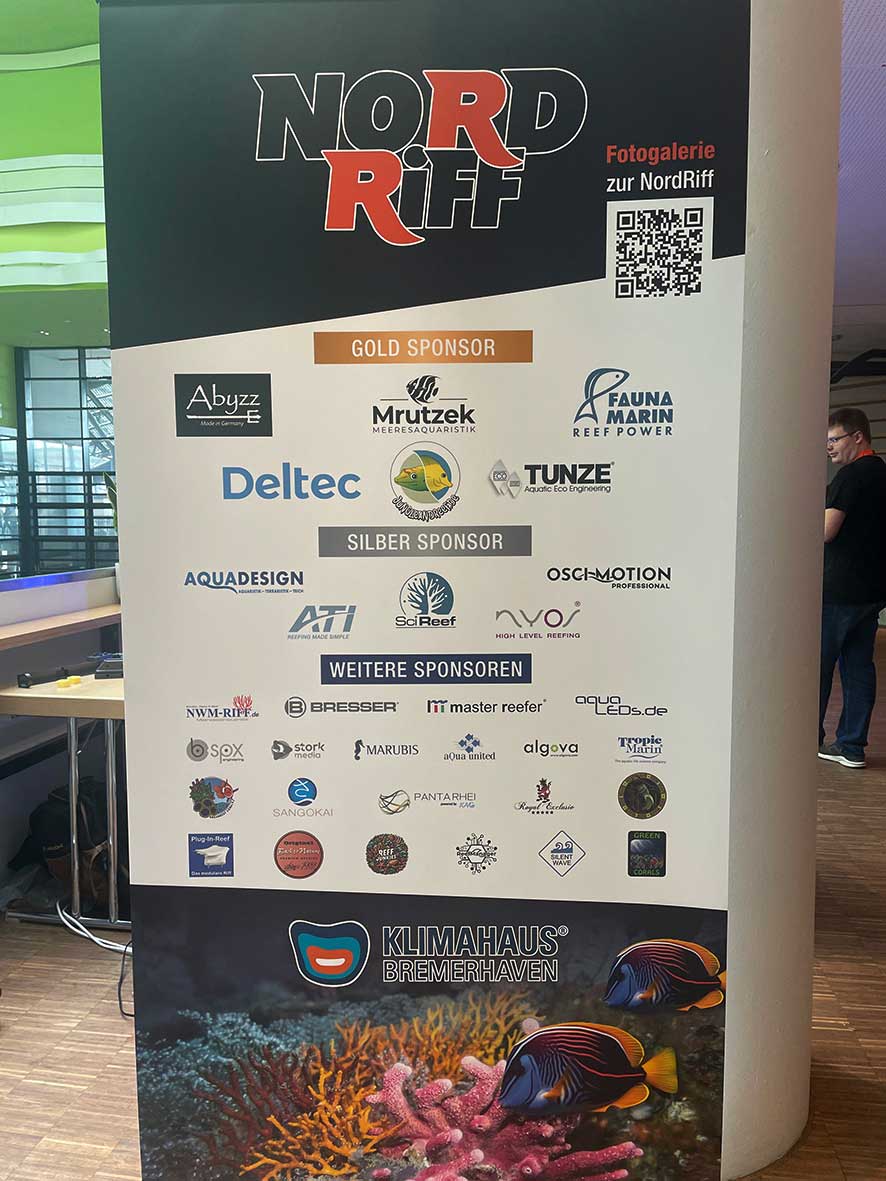
Marine aquarium exhibitors at the Nordriff fair 2026
We at GREEN CORALS were also represented at the Nordriff trade fair together with our stand partner AQ4Aquaristik, offering a wide range of products:
Coral frags, various captive-bred fish, snails, algae and mangroves, two fully set-up nano aquariums, a Coral Finder information point, our GREEN CORALS photo products featuring marine motifs, and information about our marine biology workshops and Reef Check courses.
Our stand partner AQ4Aquaristik brought Triops kits and an adult Triops, as well as the red Hawaiian shrimp Halocaridina rubra.
Coral frags from more than 45 genera
We brought a wide selection of coral frags from more than 45 genera:
All propagated in-house, grown using 100% renewable energy, adapted to aquarium conditions, and guaranteed free of Aiptasia and other unwanted hitchhikers.
SPS corals: Acropora, Anacropora, Montipora, Seriatopora, Pocillopora, Stylophora, Porites, Psammocora
LPS corals: Fimbriaphyllia, Galaxea, Alveopora, Goniopora, Micromussa, Acanthastrea, Pavona, Favites, Platygyra, Duncanopsammia, Turbinaria, Lobophyllia, Caulastraea, Oulophyllia, Echinophyllia, Echinopora, Pachyseris, Merulina, Hydnophora, Physogyra, Cyphastrea, Leptastrea and Pectinia
Zoanthids and anemones: Zoanthus, Palythoa, Entacmaea and Phymanthus
Gorgonians and soft corals: Sarcophyton, Sclerophytum, Lobophytum, Capnella, Briareum, Pinnigorgia, Plexaurella, Isis, Tubipora, Xenia and Heliopora
If anyone missed something amid the bustle of the fair, all these species are available at any time in our online shop: https://greencorals.de/shop-2/
You are welcome to visit us by appointment—a visit is always worthwhile—or order the animals you want by express delivery.
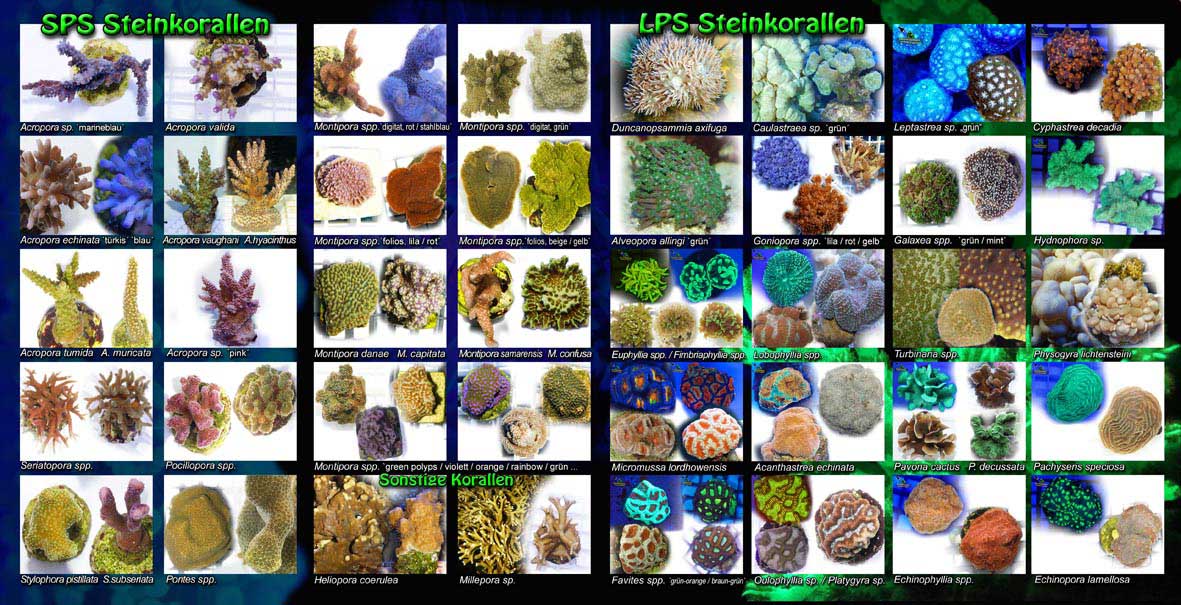
GREEN CORALS coral frags
Captive-bred fish and snails, macroalgae and mangroves
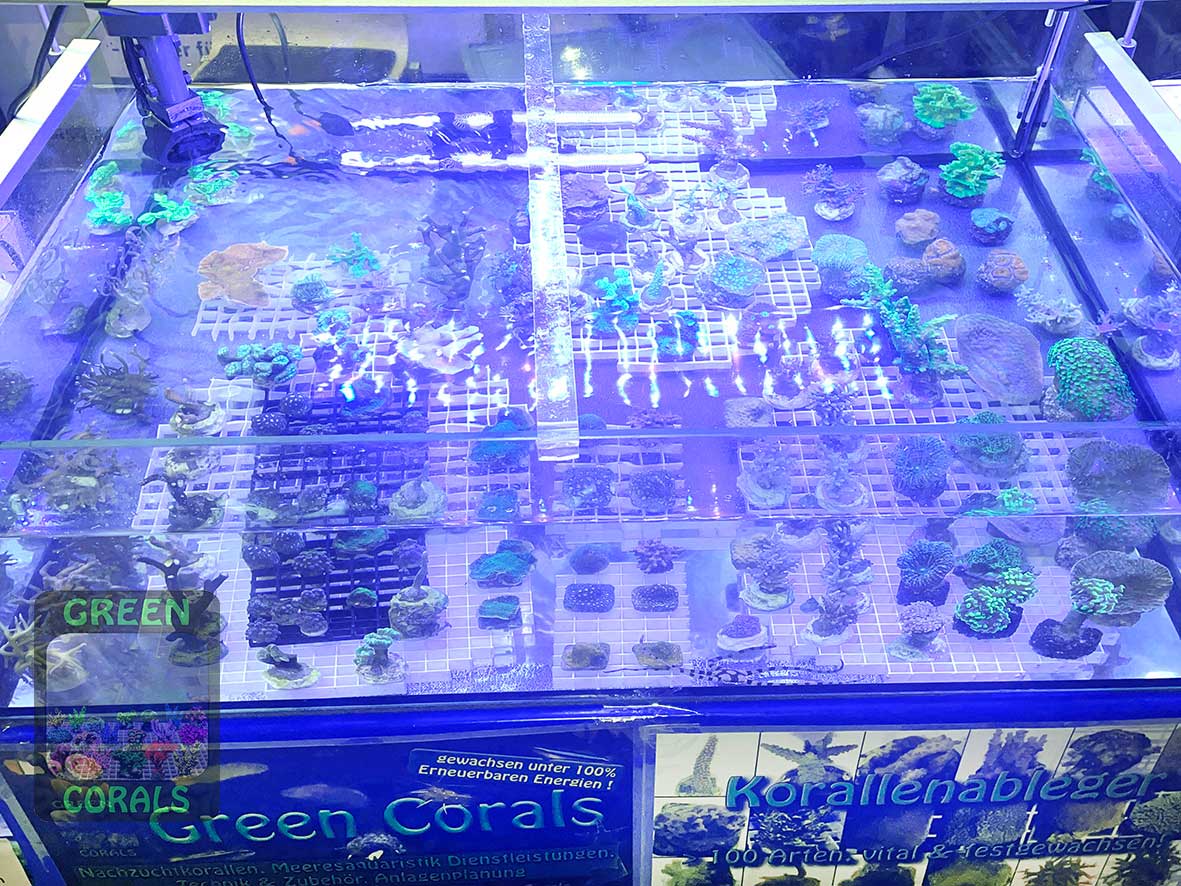
GREEN CORALS coral frags at the Nordriff fair 2026
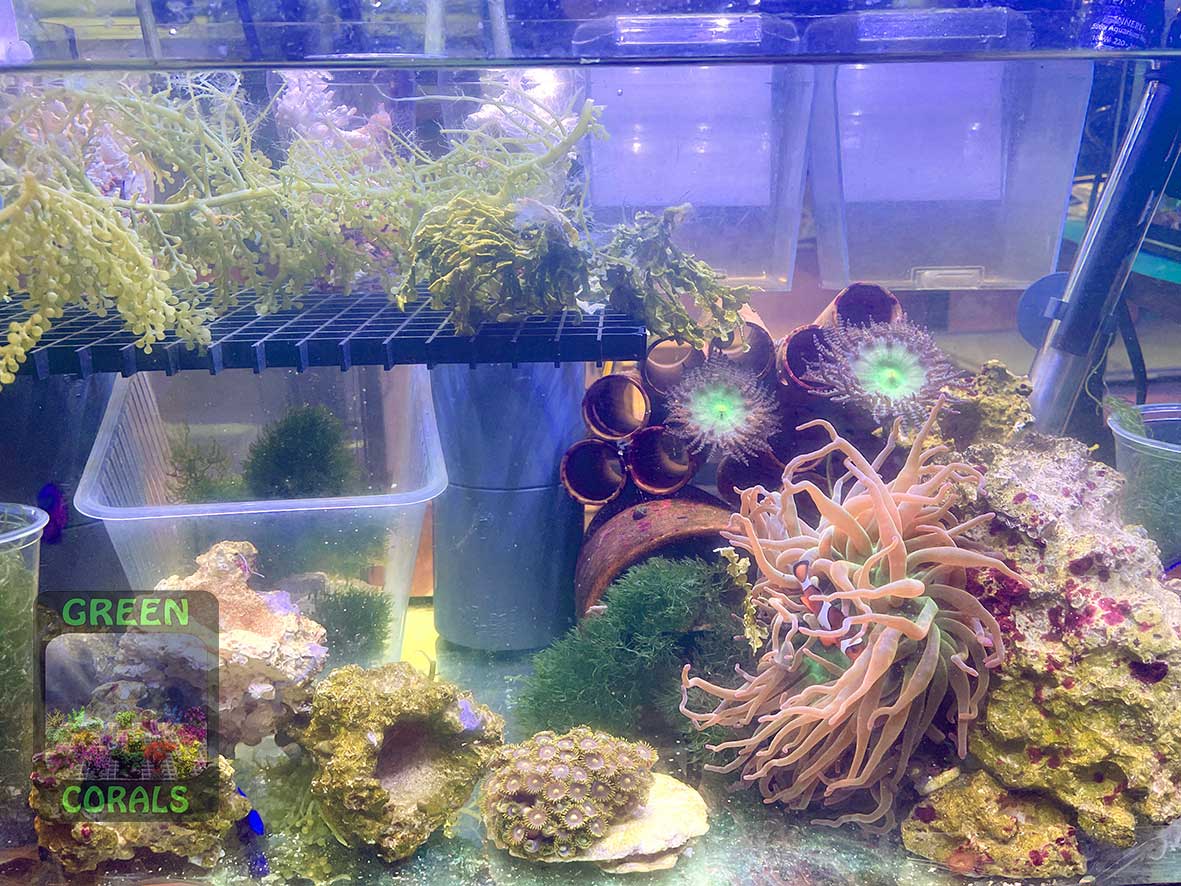
Captive-bred fish, invertebrates, macroalgae and mangroves at the Nordriff fair
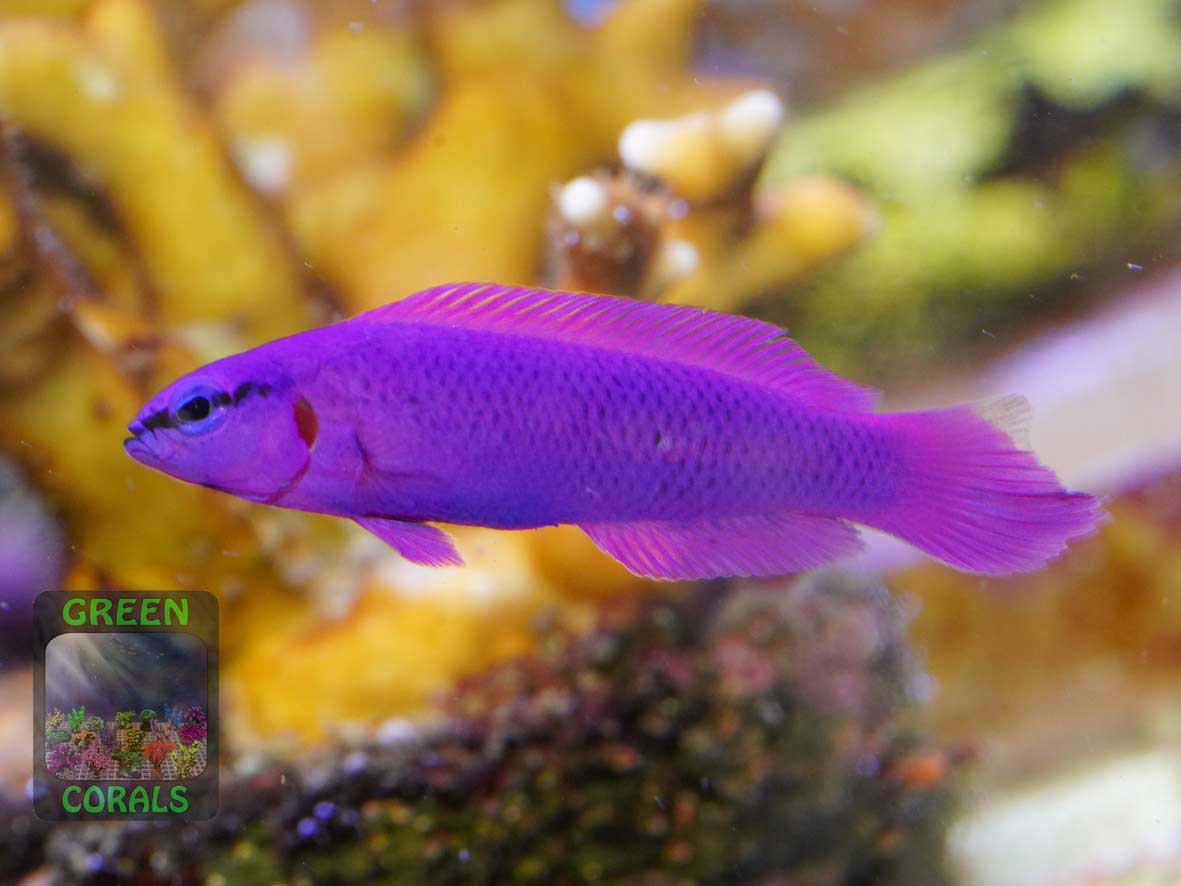
Orchid dottyback Pseudochromis fridmani
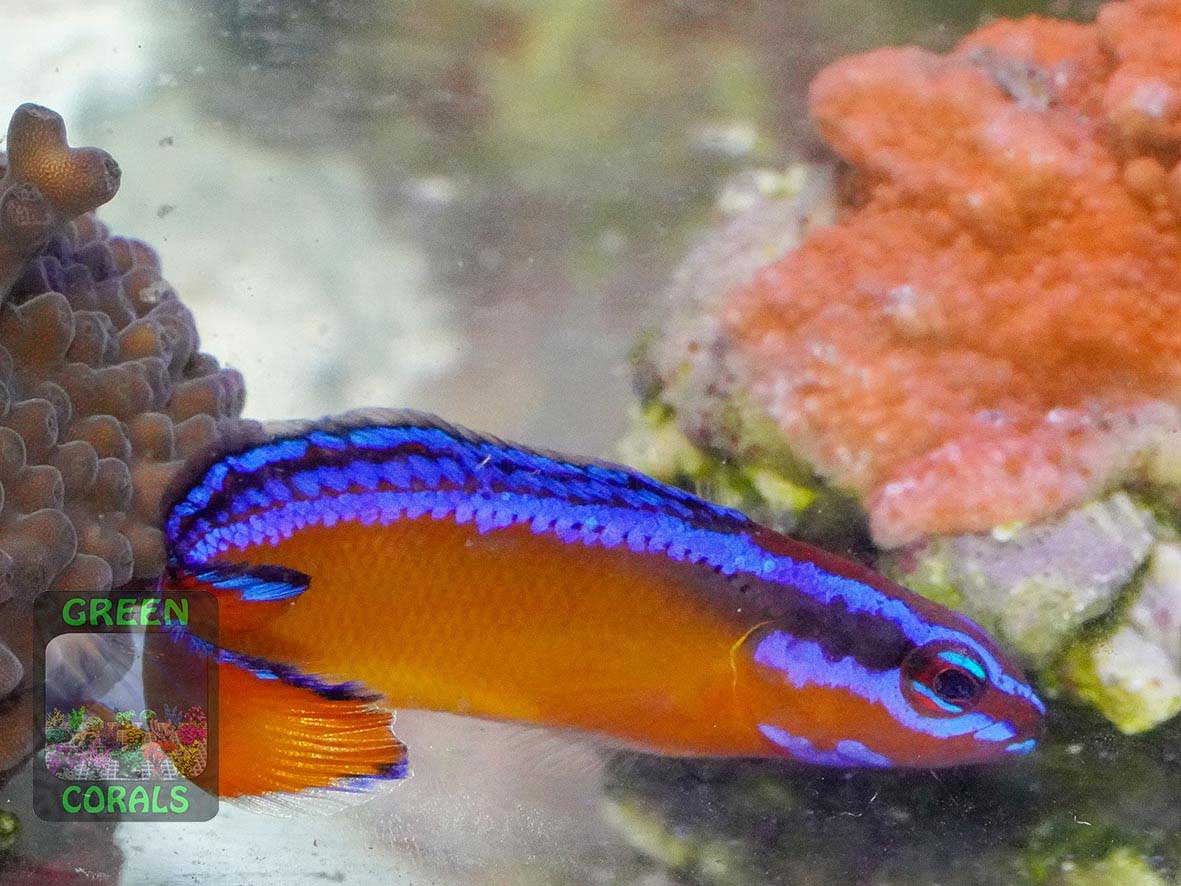
Aldabra dottyback Pseudochromis aldabraensis
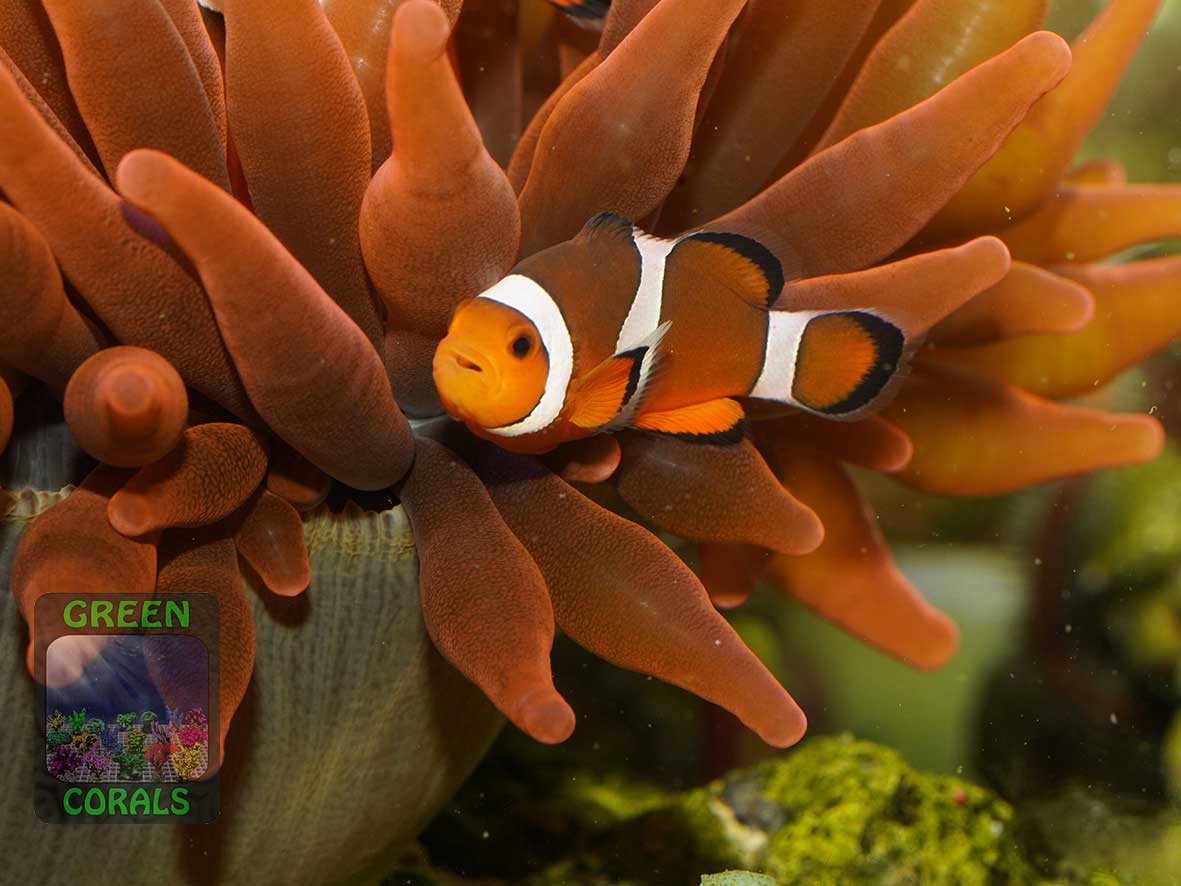
False clown anemonefish Amphiprion ocellaris
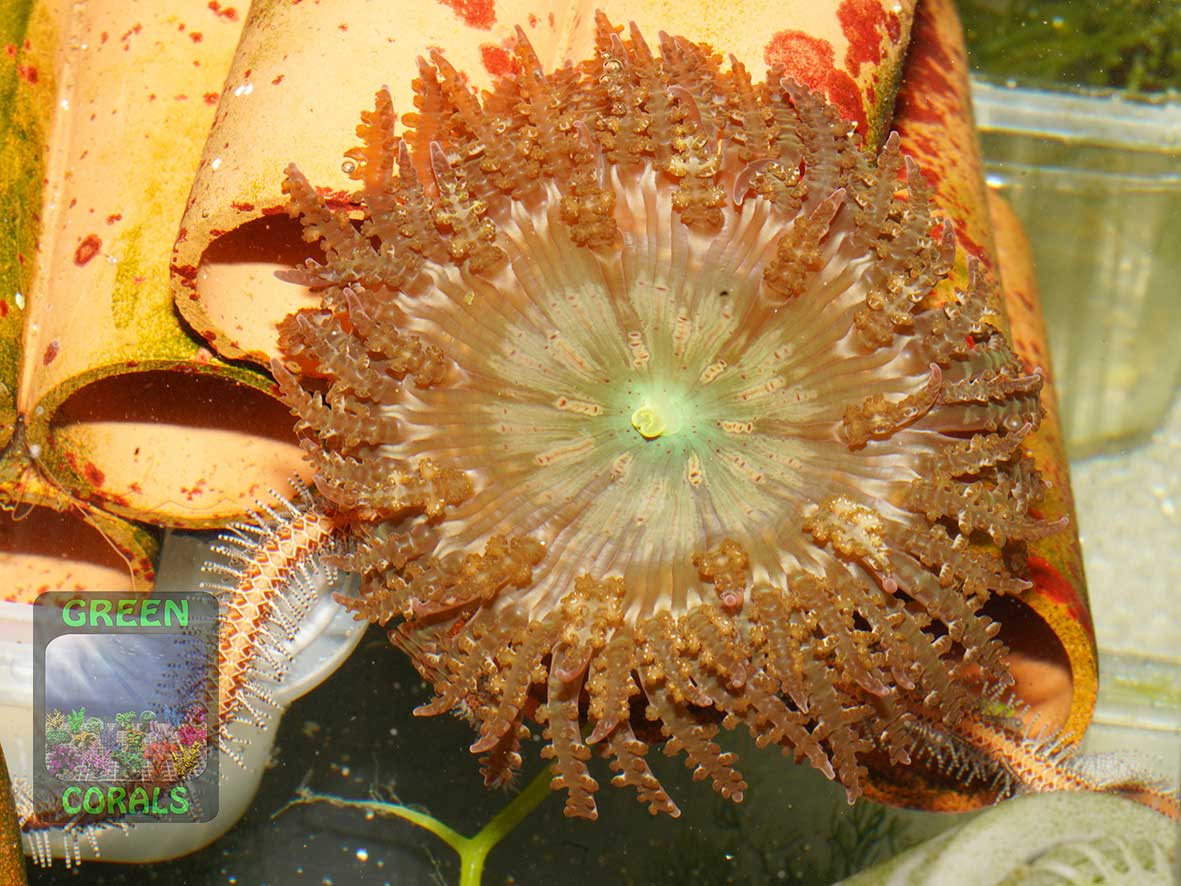
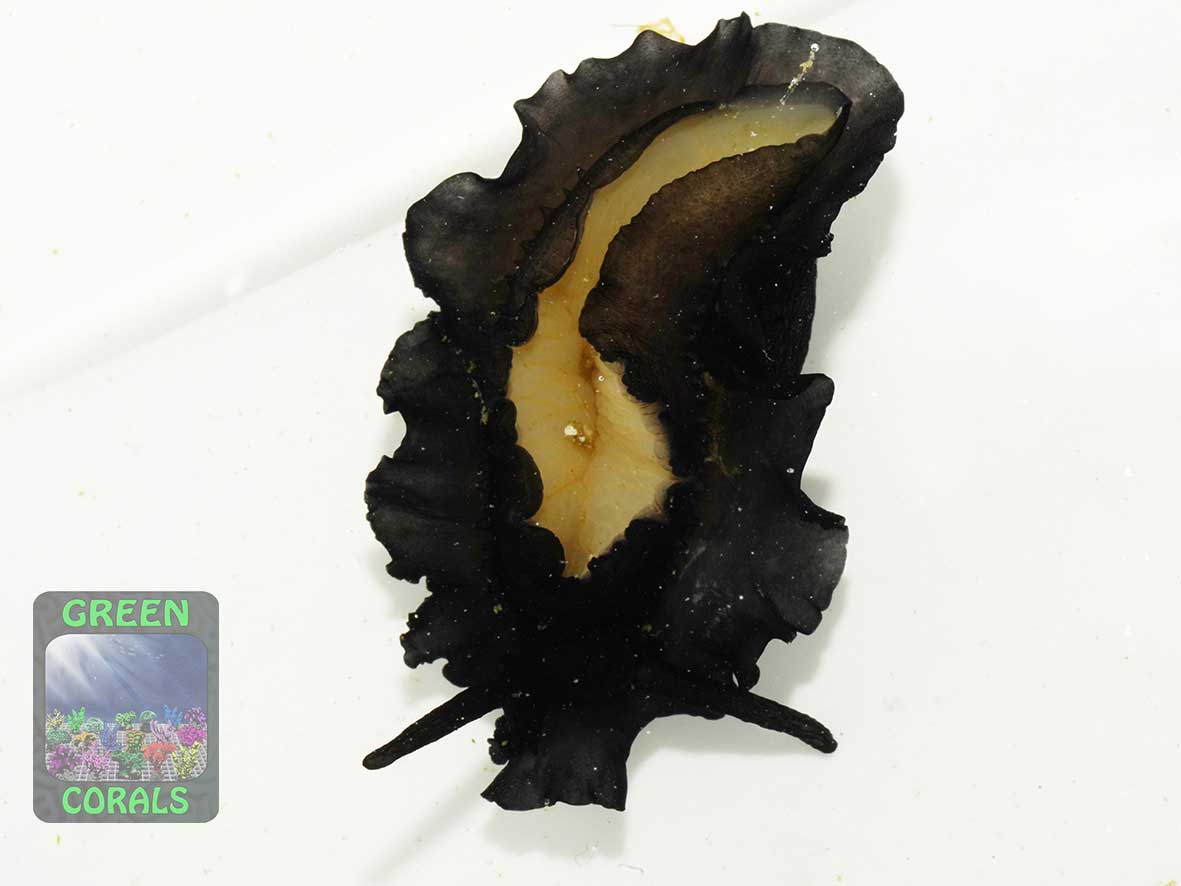
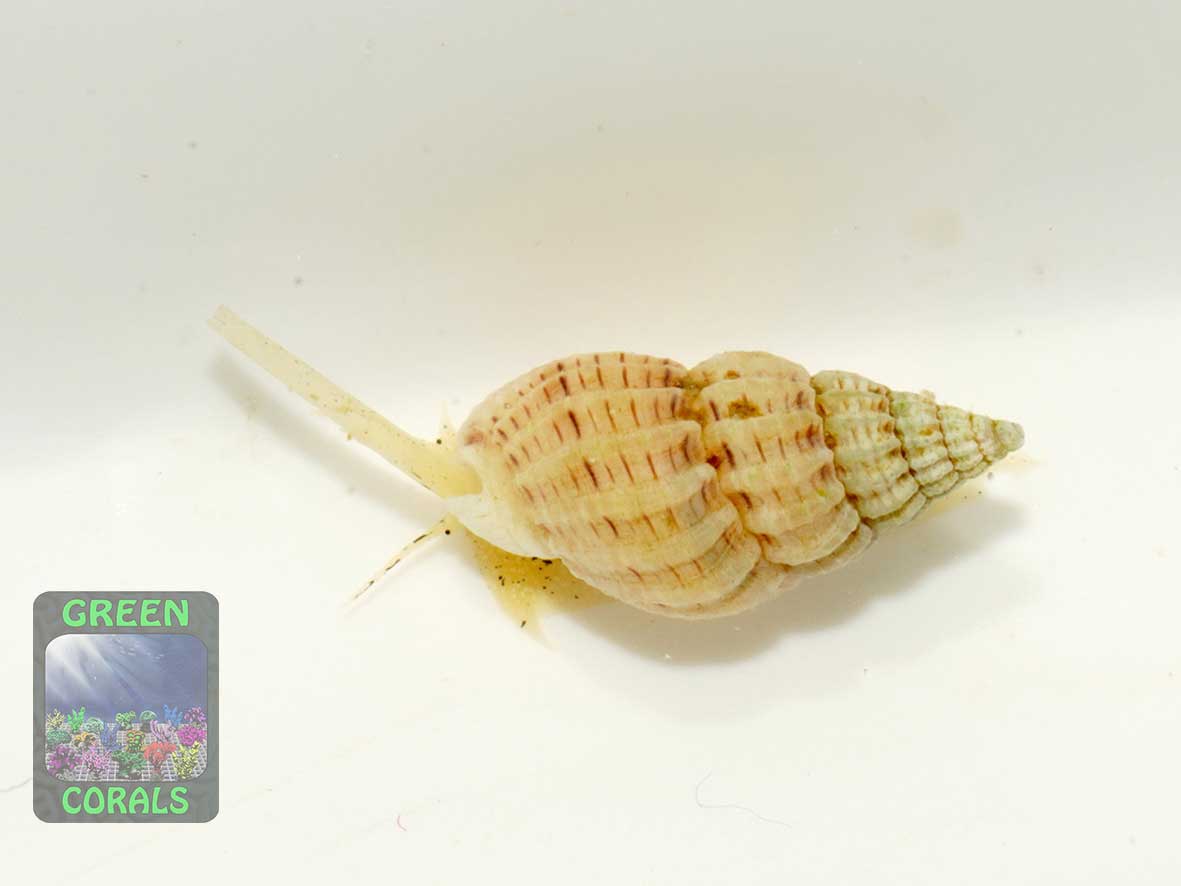
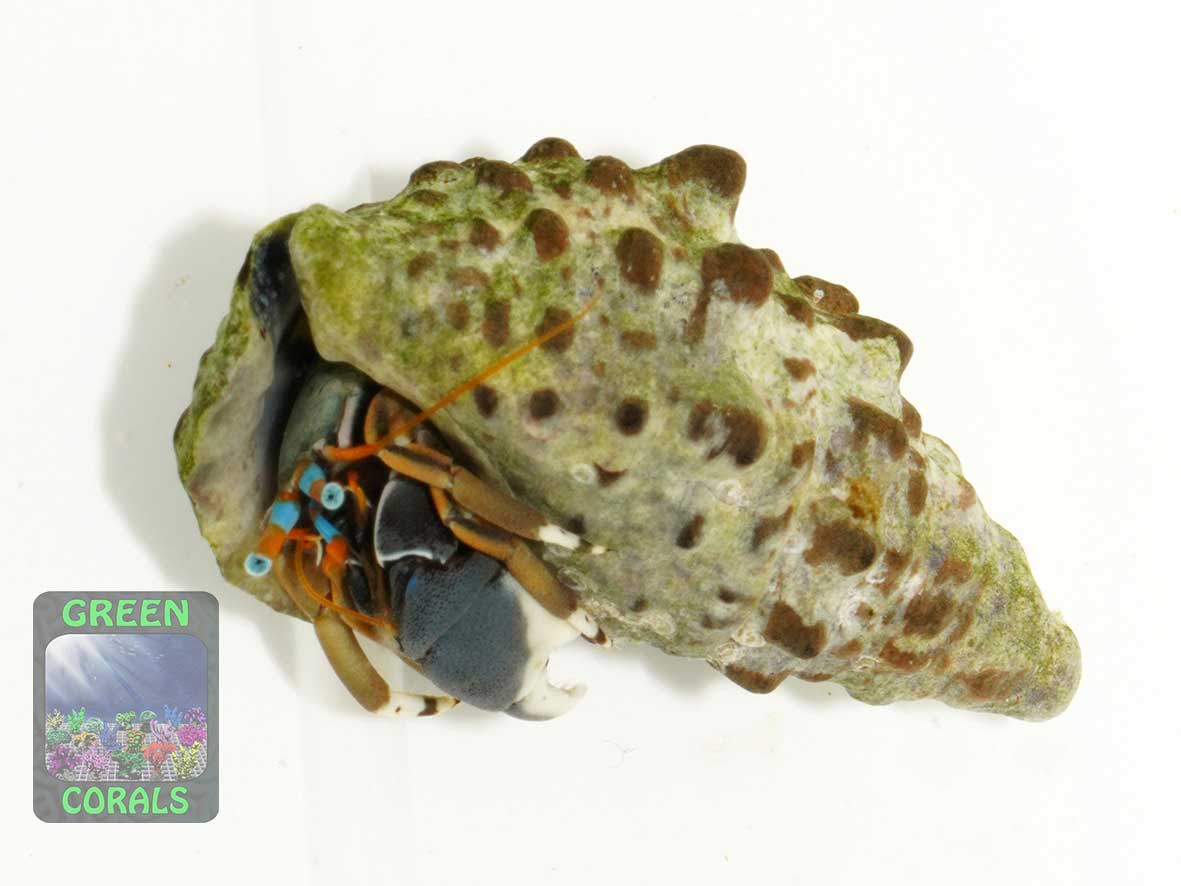
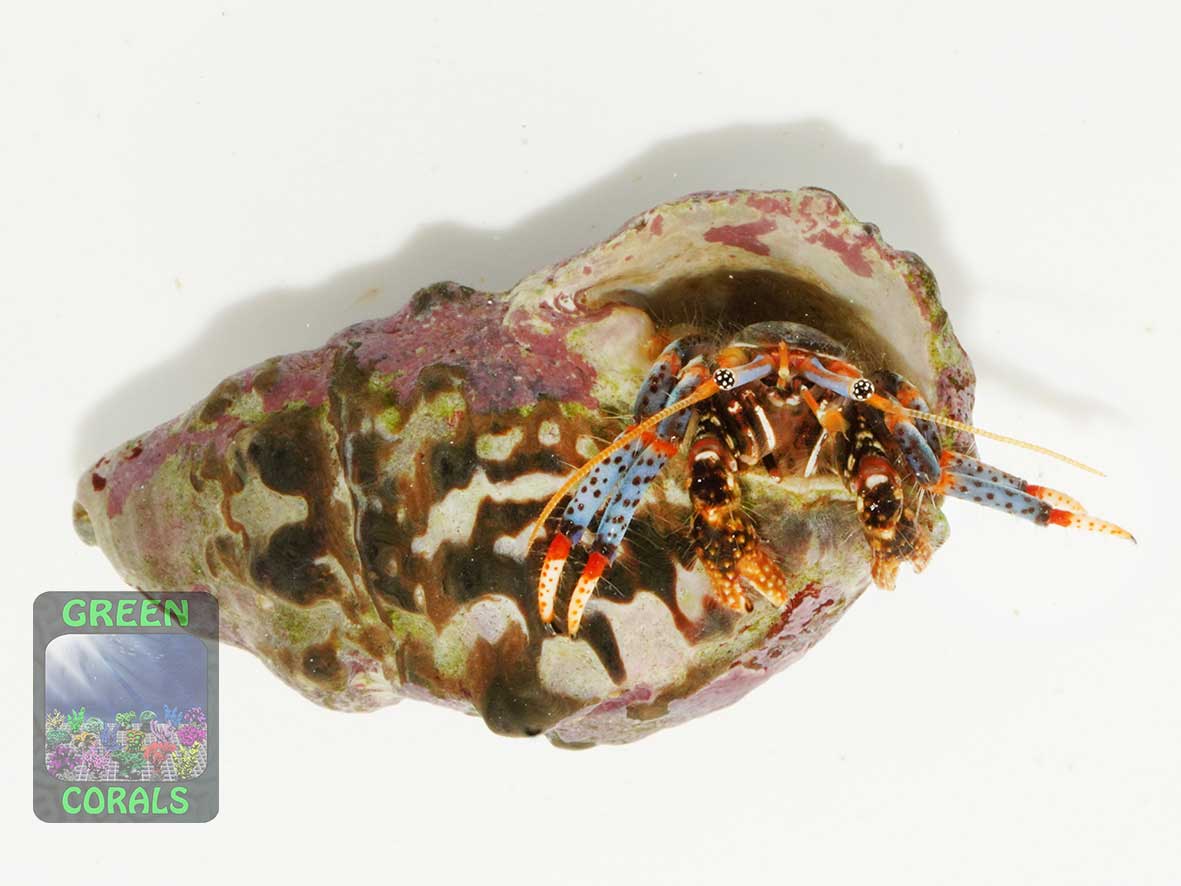
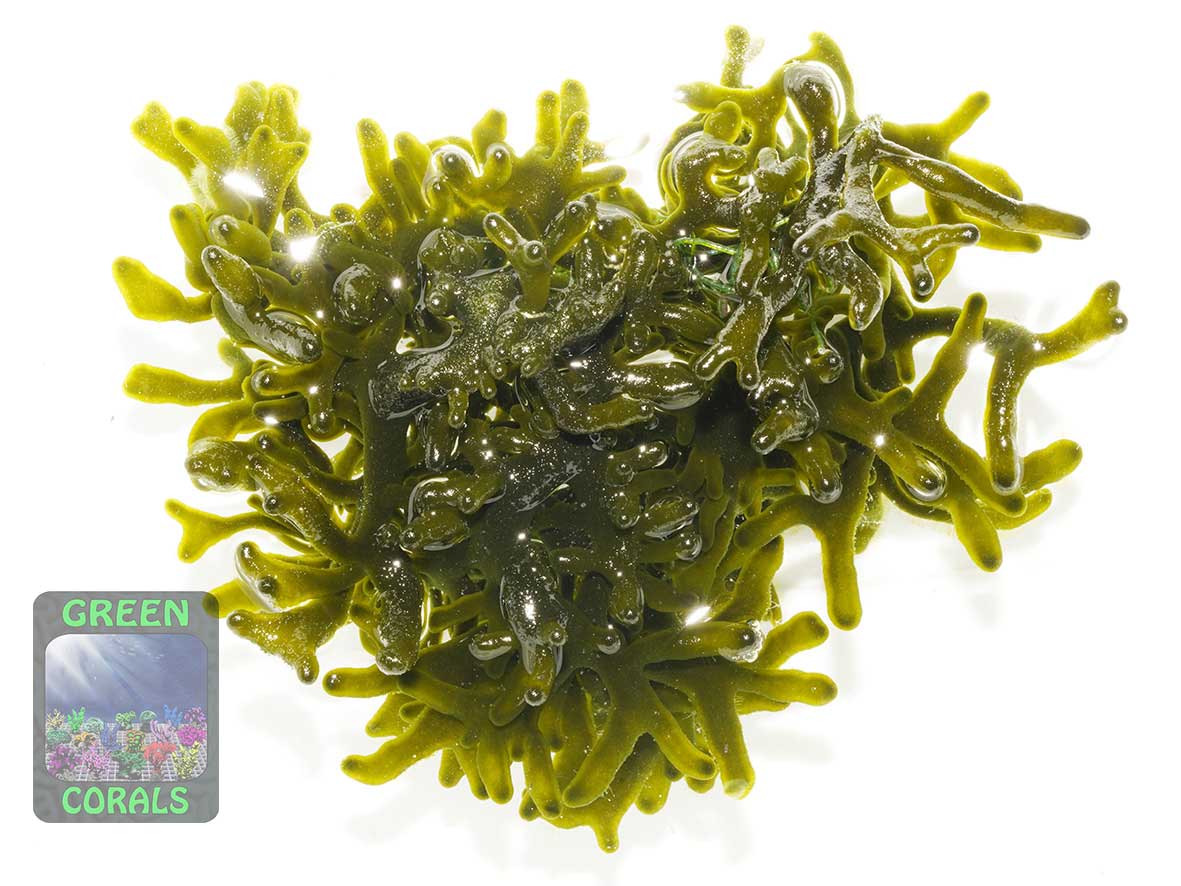
Green alga Codium sp.
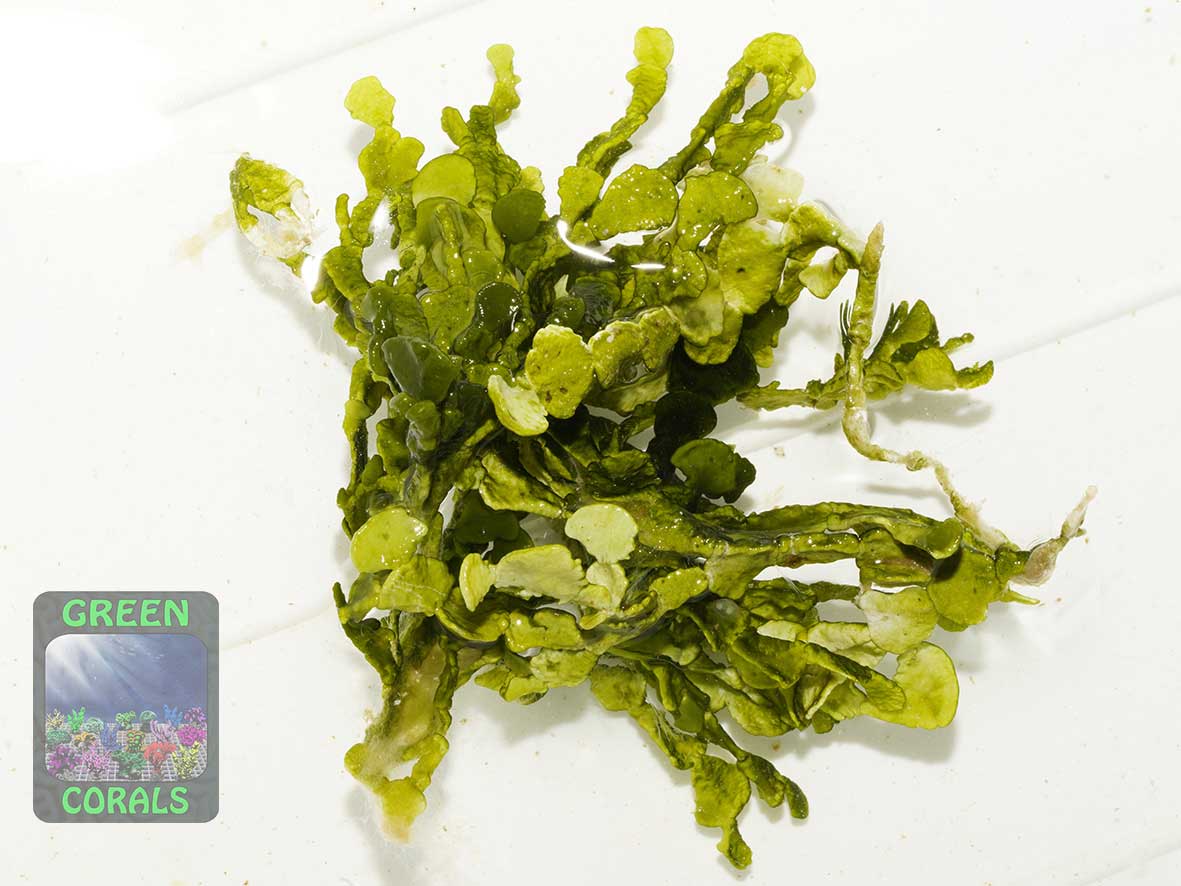
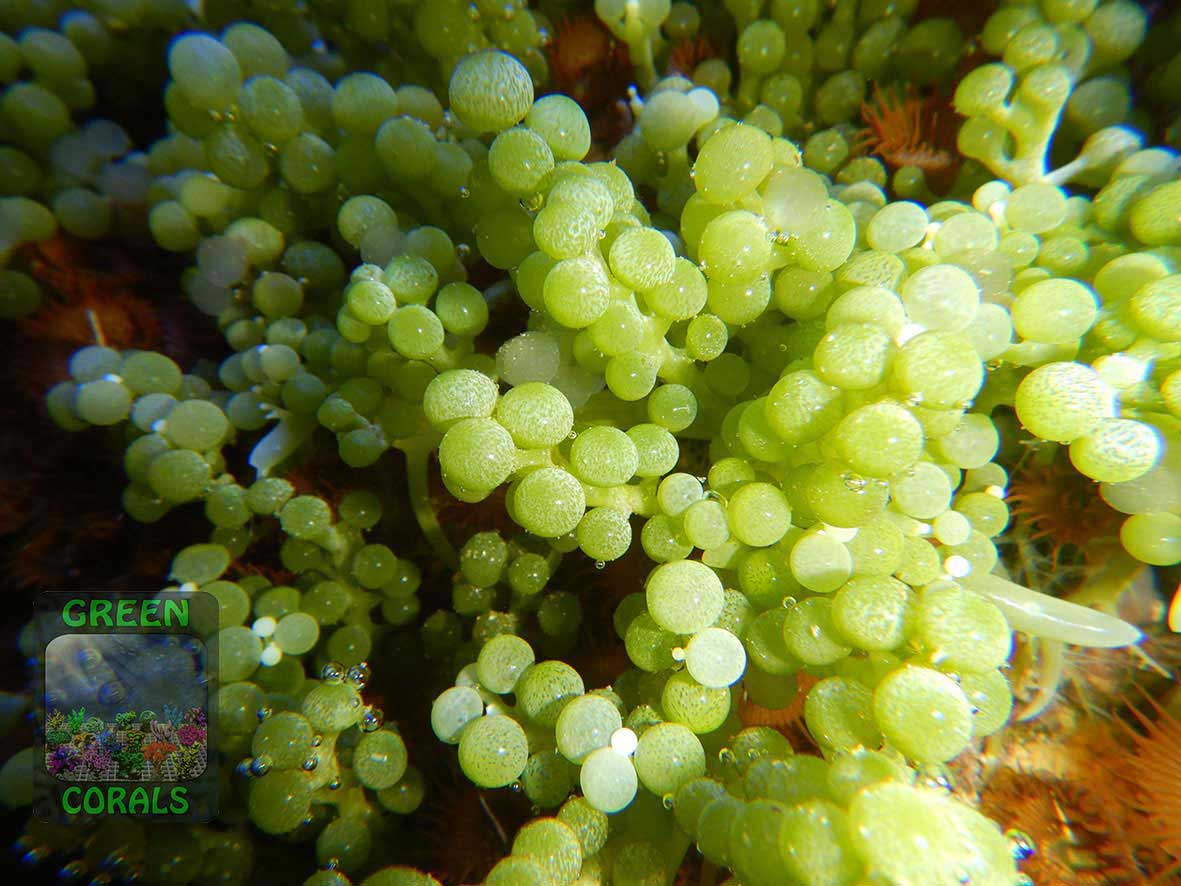
Coin algae Halimeda sp.
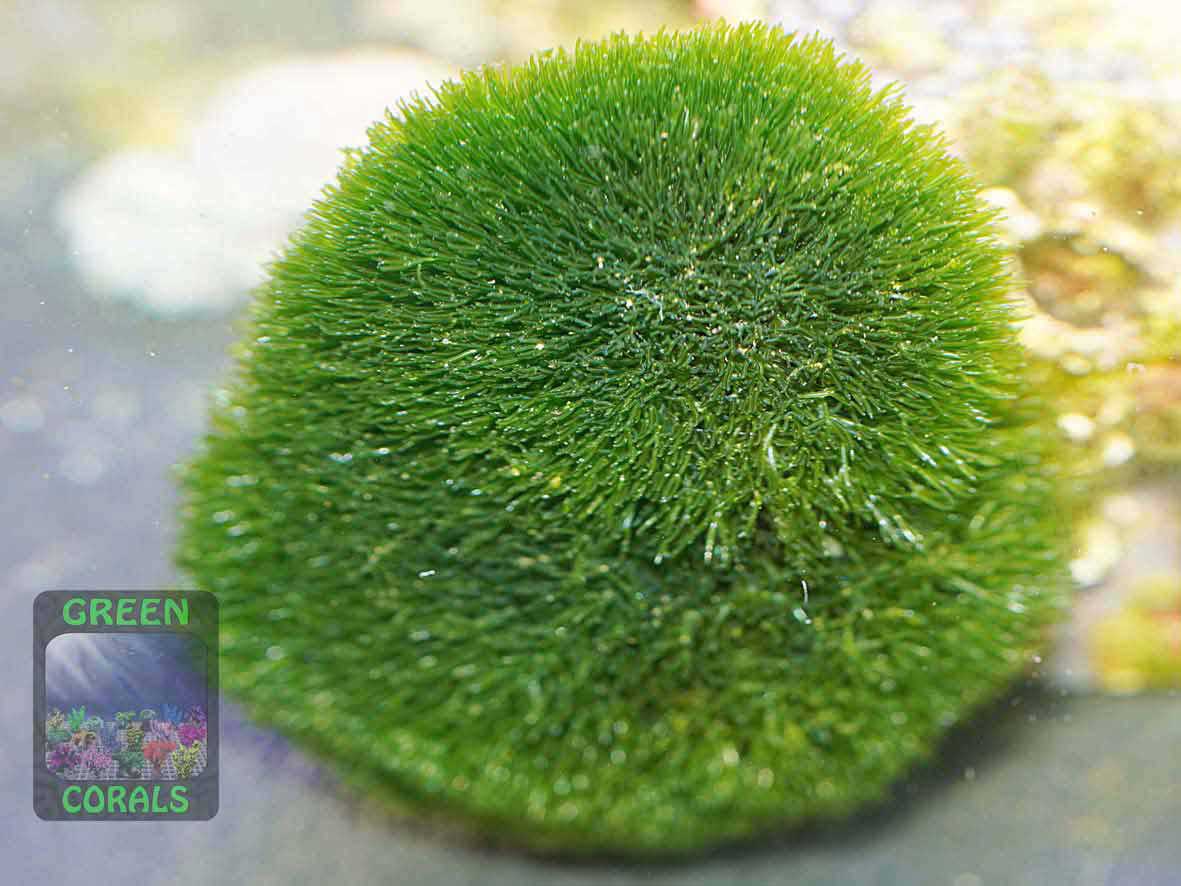

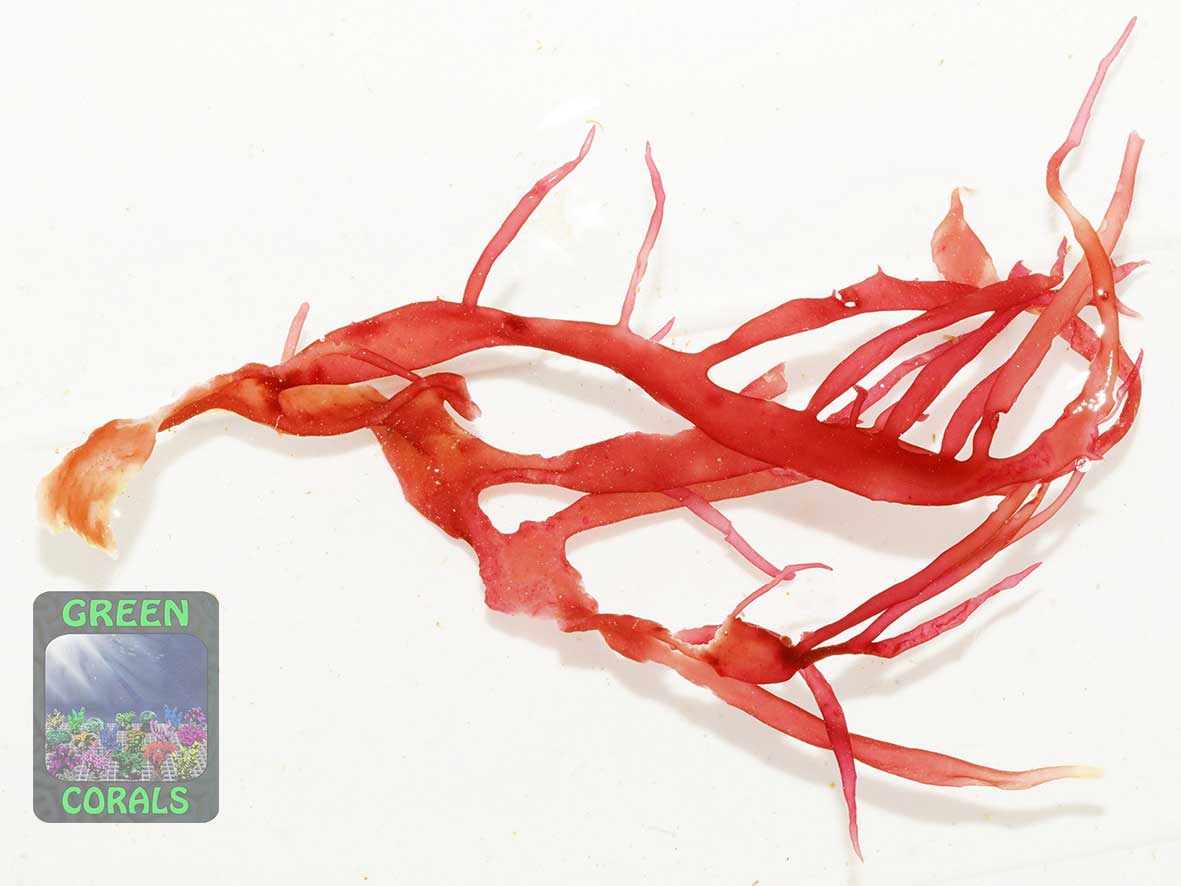
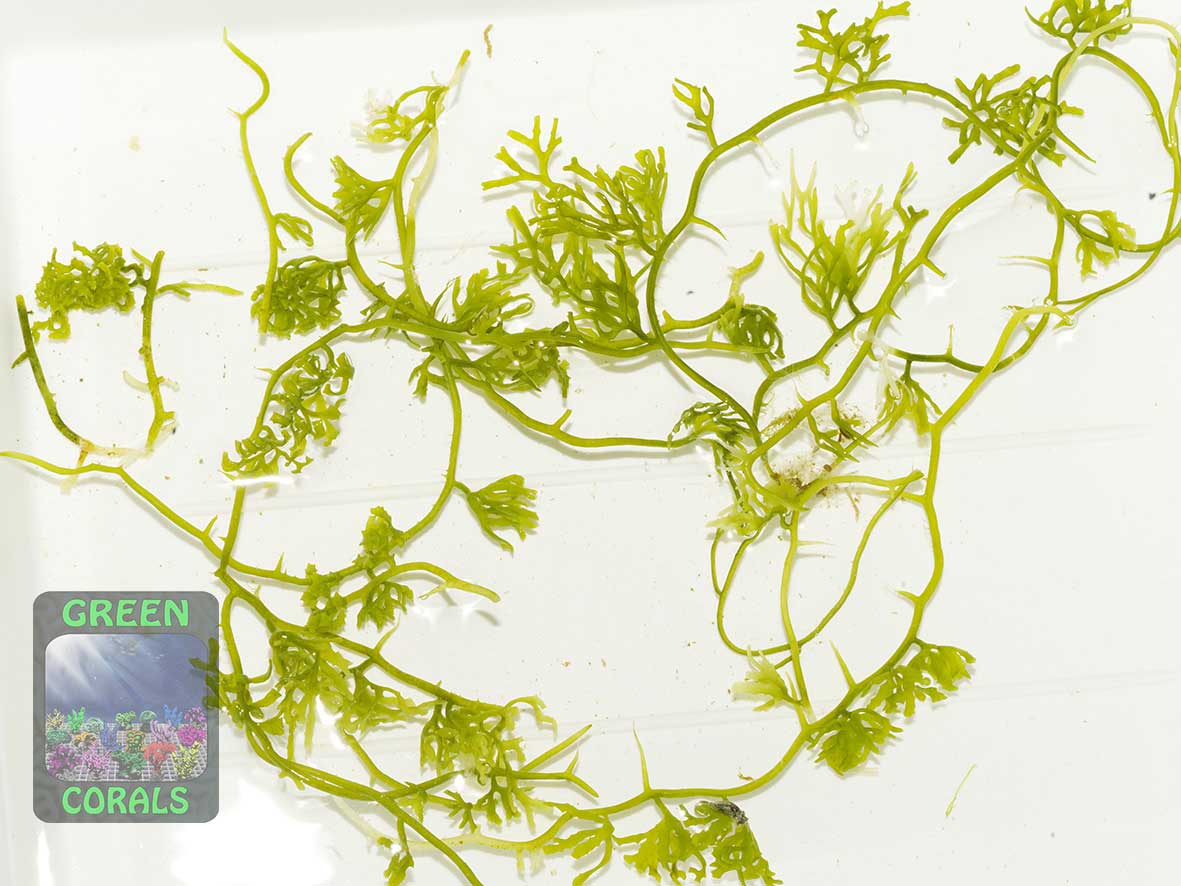
Red alga Halymenia durvillei


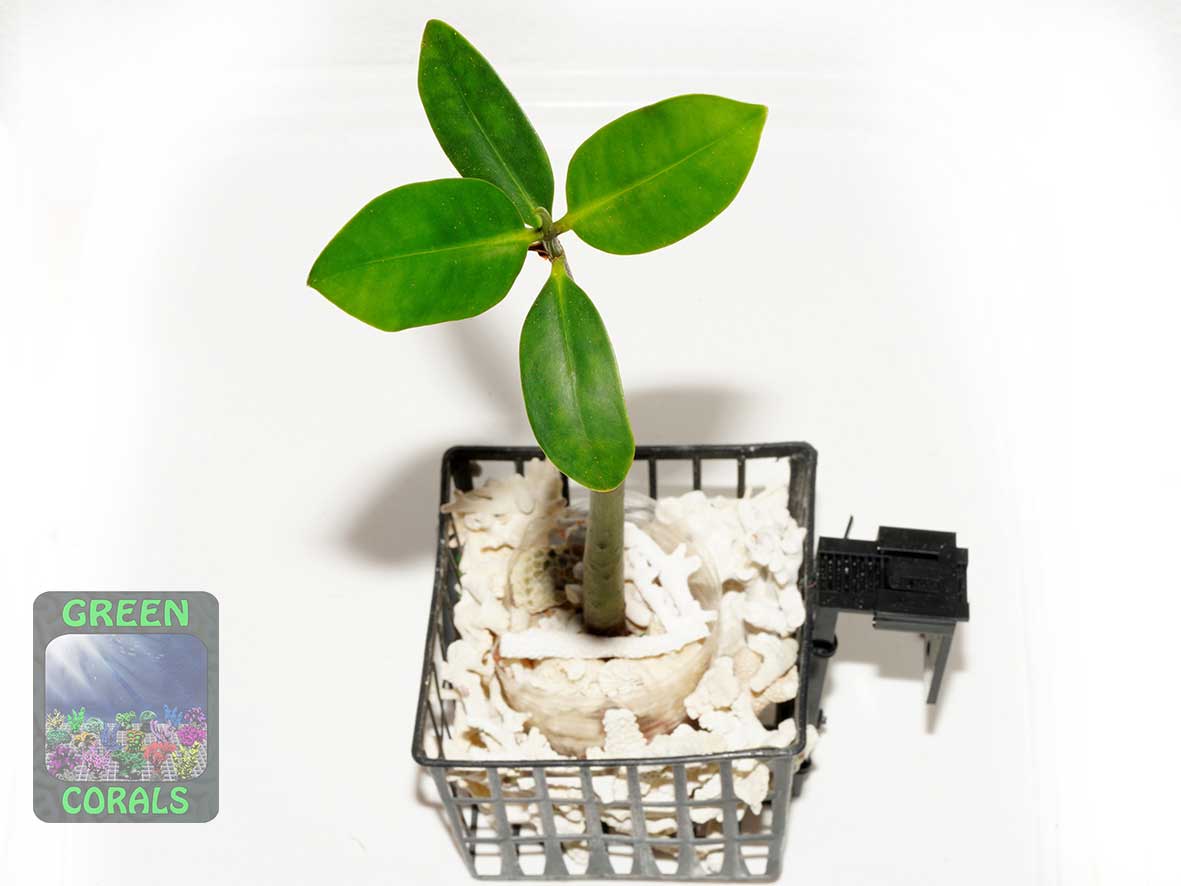
Red mangrove Rhizophora mangle
Ready-to-take-home nano aquariums
We also brought two fully set-up nano aquariums, ready to take home:
The 4-litre nano aquarium for close observation of small organisms
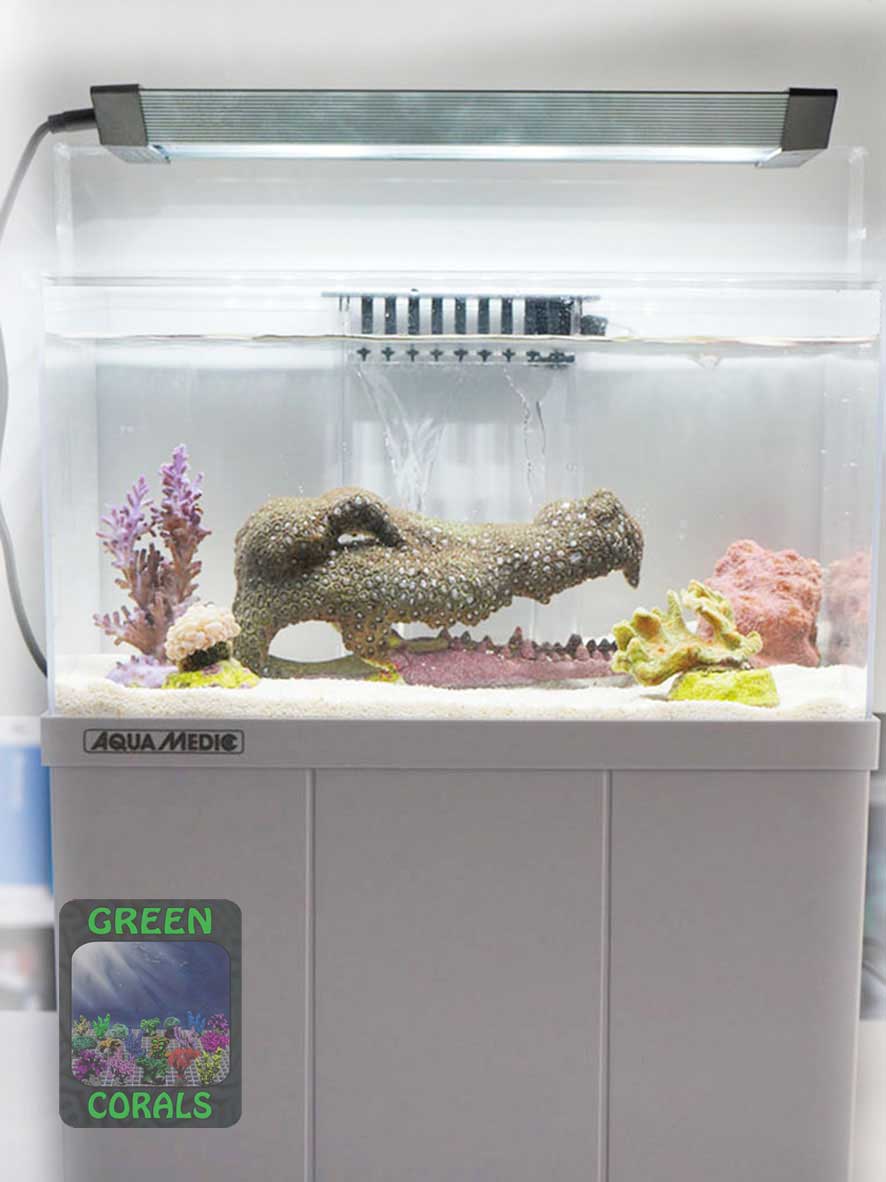
The Armatus XS by Aqua Medic is a beautifully designed miniature aquarium with LED lighting and a filtration system (powered via USB). We set it up with a fine sand substrate, five different species of macroalgae (Halimeda, Chaetomorpha, Cladophora, Halymenia, Gracilaria), and small snails and invertebrates.
This miniature aquarium is particularly well suited to observing interesting species up close for two to four days—for example, on your desk.
It is advisable to dismantle the setup after a few days, before algae start to grow. You therefore need a larger reef aquarium alongside it, from which you can transfer animals to this small aquarium for a few days of observation.
A 30-litre nano aquarium with a curved front panel and a mangrove in a hang-on basket
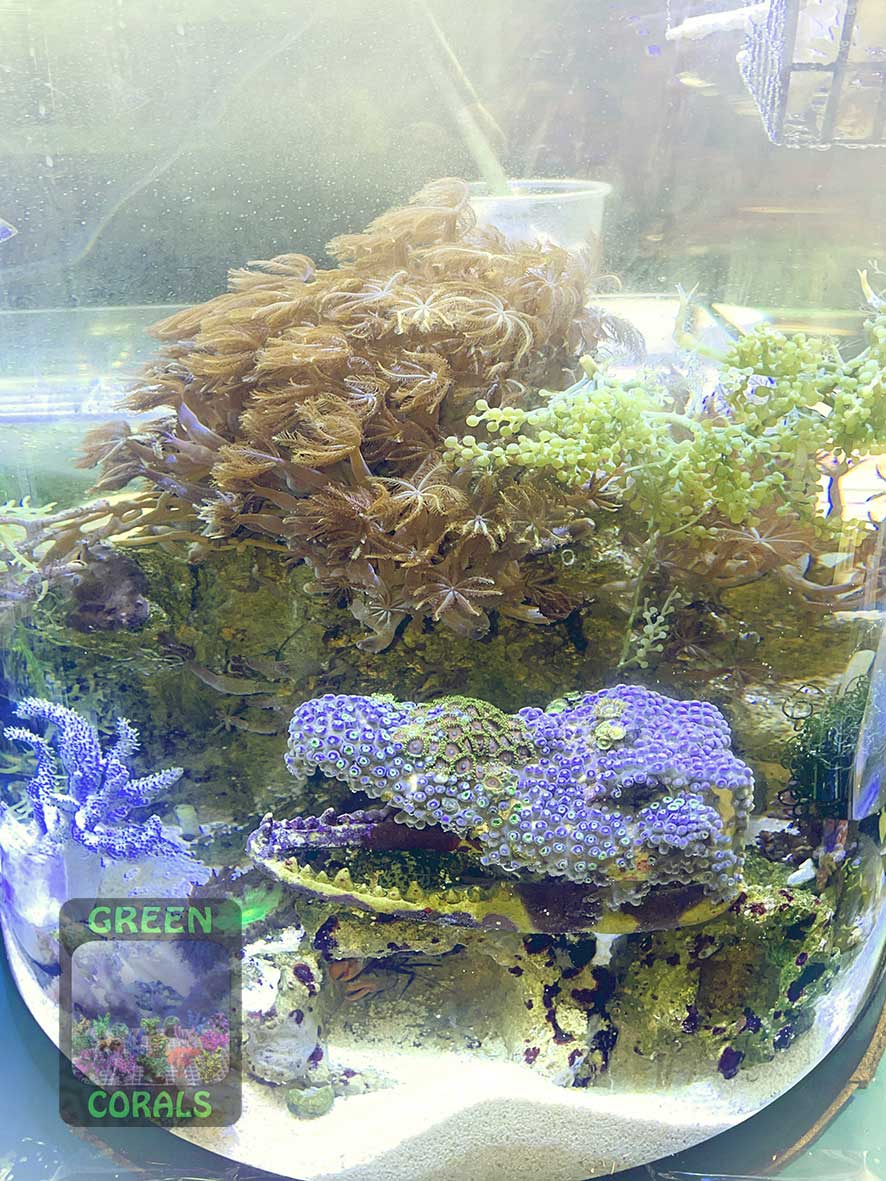
Minimal equipment and setup: 50-watt LED lighting, a surface skimmer, a sand substrate and a reef ceramic back wall.
The aquarium was stocked with very hardy organisms, including five different captive-bred snail species (Turbo, Euplica, Nassarius, Scutus, Monetaria), as well as eight different species of macroalgae (Caulerpa spp., Chaetomorpha, Cladophora, Halimeda, Codium, Halymenia, Gracilaria) and a red mangrove, Rhizophora mangle, in a mesh basket that hangs inside the aquarium.
A small, stable, simple aquarium with very little equipment and minimal maintenance—perfect for getting started with marine aquarium keeping.
The two crocodile skulls covered with zoanthids and a Leptastrea coral, respectively, were a particular eye-catcher. They were on display for the fair and were not part of the livestock included with the nano aquariums for sale.
Triops, fairy shrimp and dwarf shrimp from AQ4Aquaristik
Our stand partner AQ4Aquaristik offered various Triops and fairy shrimp kits and also brought an adult Triops cancriformis for visitors to see.
These ancient branchiopod crustaceans of the class Branchiopoda—including Triops, fairy shrimp and clam shrimp—are fascinating animals to keep, although they live in freshwater. In aquarium keeping, these “prehistoric crustaceans” are best known through the brine shrimp Artemia. Water fleas such as Daphnia and Moina are other relatives of these ancient crustaceans.
AQ4Aquaristik also presented the intriguing red Hawaiian shrimp Halocaridina rubra, which grows to only 1 cm long but can live for up to 20 years. In its natural habitat, it is accustomed to large fluctuations in salinity caused by rainfall and can readily be kept and bred in saltwater or brackish water.
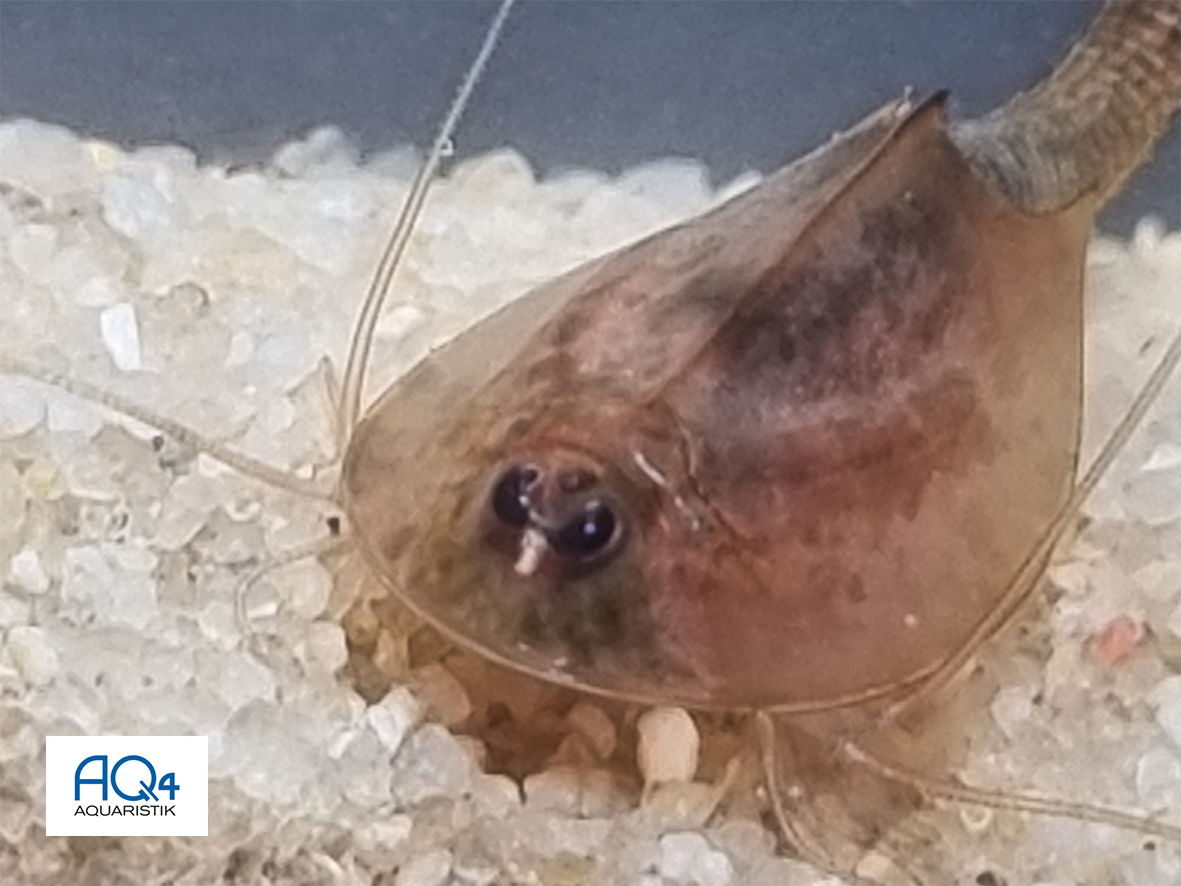
The tadpole shrimp Triops cancriformis
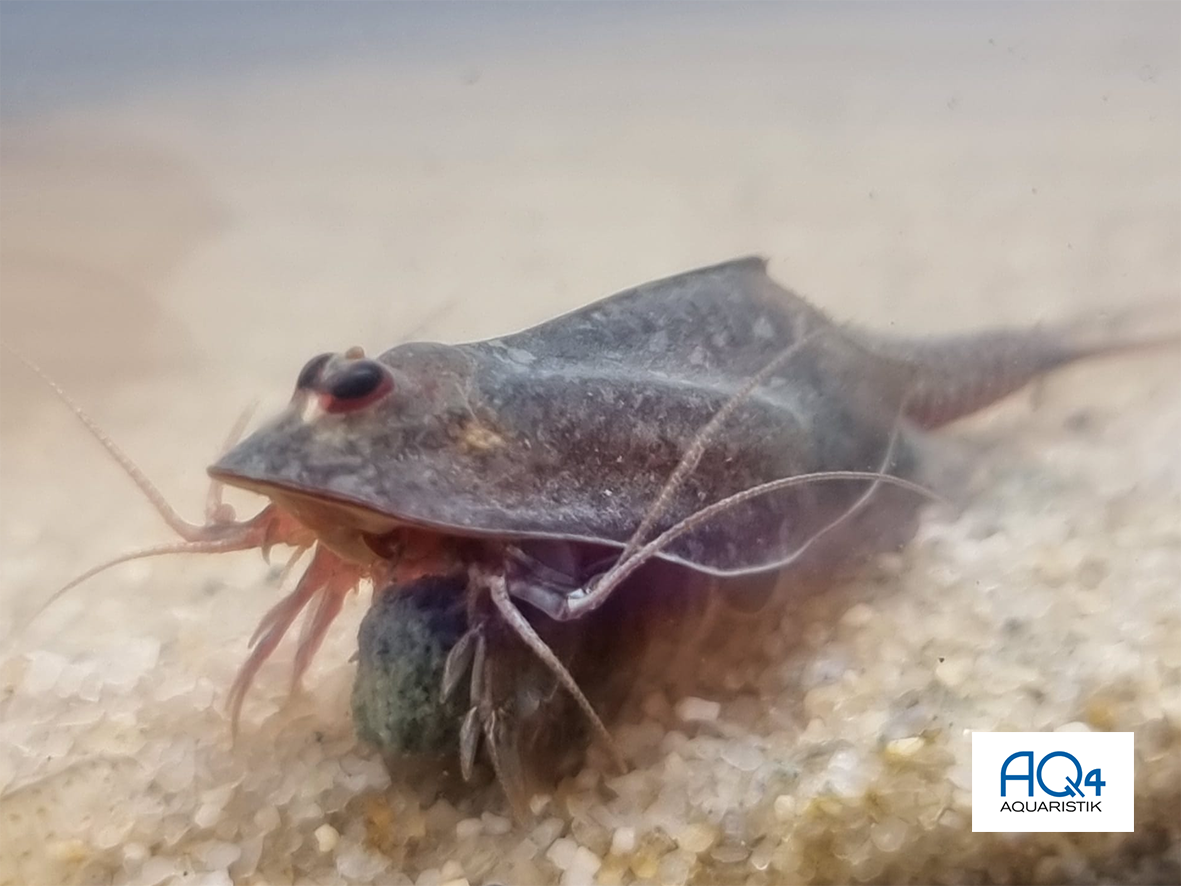
Coral Finder Information Point
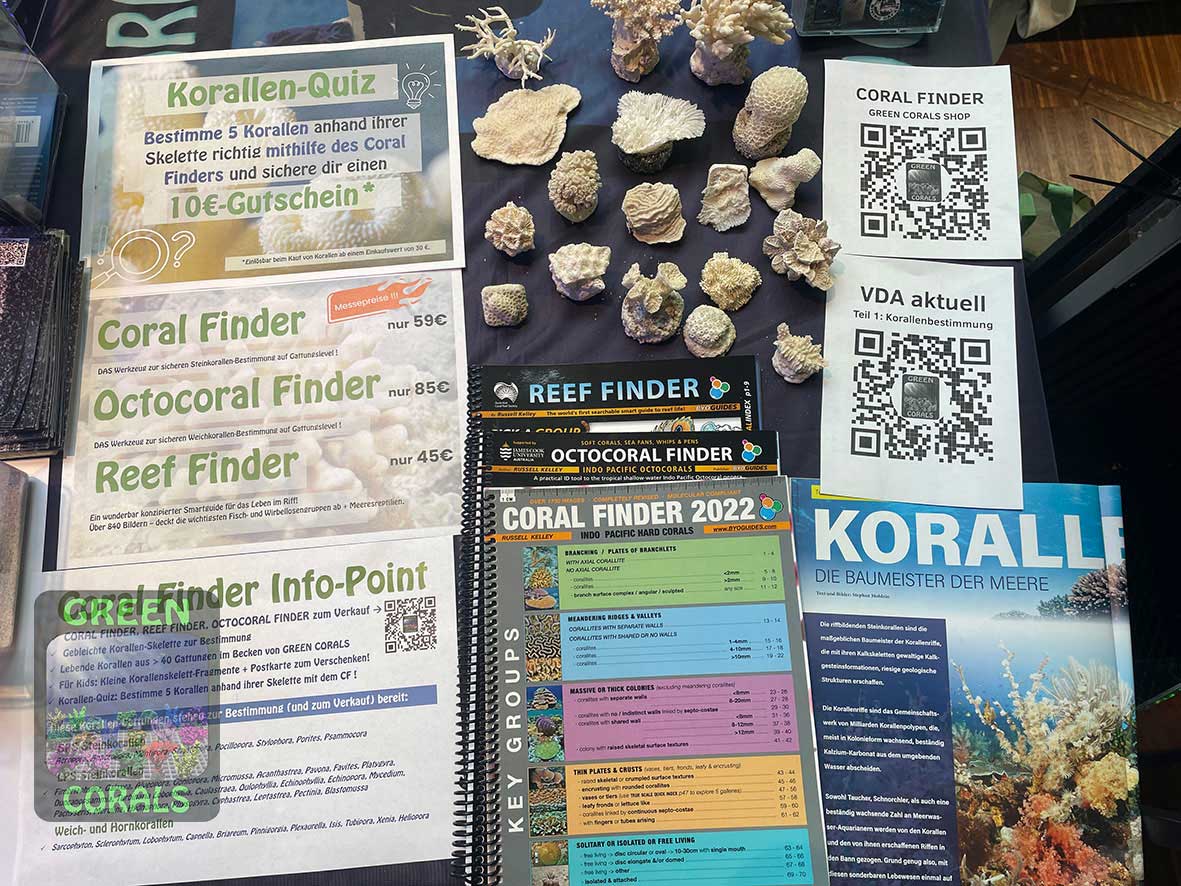
Coral Finder information point at the Nordriff fair 2026
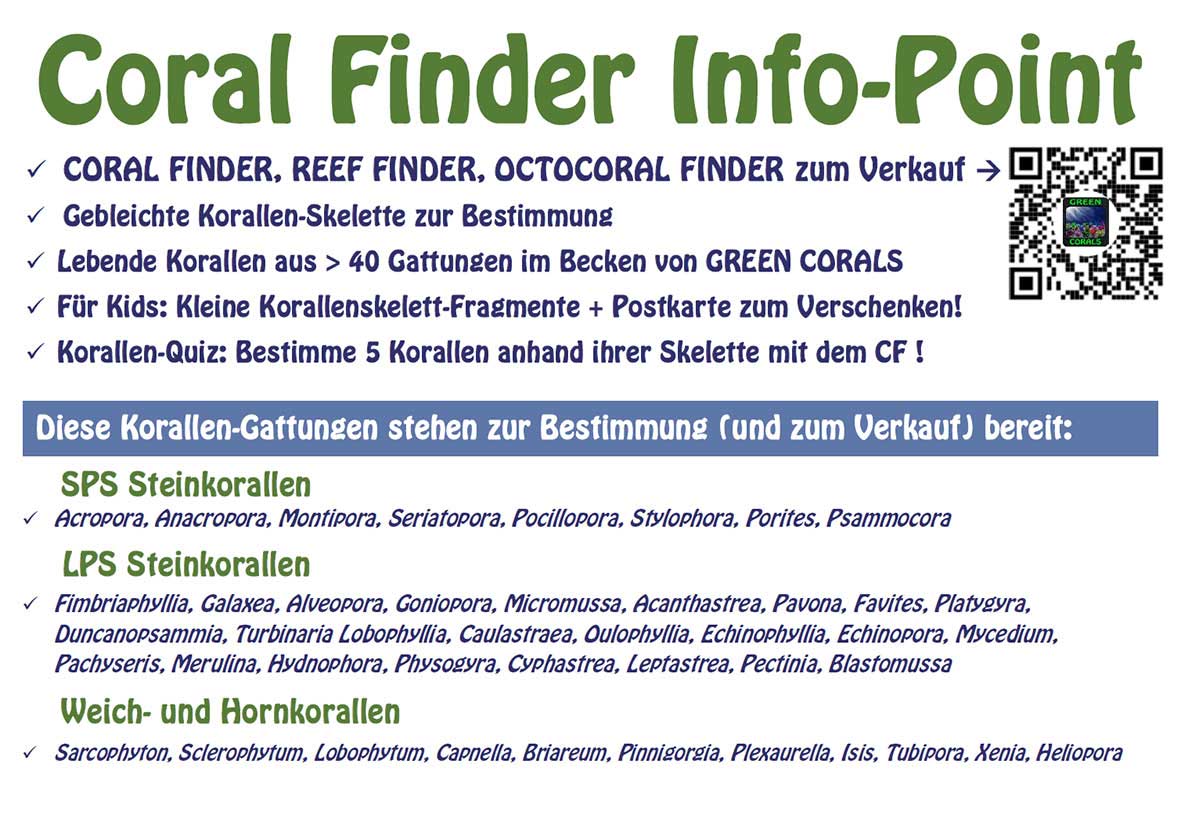
Coral Finder information point at the Nordriff fair 2026
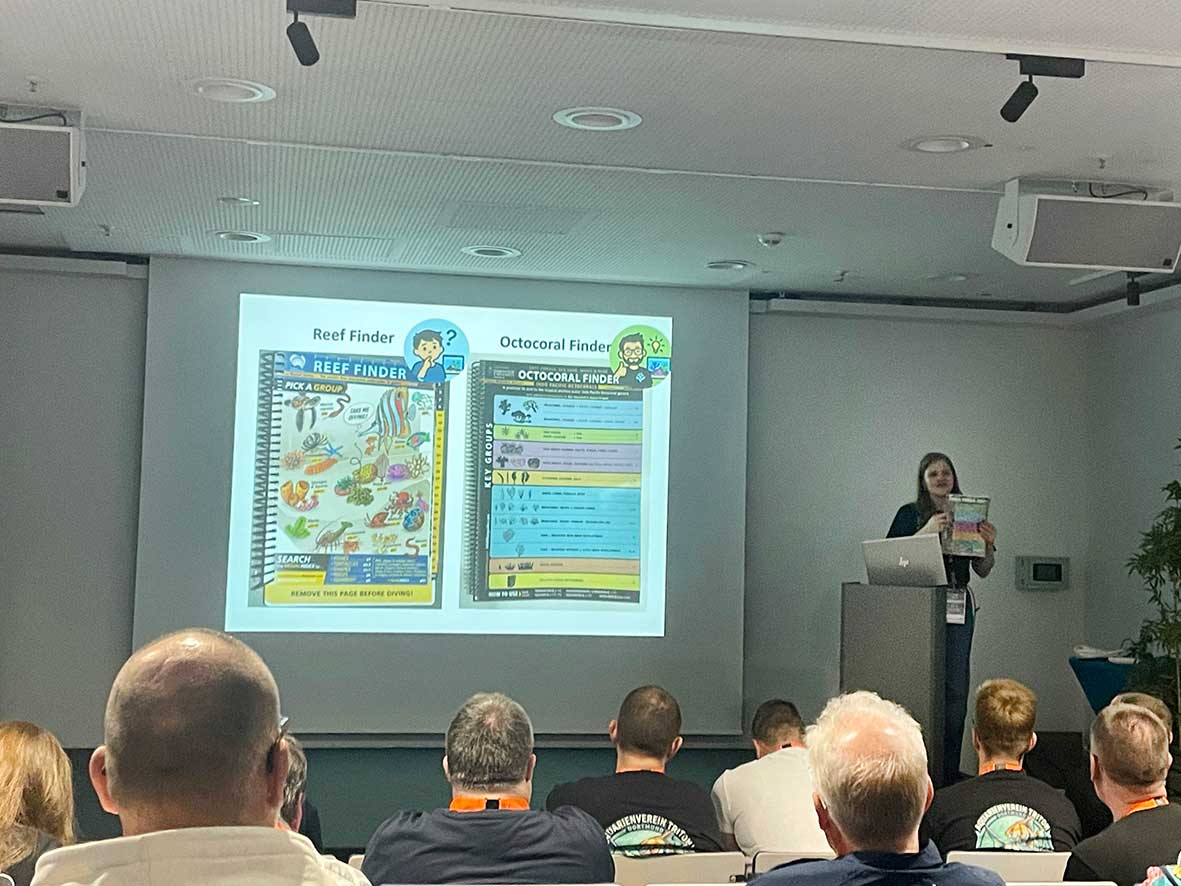
Coral Finder talk by Dr Mareen Moeller at the Nordriff fair
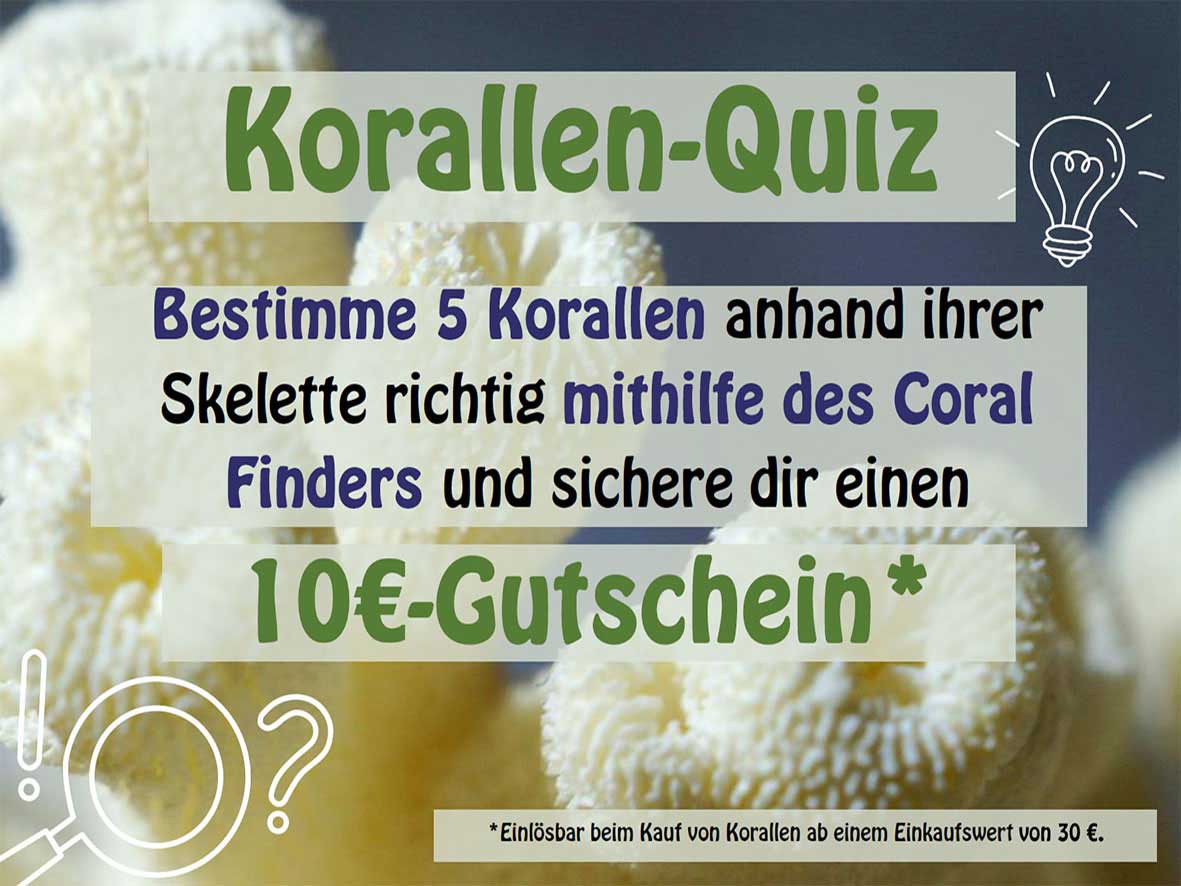
Coral quiz at the Nordriff fair 2026
On Saturday, Dr Mareen Möller from SciReef, which produces corals for marine aquariums through sexual reproduction, gave a fascinating talk on how to use the Coral Finder. During the talk, we provided ten copies of the Coral Finder for the audience to look at and also brought bleached coral skeletons for them to examine.
The Coral Finder is THE tool for identifying stony corals at genus level. Our aim was to introduce the Coral Finder to the marine aquarium community at the fair—as a “must-have” for every coral enthusiast and marine aquarist. Immediately after Mareen’s talk, there was a real rush…
At our stand, visitors could look at and purchase the Coral Finder, the new Octocoral Finder for identifying soft corals and gorgonians, and the Reef Finder. All three of these ingenious “Finders” were developed by Australian geologist, coral expert and science communicator Russell Kelley, who has a remarkable ability to make complex scientific concepts accessible to a broad audience.
We also prepared a coral quiz: anyone who correctly identified five coral skeletons to genus level using the Coral Finder could win a €10 voucher.
GREEN CORALS photo products
We also presented our GREEN CORALS photo products at the Nordriff fair at the Klimahaus Bremerhaven:
Canvas prints, mugs, magnets, fleece blankets, cushions, rulers, postcards, coasters and stickers featuring beautiful marine images.
All the images—from sharks and dolphins to pygmy seahorses, corals and impressive reef scenes—were photographed by marine biologist Stephan Moldzio on coral reefs around the world. We also offered the Red Sea sticker set, containing 288 stickers and created in collaboration with our partner Dive Sticker.
The photo products complemented our marine biology information area. The images document species and habitats of tropical coral reefs. They also appeal to people who do not keep aquariums, as well as families and children—a great tip for all ocean enthusiasts and nature lovers, and a lovely gift idea!
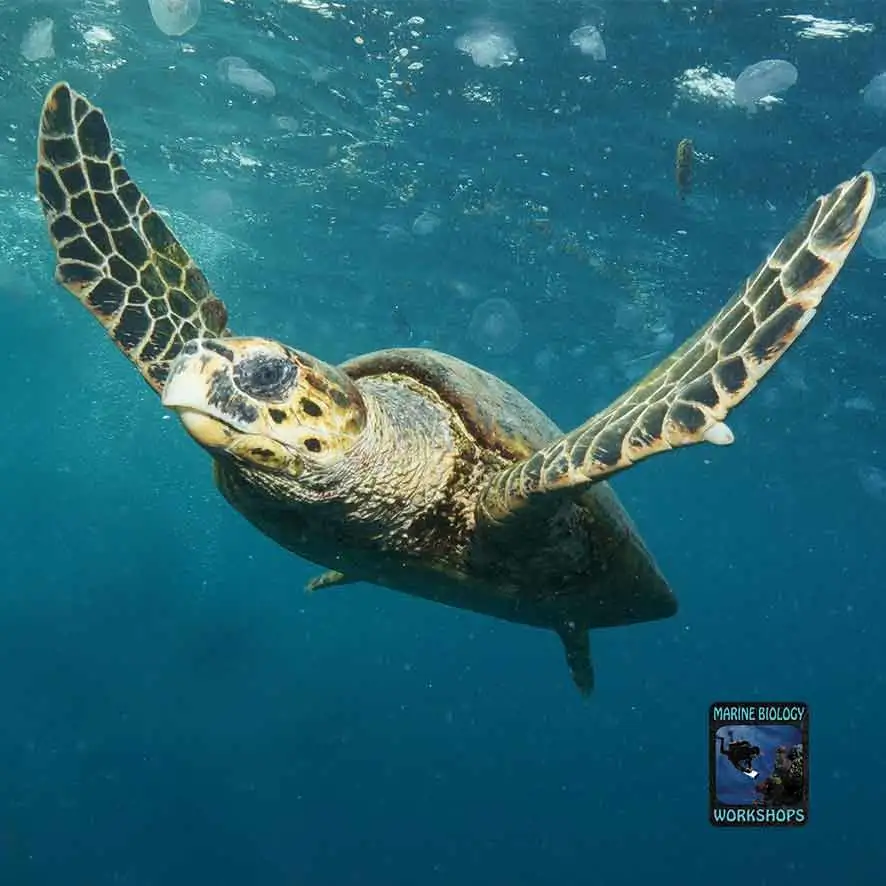
Hawksbill sea turtle Eretmochelys imbricata in the Red Sea
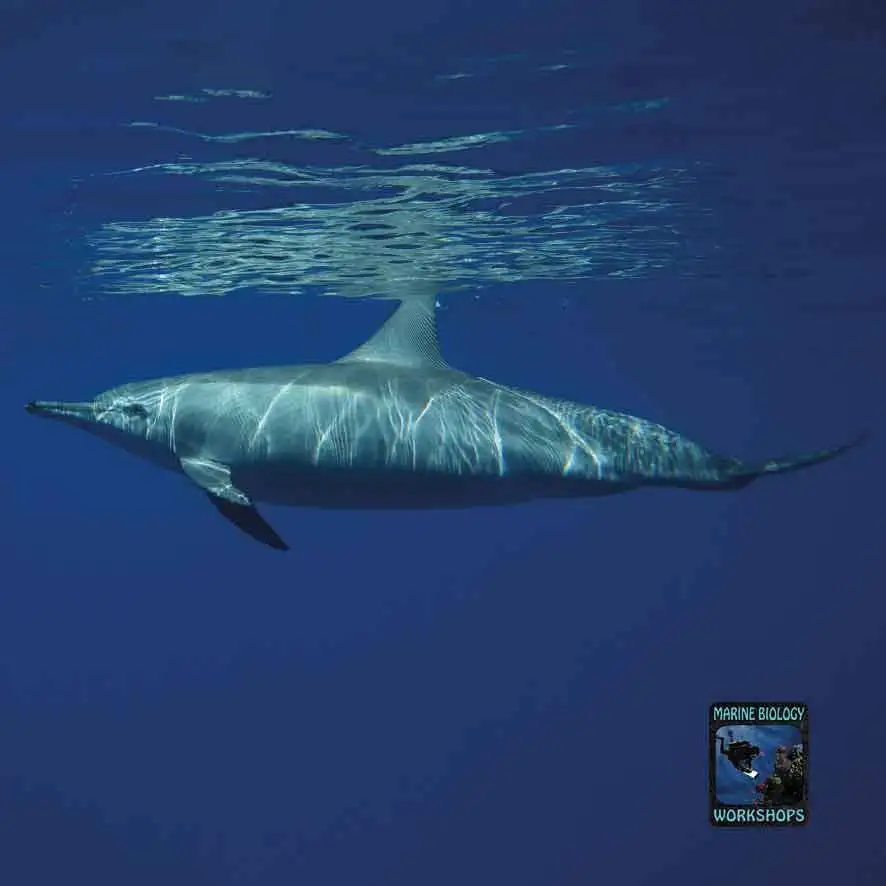
Spinner dolphin Stenella longirostris in the Red Sea
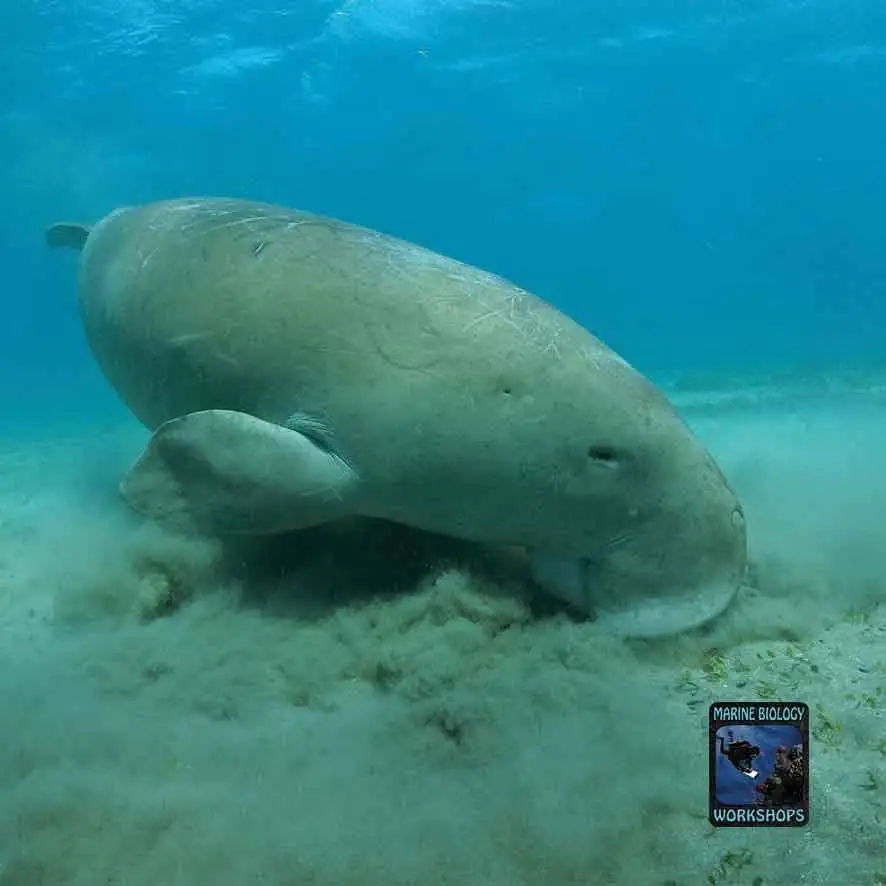
Dugong (Dugong dugon) in Marsa Egla, Red Sea
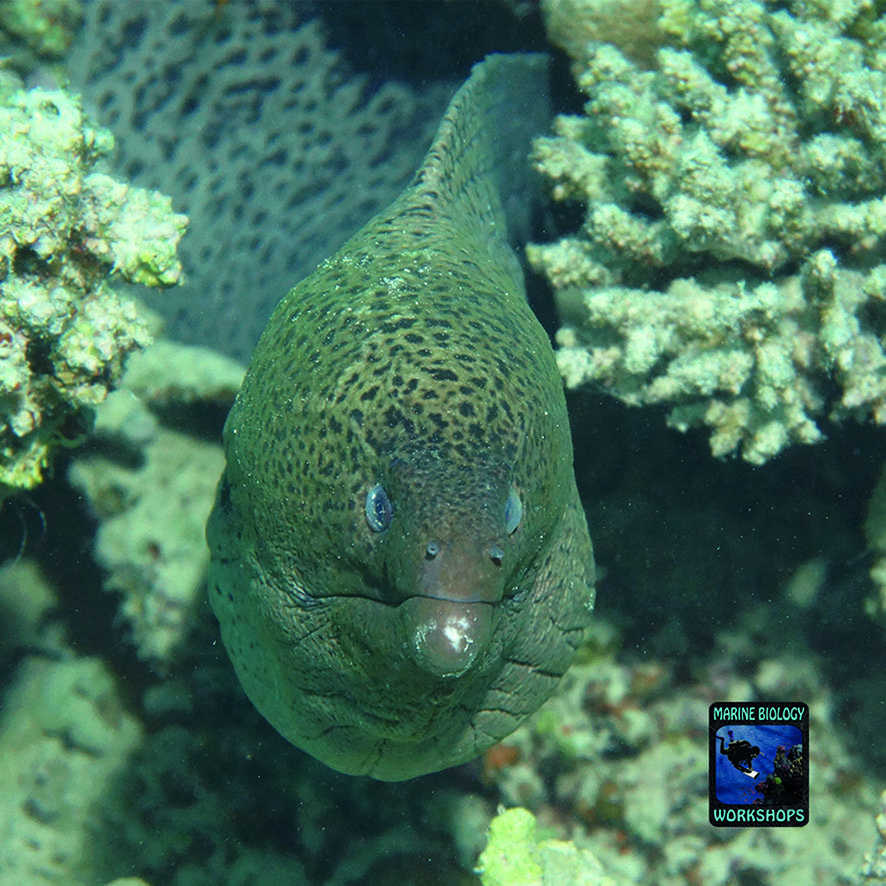
Giant moray Gymnothorax javanicus in the Red Sea
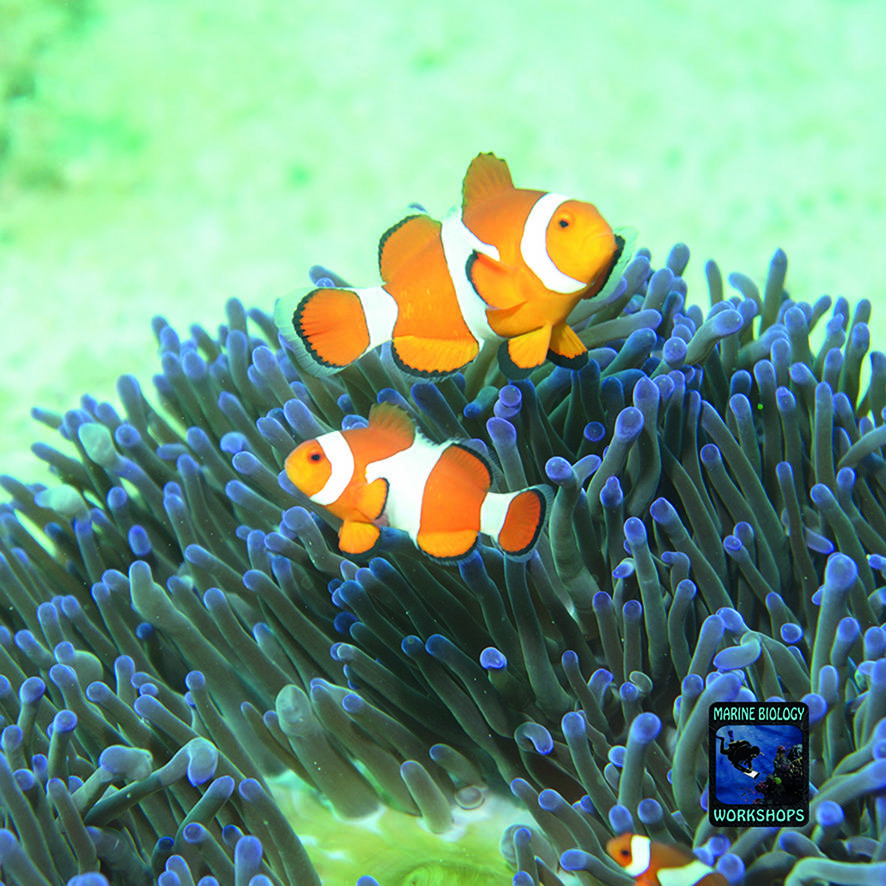
False clown anemonefish Amphiprion ocellaris in the Philippines
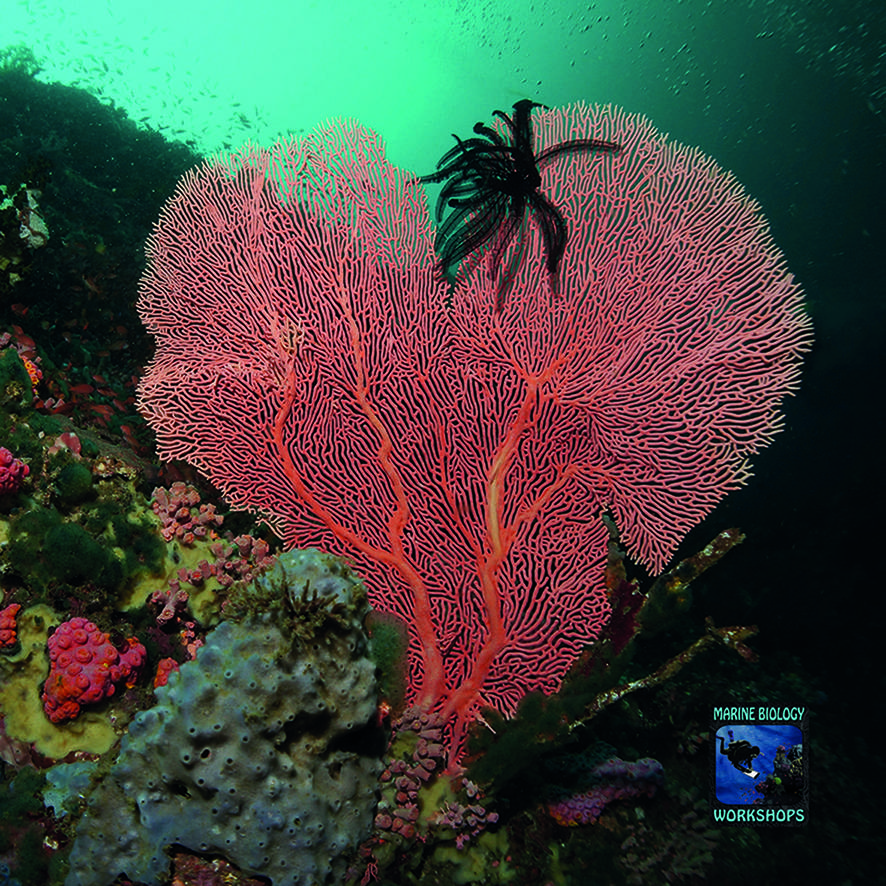
Sea fan near Verde Island in the Philippines
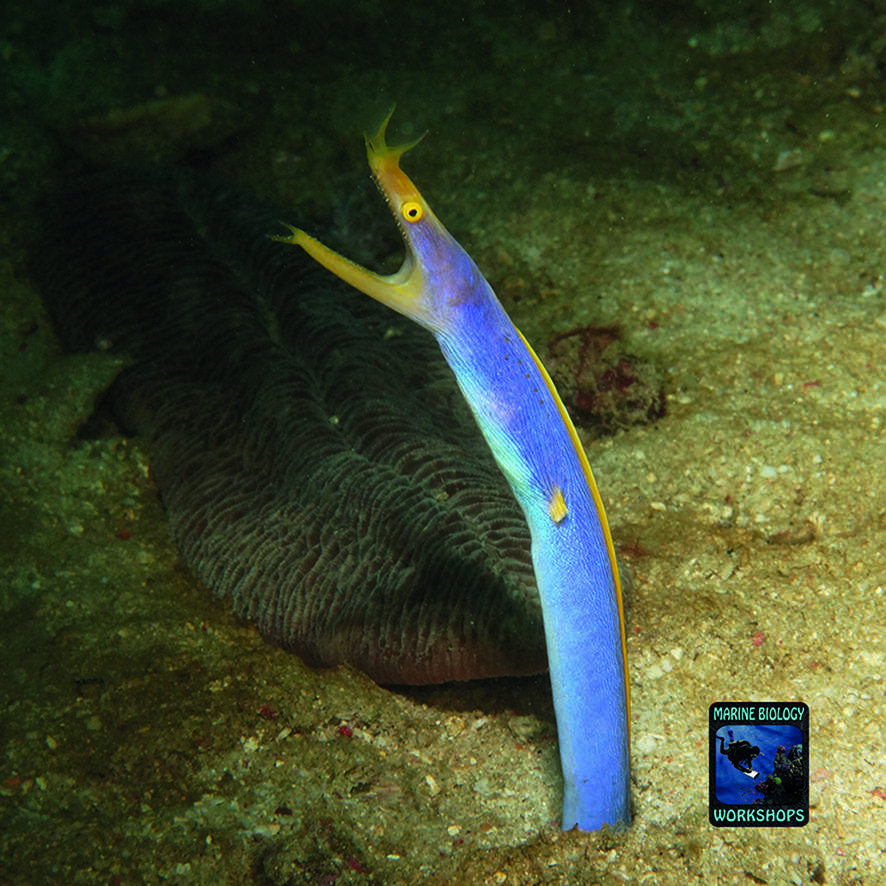
Ribbon eel Rhinomuraena quaesita in the Philippines
MARINE BIOLOGY WORKSHOPS & Reef Check
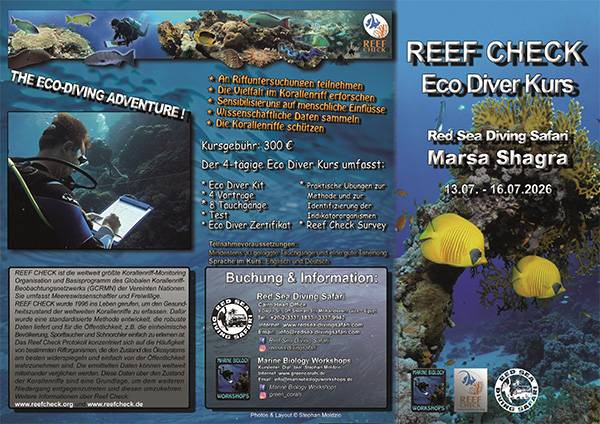


Alongside GREEN CORALS’ marine aquarium offerings, marine biology was also a central part of our presence at the fair. These activities are offered under the MARINE BIOLOGY WORKSHOPS brand and include environmental education, reef monitoring and marine biology workshops, underwater photography and diver training, as well as sustainable dive tourism.
Stephan provided information about the Reef Check EcoDiver courses and surveys (reef assessments) that he has been conducting in Marsa Shagra on the Red Sea for 17 years, and about the joint reef monitoring programme with our long-standing partner Red Sea Diving Safari. Reef Check is a citizen science programme in which divers can learn to collect scientific data on the condition of coral reefs themselves. Some visitors who also dive asked about the course dates for 2027, which have recently been confirmed. All the details are available on our website.
We also provided information about our marine biology workshops in various other coral reef regions. Some visitors asked about coral bleaching, global warming and their effects on reefs. Our stand thus became a meeting place for everyone interested in marine conservation and coral ecology who wants to take action.
On Sunday afternoon, it was time to pack up and head back to Braunschweig with the corals and snails. We had a lot of fun at the Nordriff fair and are already looking forward to next year!