Reef Check and Reef Monitoring at Red Sea Diving Safari
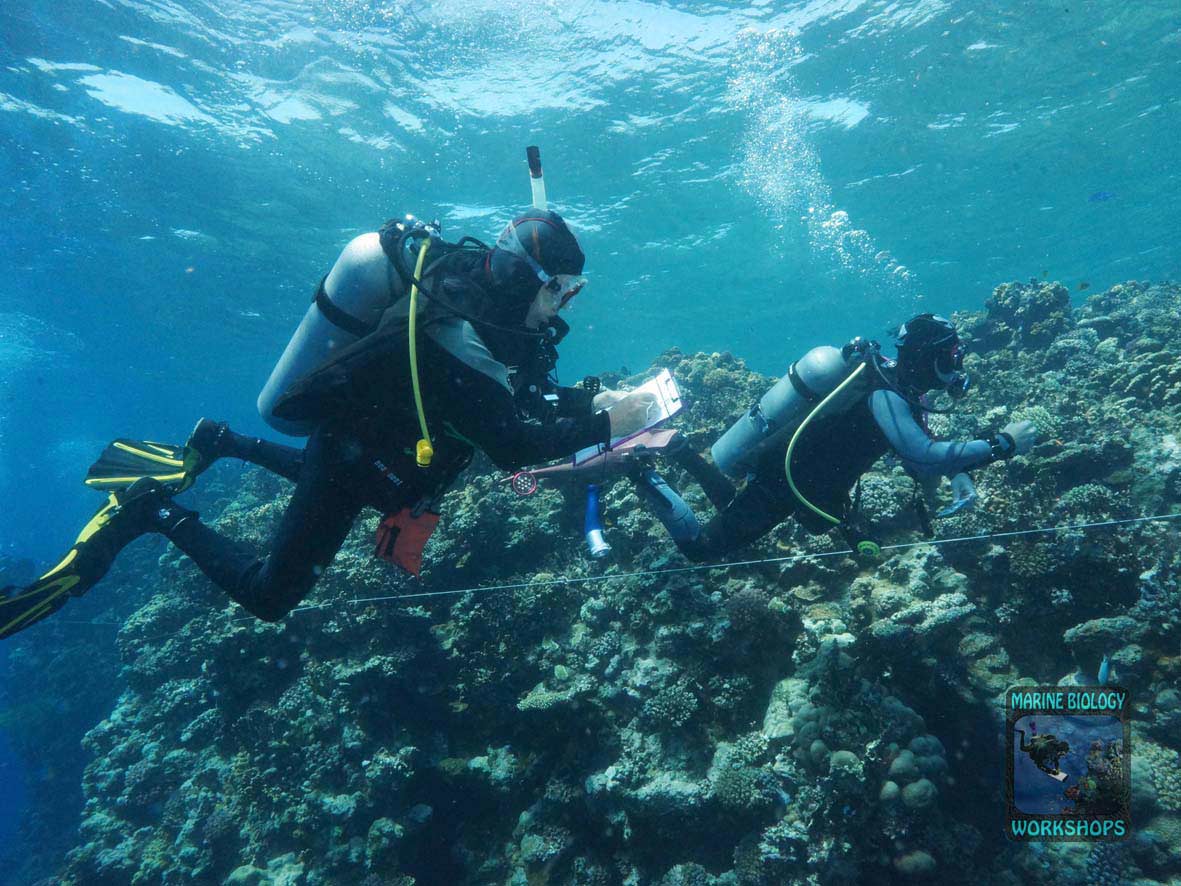
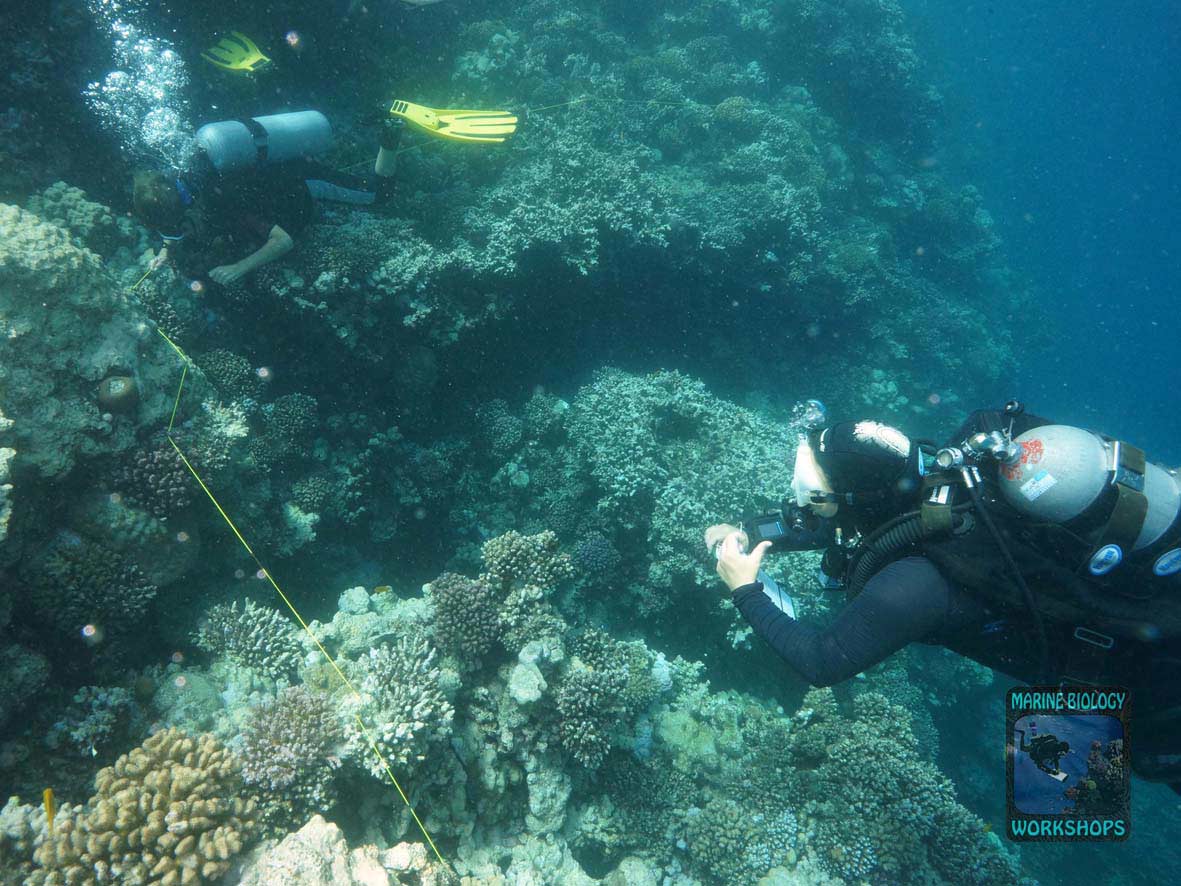
Fish-Team during Reef Check Survey in Marsa Egla
In 2026, a Reef Check EcoDiver course followed by reef surveys once again took place in Marsa Shagra at Red Sea Diving Safari. Five participants from Switzerland, Poland and Germany learned how to assess the health of coral reefs using the internationally standardised Reef Check method.
Following the course, five surveys were conducted at selected reefs near Marsa Egla, Marsa Nakari and Wadi Lahami. The data collected were submitted to Reef Check headquarters and are being incorporated into the international Reef Check database.
In the week following the survey, detailed coral surveys were also conducted in Marsa Nakari to assess the recovery of the house reef following damage caused by the flood in December 2023 and by the fourth global coral bleaching event in 2023 and 2024.
EcoDiver Course in Marsa Shagra
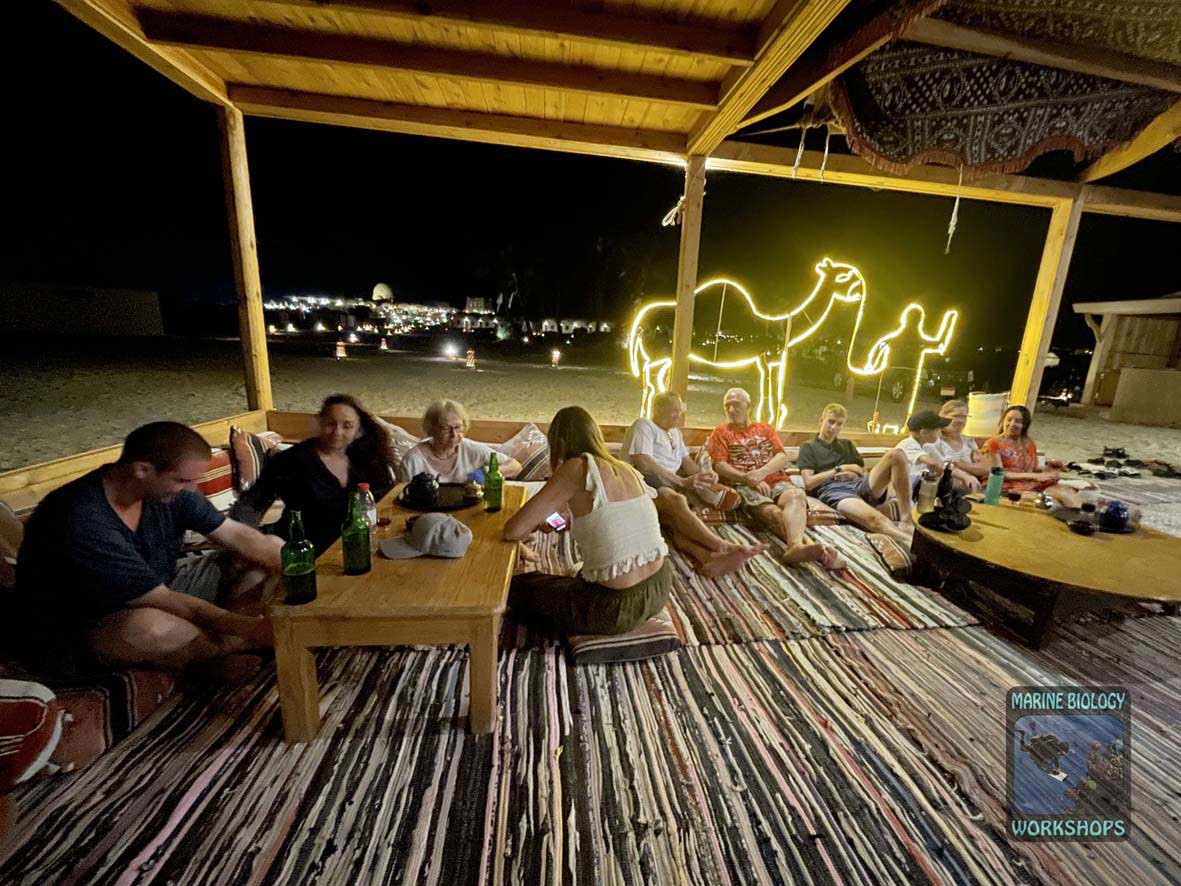
Reef Check Gruppe 2026 im Beduinen Café
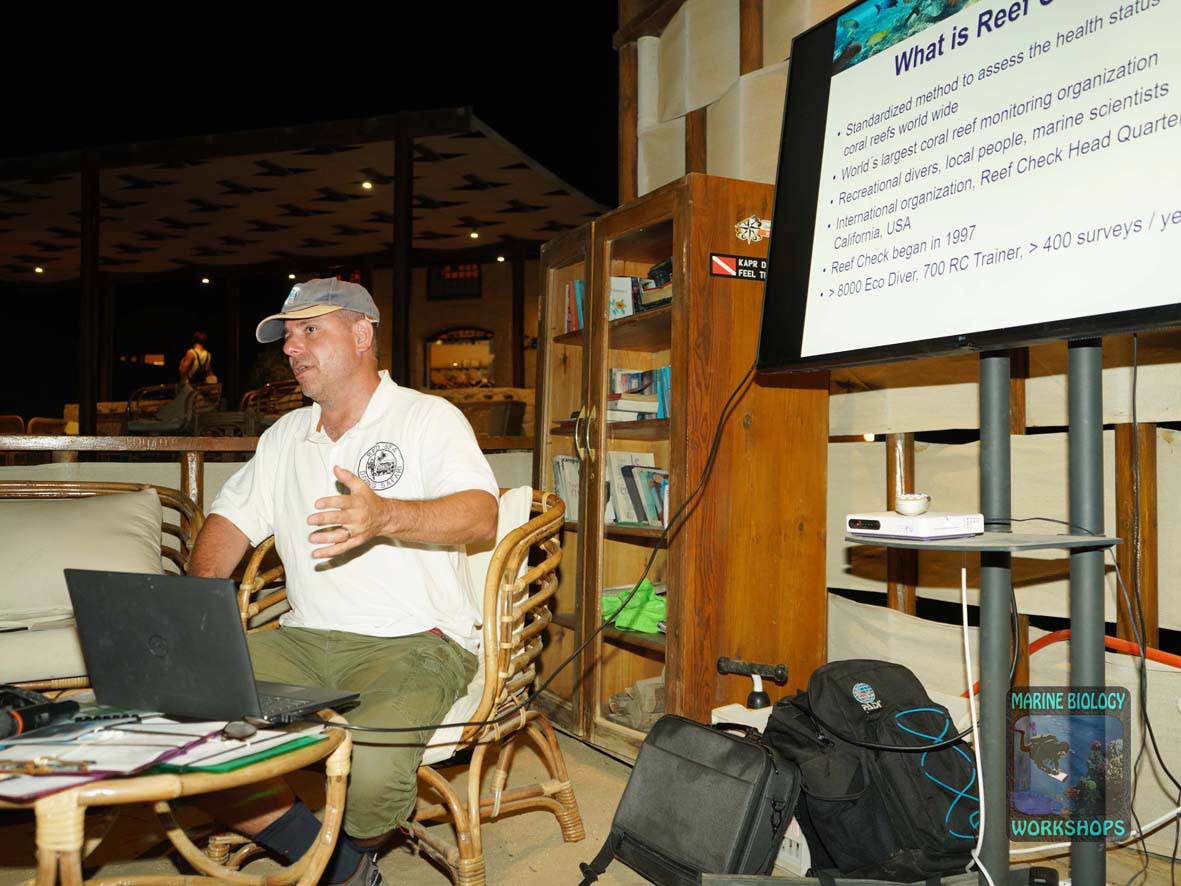
Presentation by Stephan Moldzio on the reef monitoring programme with RSDS
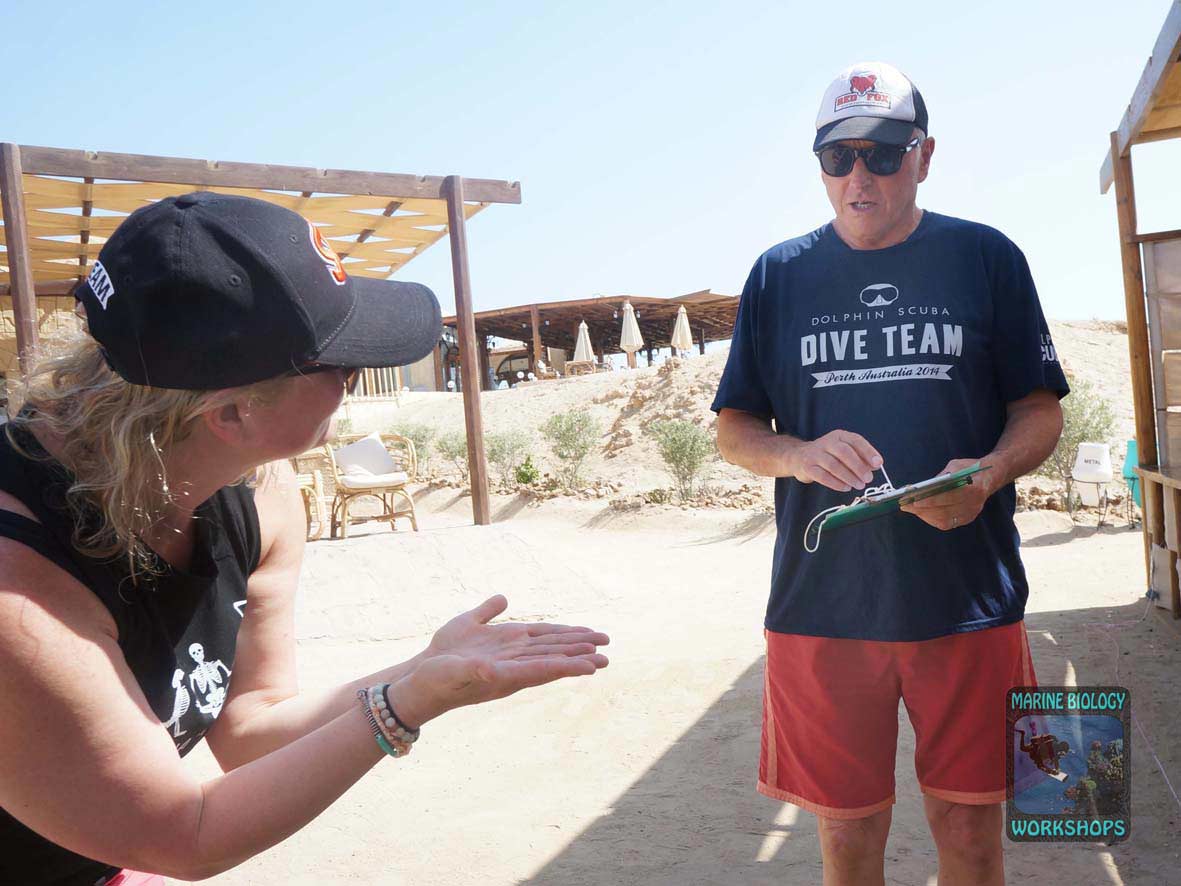
Practising the Reef Check method during the beach exercise
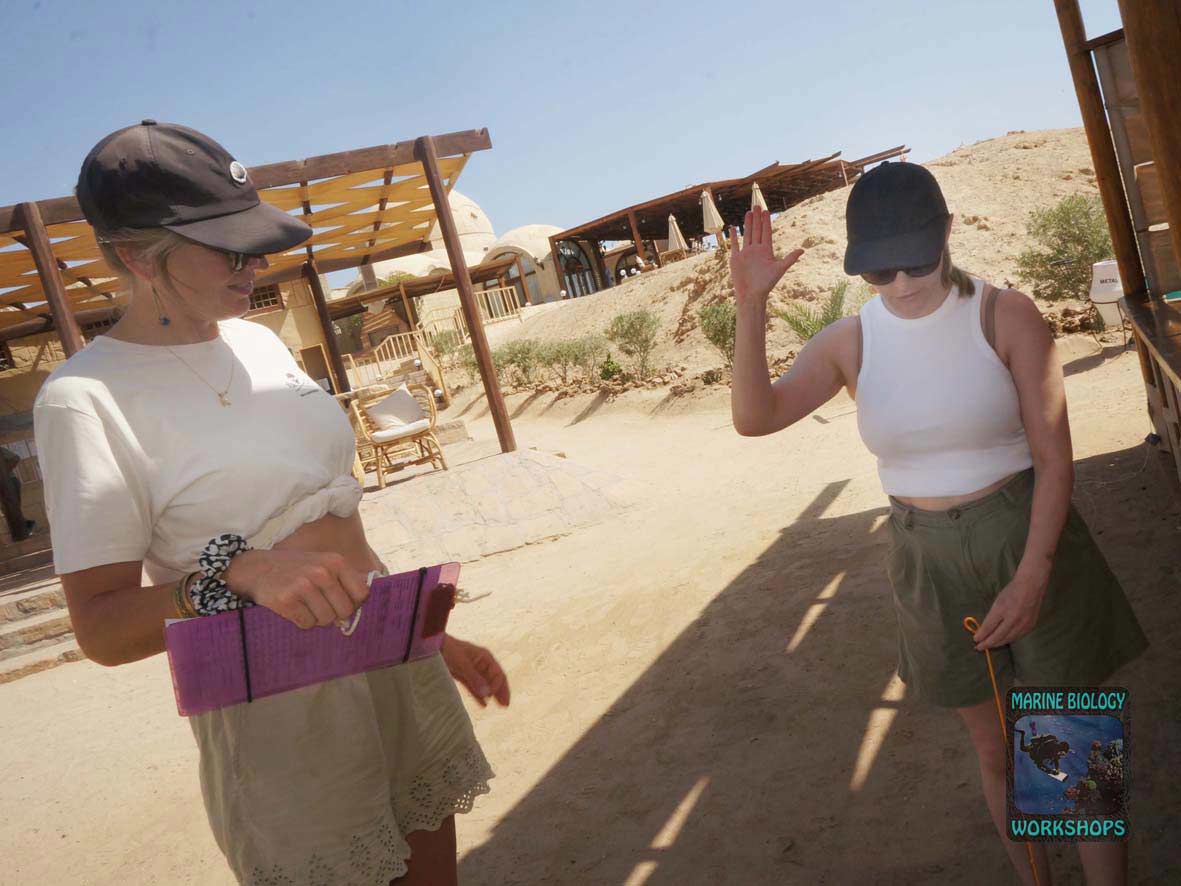
Practising the Reef Check method during the beach exercise
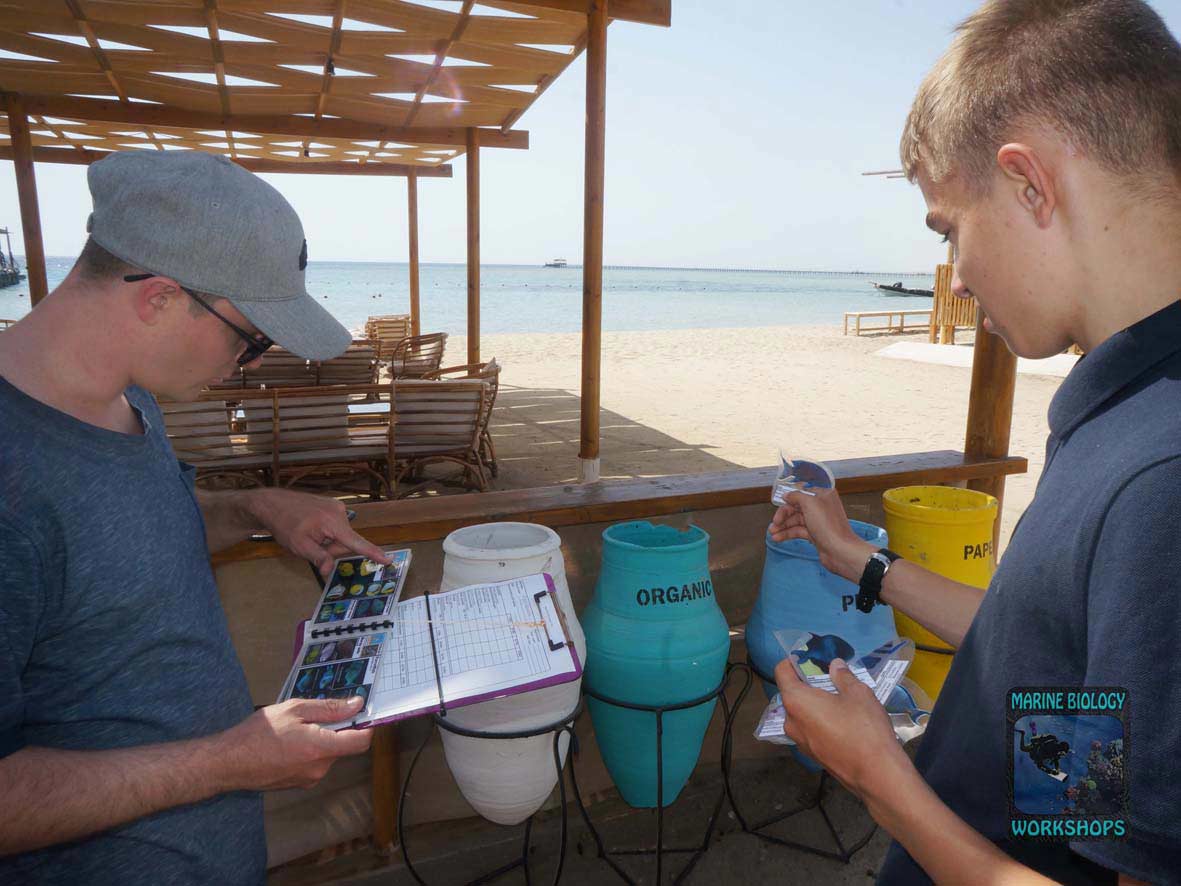
Practising the Reef Check method during the beach exercise
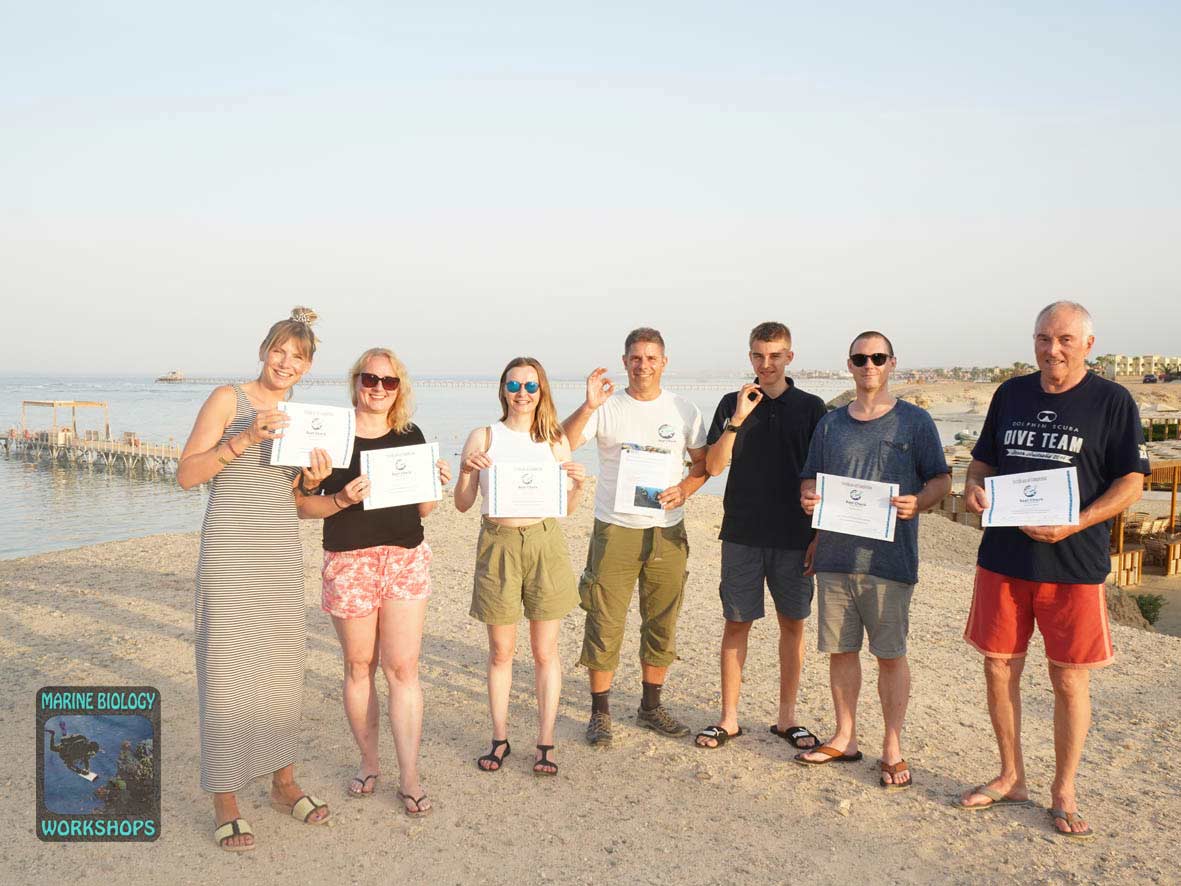
Reef Check group photo 2026
Before the four-day EcoDiver course began, Stephan gave a public presentation in the Dive Shade at Marsa Shagra about Red Sea Diving Safari’s reef monitoring programme. This programme was jointly launched in 2009 and has since included regular EcoDiver courses and Reef Check surveys at Red Sea Diving Safari’s main dive sites in the southern Red Sea.
During the course, participants learned the Reef Check method and how to identify the various indicator organisms. Engaging presentations provided the necessary theoretical knowledge, which was then applied during practical exercises on land and underwater.
Two dives were scheduled on each day of the course. During these dives, participants practised confidently identifying the various indicator fish, invertebrates, substrate categories and human impacts underwater.
During the beach exercise, the procedure for a Reef Check survey was then practised on land. This included working along the transect line, communicating using underwater hand signals, handling underwater slates and recording observations.
After successfully passing the final tests, all participants received their certification as Reef Check EcoDivers. This enables them to participate in Reef Check surveys throughout the Indo-Pacific and actively contribute to scientific data collection and the protection of coral reefs.
To conclude the course, the group met at the Bedouin Café. As always, under a perfect starry sky. We wrapped up our days in a cozy atmosphere with Arabic tea and strong Bedouin coffee, known as “Gabana.”
Reef Check Surveys in Marsa Egla, Marsa Nakari and Wadi Lahami
The practical part of the reef monitoring began immediately after the EcoDiver course. A total of five surveys were conducted at reefs in Marsa Egla, Marsa Nakari and Wadi Lahami.
For each survey, two transect lines, each 100 metres long, were laid out along different depth contours on the reef. The three survey teams then entered the water one after another and recorded their observations on underwater slates.
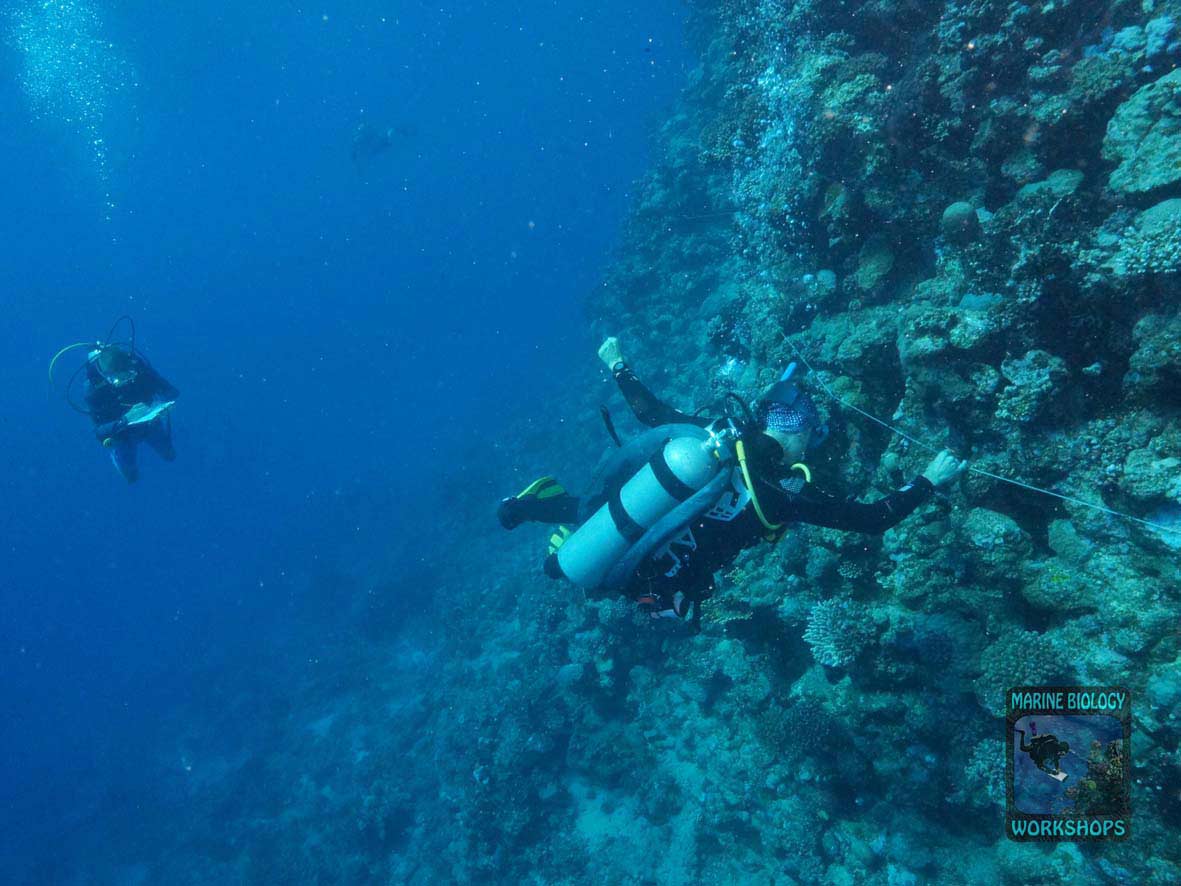
Substrate team during the Reef Check survey in Marsa Egla
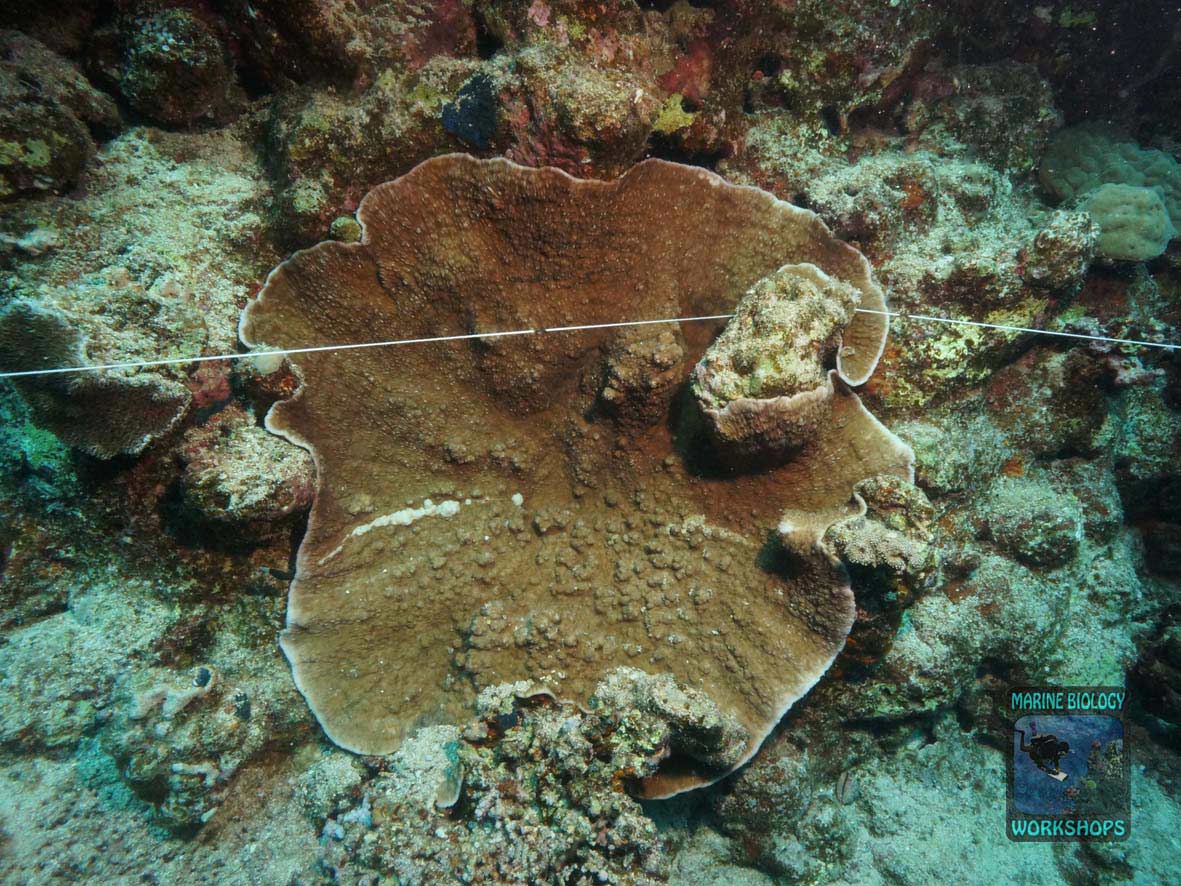
Coral (Podabacia) on the transect line during the Reef Check survey in Marsa Egla
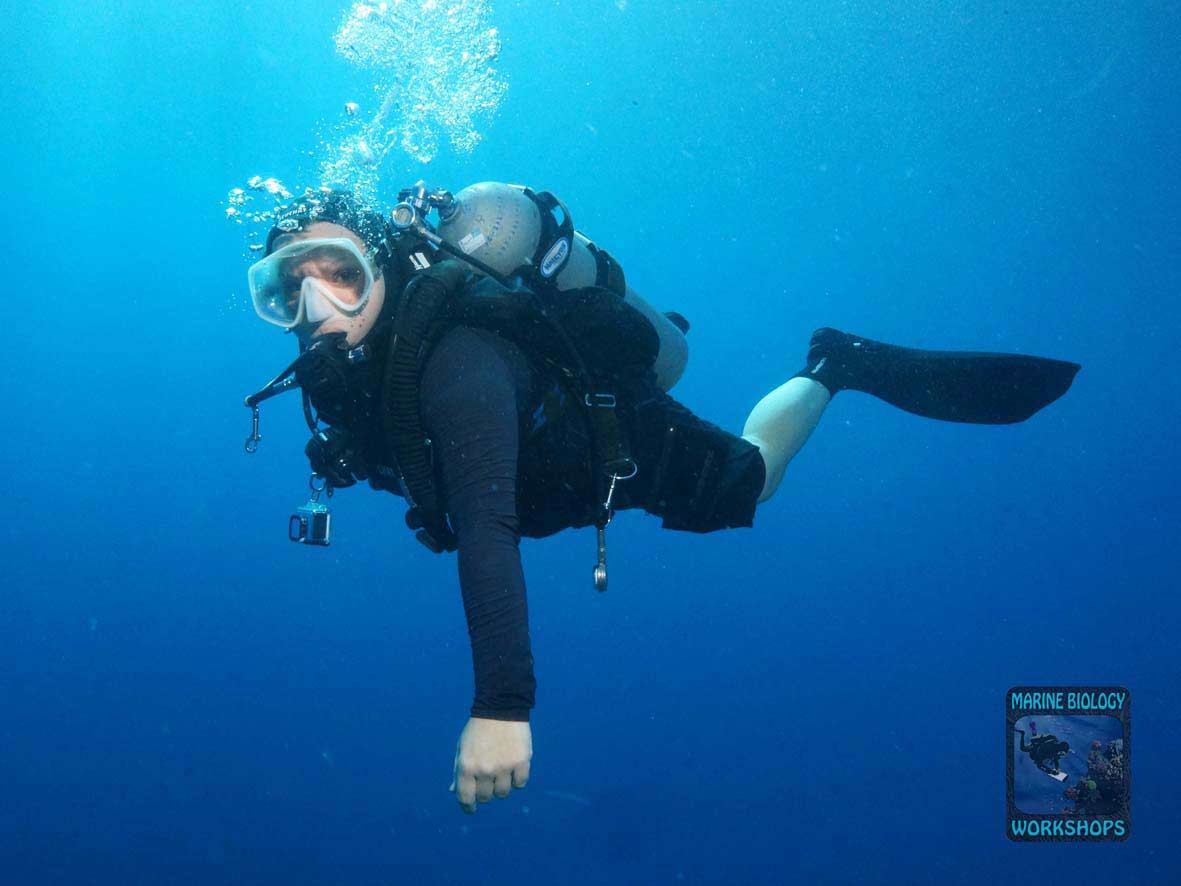
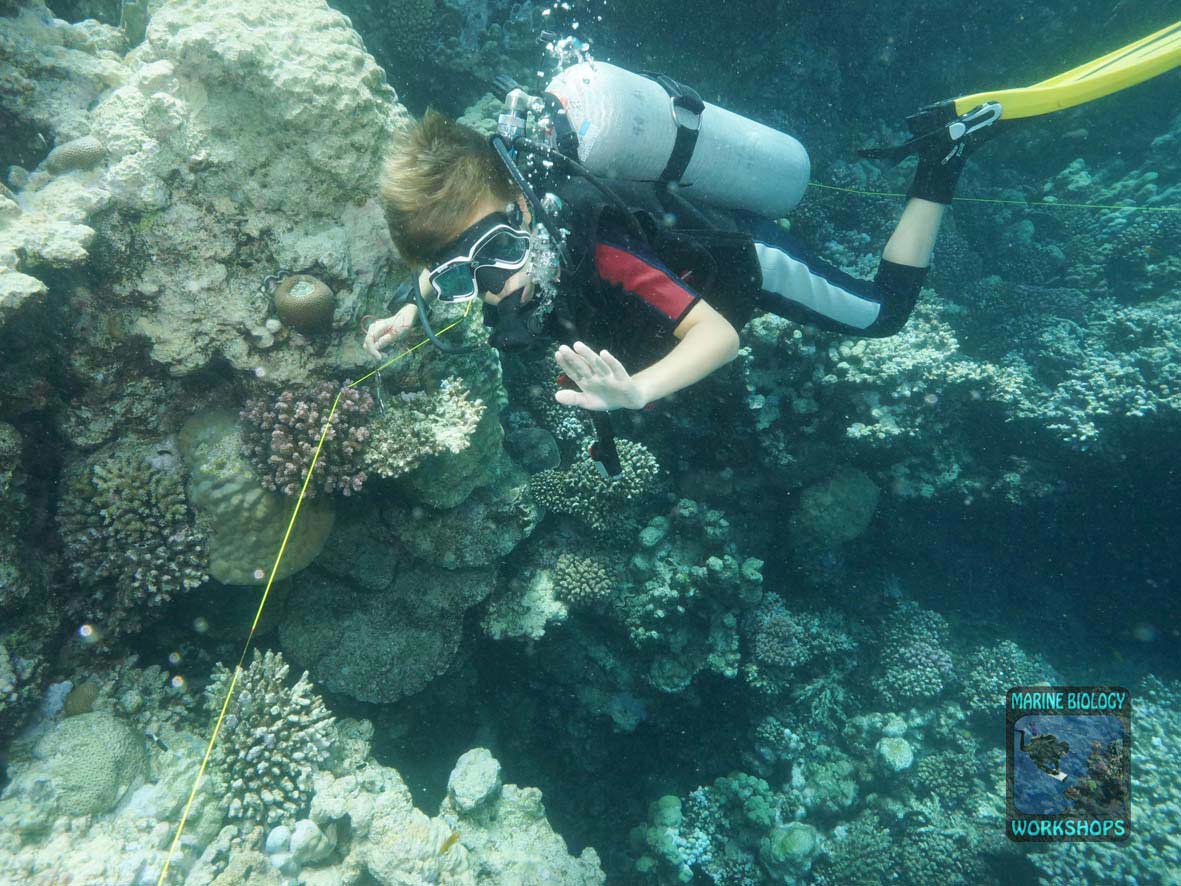
Diver during the Reef Check survey in Marsa Egla
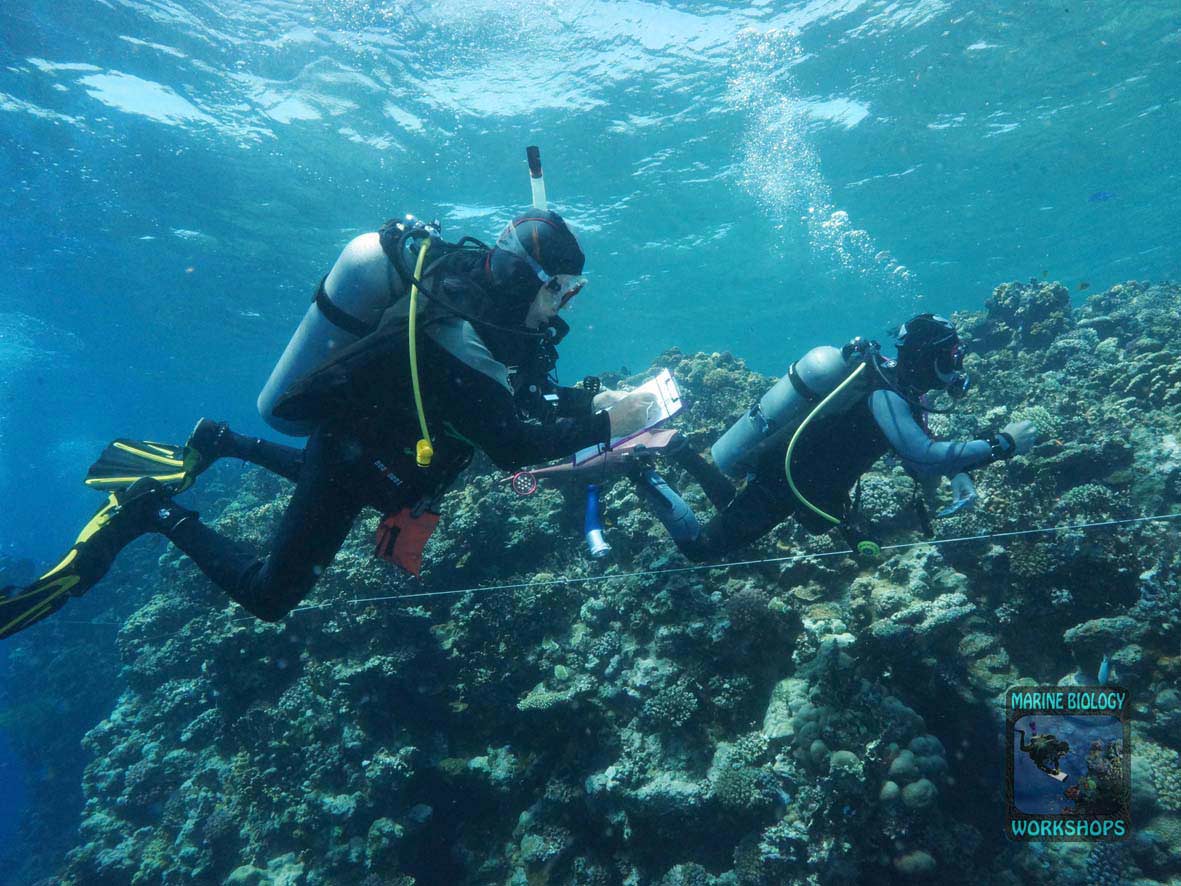
Fish-Team during Reef Check Survey in Marsa Egla
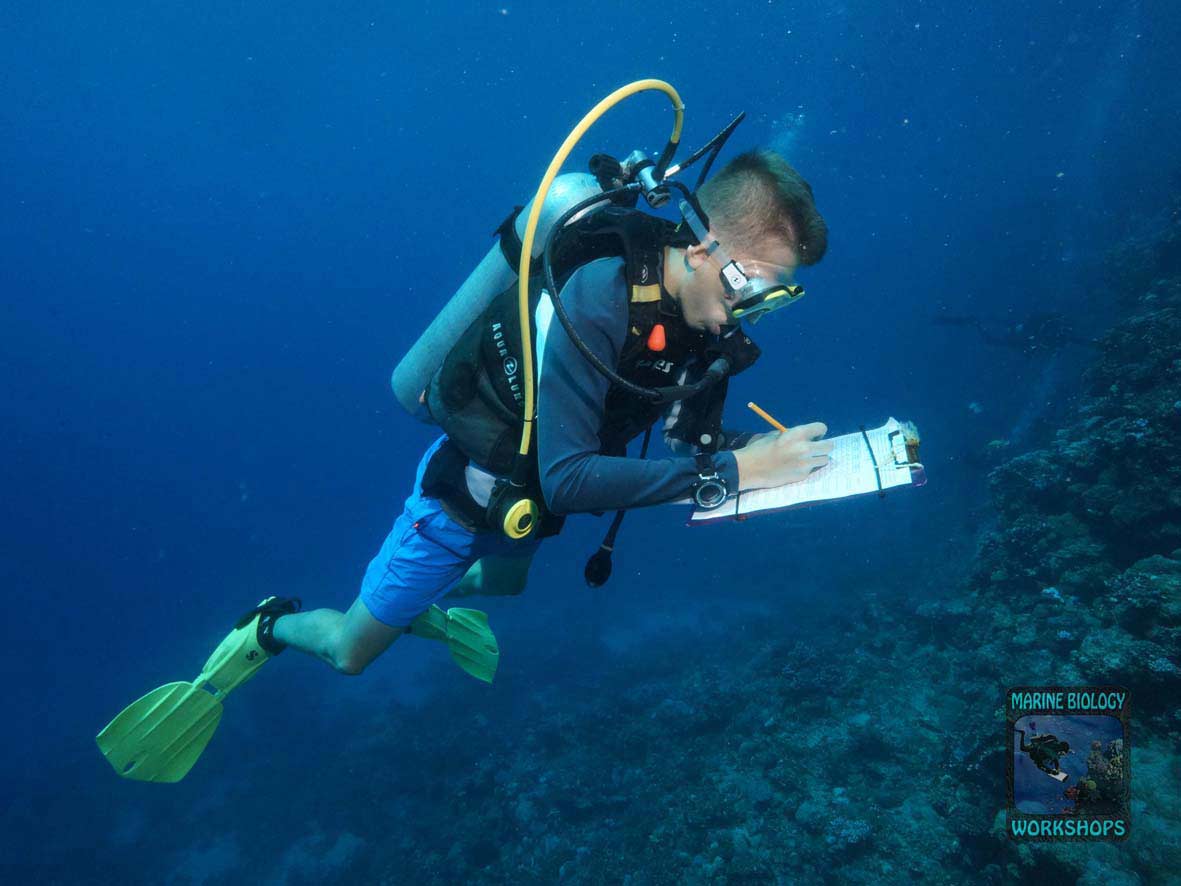
Substrate team during the Reef Check survey in Marsa Egla
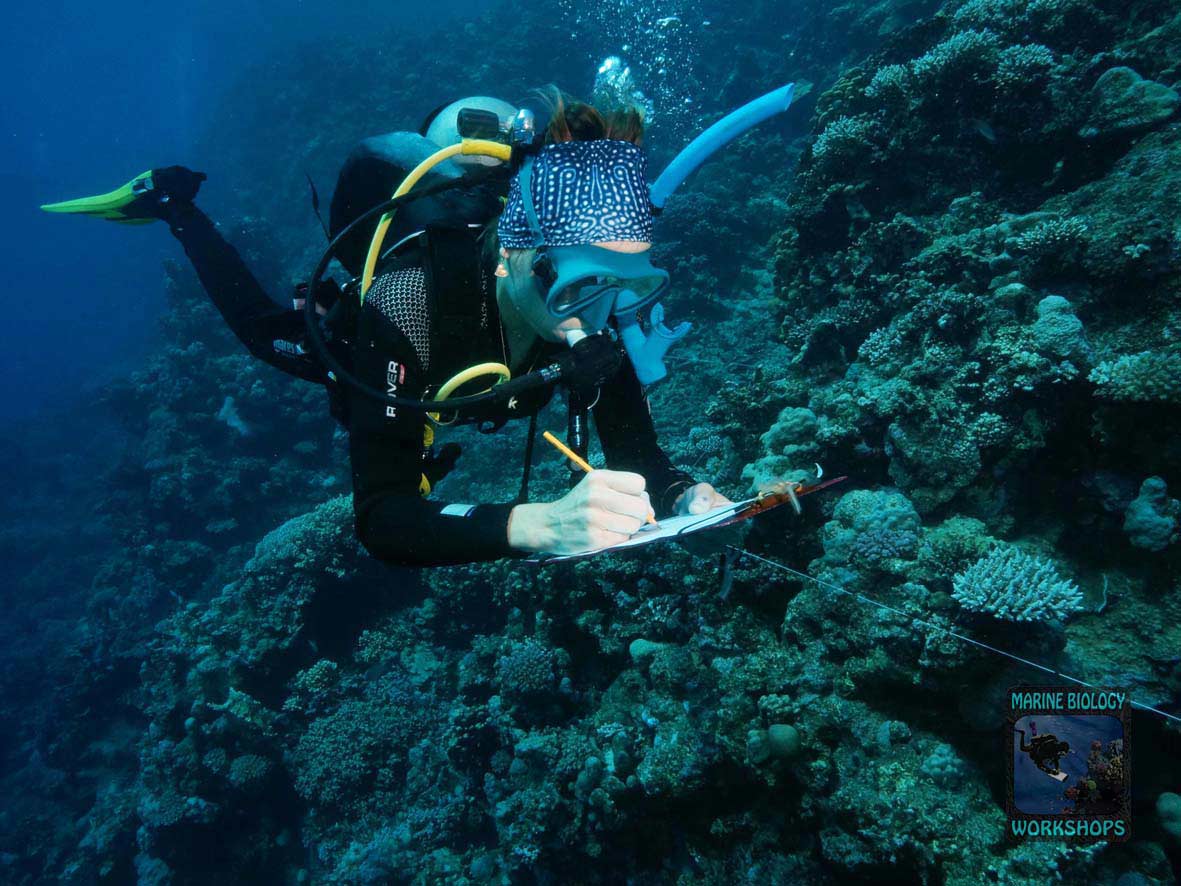
Substrate team during the Reef Check survey in Marsa Egla
First Survey in Marsa Egla
The day after the course, the first complete survey in Marsa Egla was on the programme. Here, the newly certified EcoDivers were able to apply their knowledge under real conditions for the first time and collect important data. On underwater slates, they recorded the indicator organisms observed: fish, invertebrates & human impacts, as well as substrate.
After Marlin and Stephan had laid out the two transect lines on the reef, the three teams carried out the fish, substrate and invertebrate surveys. As Team Scientist, Stephan supervised the correct implementation and documented the survey with an underwater camera.
Fish Survey
The fish team started first. It recorded the indicator fish specified by the Reef Check method, such as groupers, snappers, parrotfish and butterflyfish.
The presence and abundance of these fish groups provide important information about the condition of the reef. Some species or fish families serve, for example, as indicators of overfishing. Herbivorous fish such as parrotfish also play an important role in controlling algal growth and thus in maintaining the ecological balance of the coral reef.
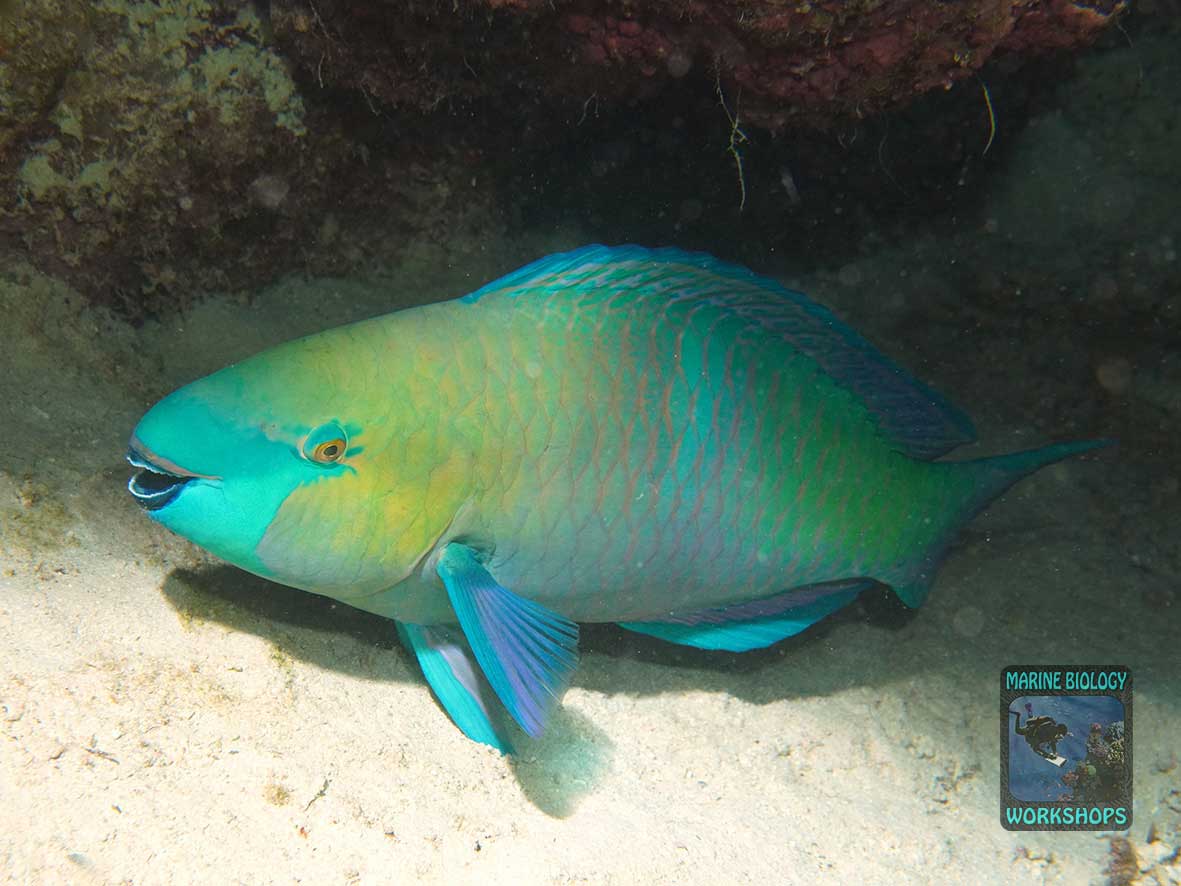
A rusty parrotfish gets ready for the night
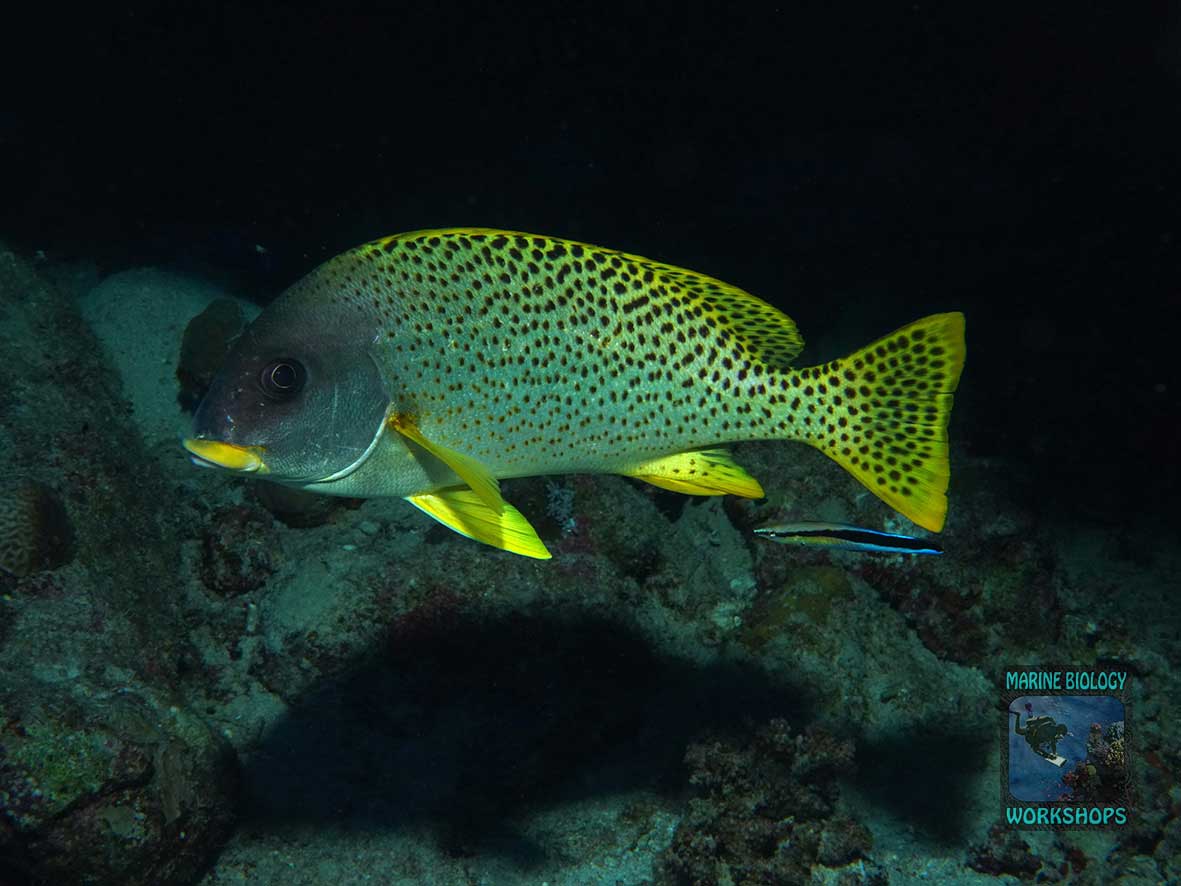
The sweetlip is a nocturnal predator of invertebrates
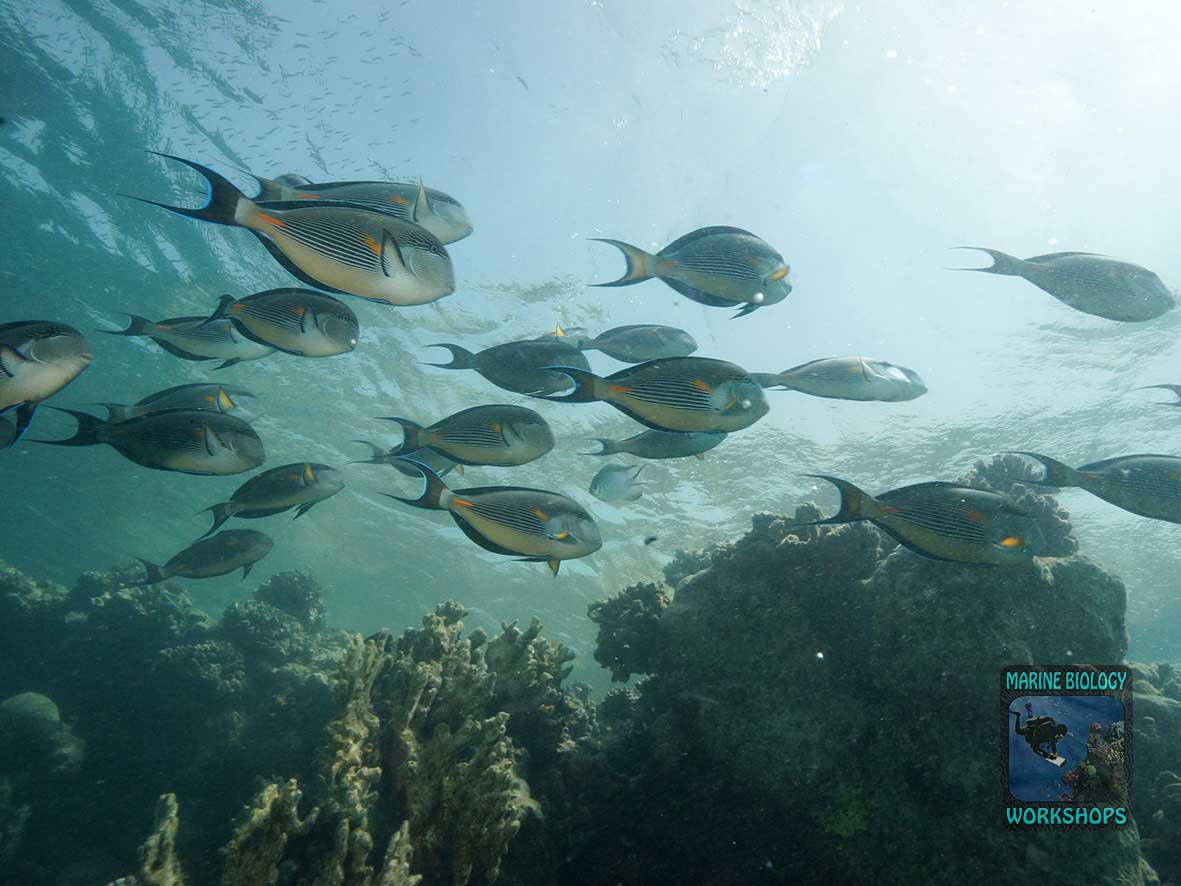
The Arabian surgeonfish is a territorial algae-grazing fish
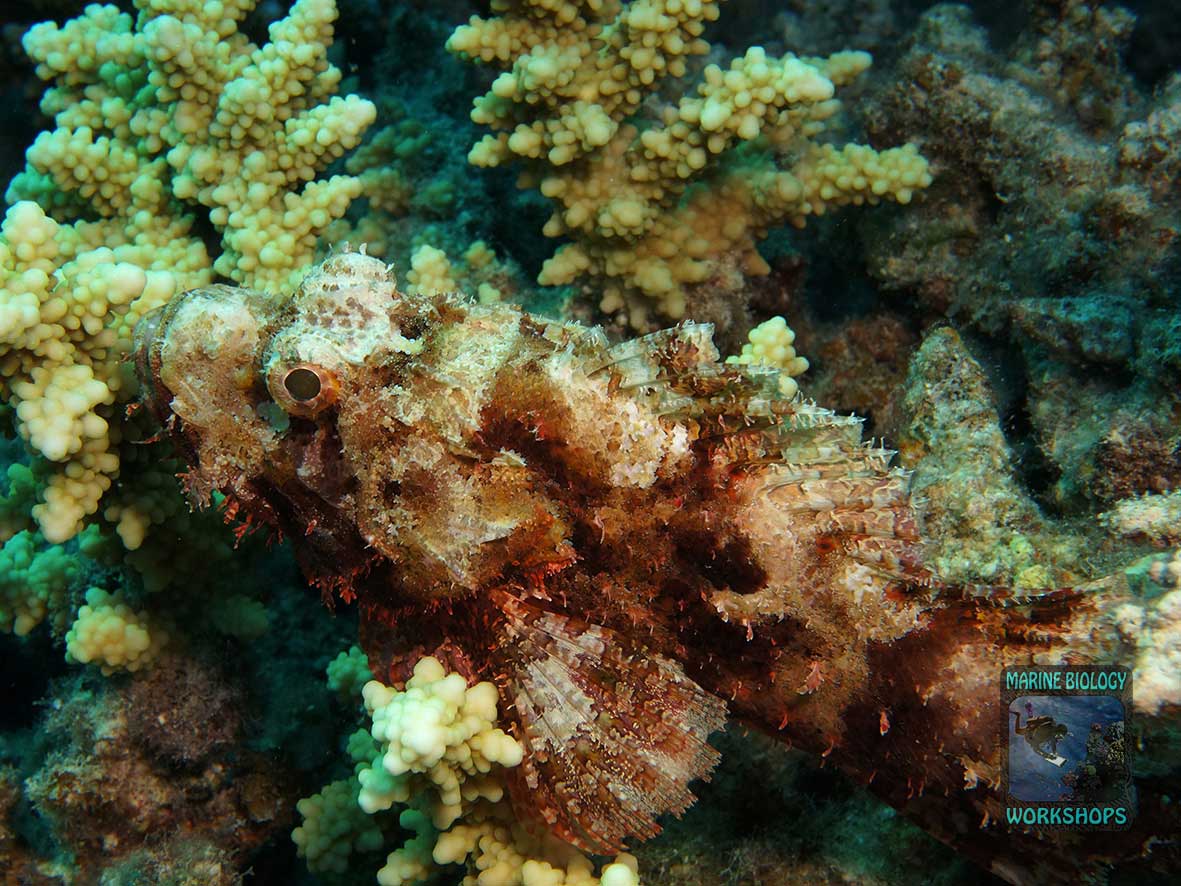
You often spot a well-camouflaged scorpionfish next to the transect line
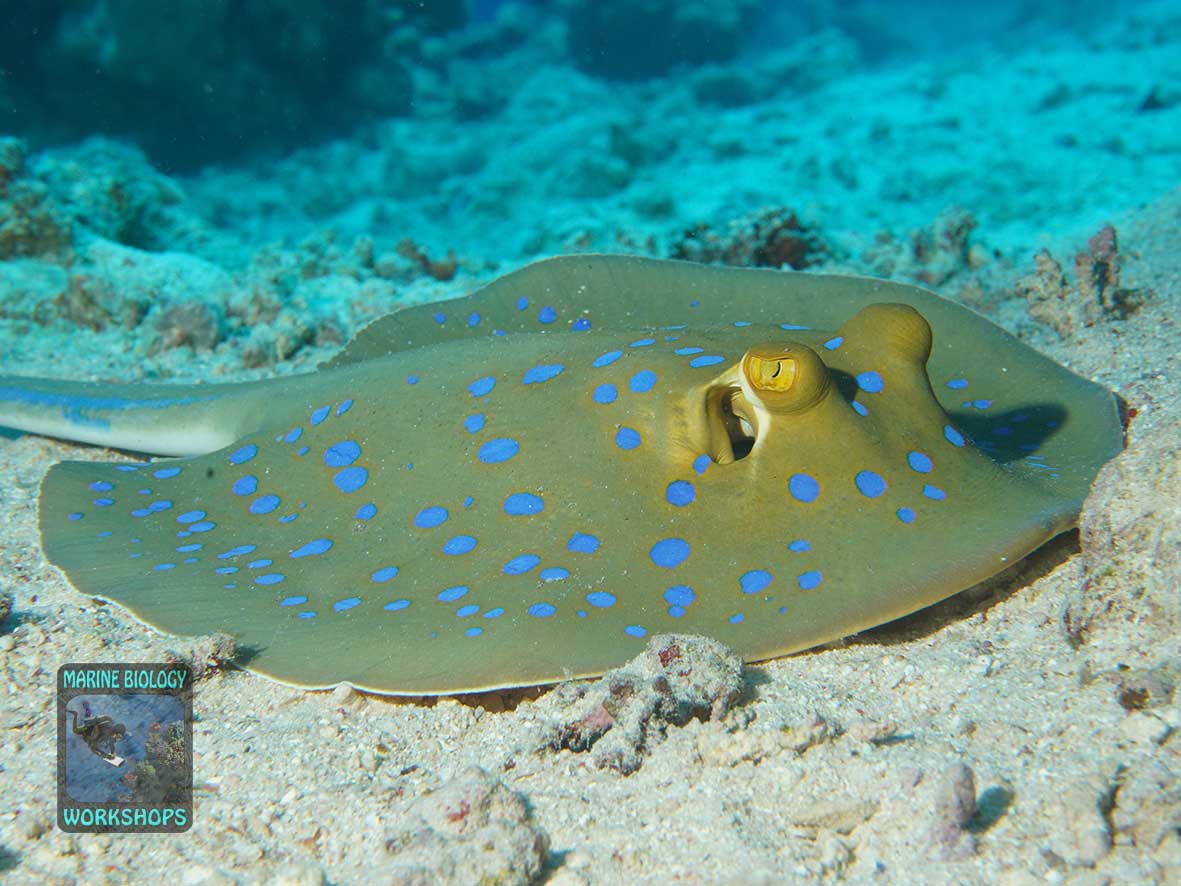
Blue-spotted stingrays are common in Marsa Shagra Bay
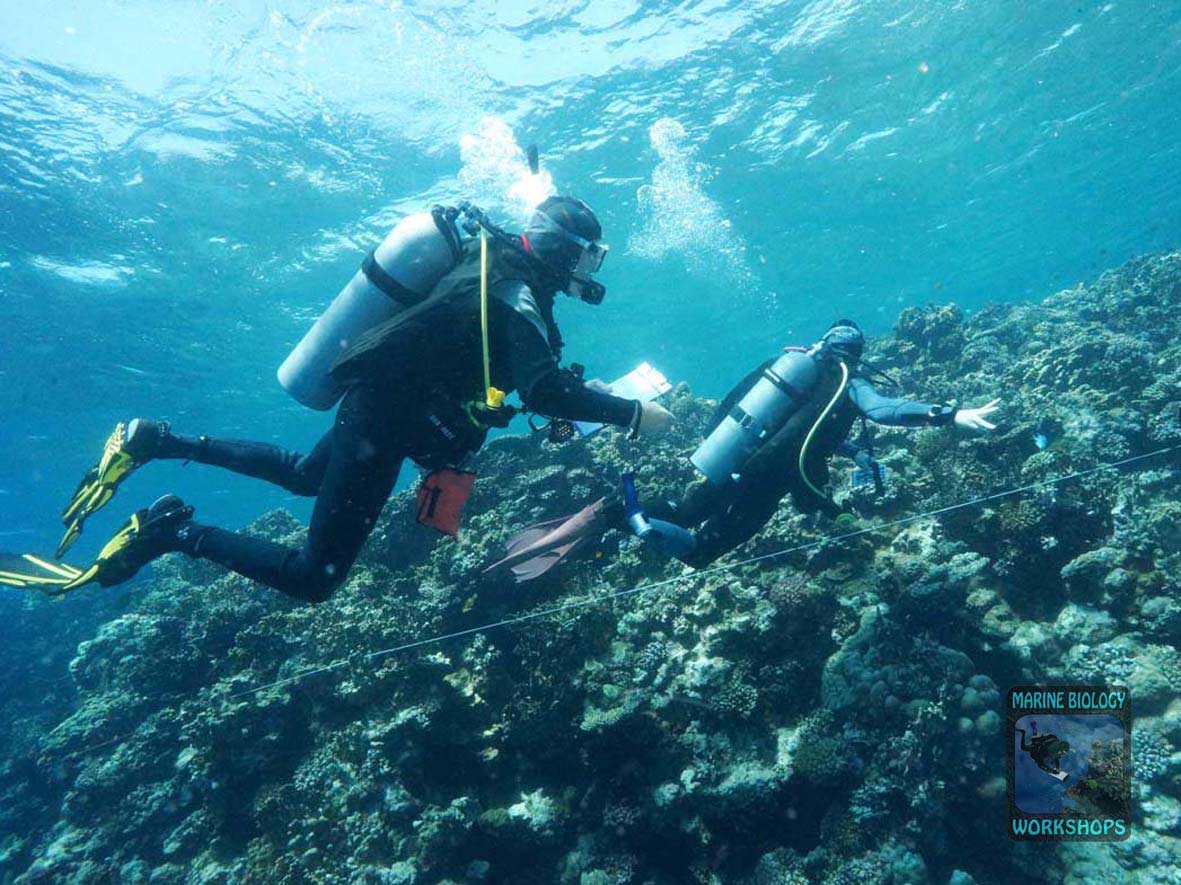
Fish team during the Reef Check survey in Marsa Egla
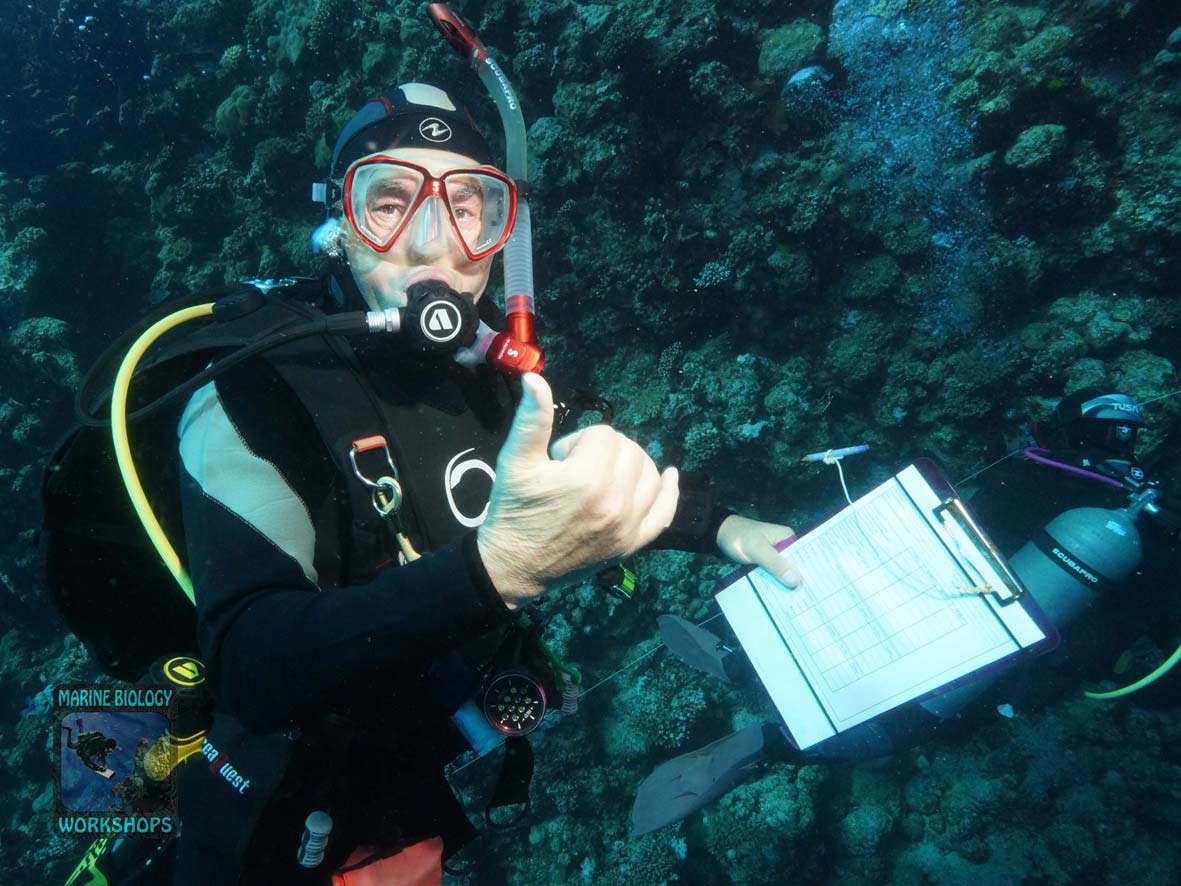
Fish team during the Reef Check survey in Marsa Egla
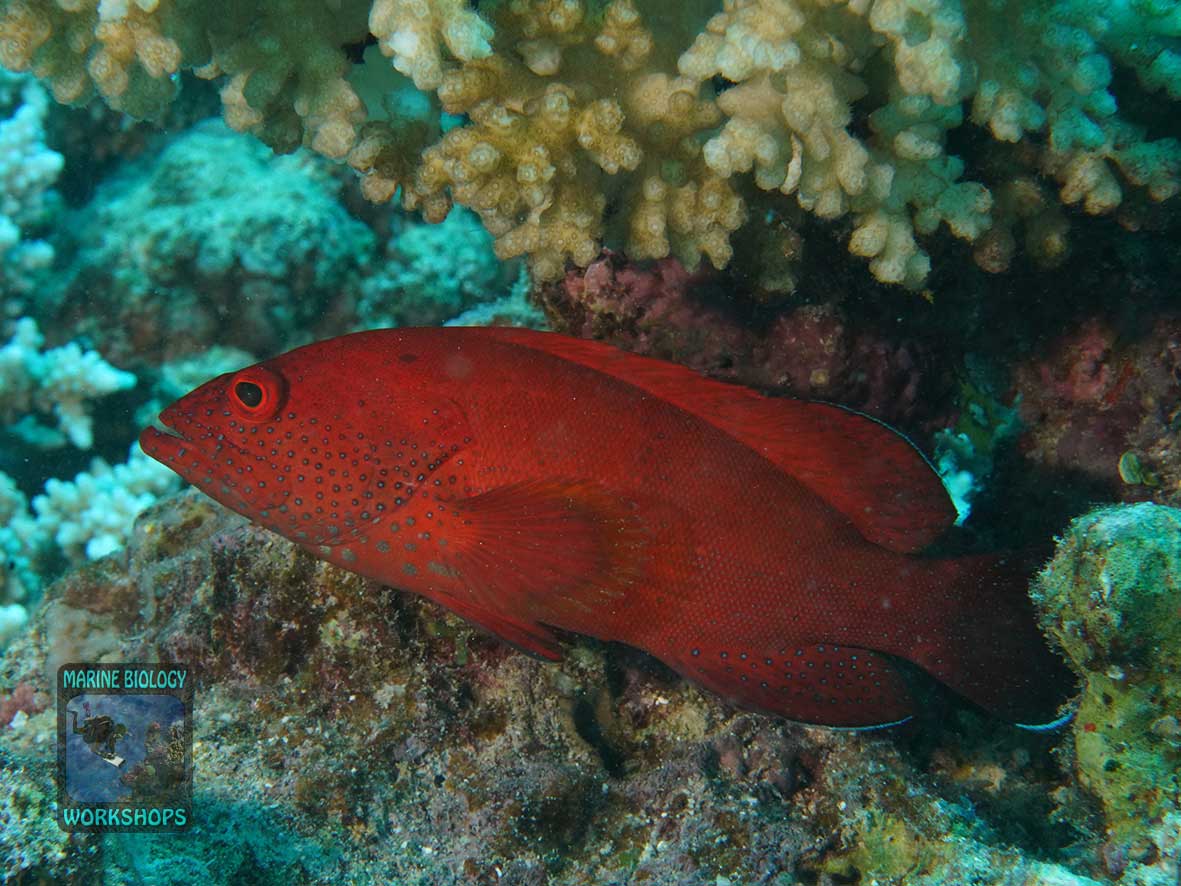
Groupers are Reef Check indicators of overfishing
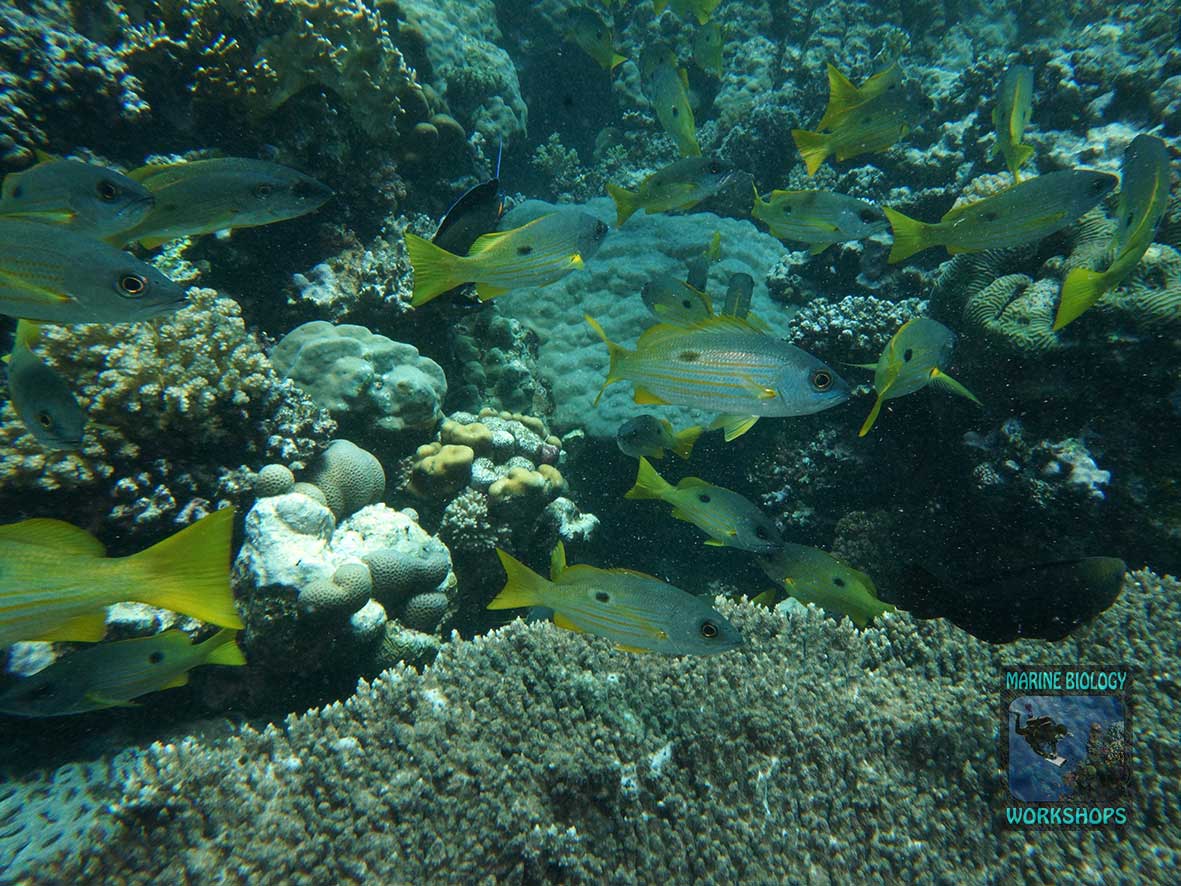
Snappers are Reef Check indicators of overfishing
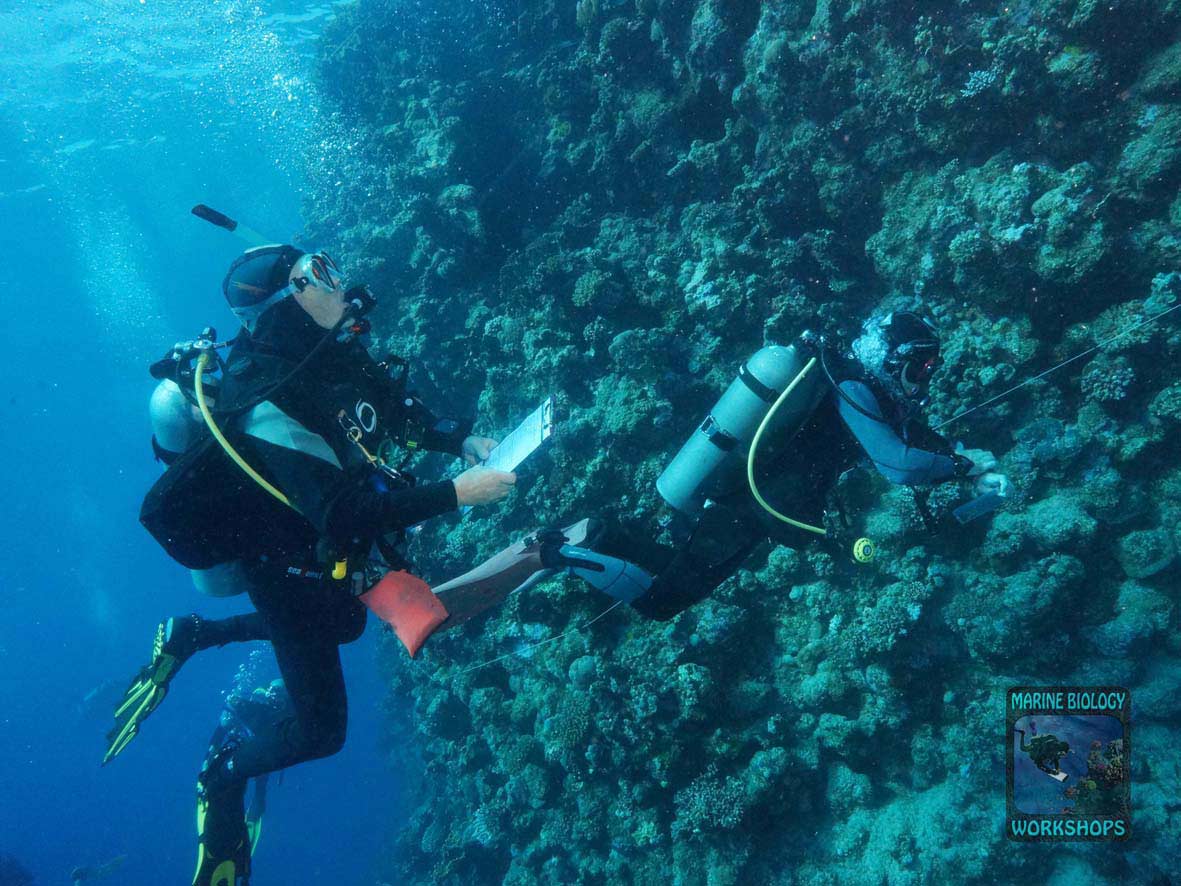
Fish team during the Reef Check survey in Marsa Egla
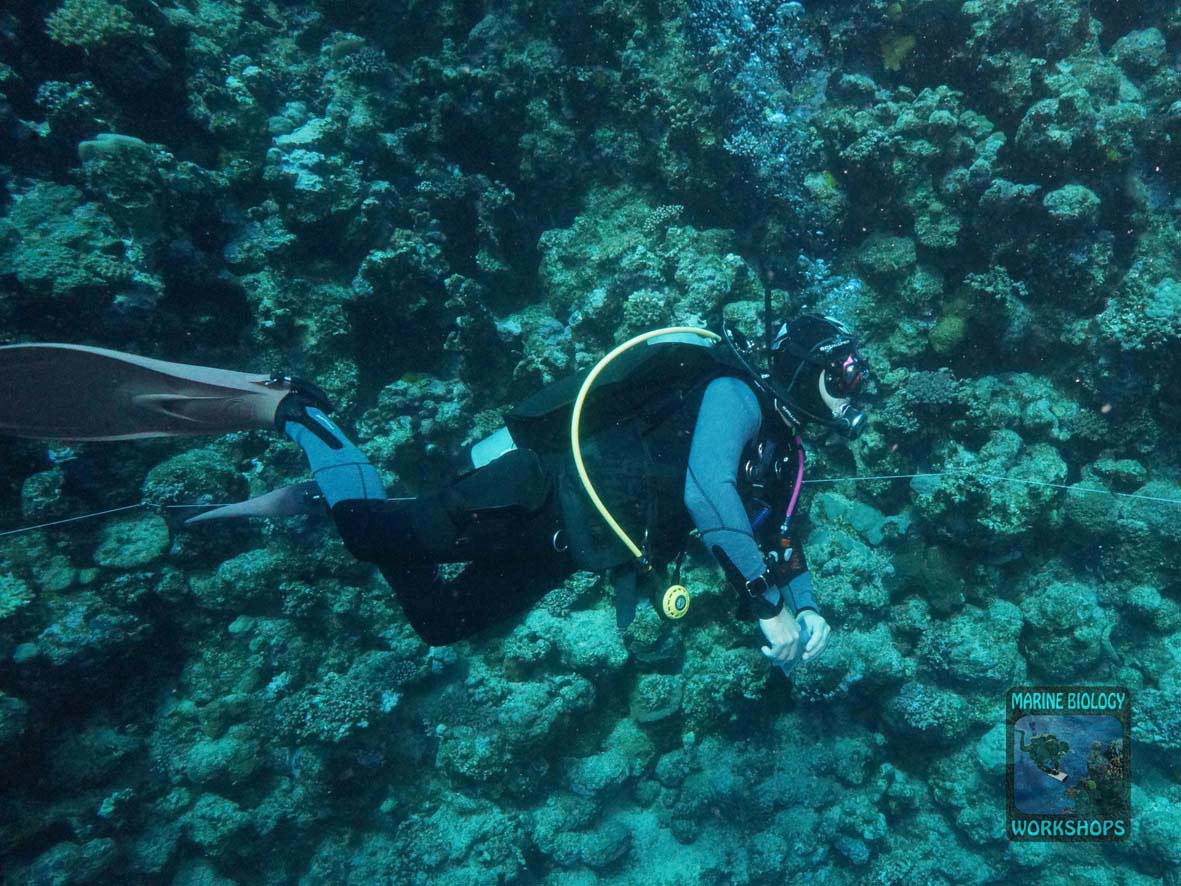
Fish team during the Reef Check survey in Marsa Egla
Substrate Survey
The substrate team used a plumb line to identify the substrate at a total of 320 points beneath the transect line. This method can be used to determine, among other things, the percentage cover of hard and soft corals.
Other substrate categories, such as reef rock, sponges, macroalgae and recently killed coral, are also recorded. The composition of the substrate, particularly the percentage of coral cover, provides important information about the health and possible changes in the coral reef being surveyed.
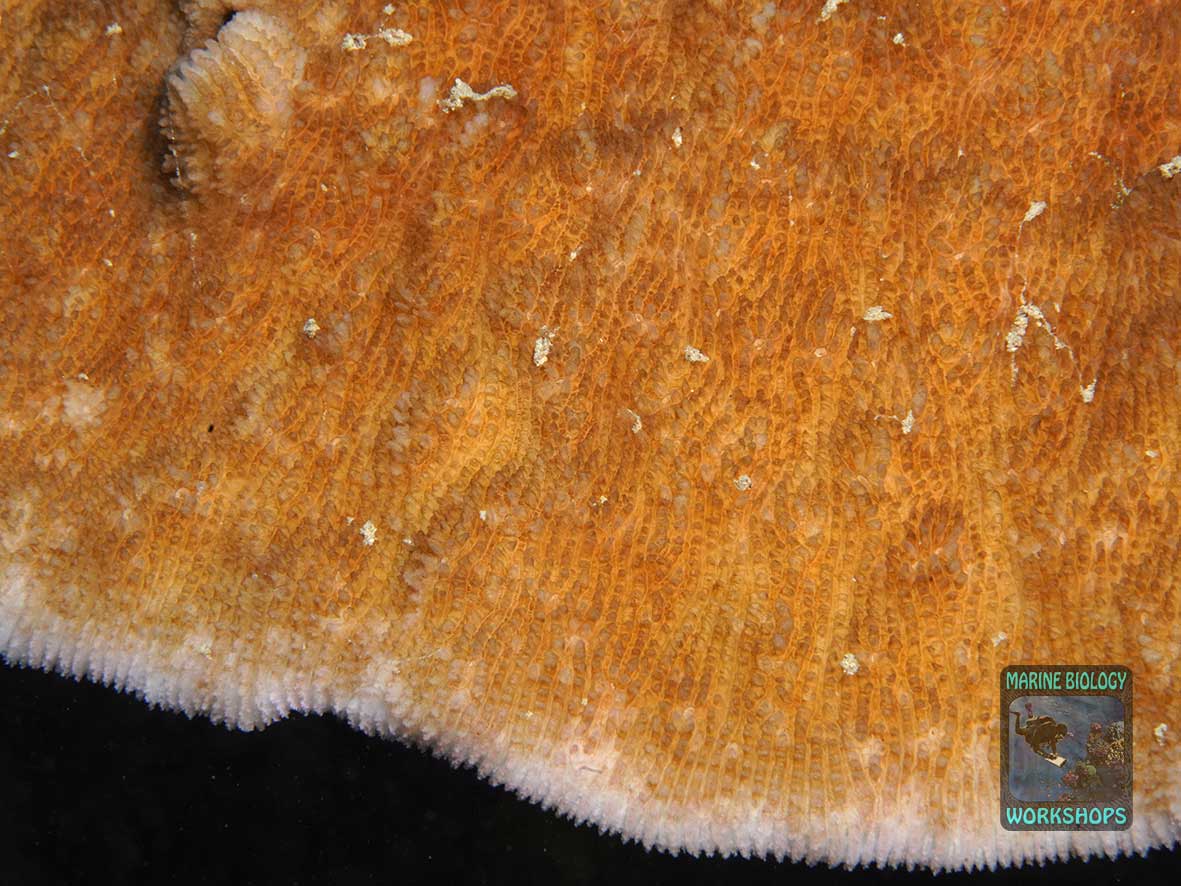
The Podabacia stony coral grows in a plate-like shape
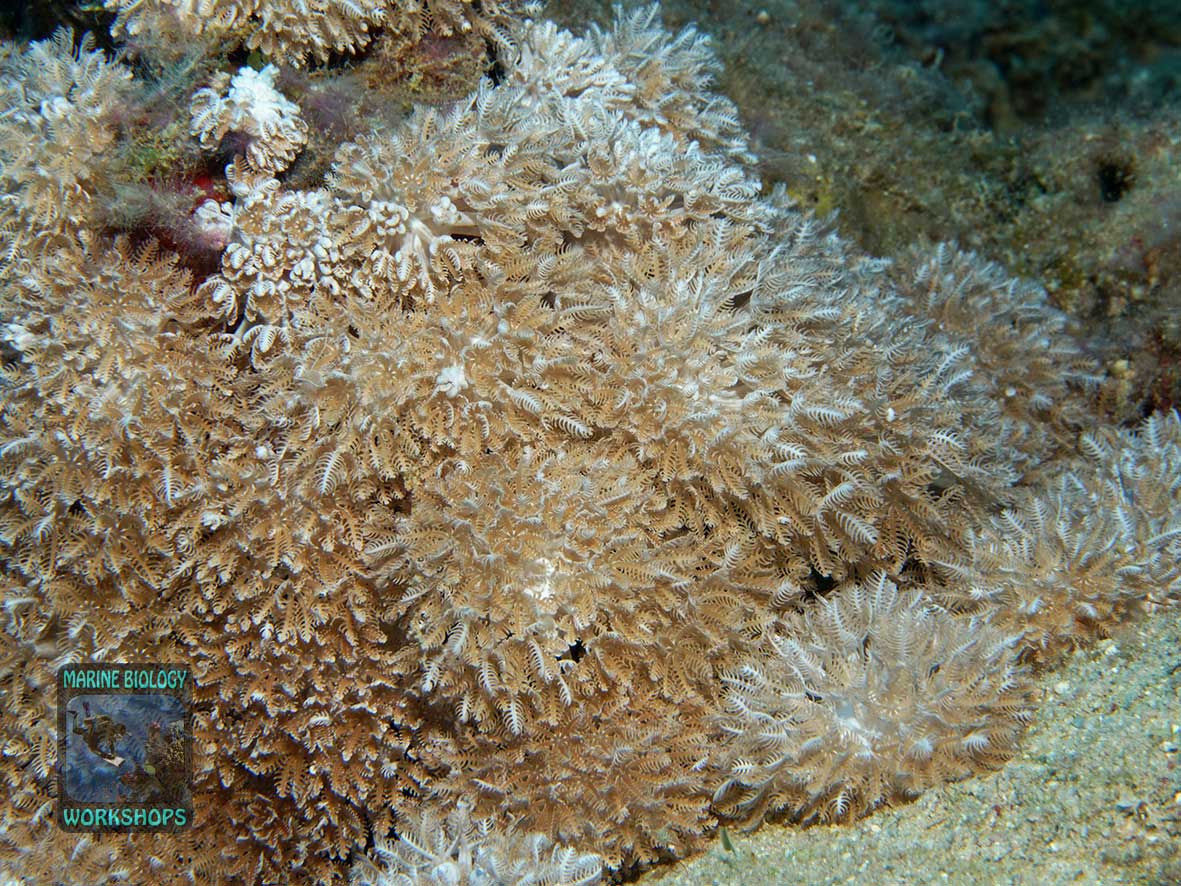
The Xenia soft coral belongs to the Reef Check substrate category “Soft Coral”.
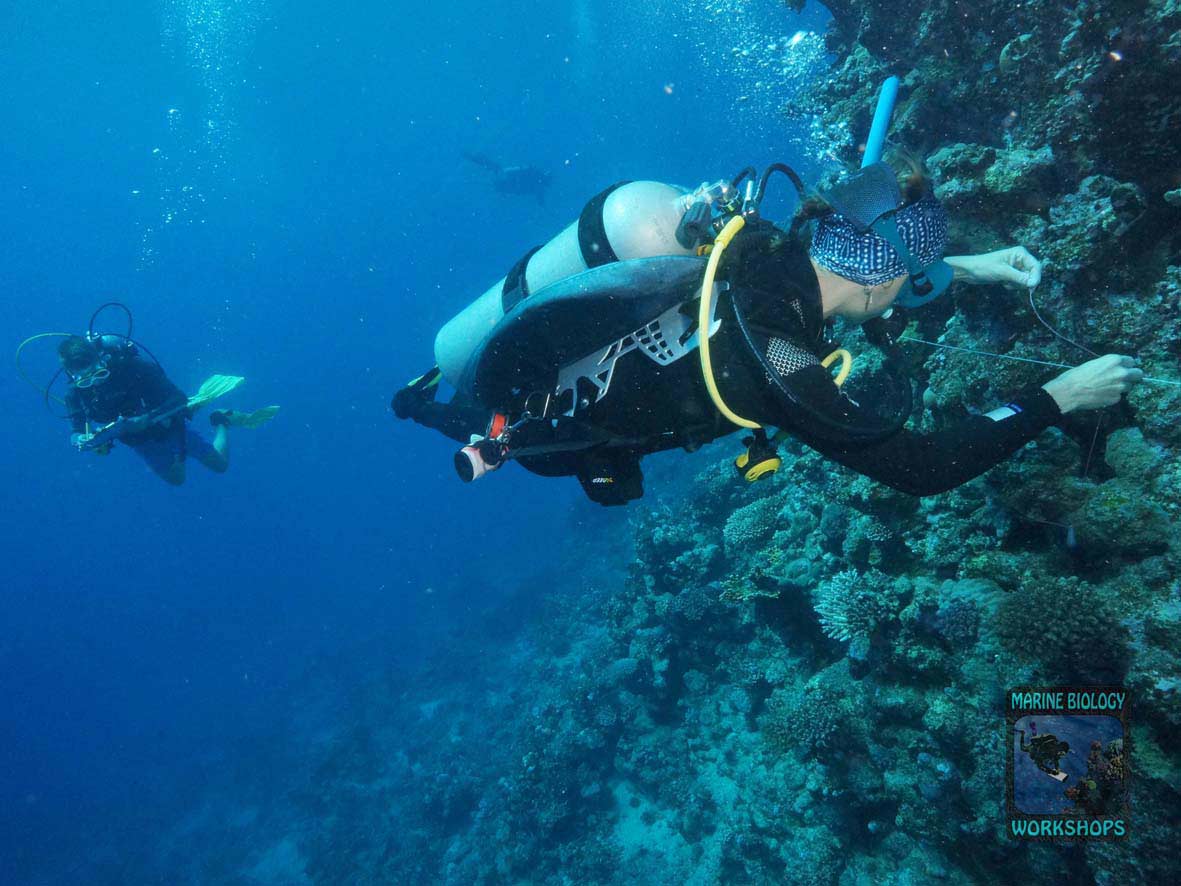
Substrate team during the Reef Check survey in Marsa Egla
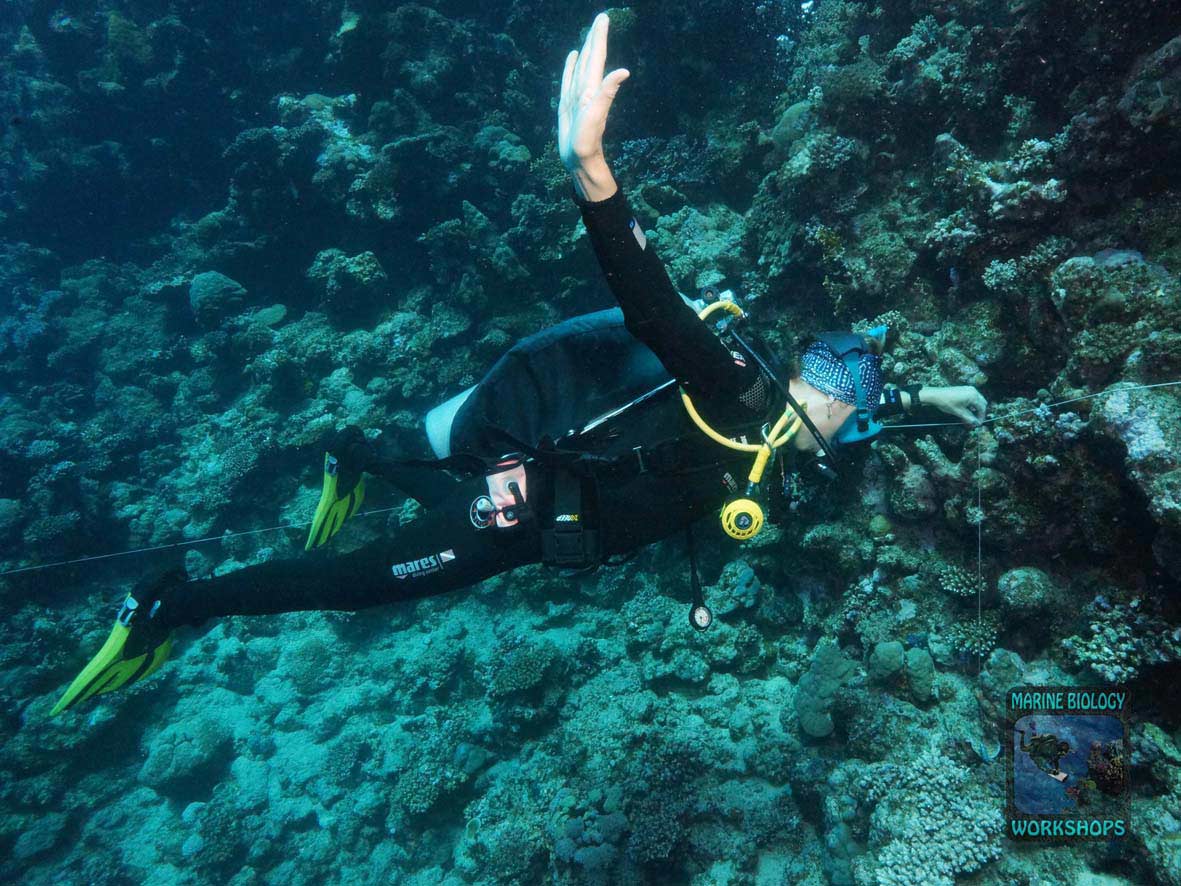
Substrate team during the Reef Check survey in Marsa Egla
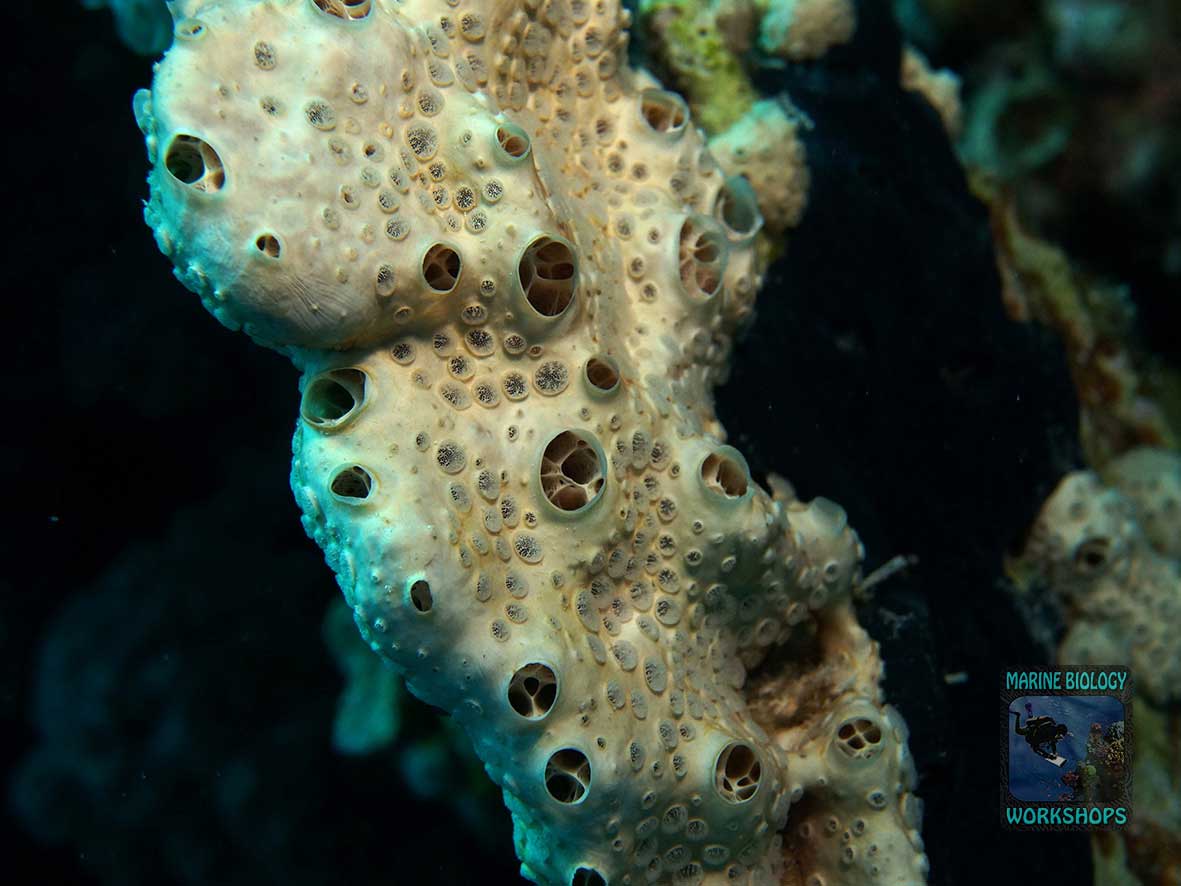
Sponges are filter feeders and feed on bacteria
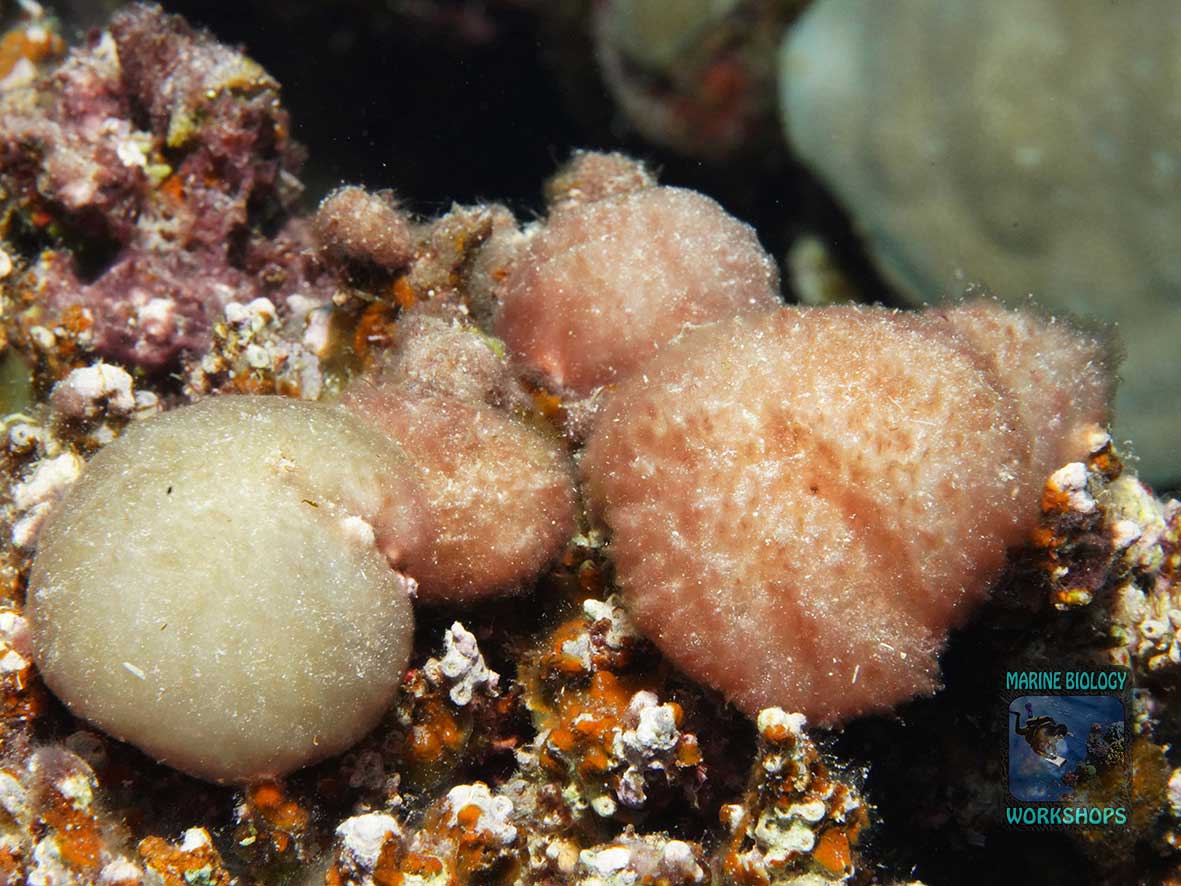
Cyanobacteria are an indicator of elevated nutrient concentrations.
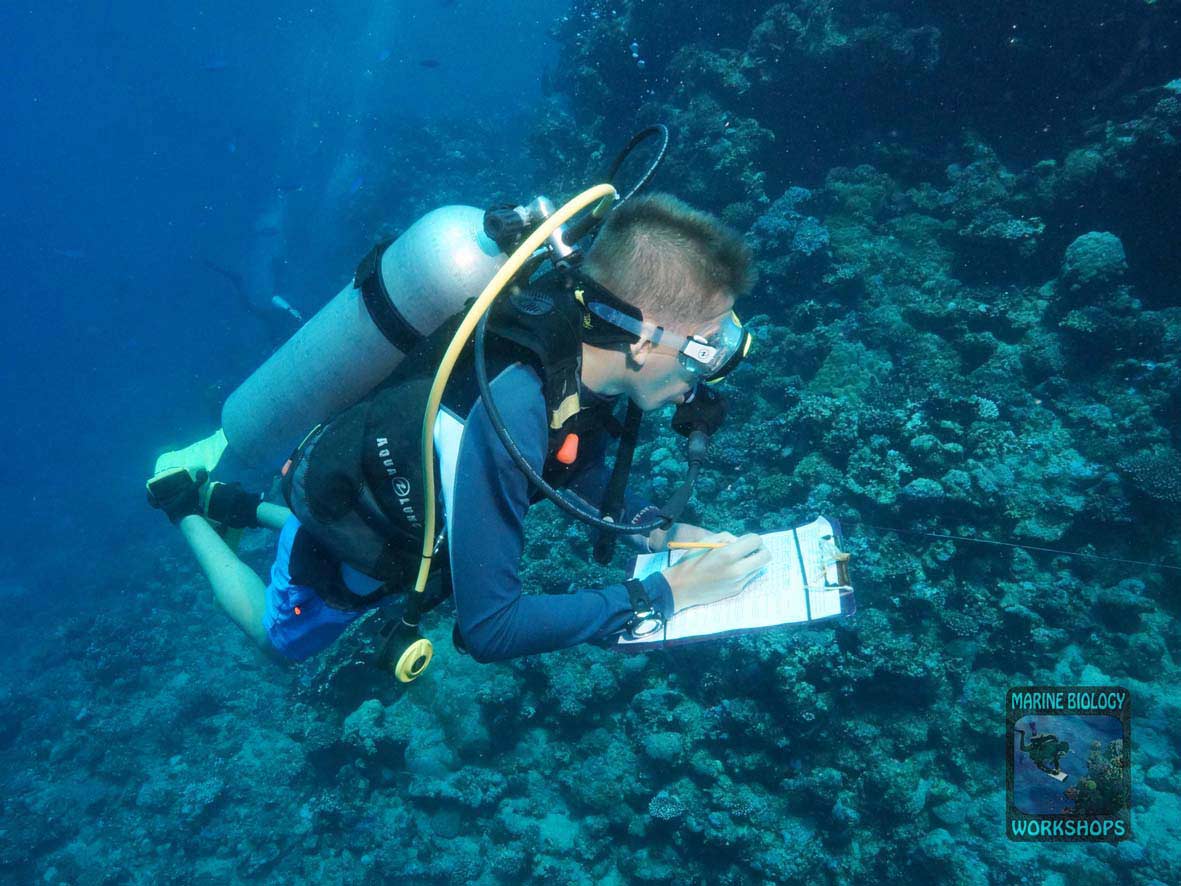
Substrate team during the Reef Check survey in Marsa Egla
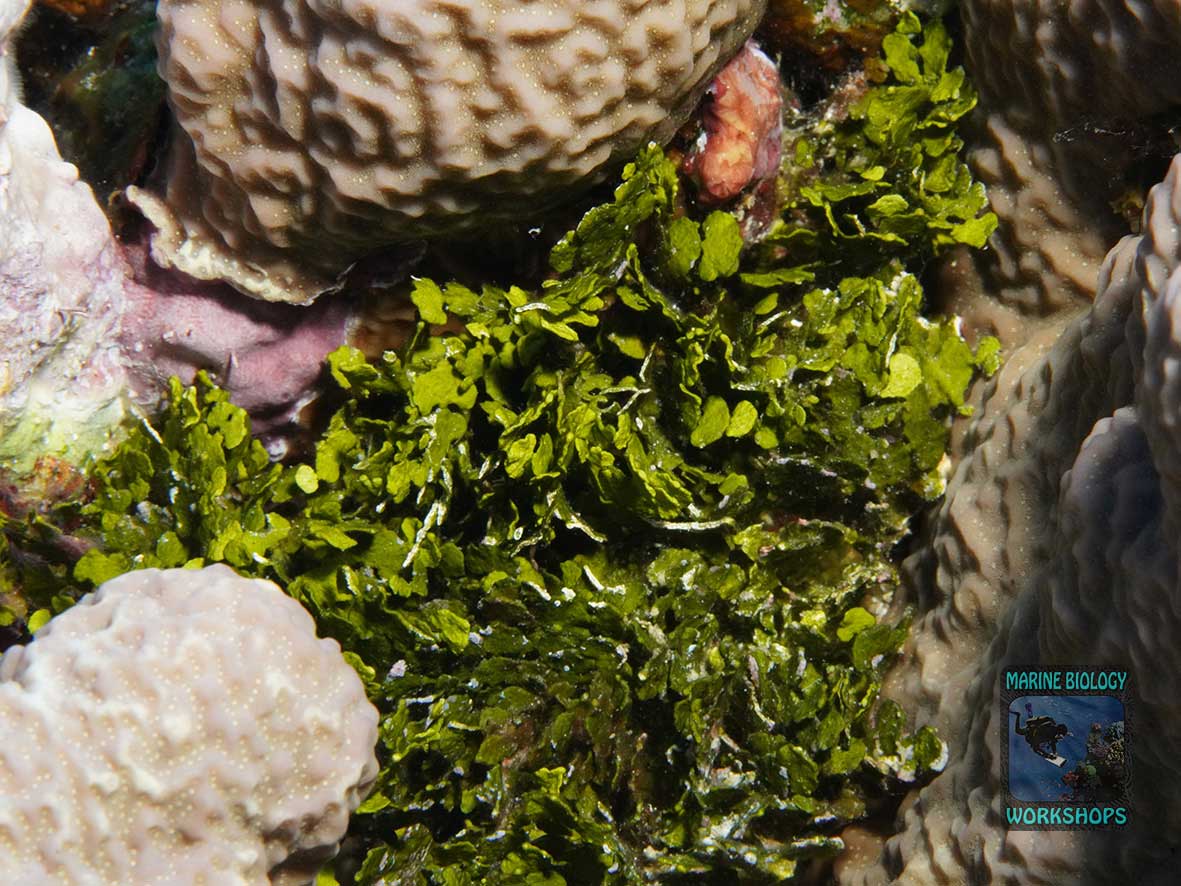
The Halimeda seaweed belongs to the substrate category “Other”
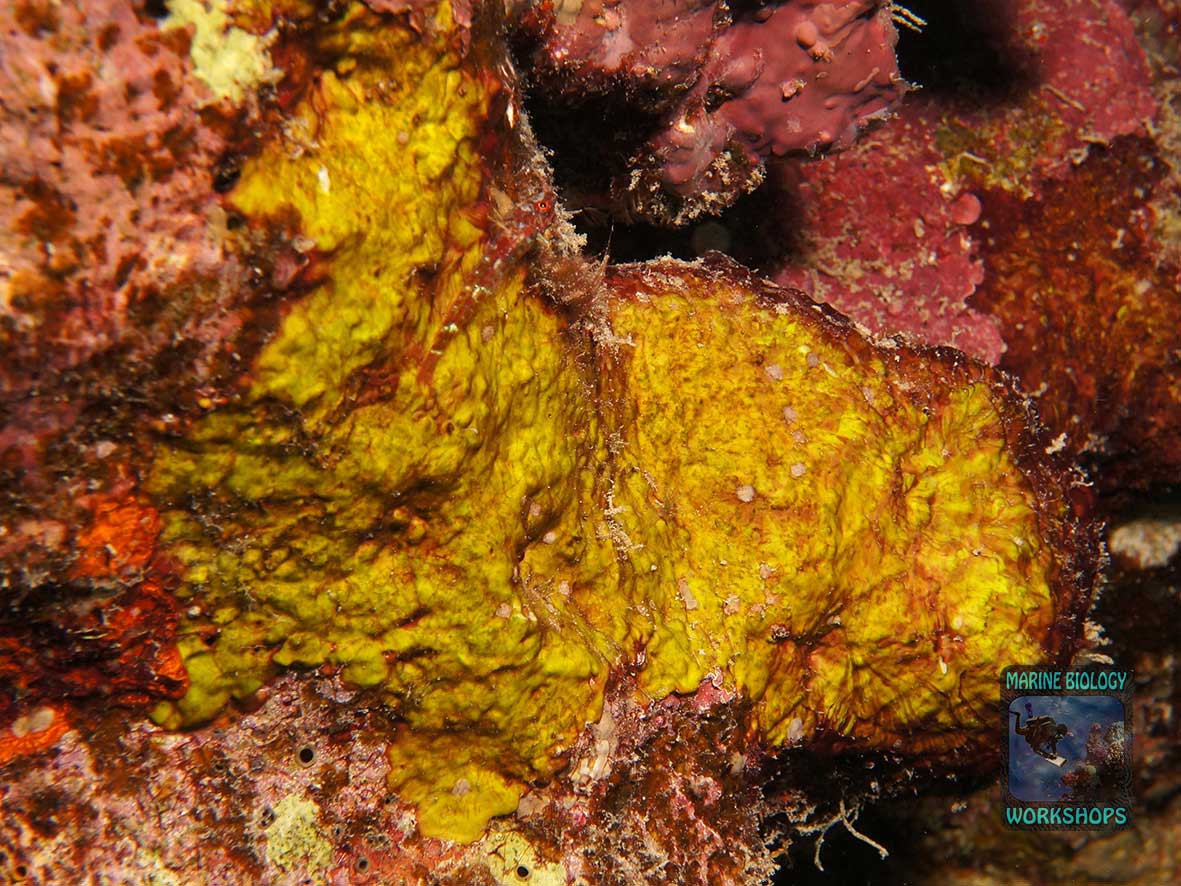
Calcareous red algae belong to the substrate category “Rock”
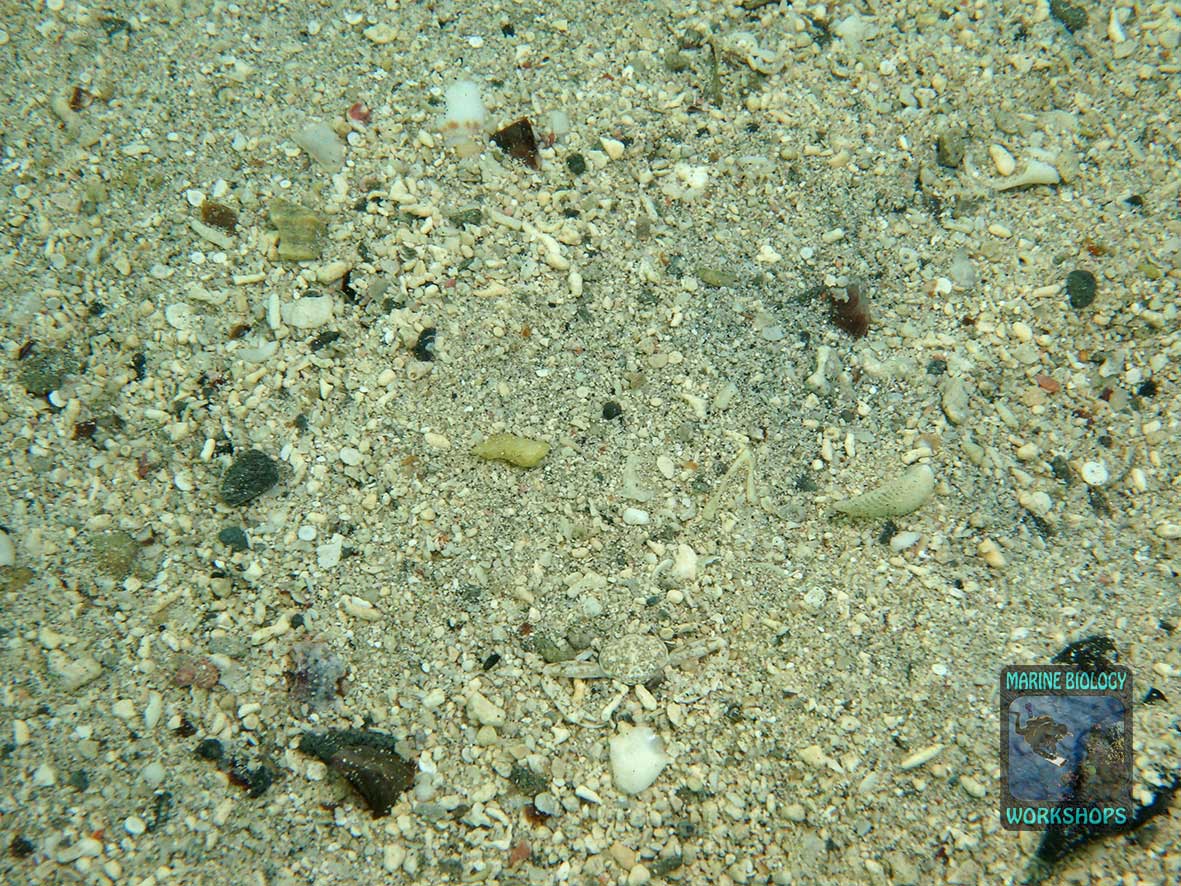
Sand is a substrate category in Reef Check.
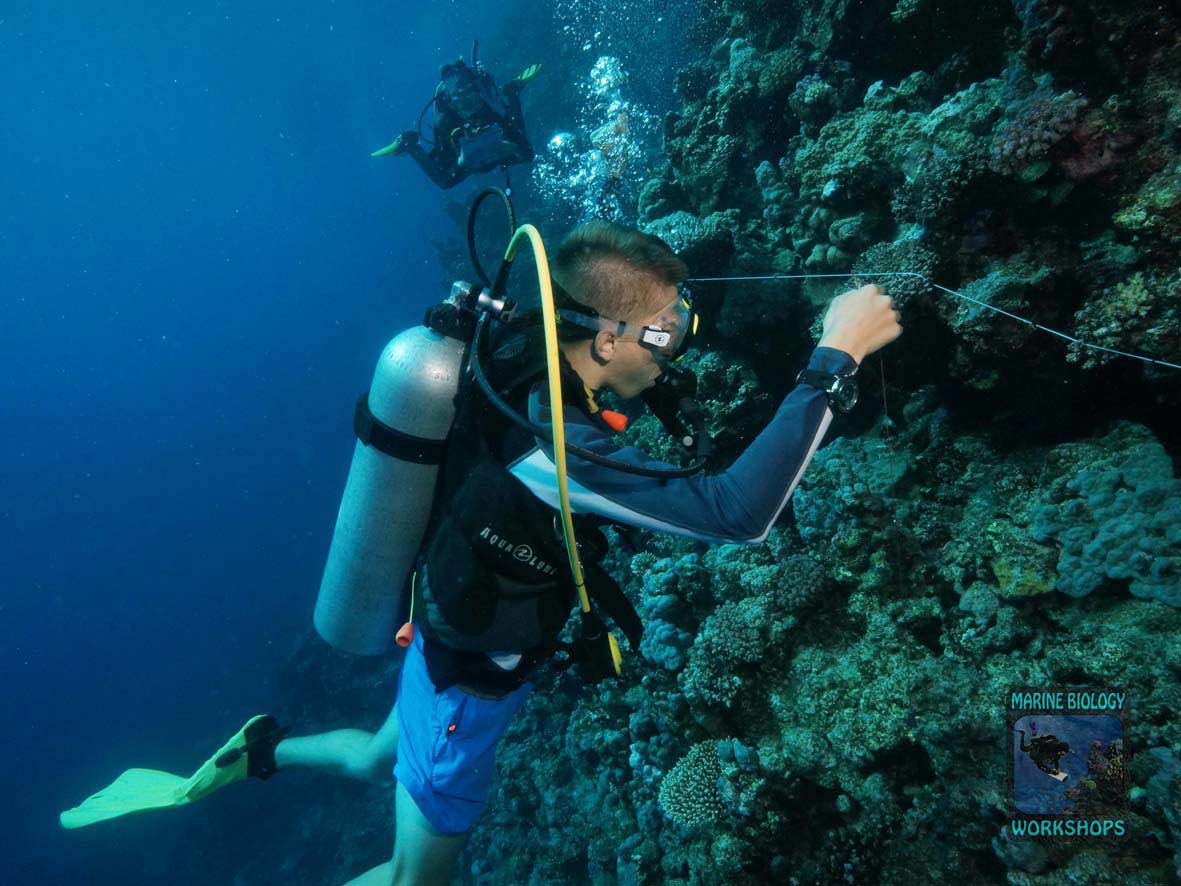
Substrate team during the Reef Check survey in Marsa Egla
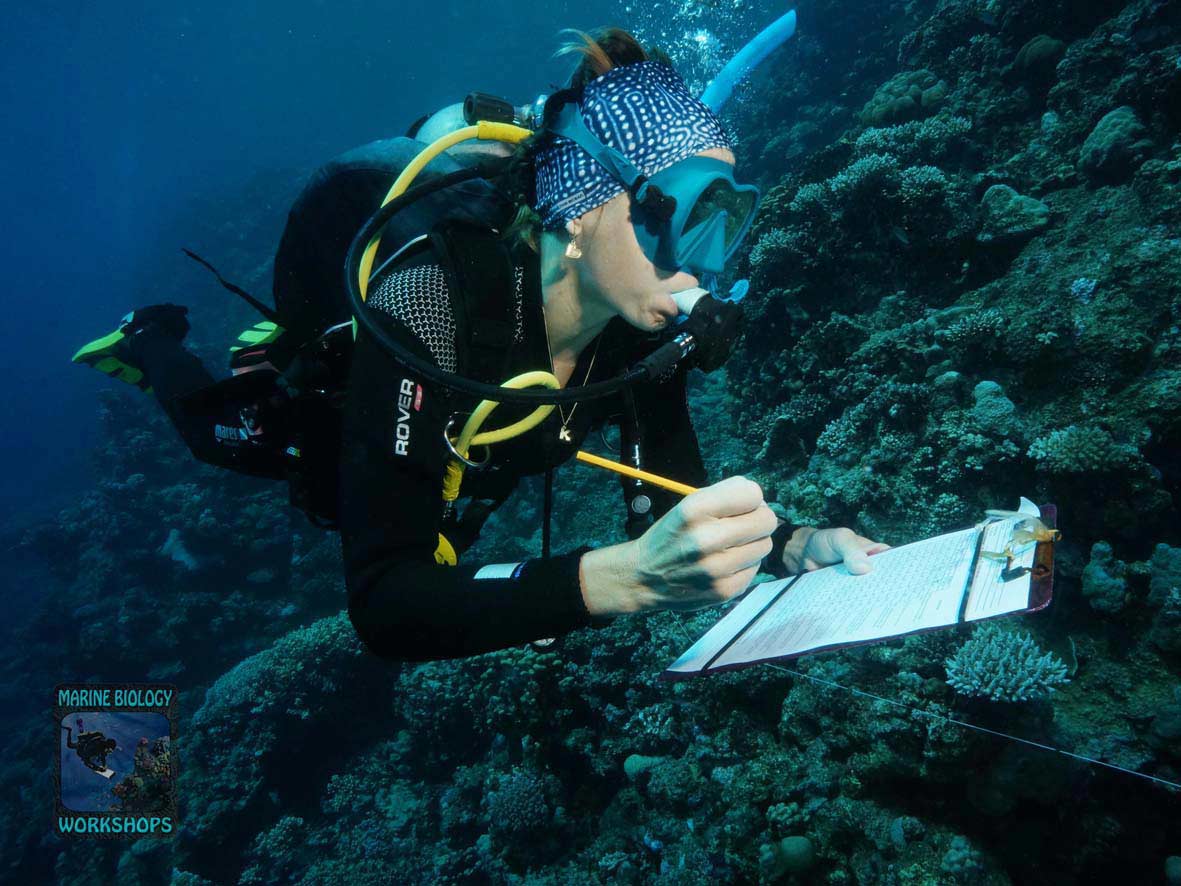
Substrate team during the Reef Check survey in Marsa Egla
Invertebrates and Human Impacts
The third team surveyed invertebrates and human impacts on the reef. Various key species were recorded, such as giant clams, various sea urchins, sea cucumbers, spiny lobsters, the coral-eating crown-of-thorns starfish and the triton shell. Overfishing or collection also play a role among the predominantly nocturnal invertebrates.
At the same time, the team documented visible impacts and damage. These include broken corals, trash, fishing lines, fishing nets, coral bleaching and coral diseases. Any population outbreaks of certain organisms are also recorded, for example the Drupella snail, which feeds on living coral tissue.
After the surveys were completed, the two transect lines were retrieved. In the evening, the group entered the collected data tables on the computer.
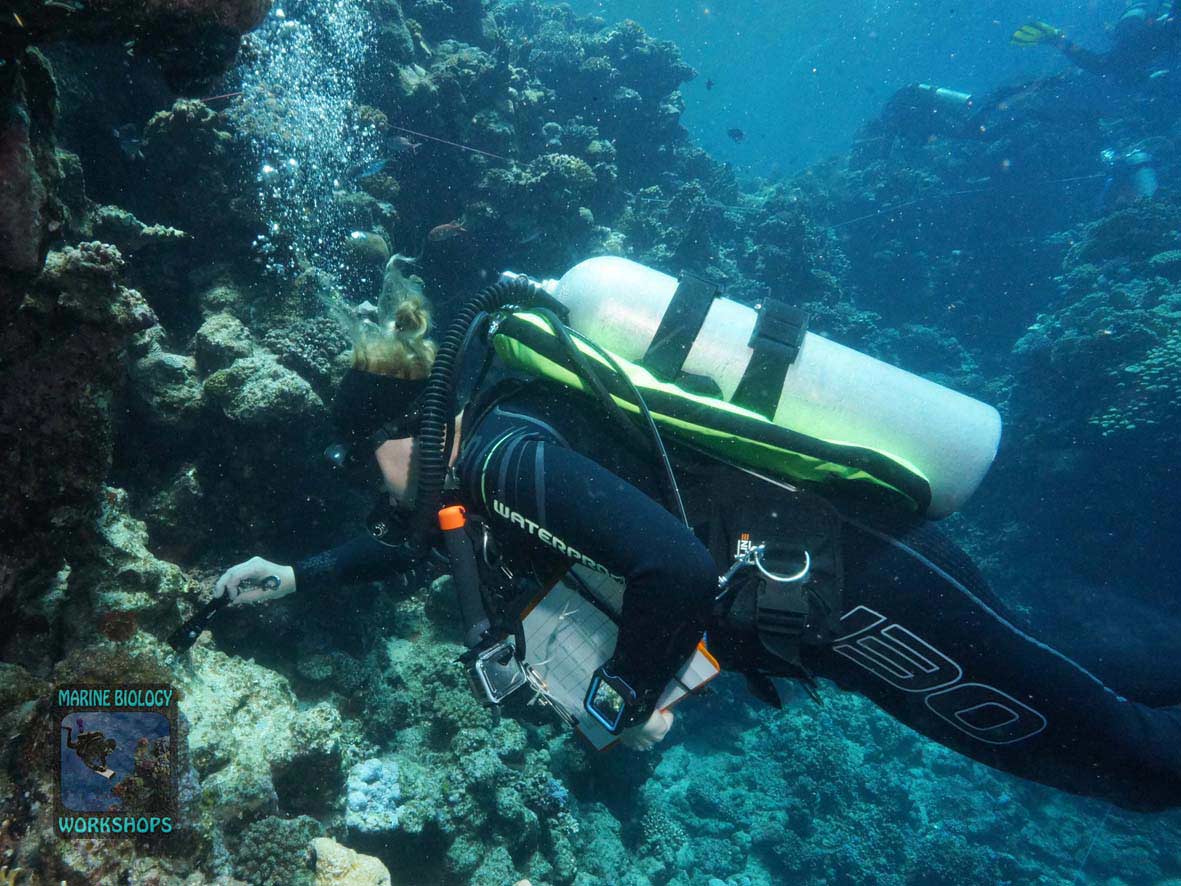
Invertebrate team during the Reef Check survey in Marsa Eglagla
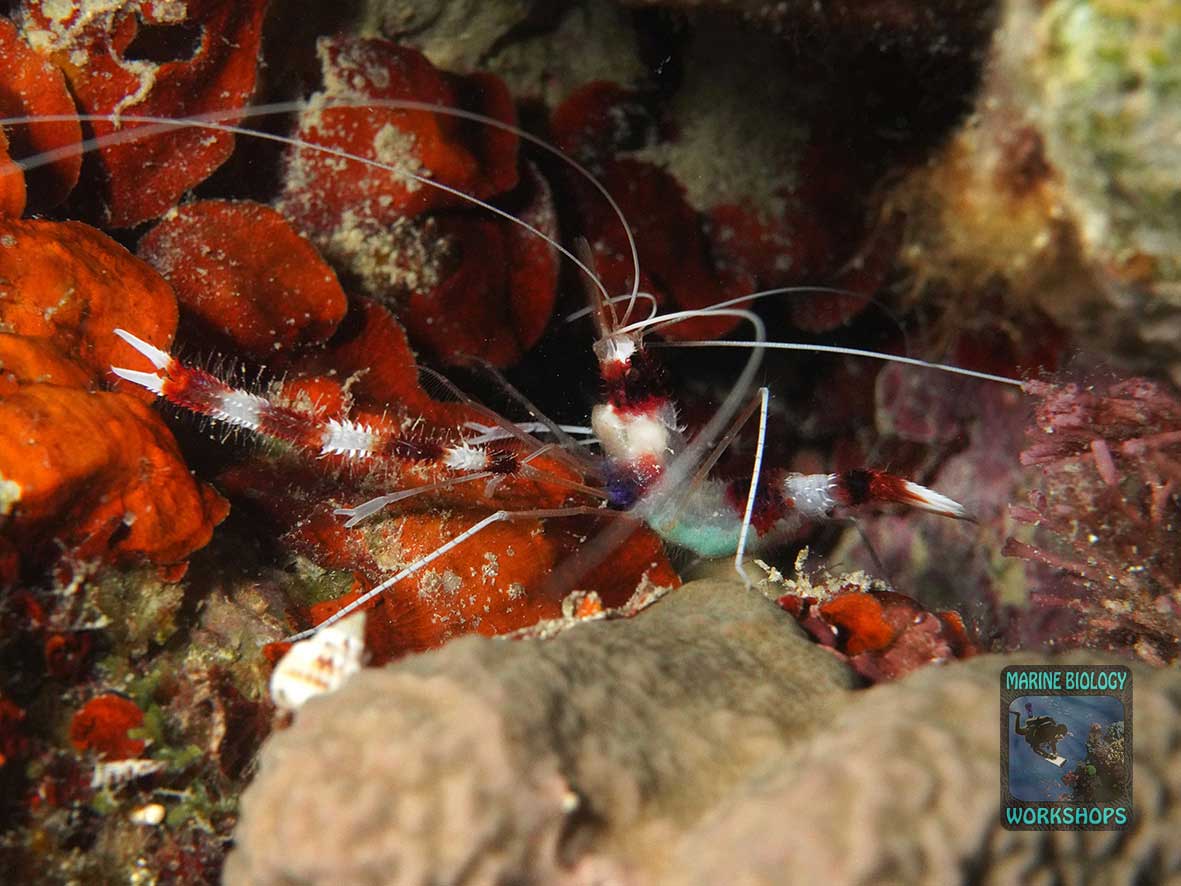
The banded coral shrimp lives in caves and is nocturnal
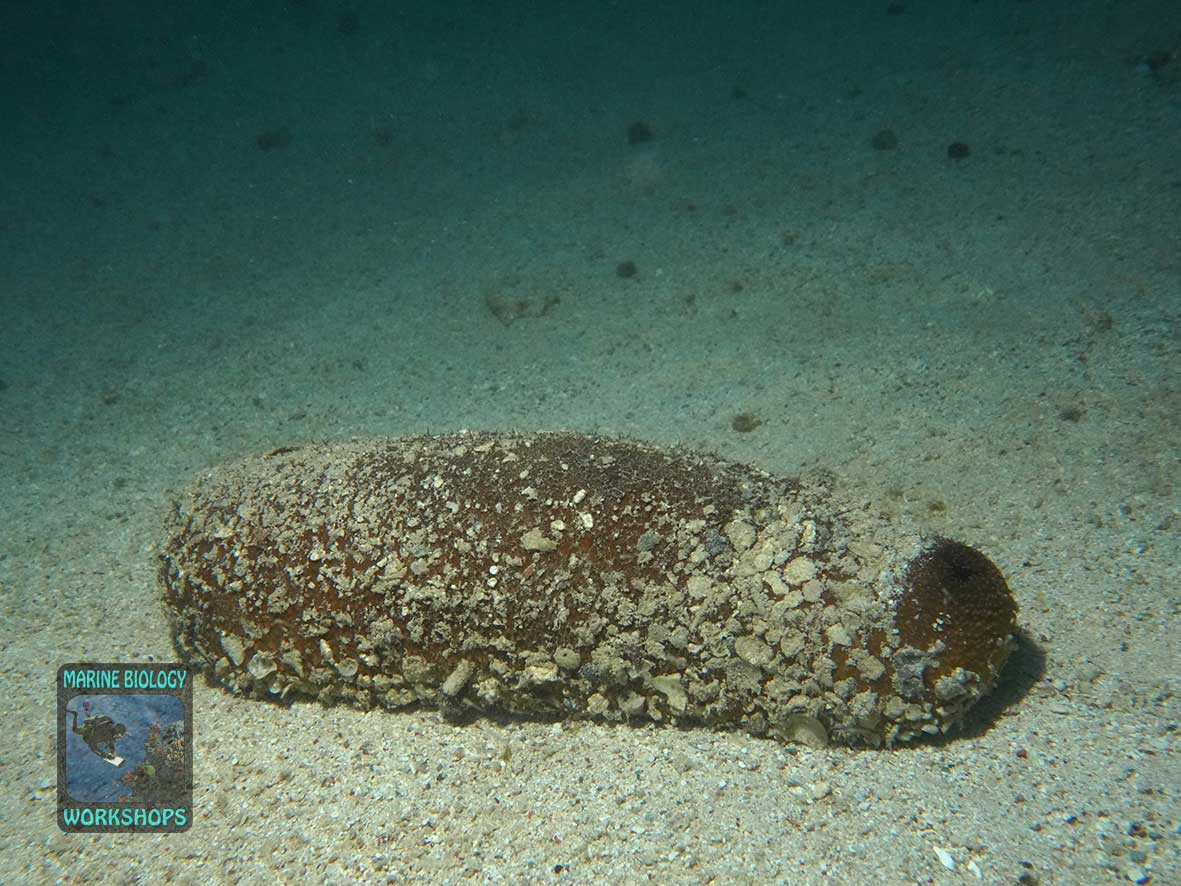
Sea cucumbers feed on detritus
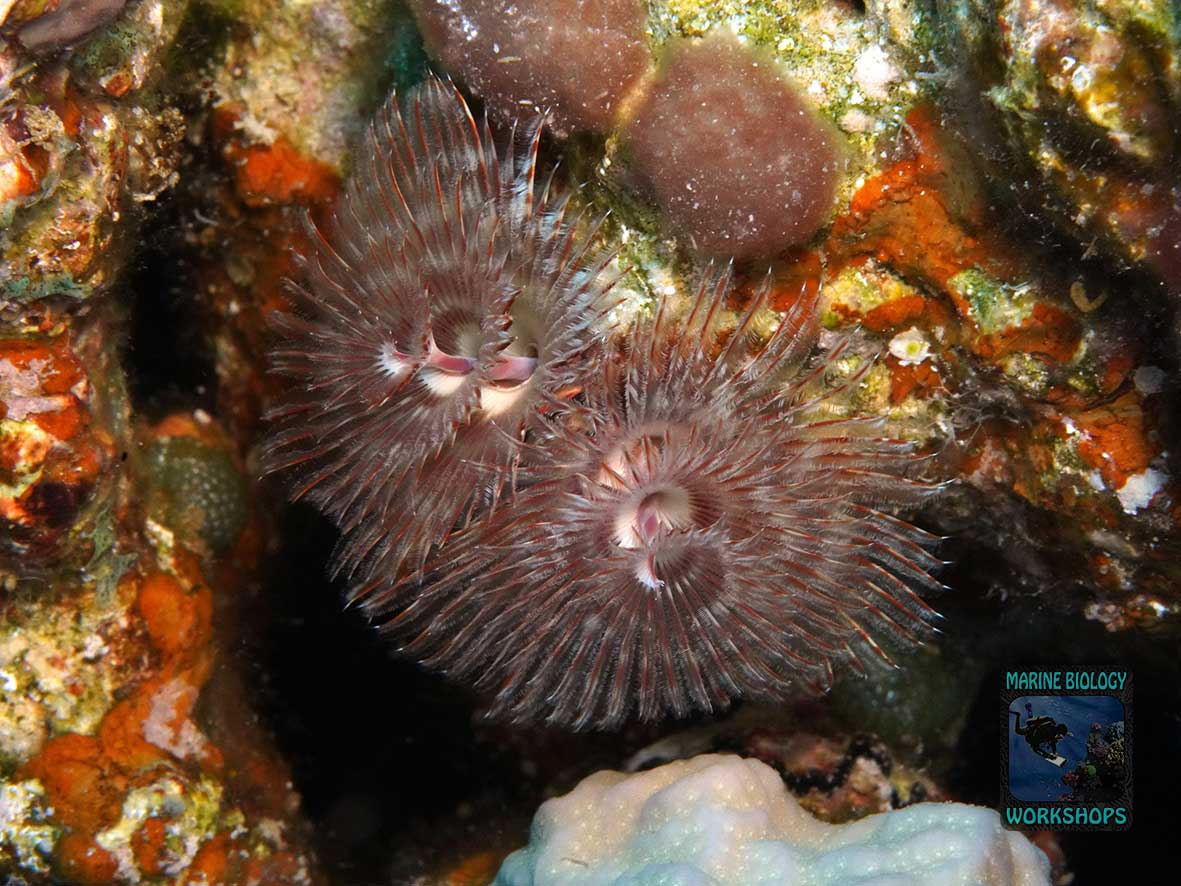
Tubeworms are filter feeders
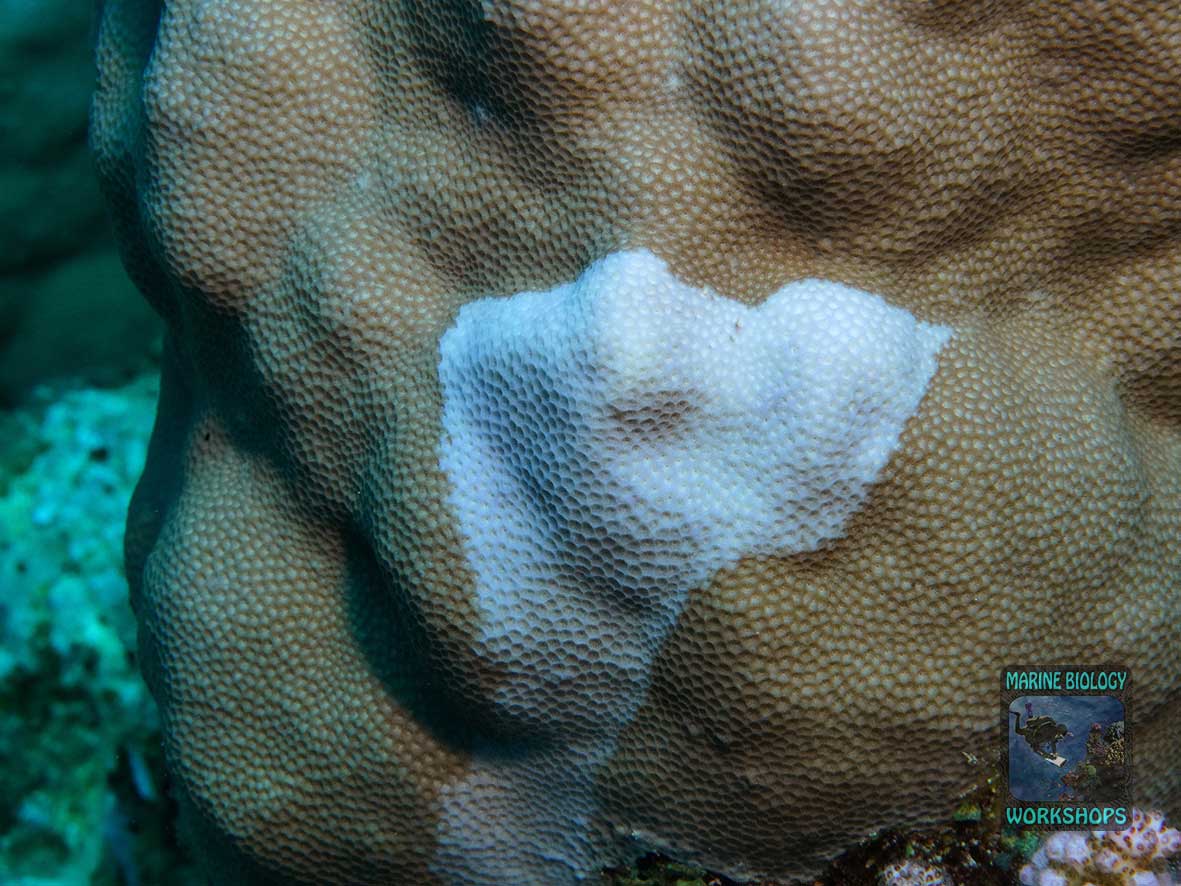
In this small area, the coral has no zooxanthellae, but it is still alive
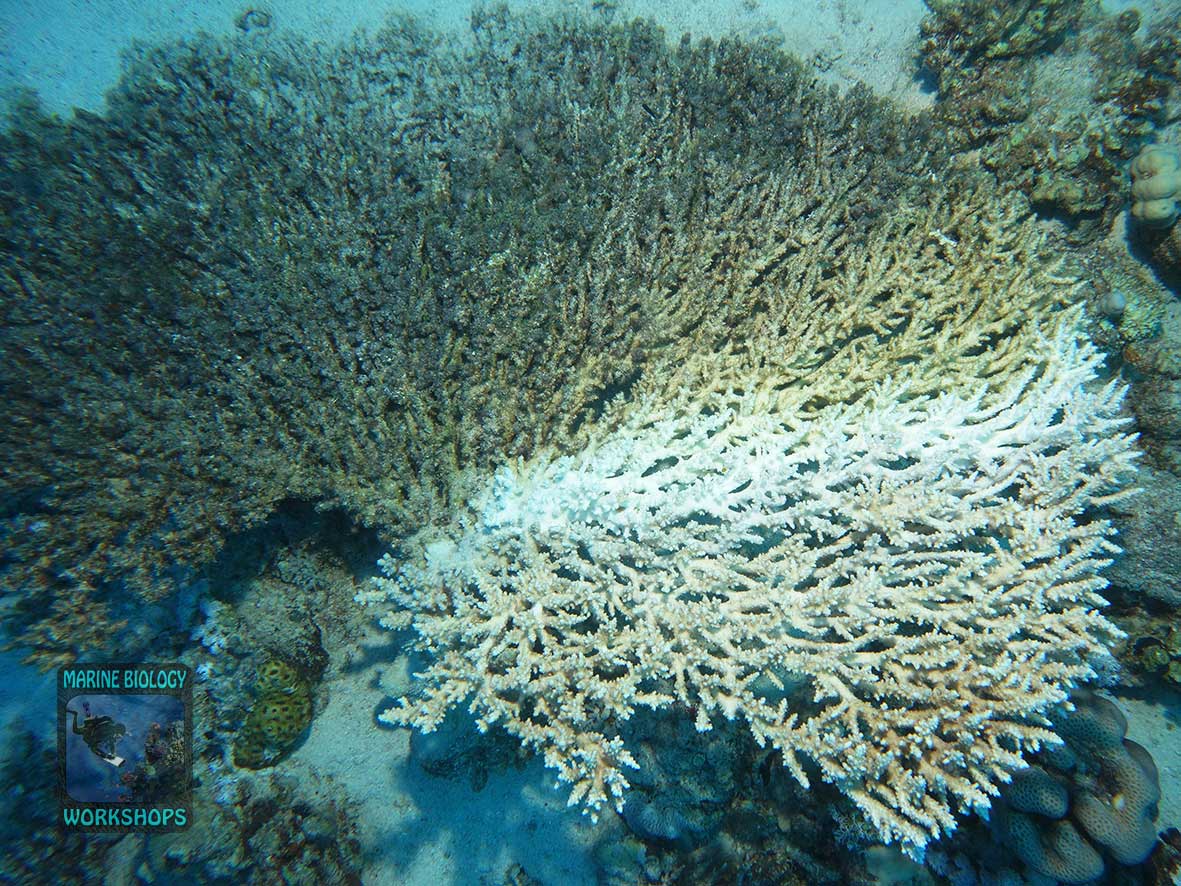
White Syndrome is a coral disease
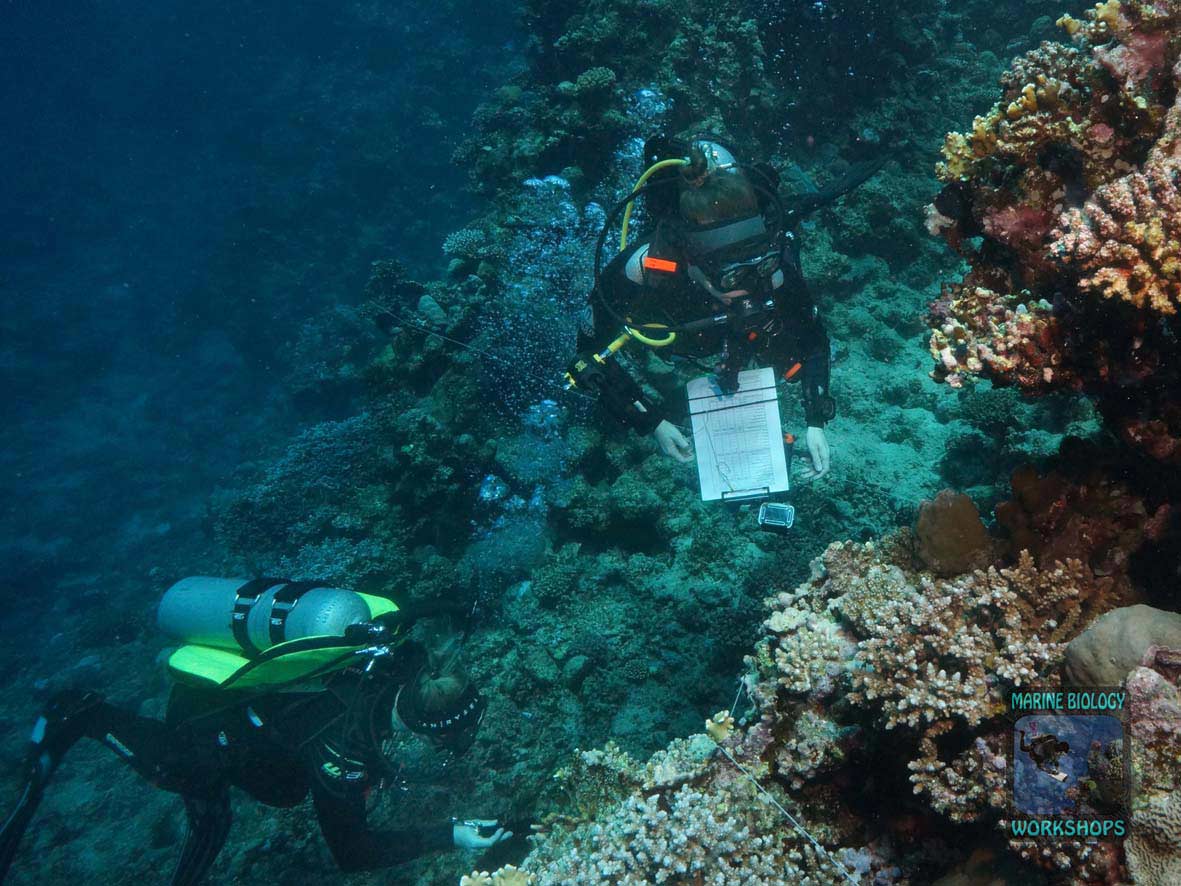
Invertebrate team during the Reef Check survey in Marsa Egla
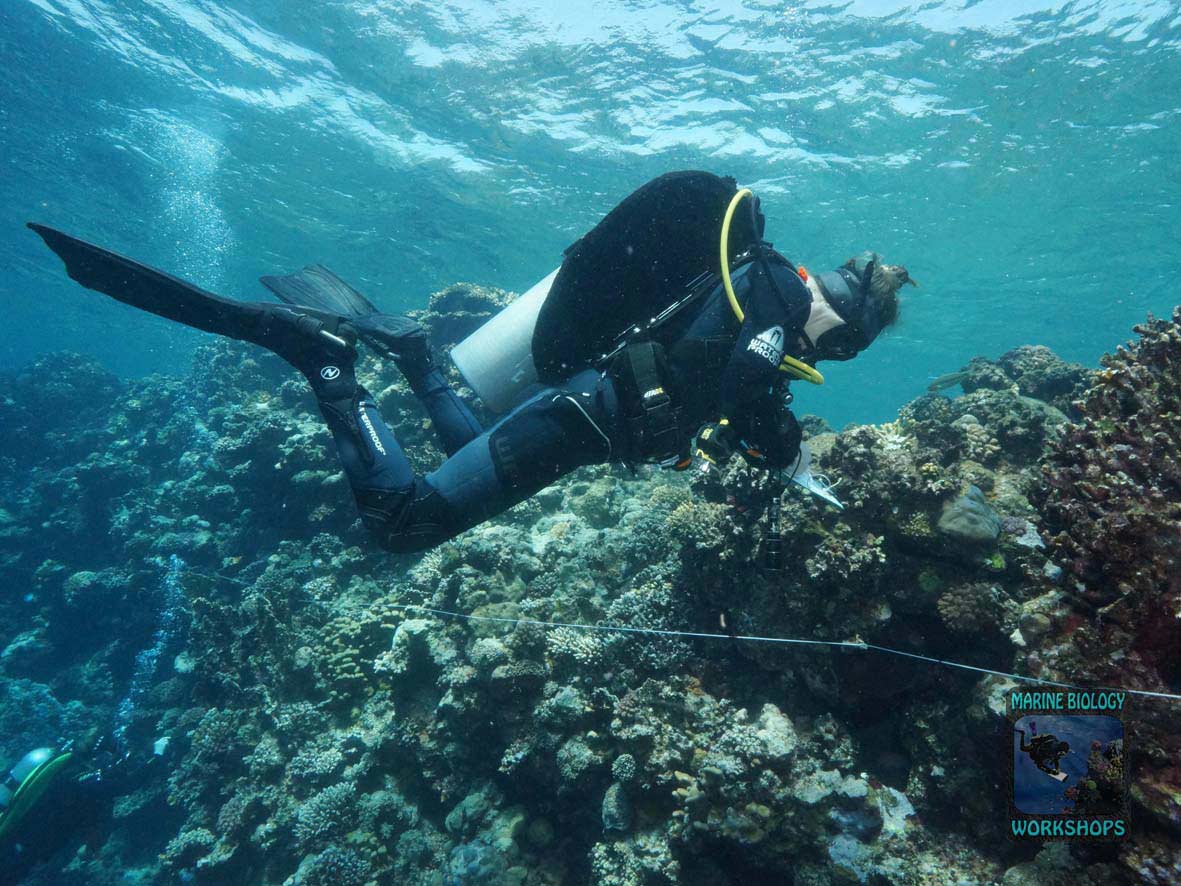
Invertebrate team during the Reef Check survey in Marsa Egla
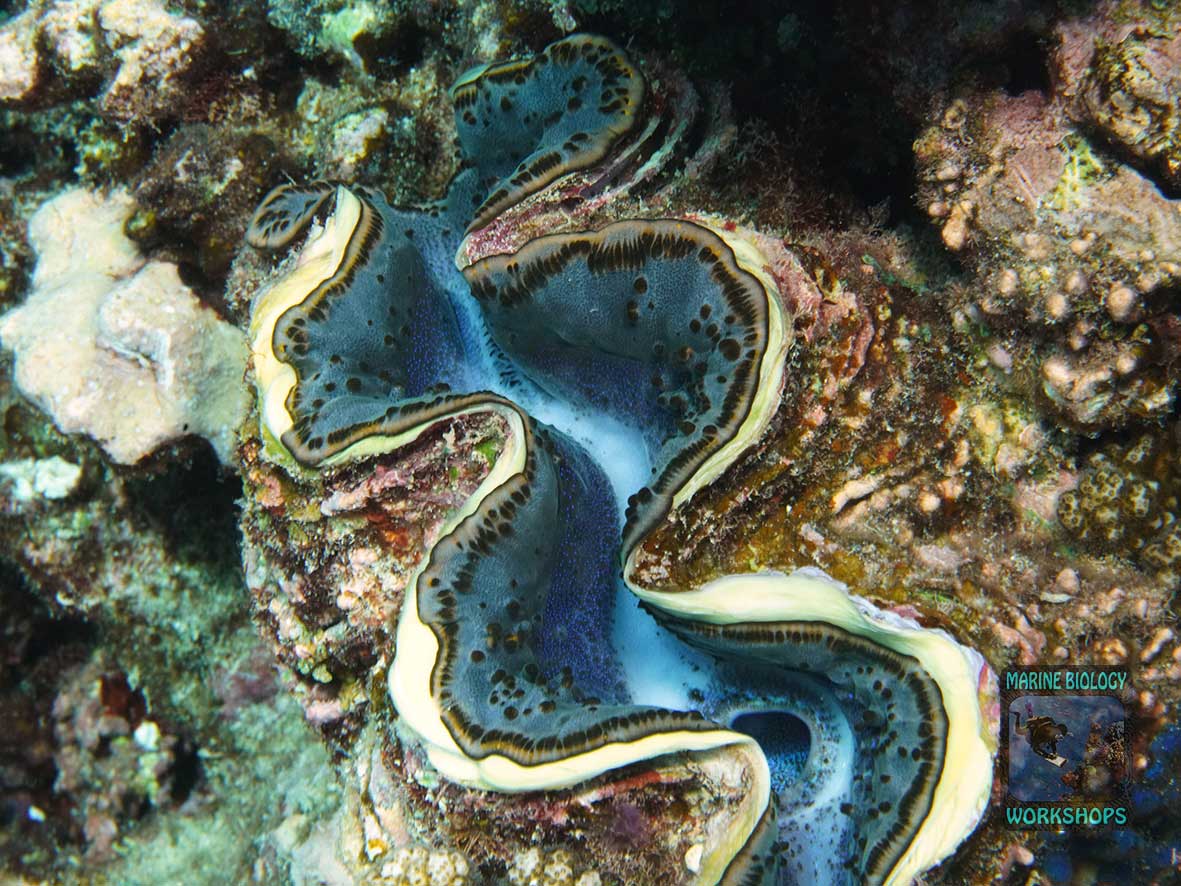
The Tridacna giant clam has zooxanthellae in its mantle lobes
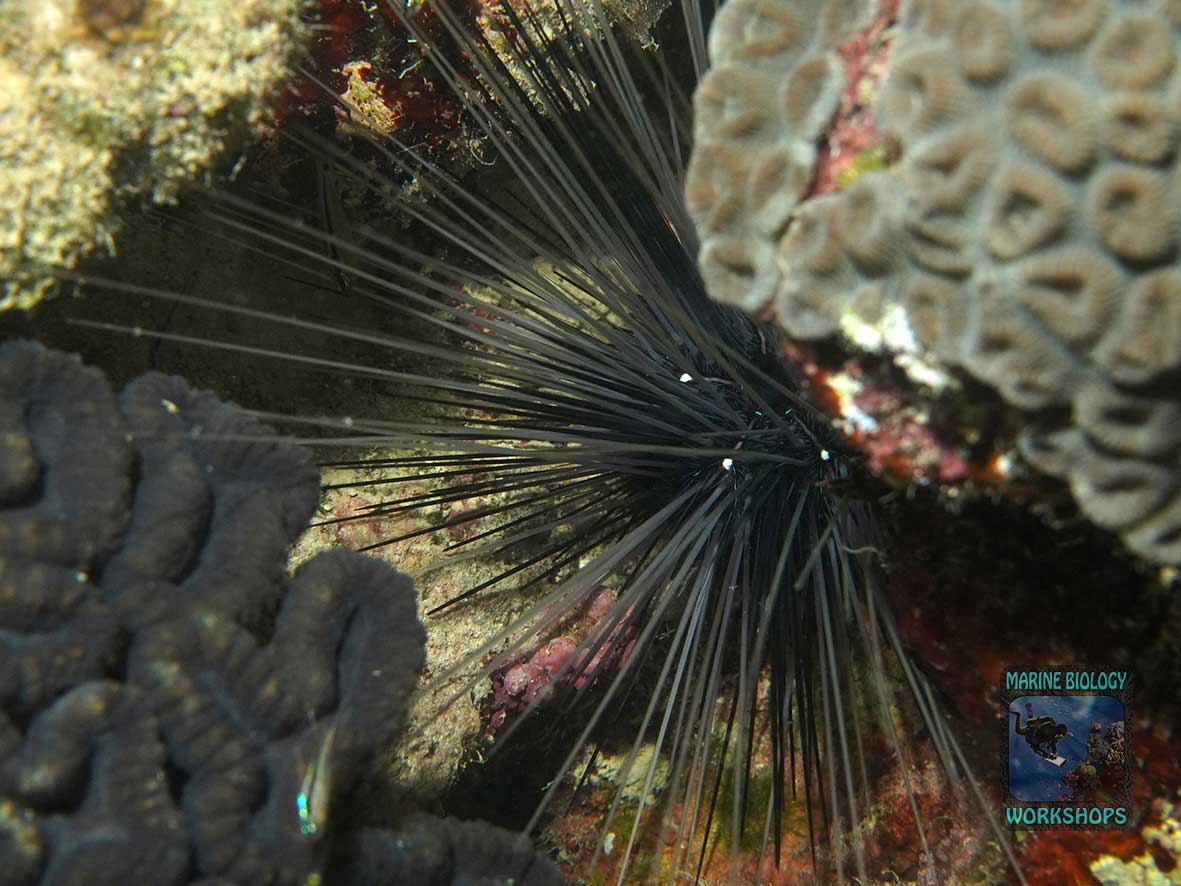
The Diadem Sea Urchin is a nocturnal grazer that feeds on algae
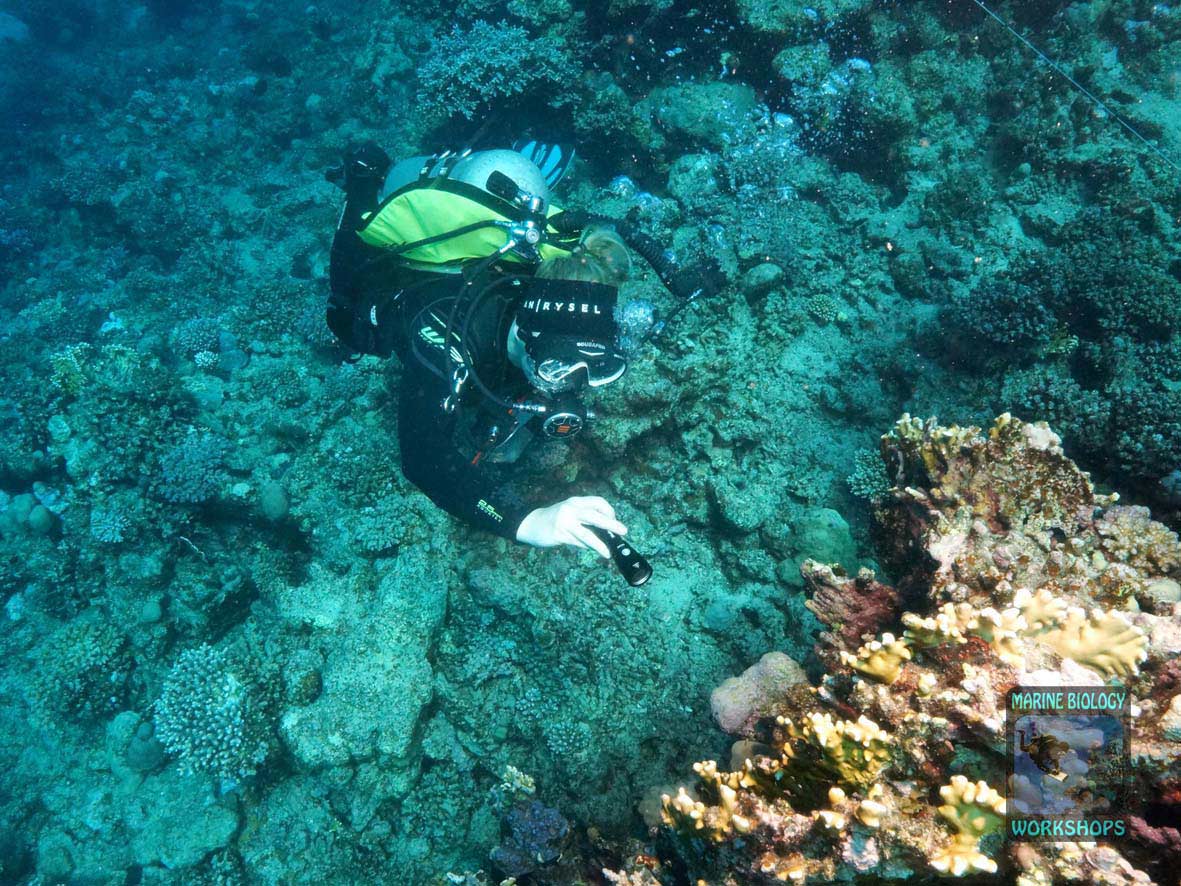
Invertebrate team during the Reef Check survey in Marsa Egla
Two Surveys at the House Reef of Marsa Nakari
Two days later, we conducted two more surveys at the house reef of Marsa Nakari: one on the north side and one on the south side of the reef, outside the bay.
The group was supported by Christina, an experienced Reef Checker from Dahab. She conducted the briefing, helped lay out the transect lines and accompanied the teams during the surveys.
The procedures were already well practised, and everything ran really smoothly. However, two complete surveys in one day are demanding even for a well-coordinated team. Between the two surveys, there was a short lunch break, and the data sheets and equipment were prepared for the second survey. In the evening, after the two surveys (and, of course, dinner), the group travelled further on to Wadi Lahami.
Wadi Lahami and the Reefs of the Fury Shoals
Red Sea Diving Safari’s Wadi Lahami Village is located in southern Egypt, north of the Ras Banas peninsula. From here, the various dive sites and reefs of the Fury Shoals are reached by speedboat. This shallow marine area is known for its numerous offshore platform reefs with their varied, often massive reef structures and their high species diversity.
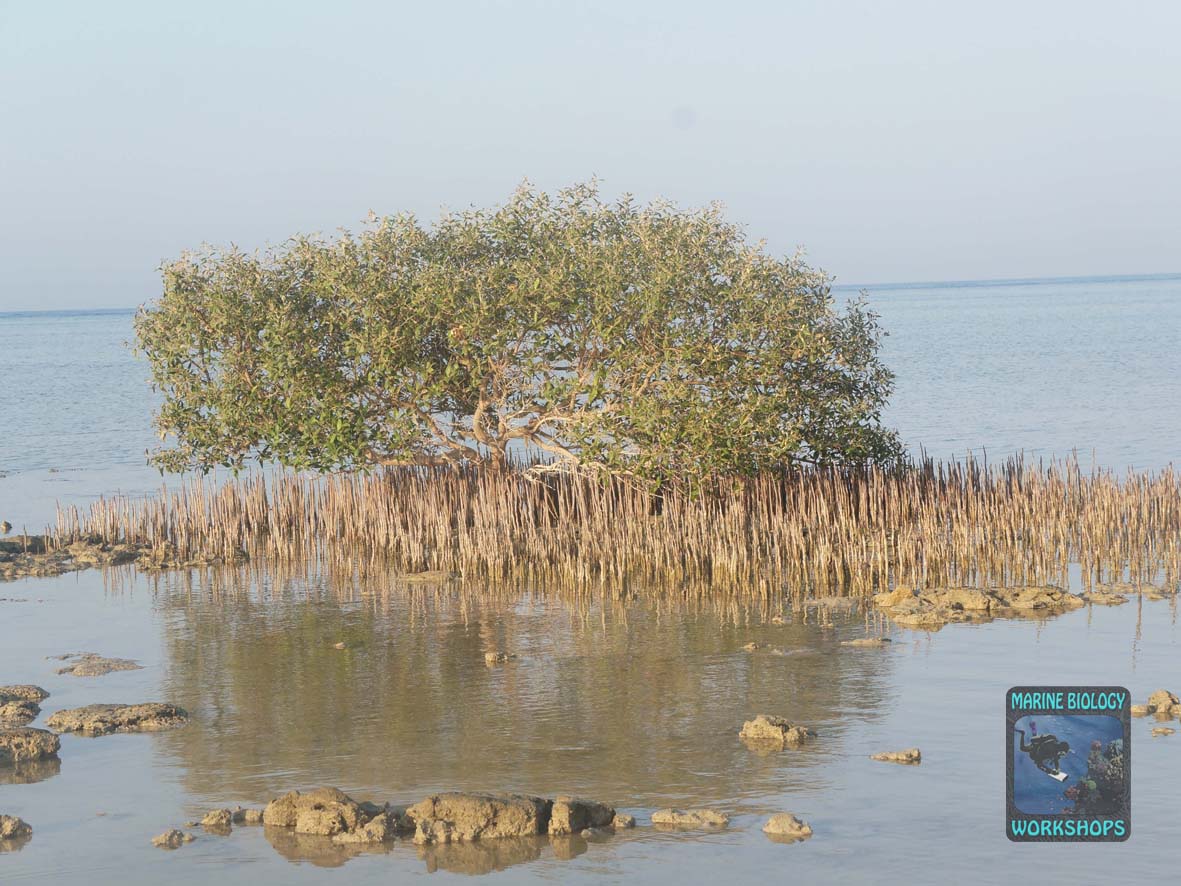
Directly next to Wadi Lahami Village, there is also an extensive mangrove area with white mangroves (Avicennia marina), which provides food and habitat for numerous seabird species and many other organisms:
The Red Sea ghost crab (Ocypode saratan) feeds mainly on carrion and organic matter and digs burrows in the sediment.
The local great egret (Ardea alba) and the osprey (Pandion haliaetus) hunt for fish in the shallow water at dawn and dusk.
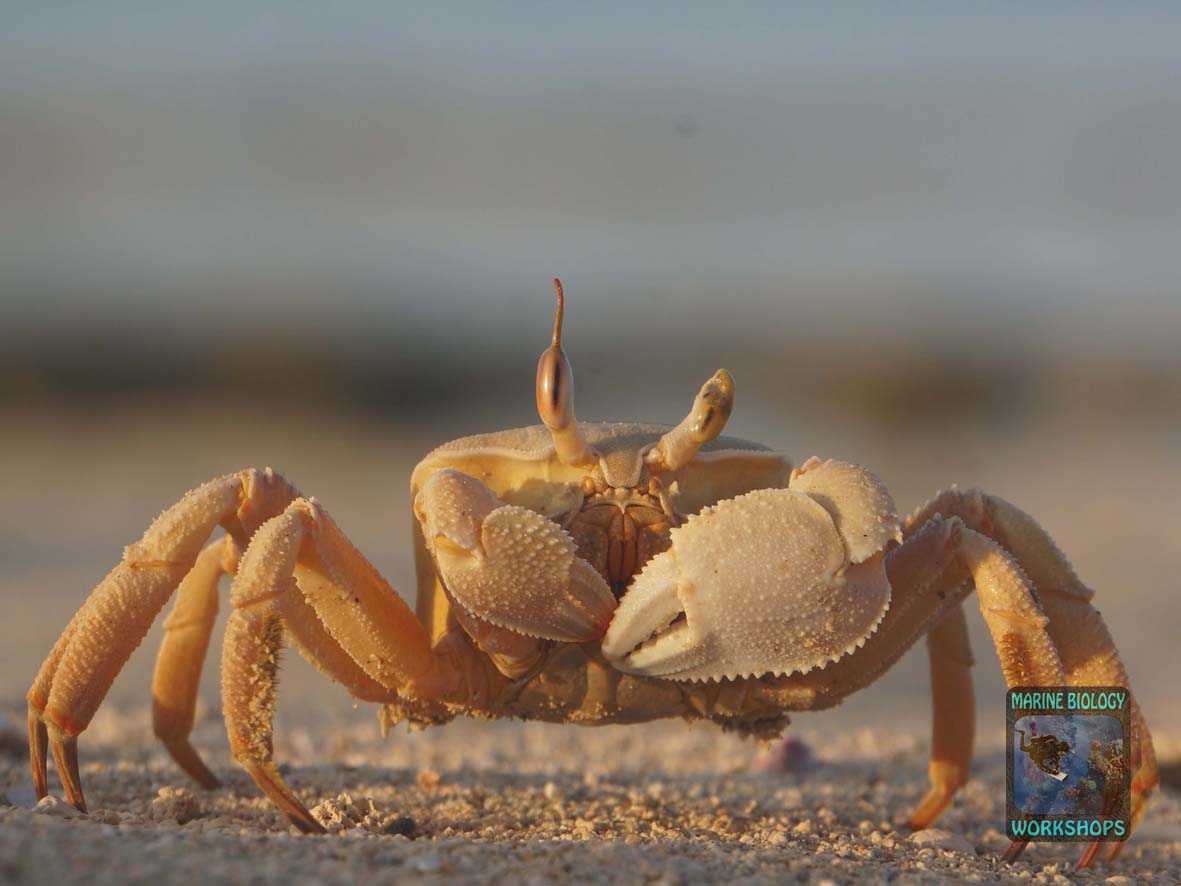
A crab seeks shelter in the sand on the beach in Wadi Lahami
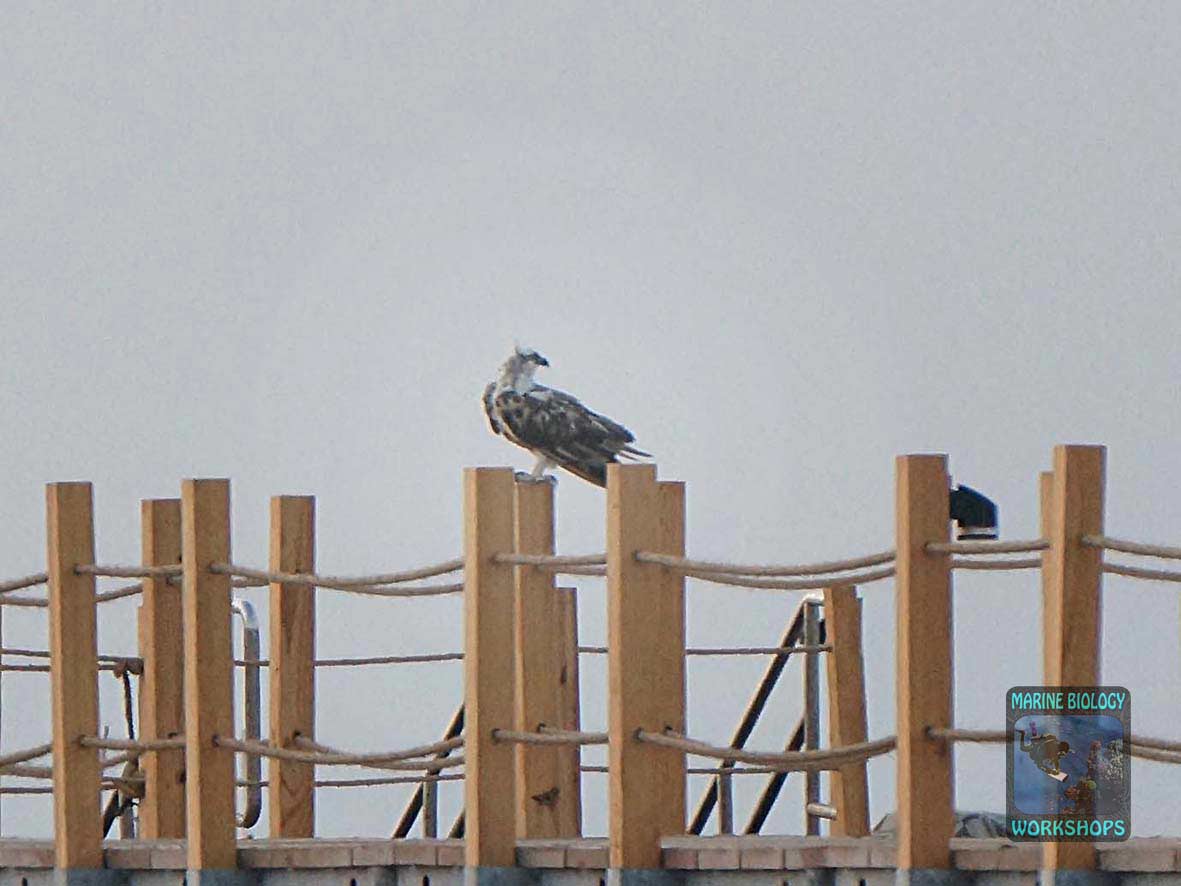
Osprey (Pandion haliaetus) at sunrise in Wadi Lahami
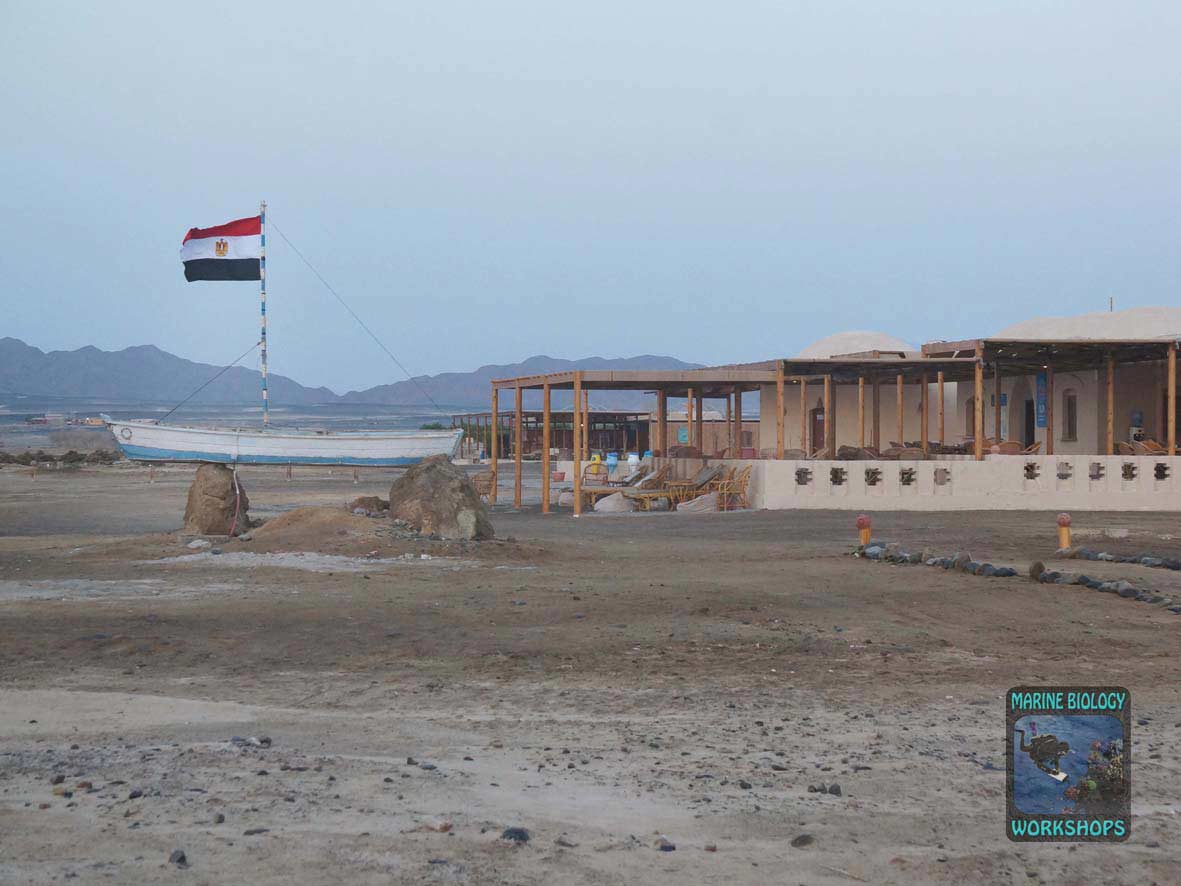
Wadi Lahami vilage, Red Sea Diving Safari
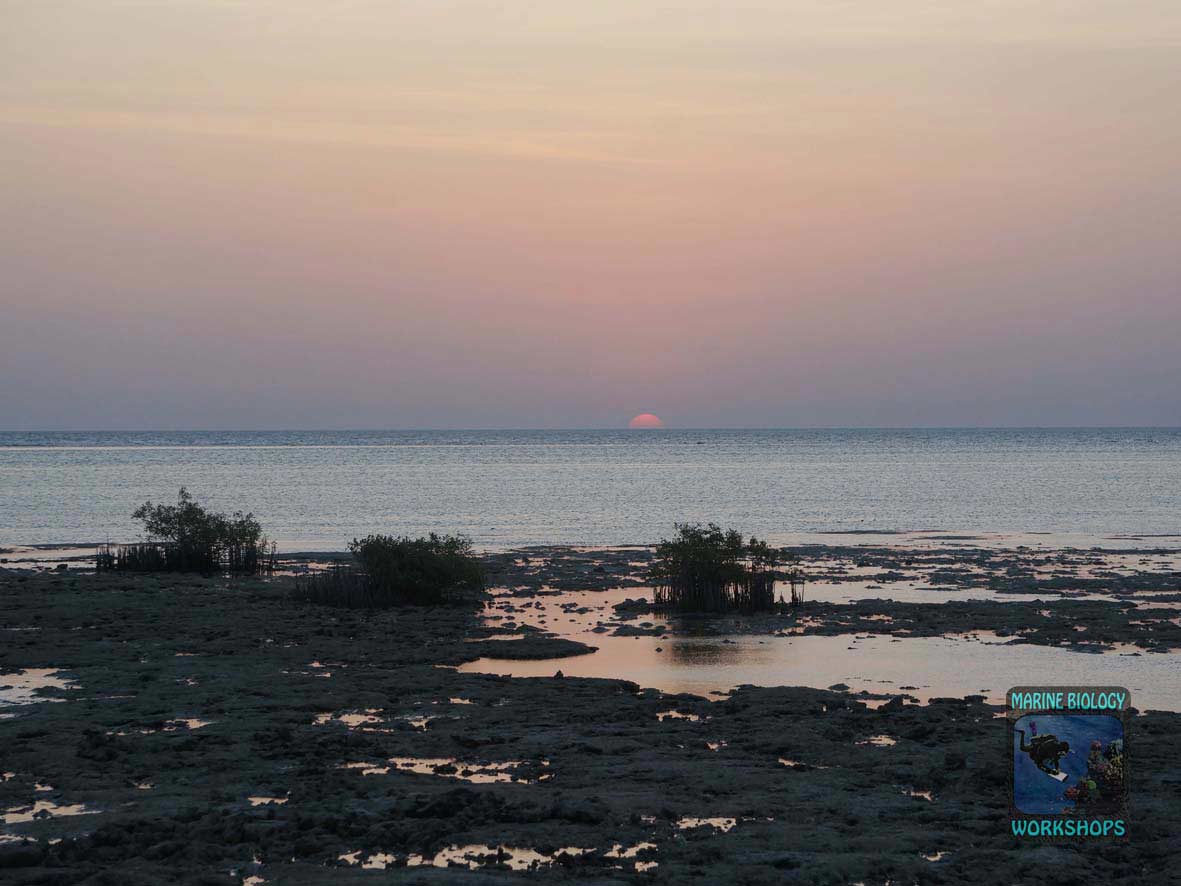
Sunrise in Wadi Lahami
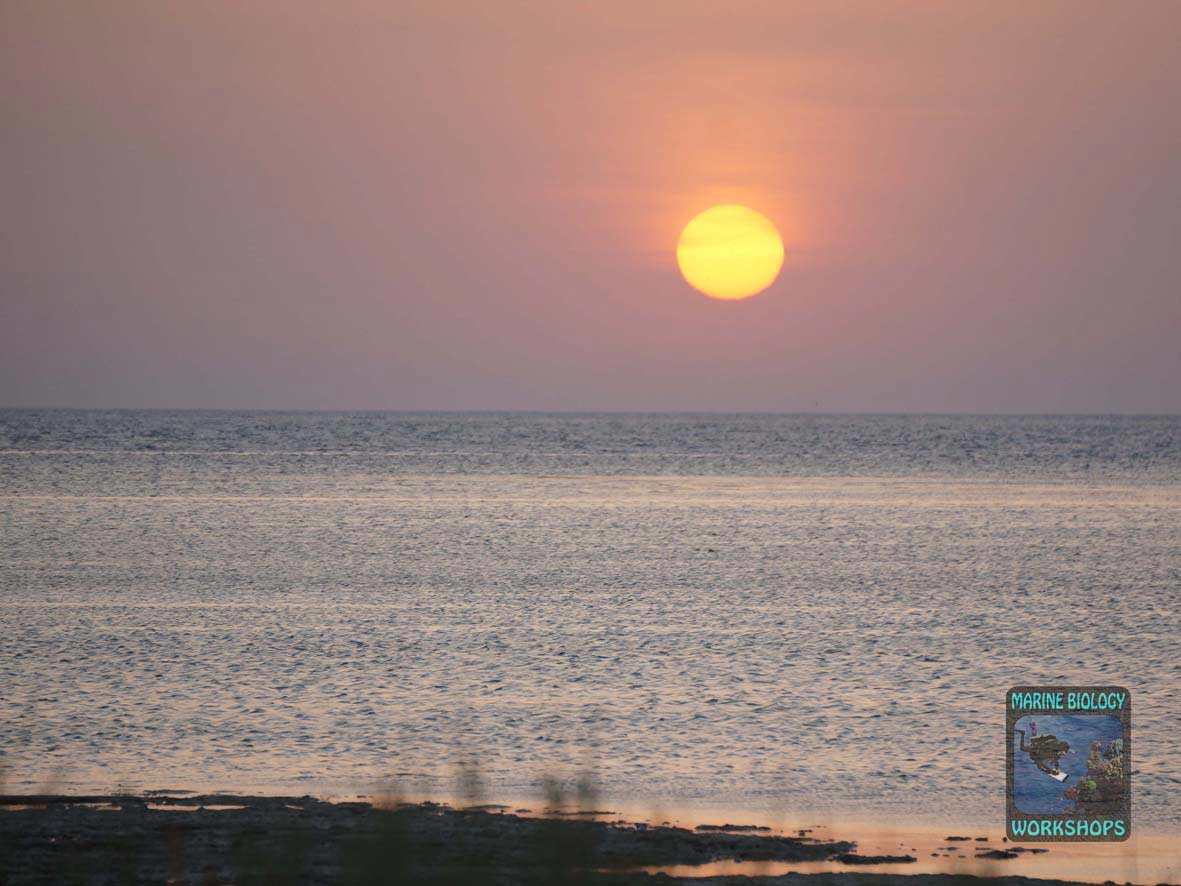
Sunrise in Wadi Lahami
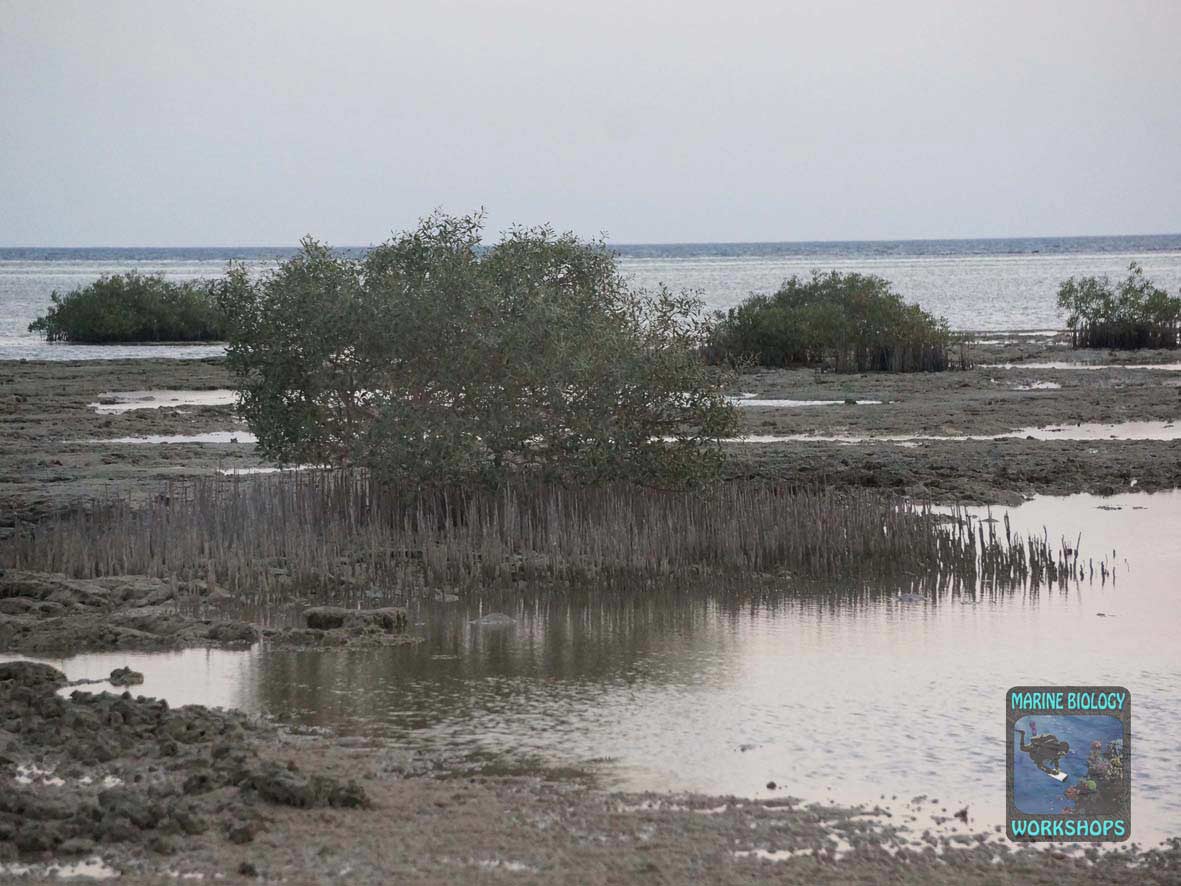
White mangrove at sunrise in Wadi Lahami
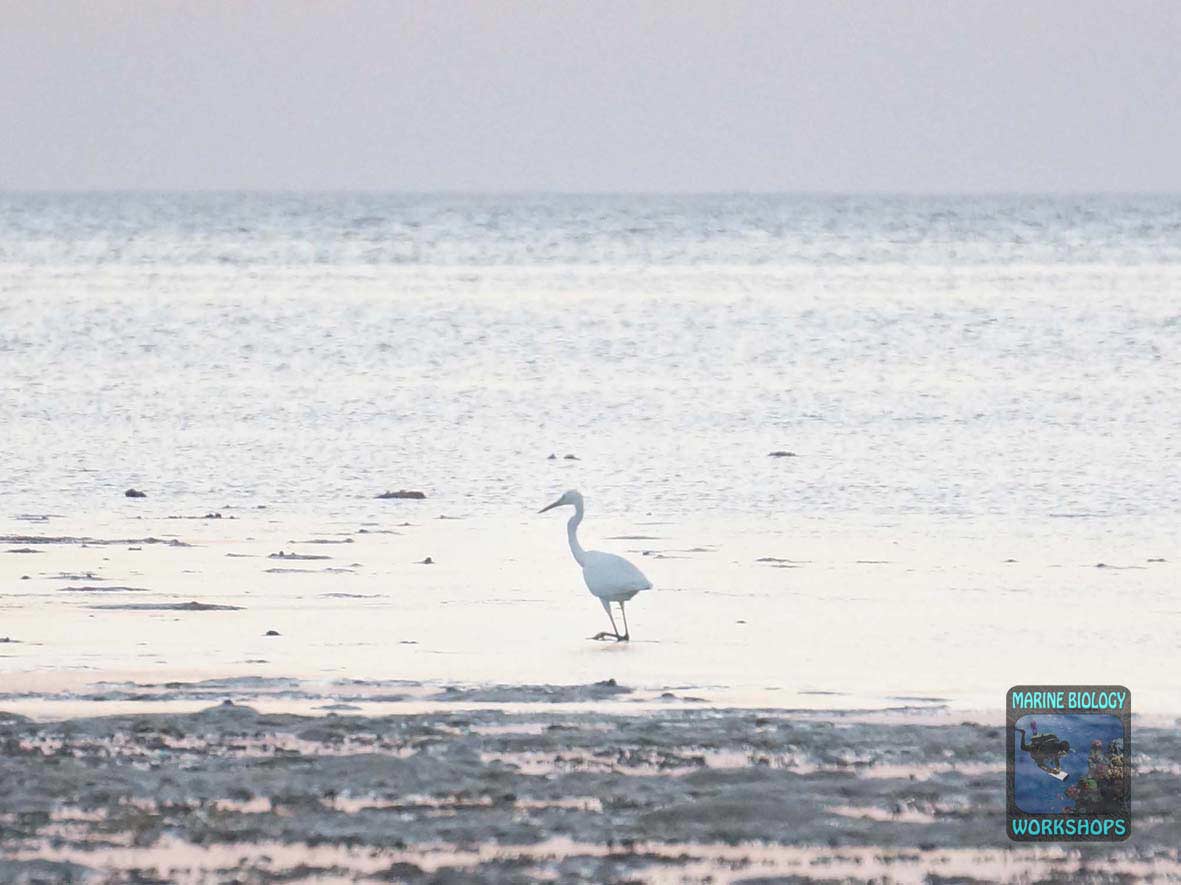
A heron on the reef flat at sunrise in Wadi Lahami
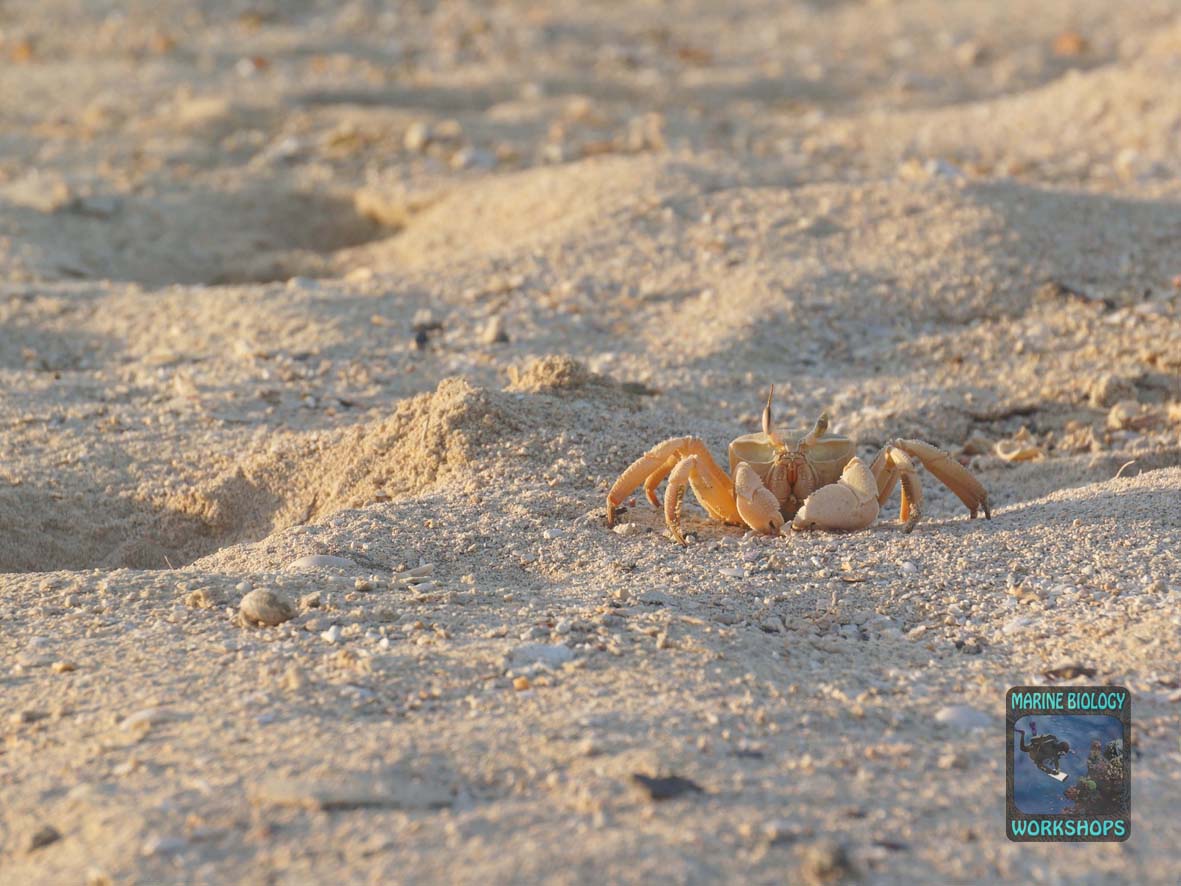
A crab seeks shelter in the sand on the beach in Wadi Lahami
Surveys in Wadi Lahami
Finally, two further Reef Check surveys were conducted at the house reef of Wadi Lahami.
By this point, the Reef Check team was very well coordinated, and everything ran like clockwork again. This time, Marlin, now in his fifth year of participating in Reef Check surveys, conducted the briefing and helped lay out the transect lines.
These surveys concluded this year’s survey series and provided further important data on the condition of coral reefs in the southern Red Sea and their relative recovery following the Fourth Global Coral Bleaching Event (GCBE4) in 2023 and 2024.
Sheltered
The sheltered and very shallow section of the house reef was severely damaged by the fourth global coral bleaching event in 2023 / 2024. In late summer during both years, the water simply became too warm, causing a large proportion of the corals to bleach and die.
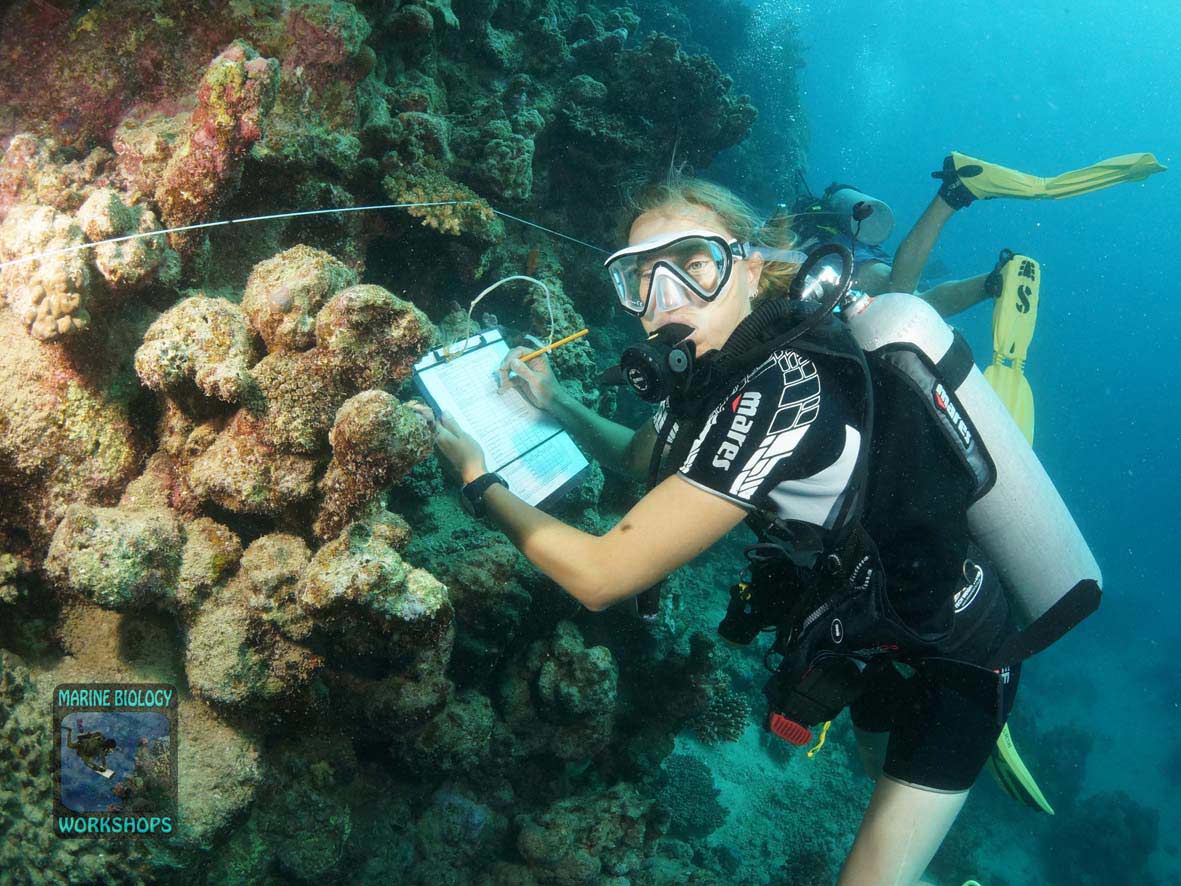
Invertebrate team during the survey in Wadi Lahami
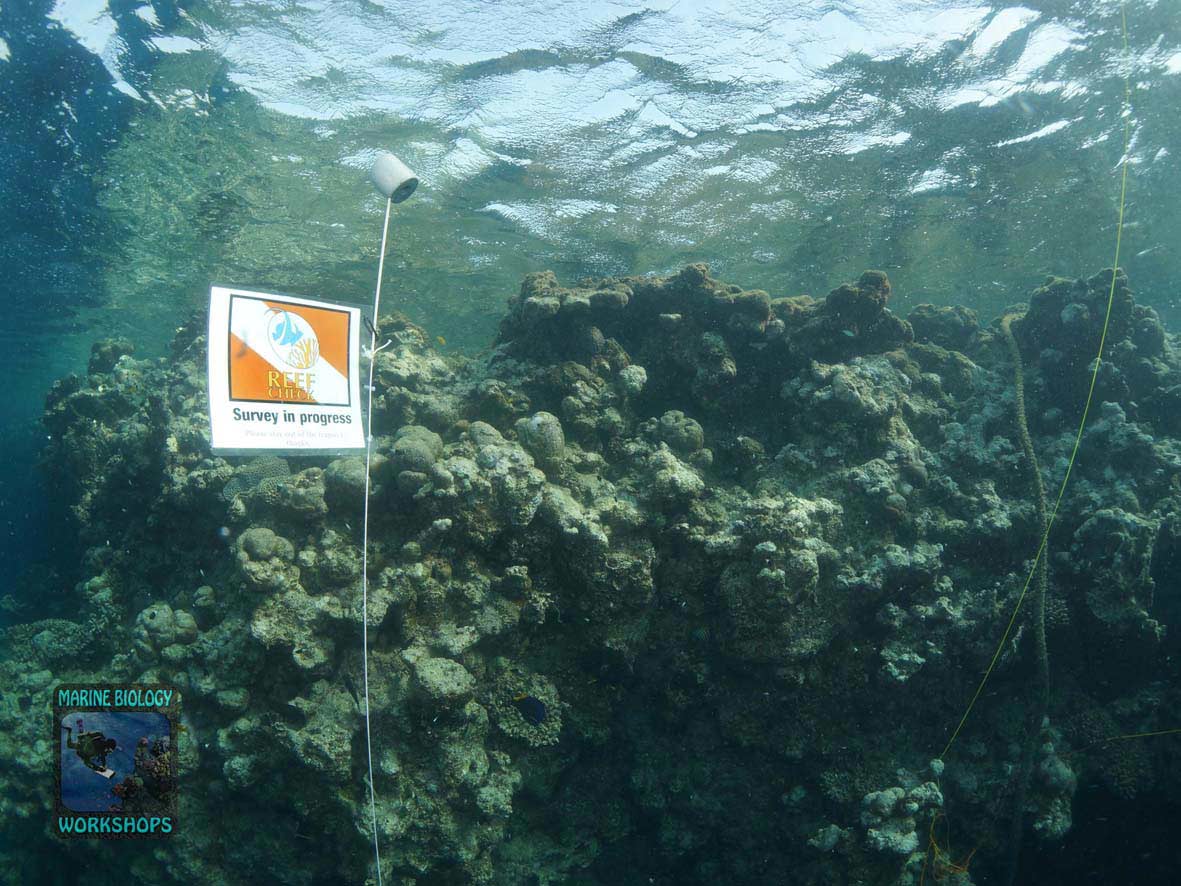
Starting point of the Reef Check survey in Wadi Lahami
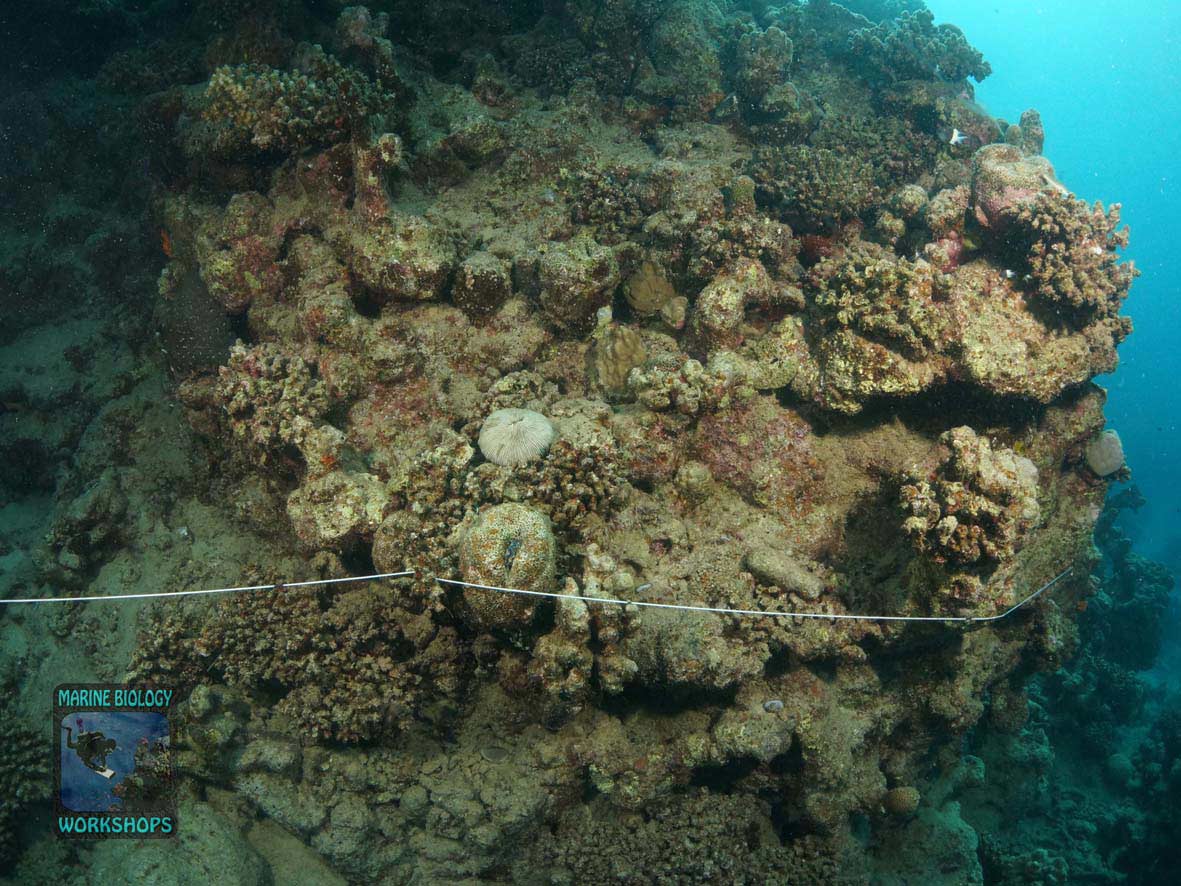
Transect line during the Reef Check survey in Wadi Lahami
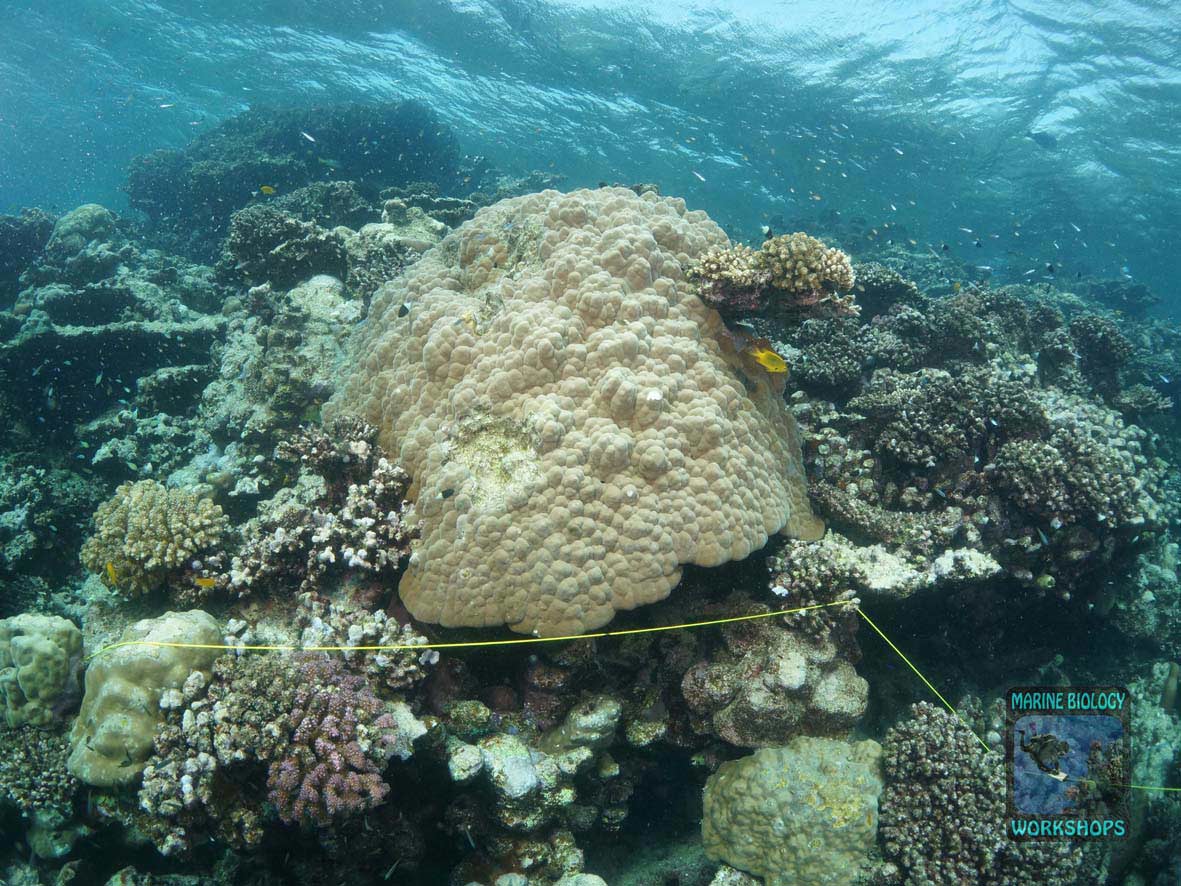
Transect line during the Reef Check survey in Wadi Lahami
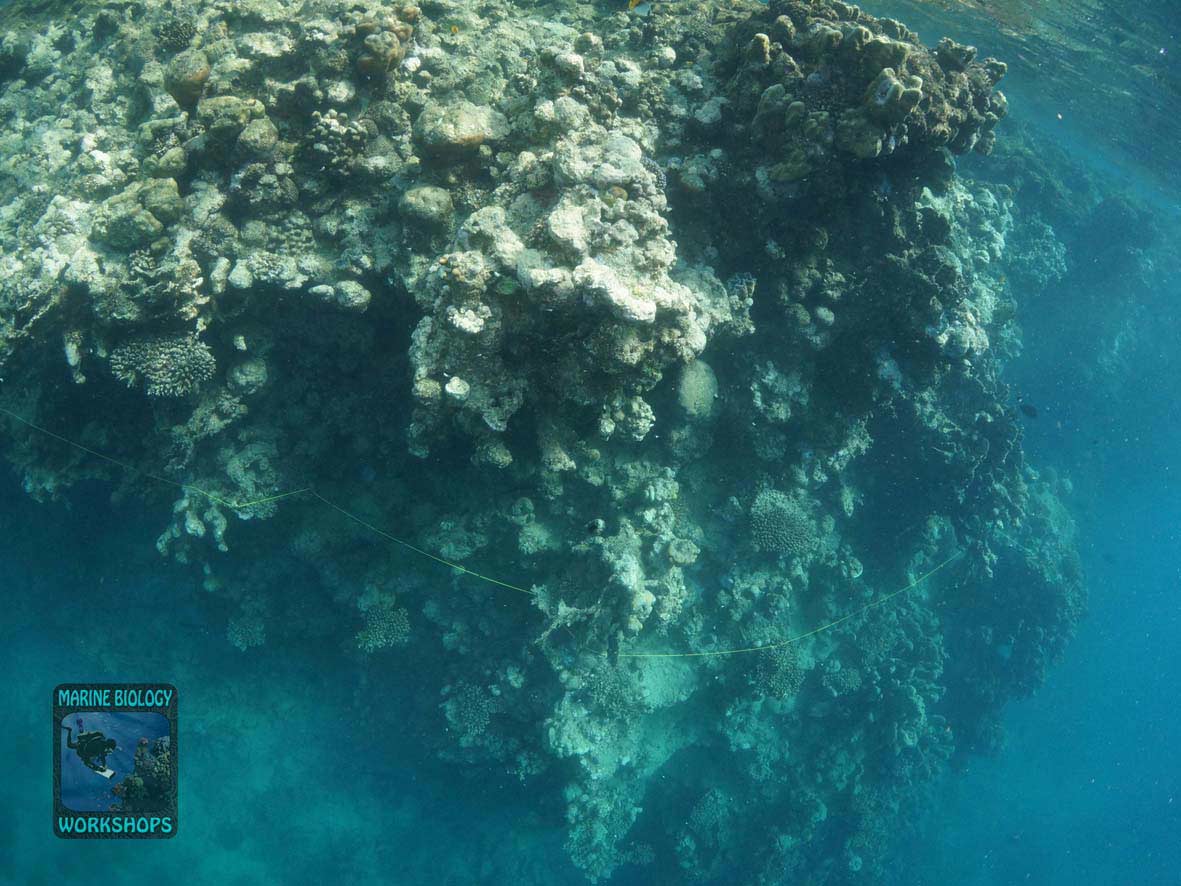
Transect line during the Reef Check survey in Wadi Lahami
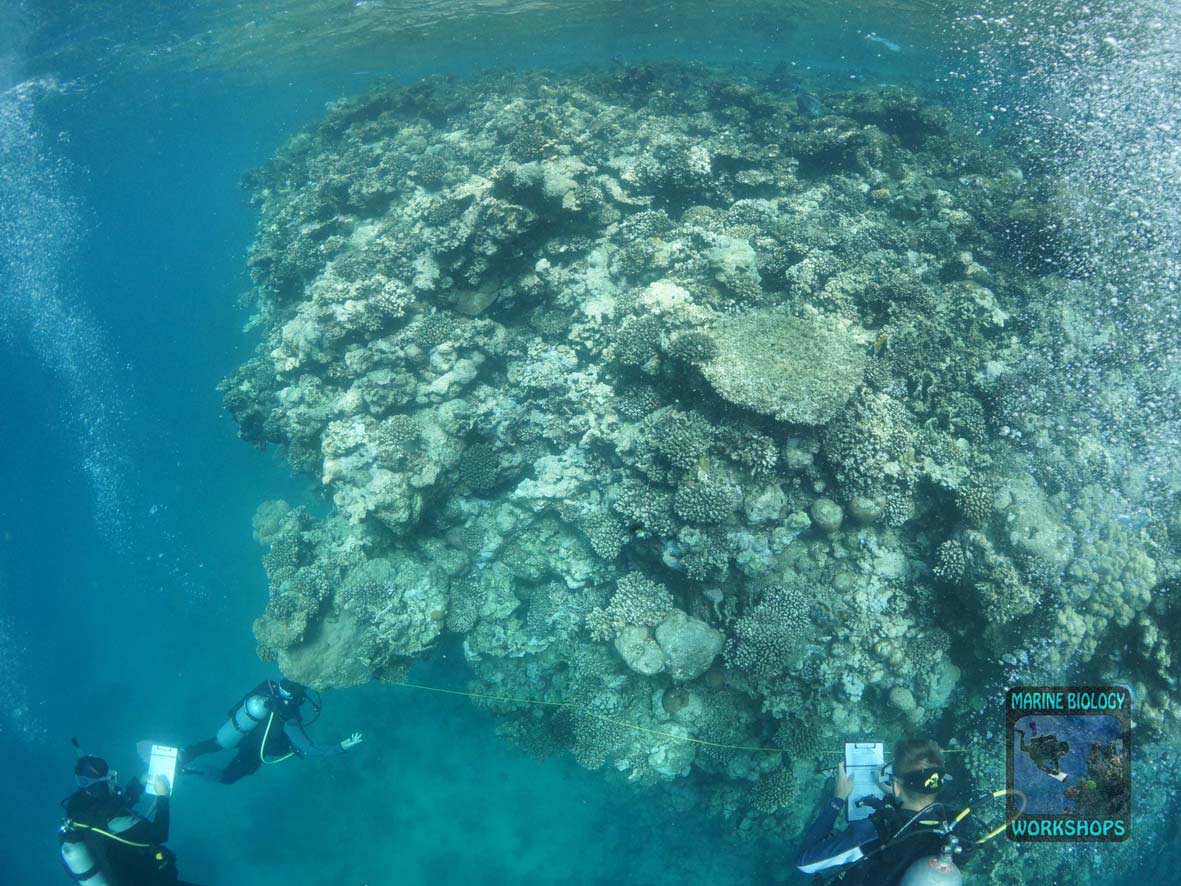
Reef Check Survey in Wadi Lahami
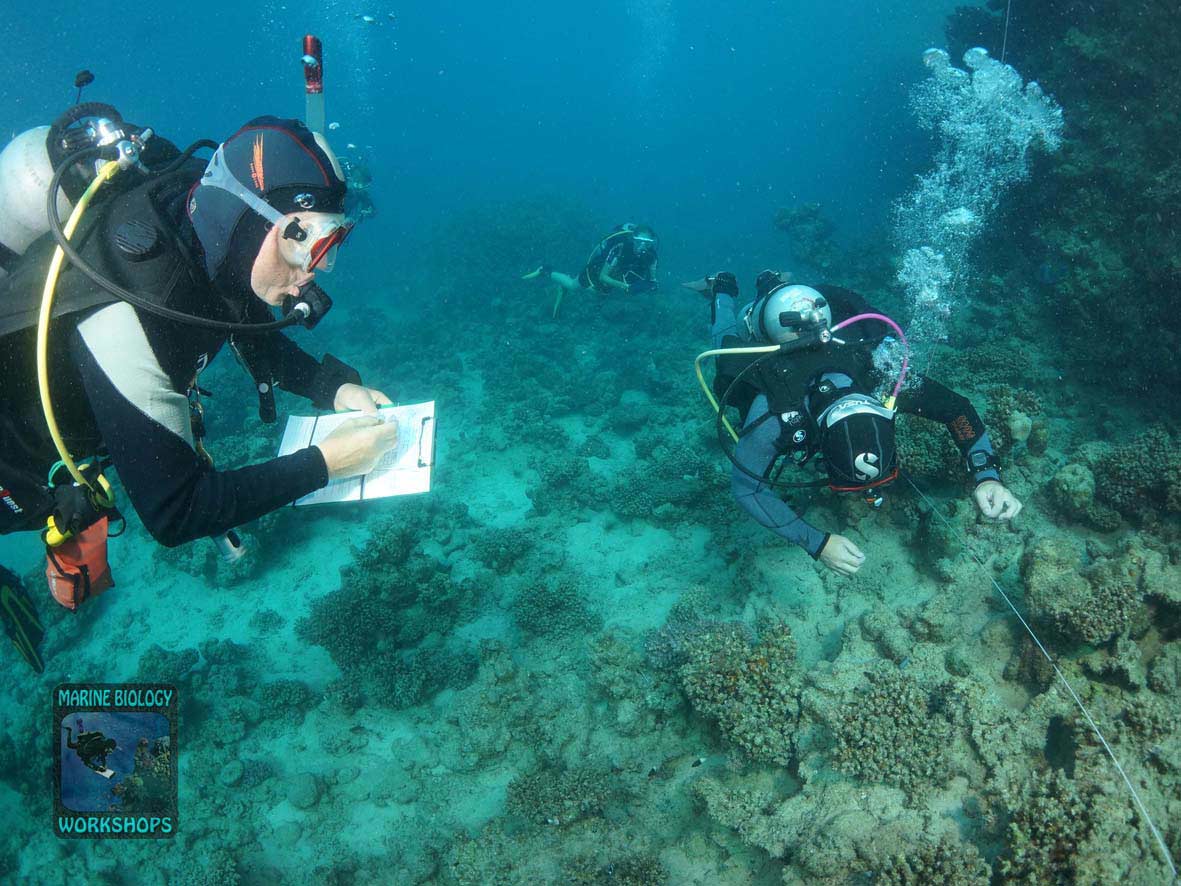
Substrate team during the Reef Check survey in Wadi Lahami
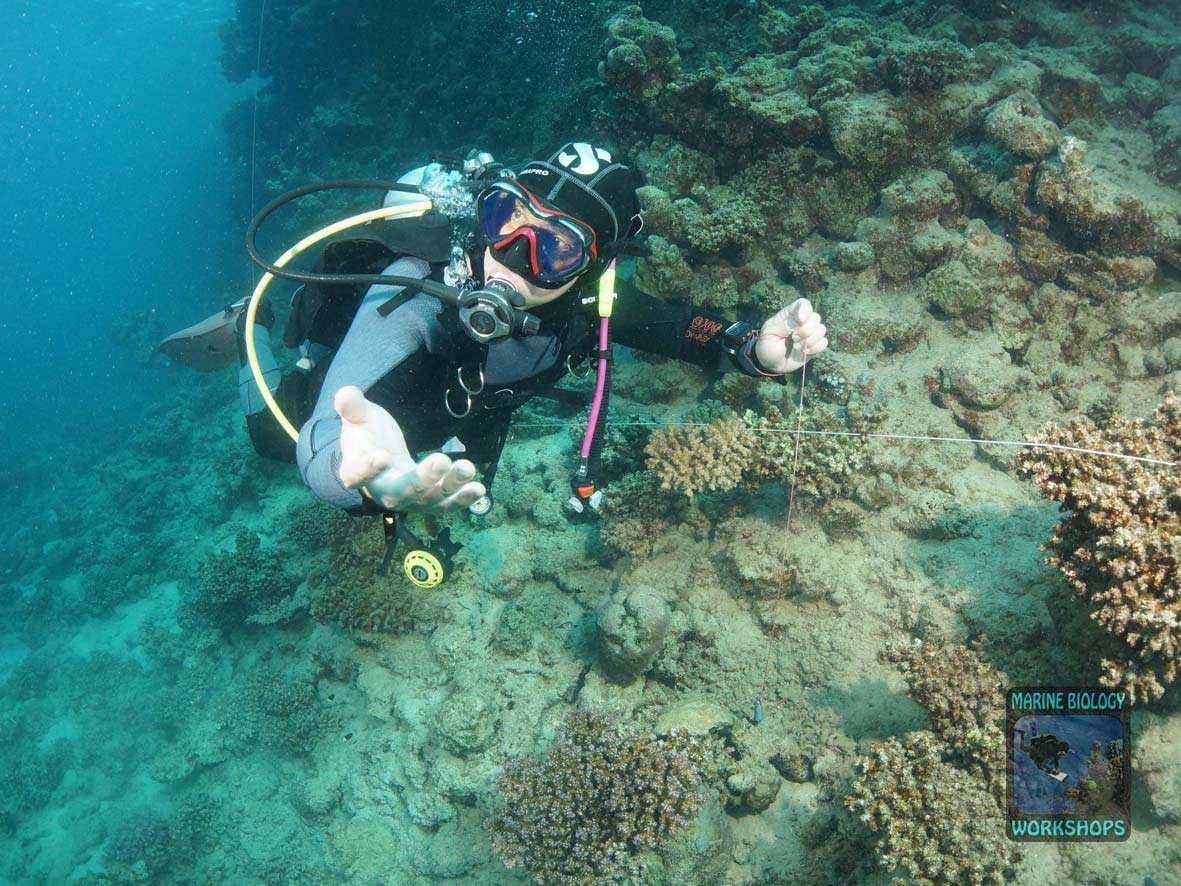
Substrate team during the Reef Check survey in Wadi Lahami
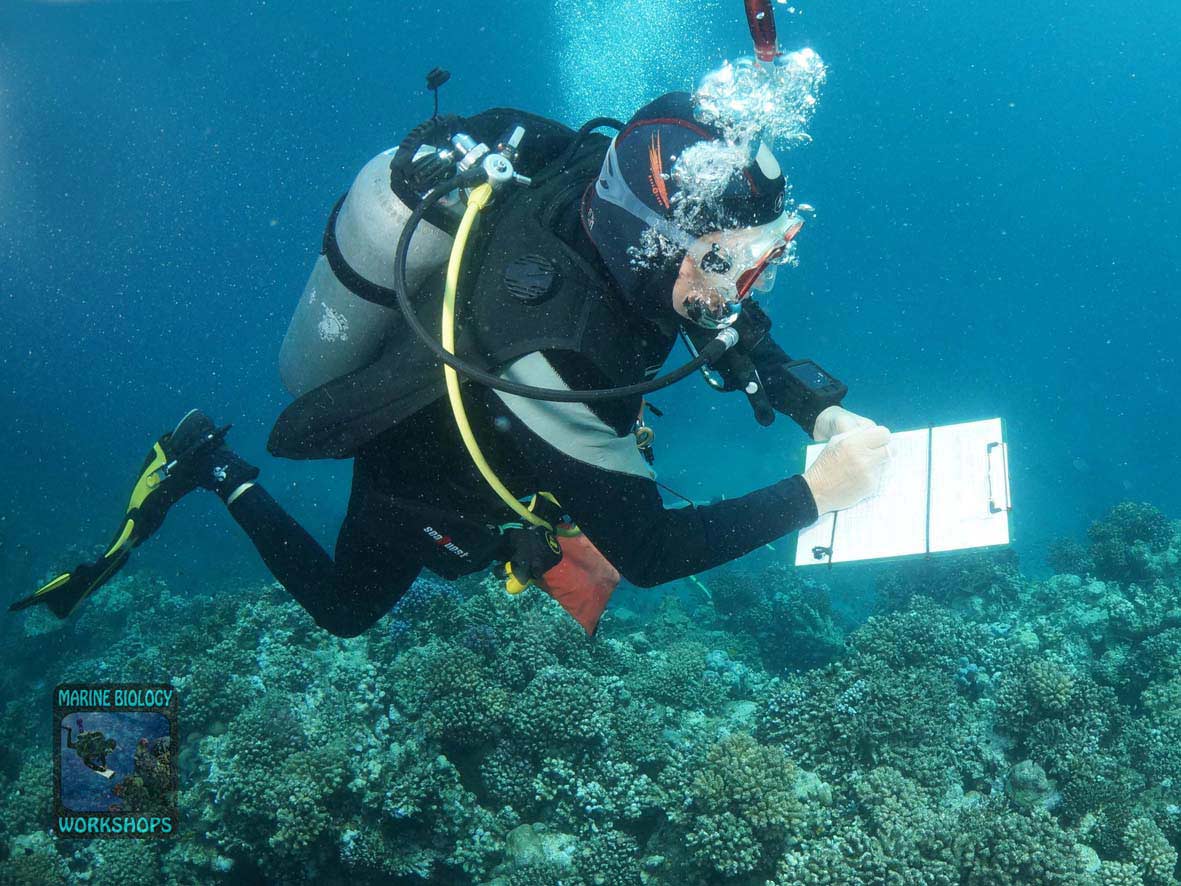
Substrate team during the Reef Check survey in Wadi Lahami
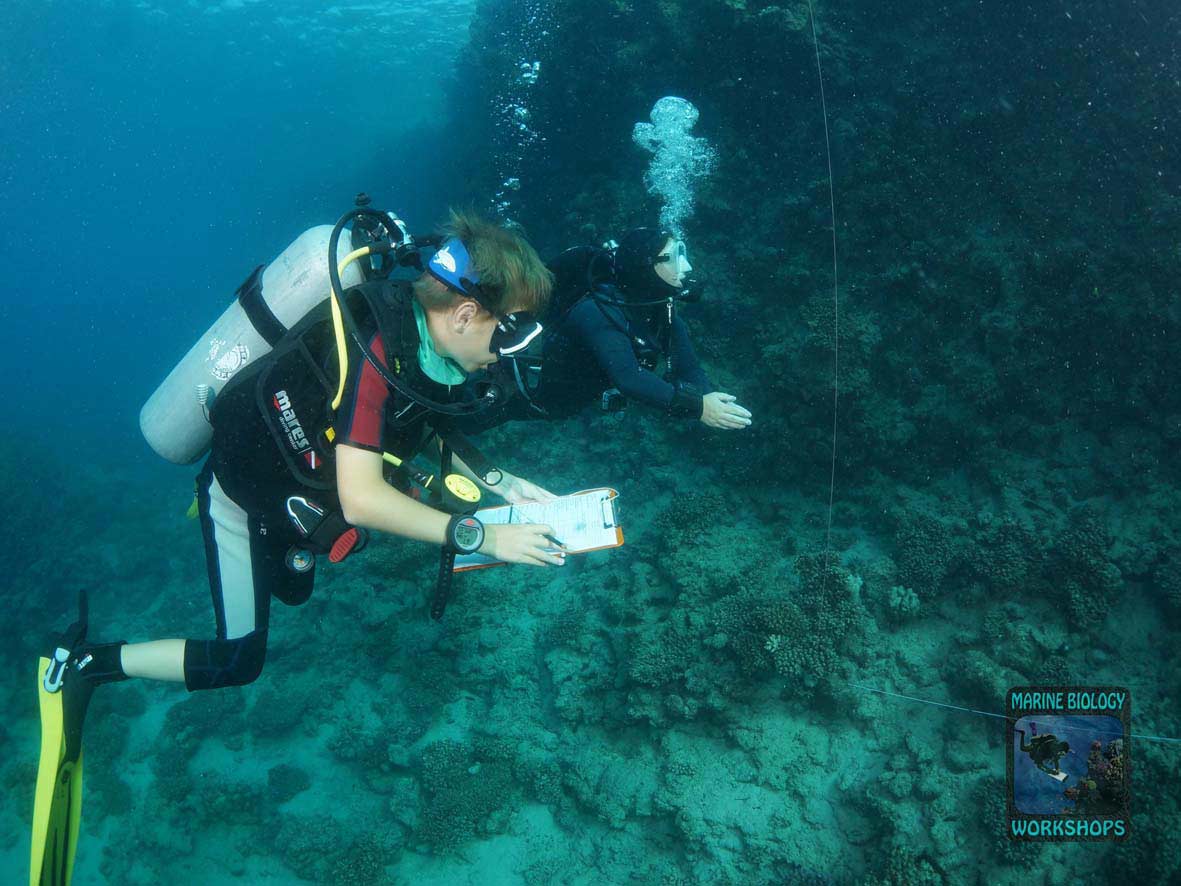
Fish team during the Reef Check survey in Wadi Lahami
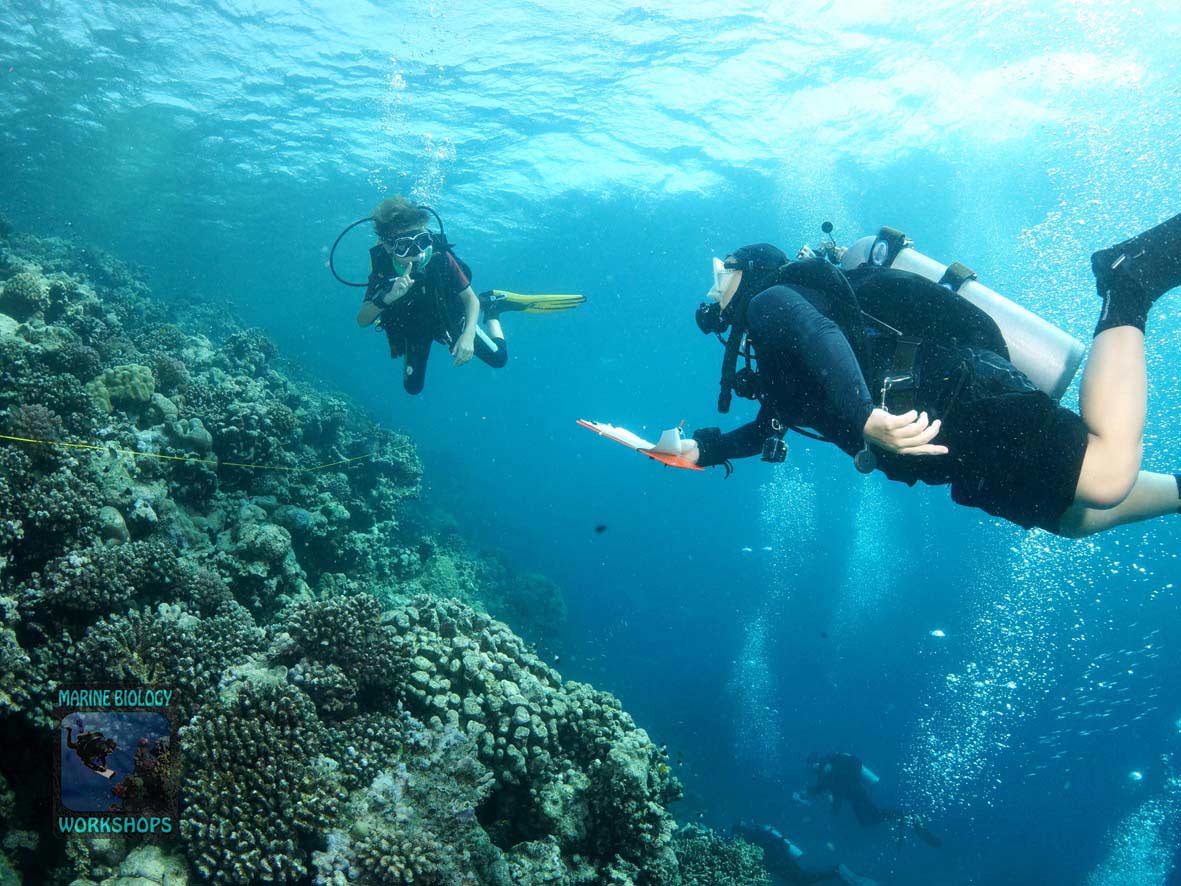
Fish team during the Reef Check survey in Wadi Lahami
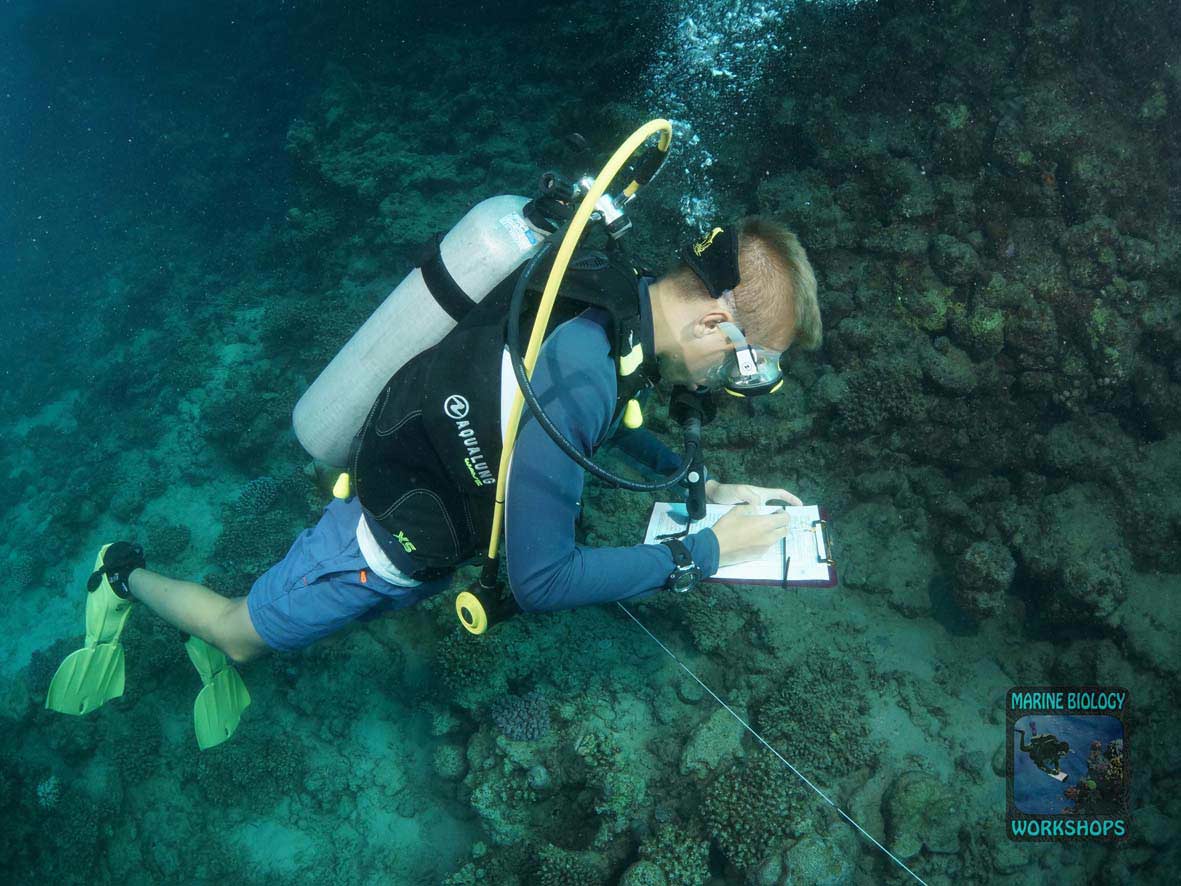
Invertebrate team during the survey in Wadi Lahami
Exposed
The seaward section of the house reef had suffered less severe damage due to its exposed location and deeper water. However, the fourth global coral bleaching event in 2023 / 2024 had left its mark here too.
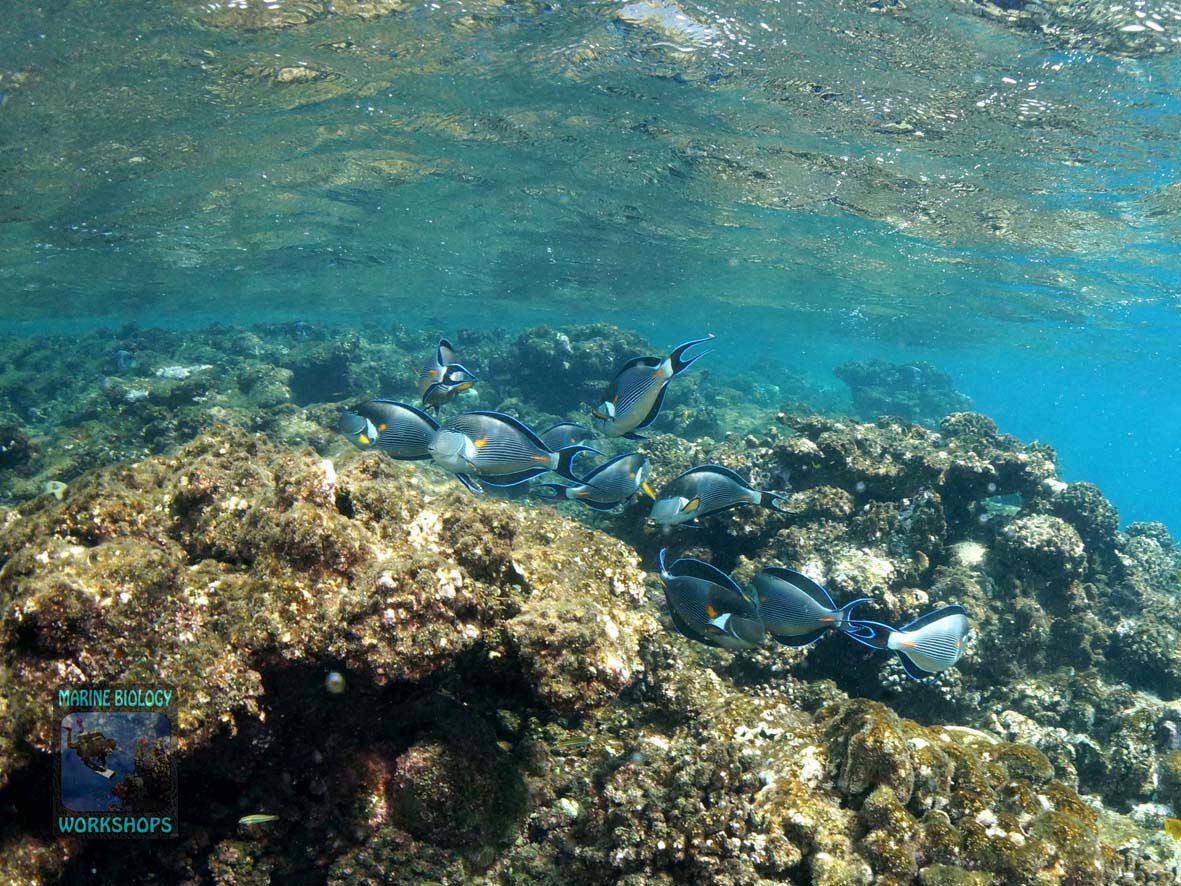
Arabian surgeonfish on the reef flat of Wadi Lahami
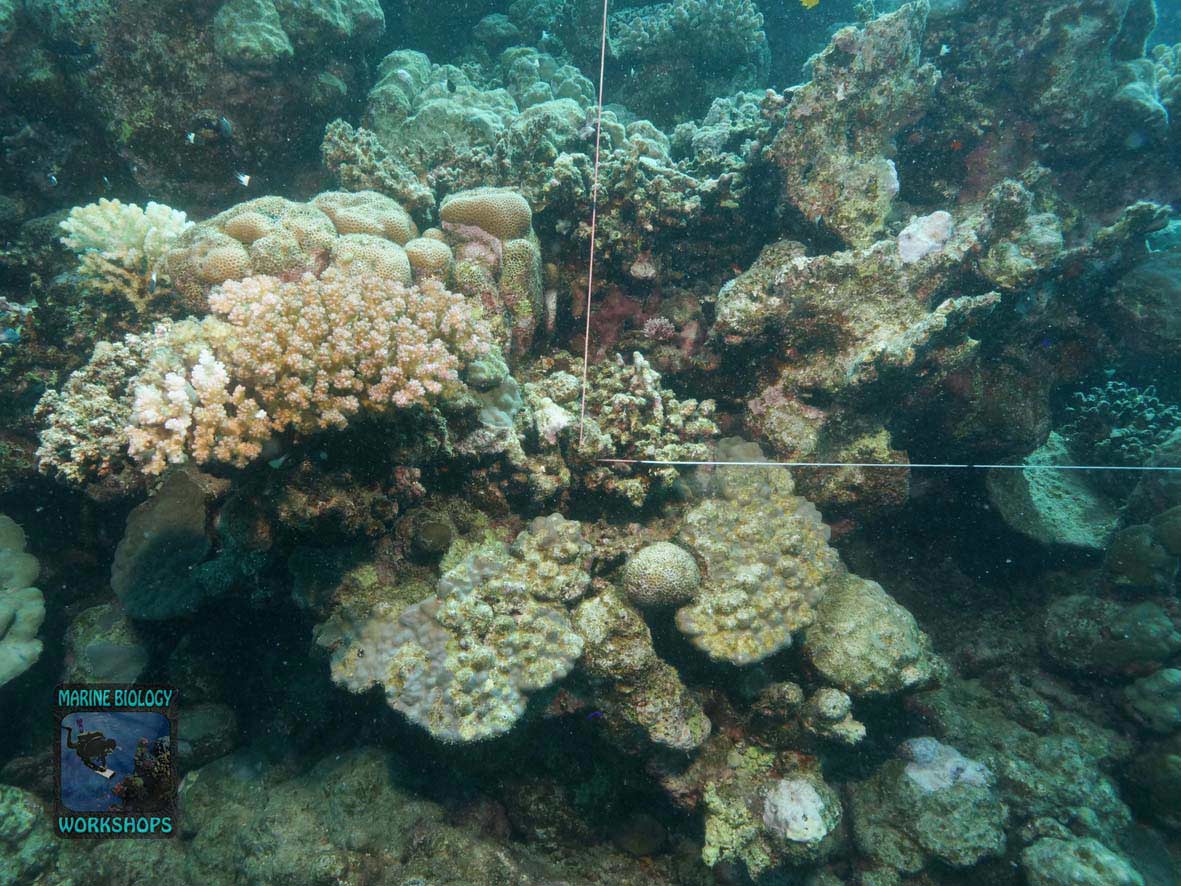
Transect line during the Reef Check survey in Wadi Lahami
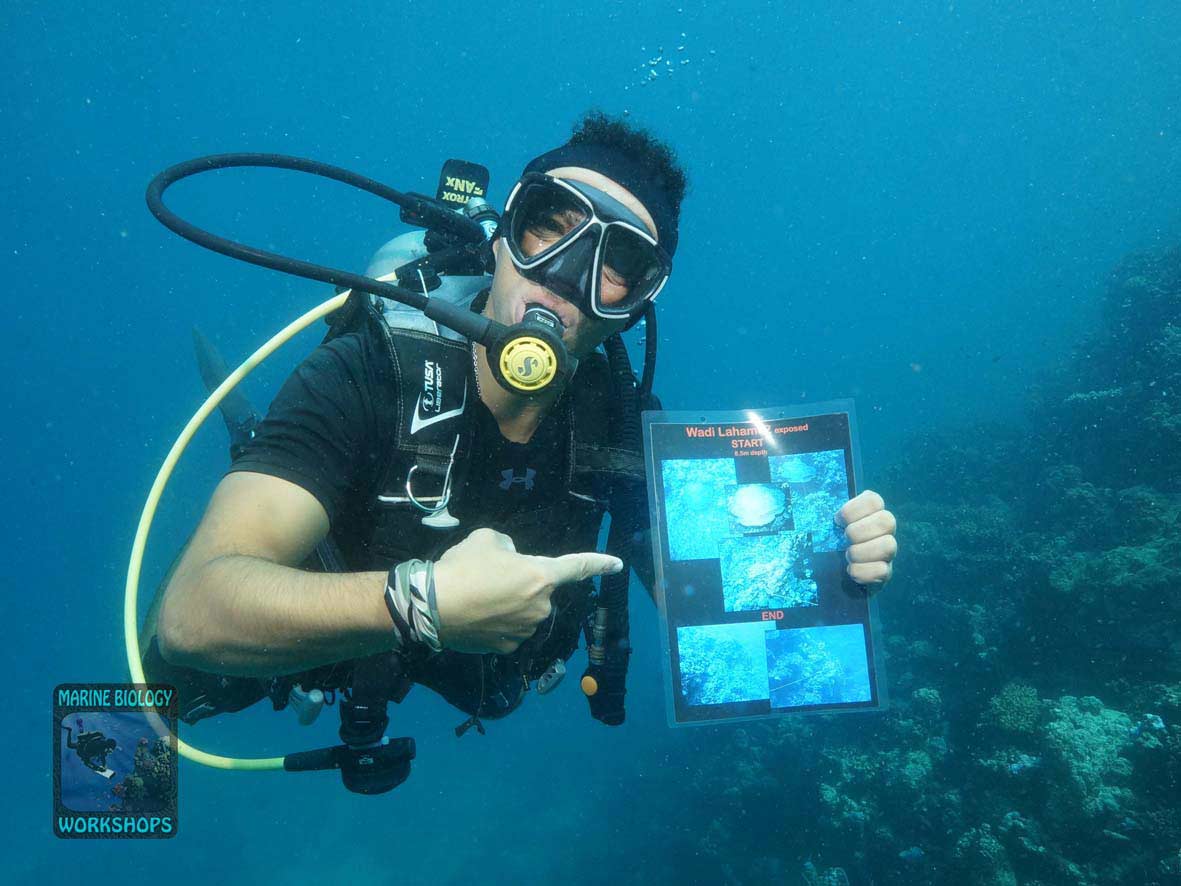
Diver during the Reef Check survey in Wadi Lahami
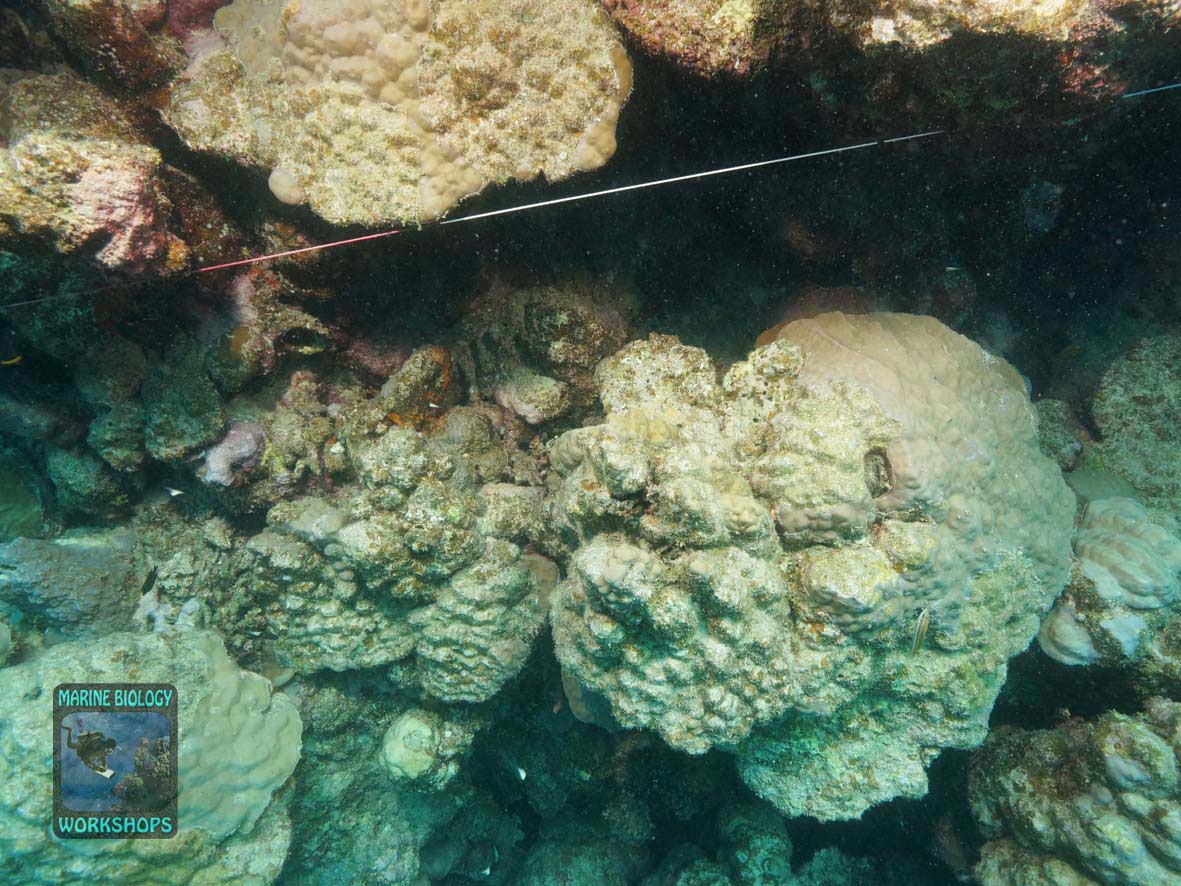
Transect line during the Reef Check survey in Wadi Lahami
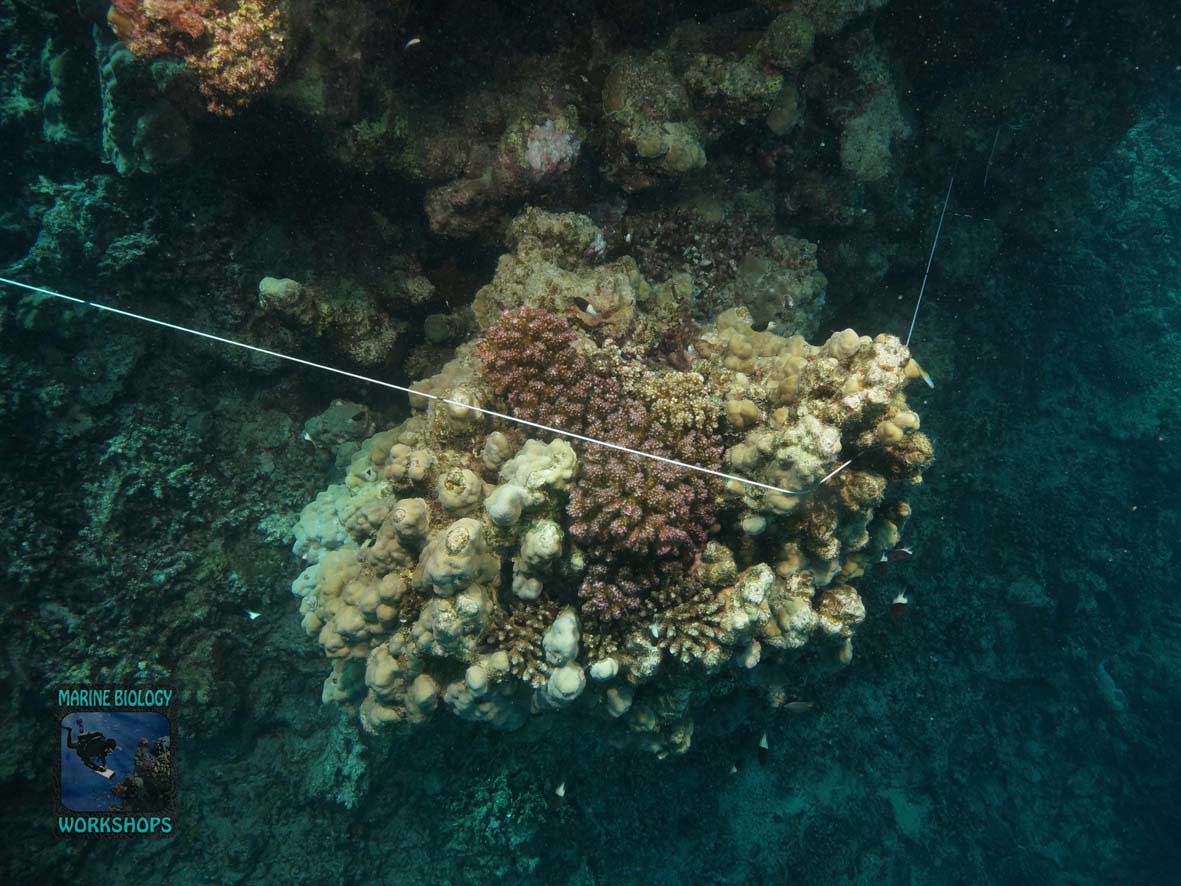
Transect line during the Reef Check survey in Wadi Lahami
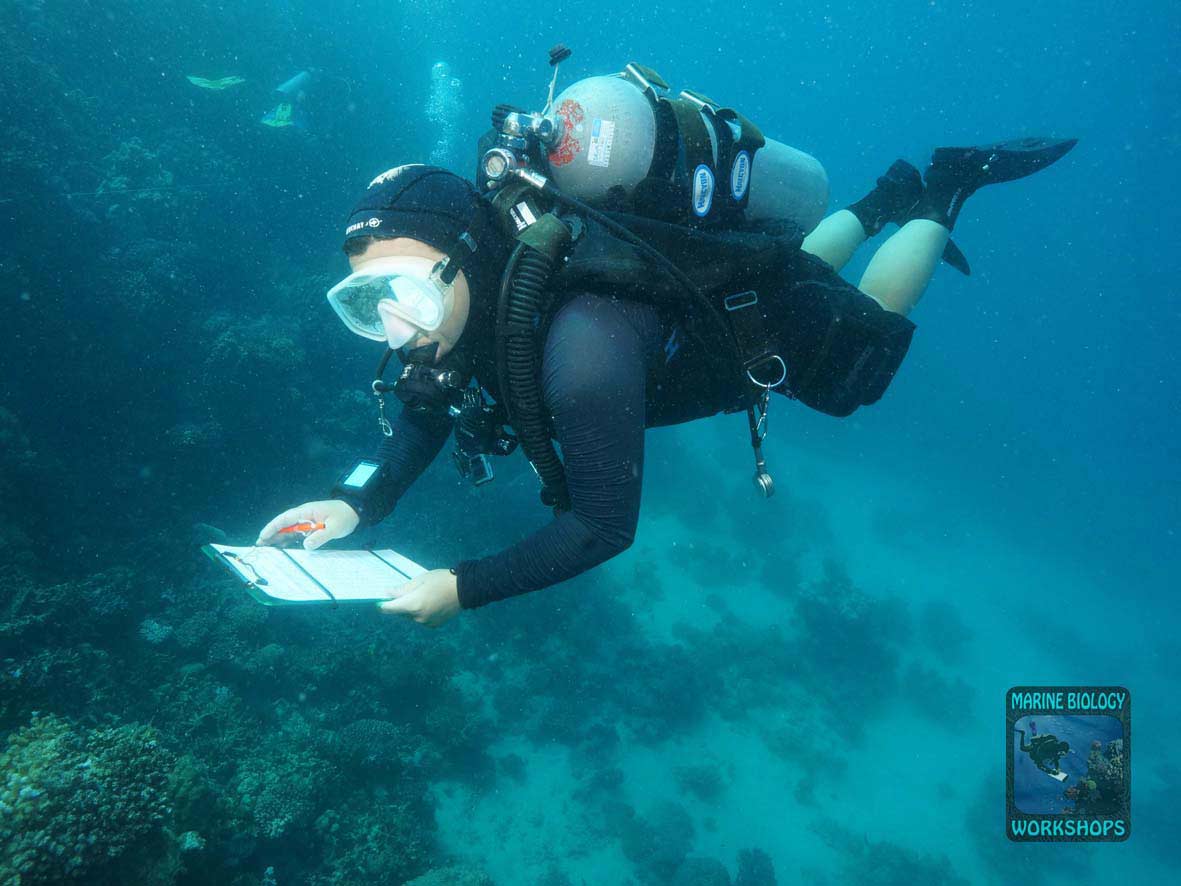
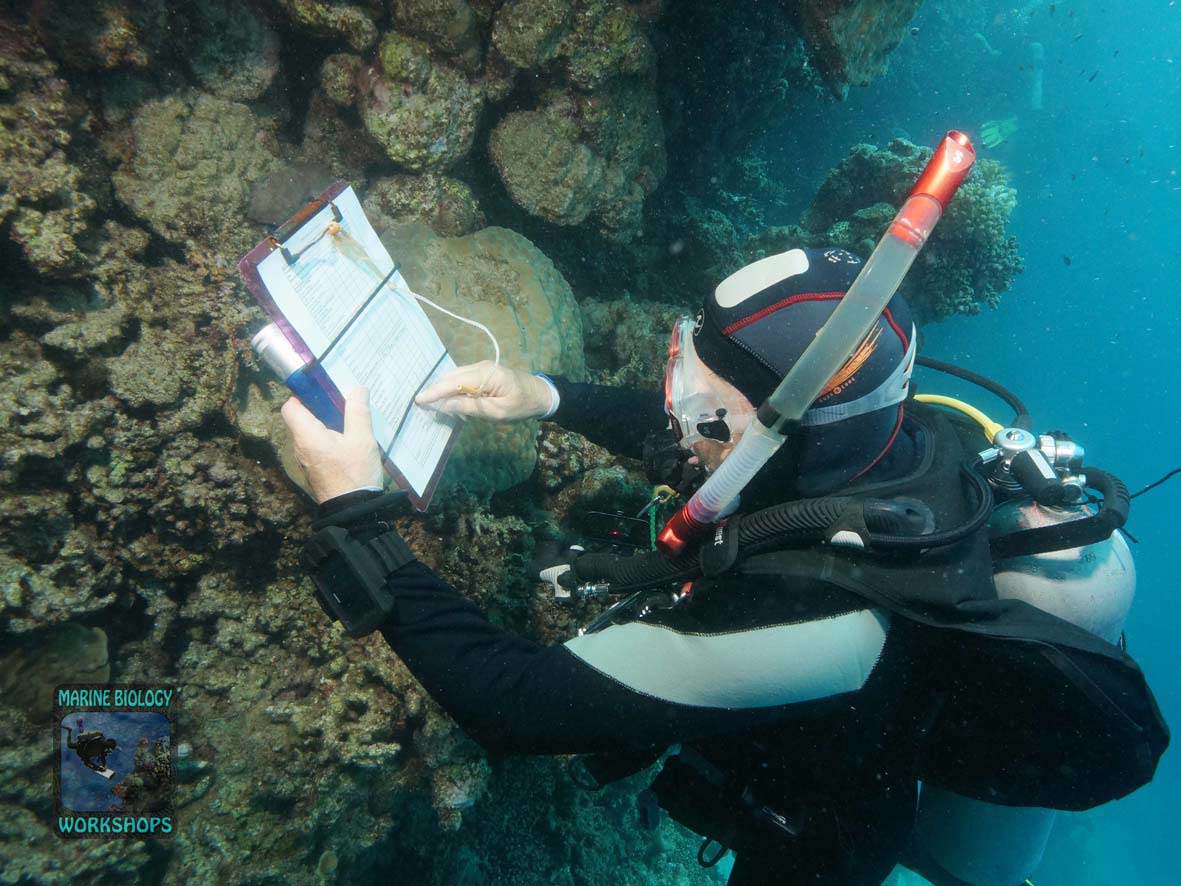
Substrate survey during the Reef Check survey in Wadi Lahami
Substrat Survey beim Reef Check Survey in Wadi Lahami
Substrat Survey beim Reef Check Survey in Wadi Lahami
Invertebrate team during the survey in Wadi Lahami
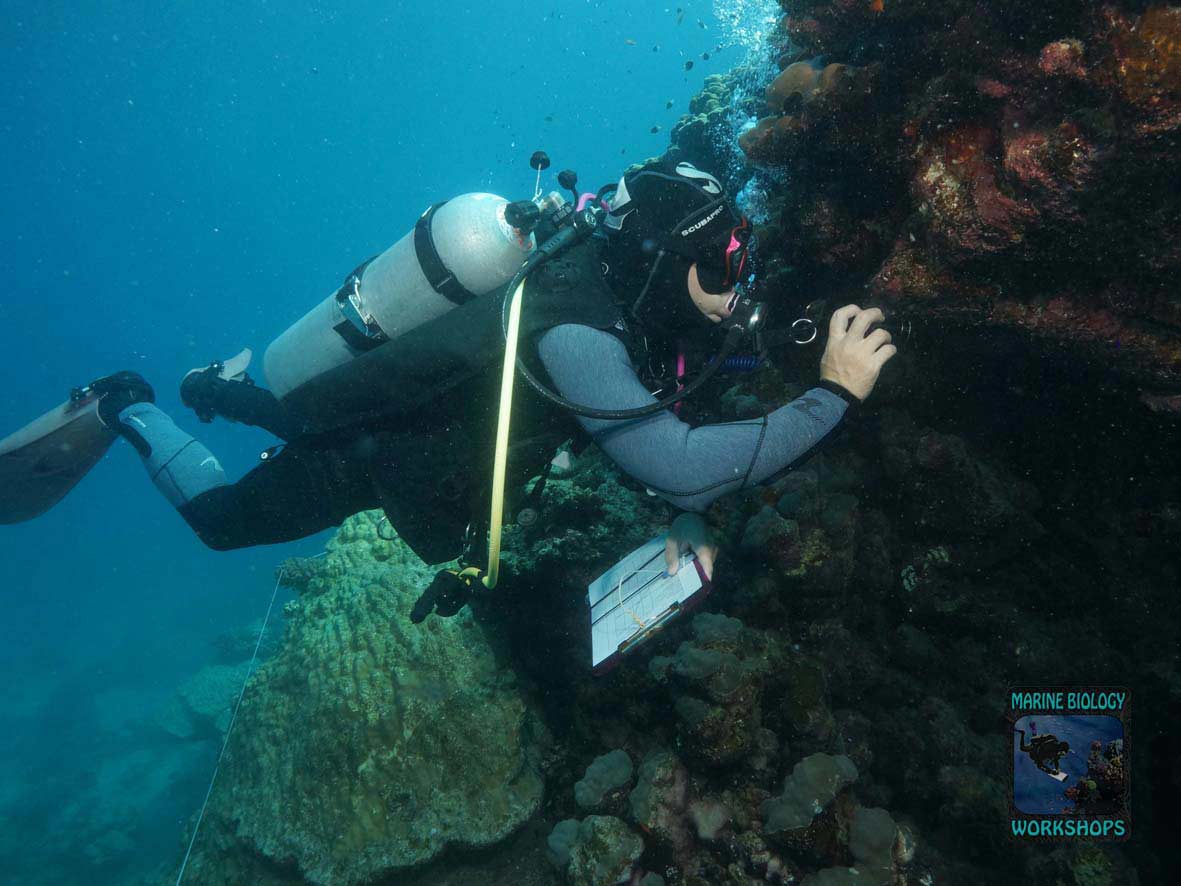
Invertebrate team during the survey in Wadi Lahami
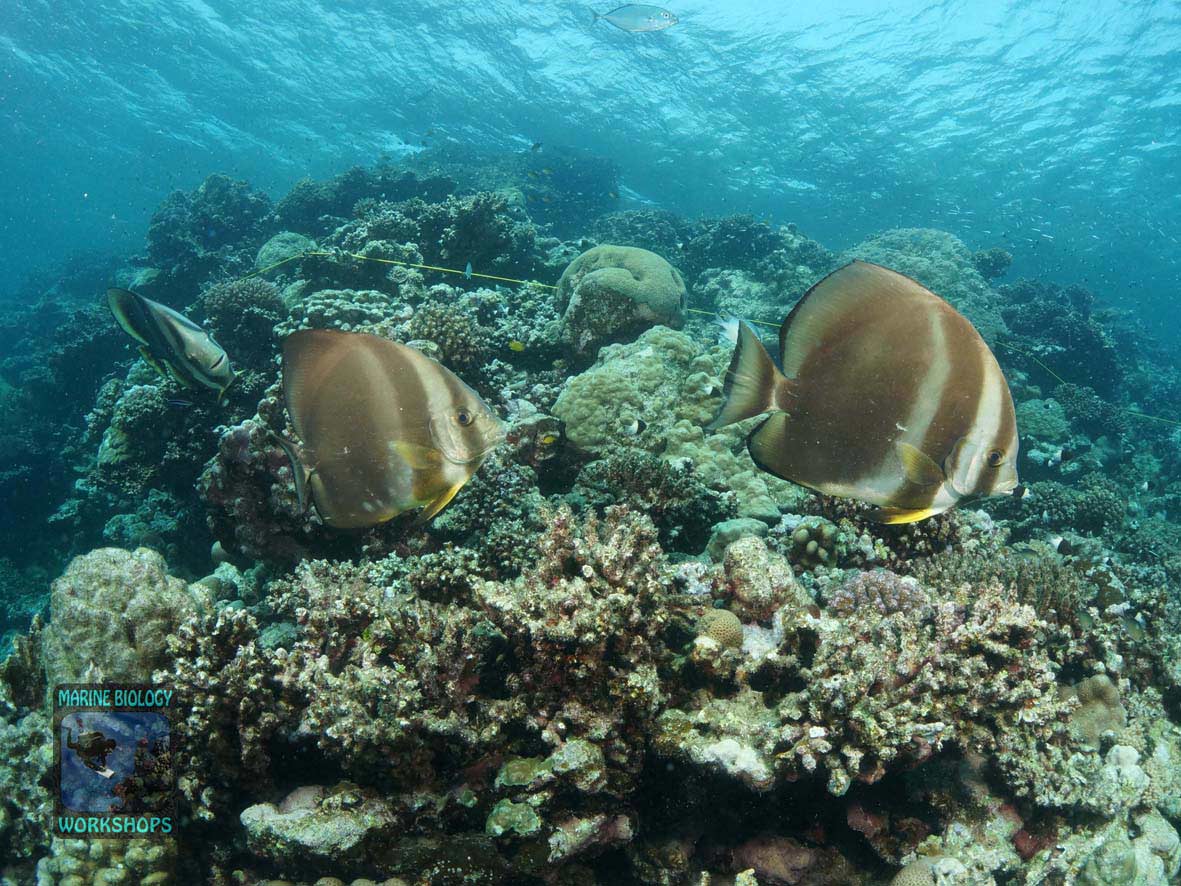
Batfish during the Reef Check survey in Wadi Lahami
Stony Corals – The Reef Builders
Corals are, of course, of particular importance to coral reefs – the animal group that creates this fascinating ecosystem with its complex structure, countless niches and enormous species diversity.
Stony corals (Scleractinia) are the main reef builders. Other calcifying organisms, such as coralline algae or bivalves, also contribute to reef growth. Stony corals exhibit sixfold symmetry; this means, for example, that the number of tentacles on their polyps is always a multiple of six. The fine structure of their corallites – for example, whether they have shared, separate or merging walls – is crucial for genus identification. The tool for identifying stony corals to genus level is the Indopacific Coral Finder.
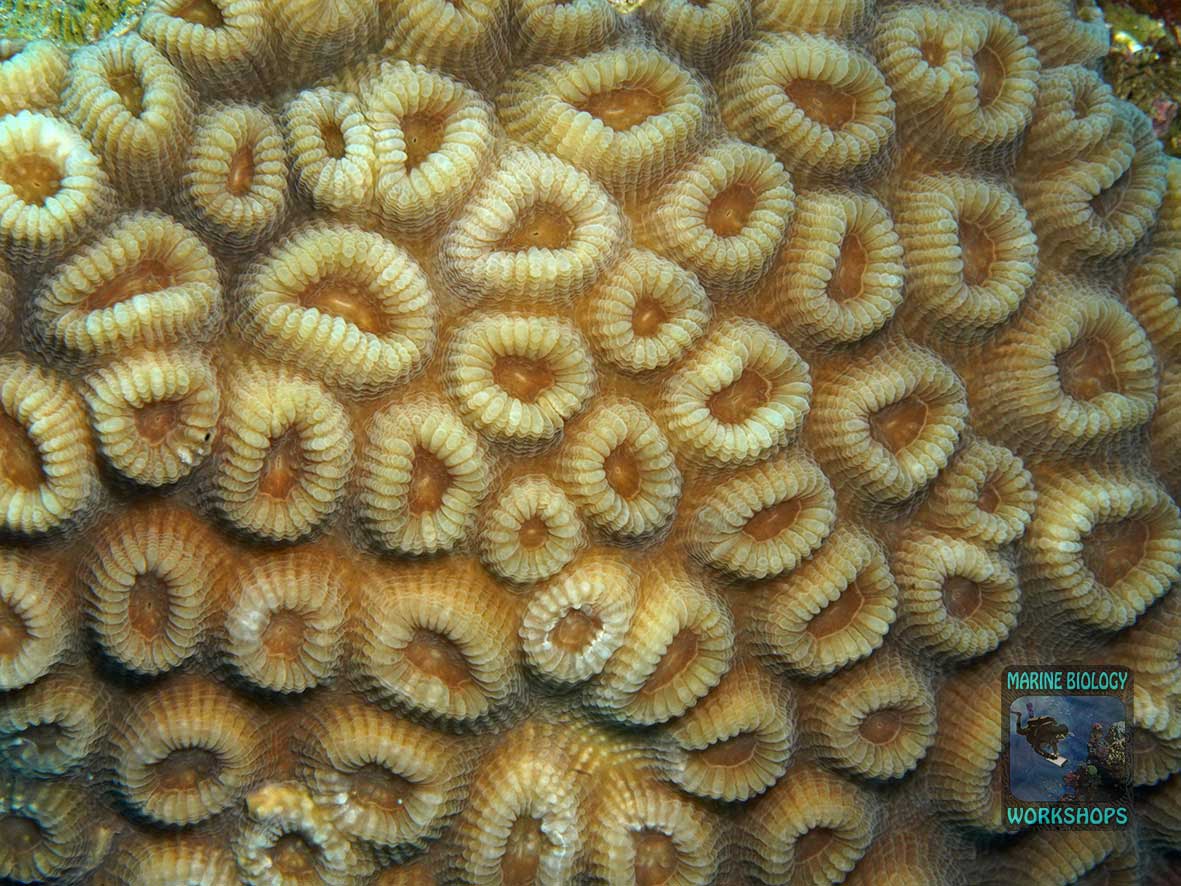
Dipsastraea - The polyps have separate walls
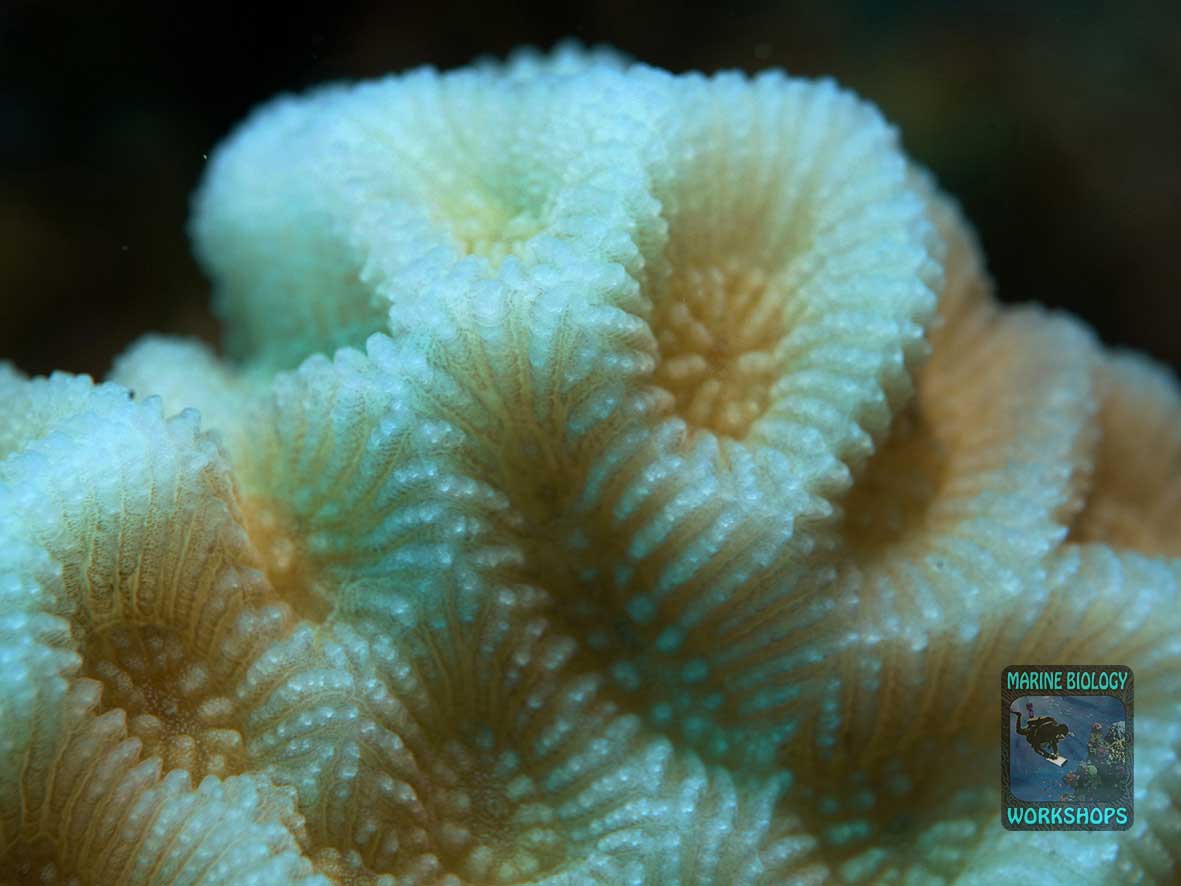
Goniastrea - shared walls and paliform lobes
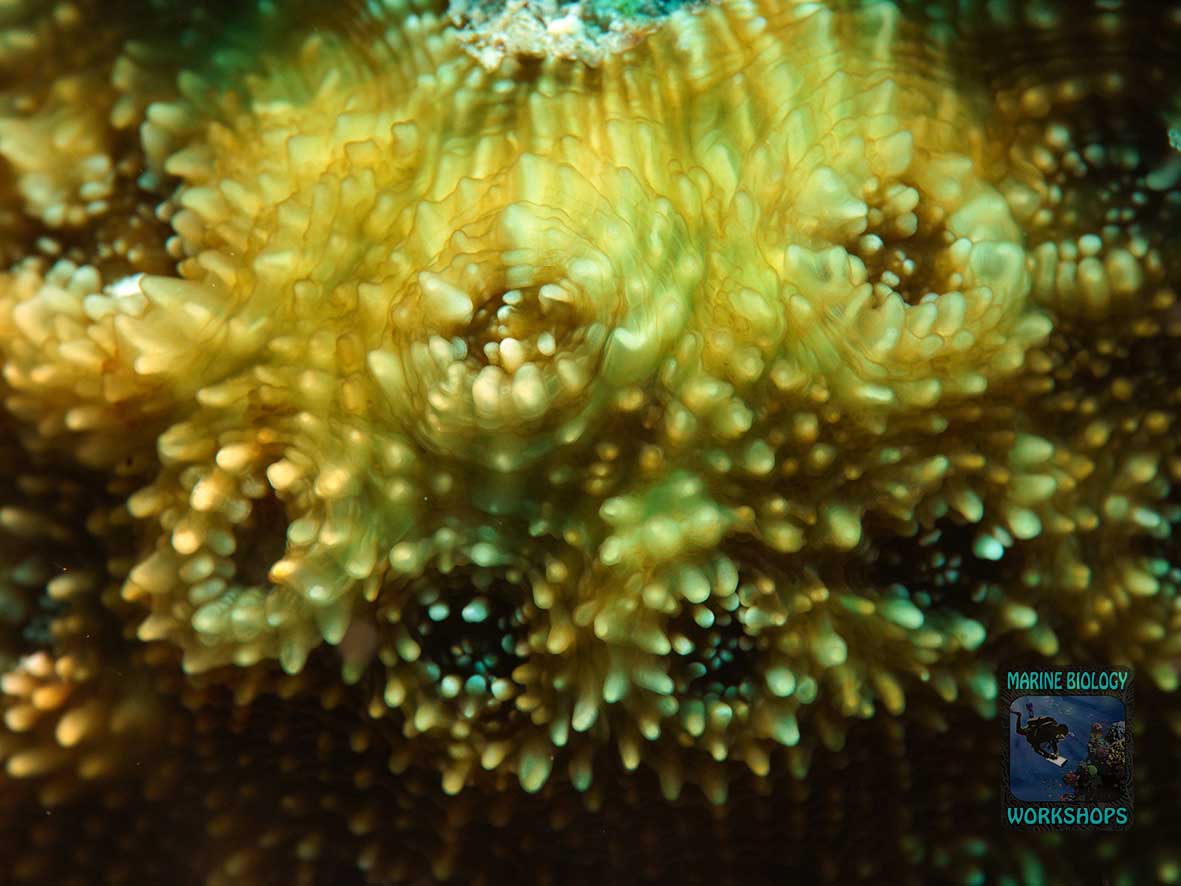
Acanthastrea with sharp skeletal spines
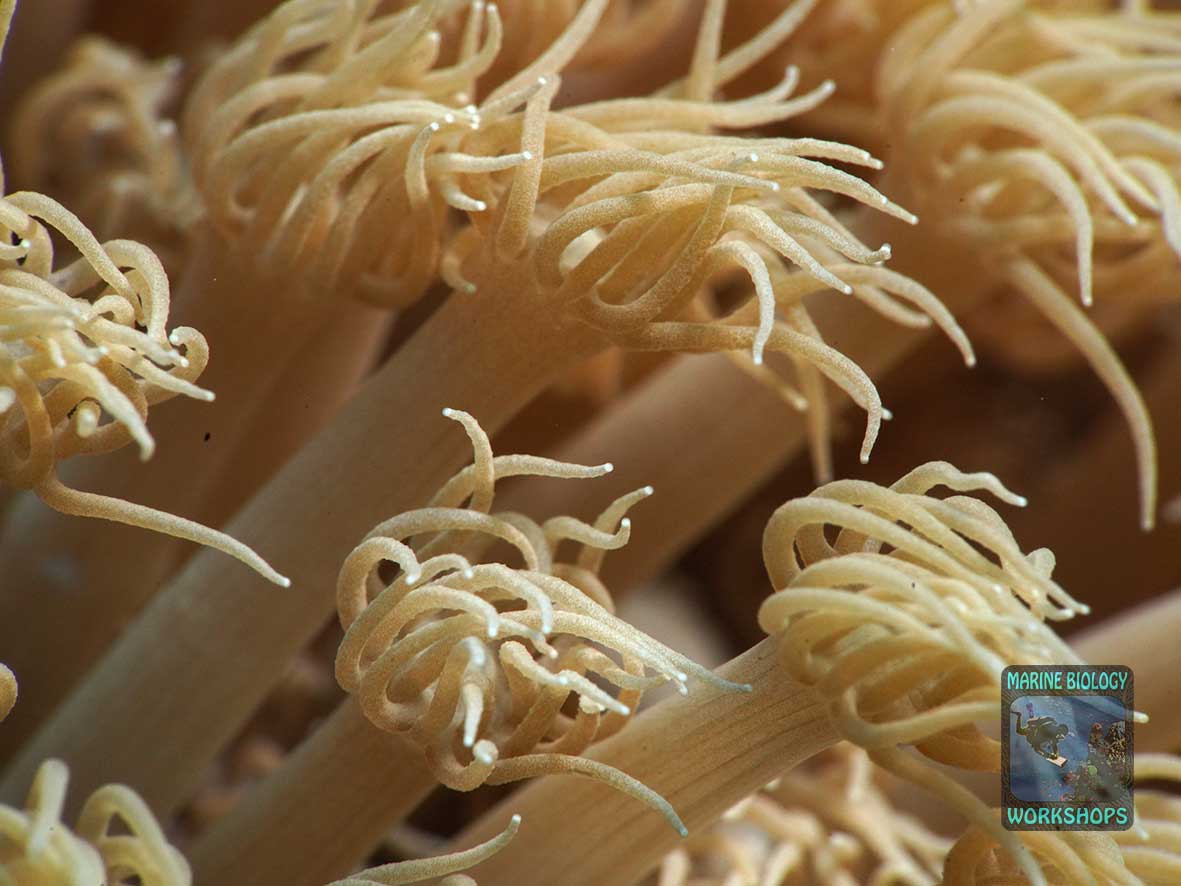
Polyps of the Goniopora stony coral with 24 tentacles
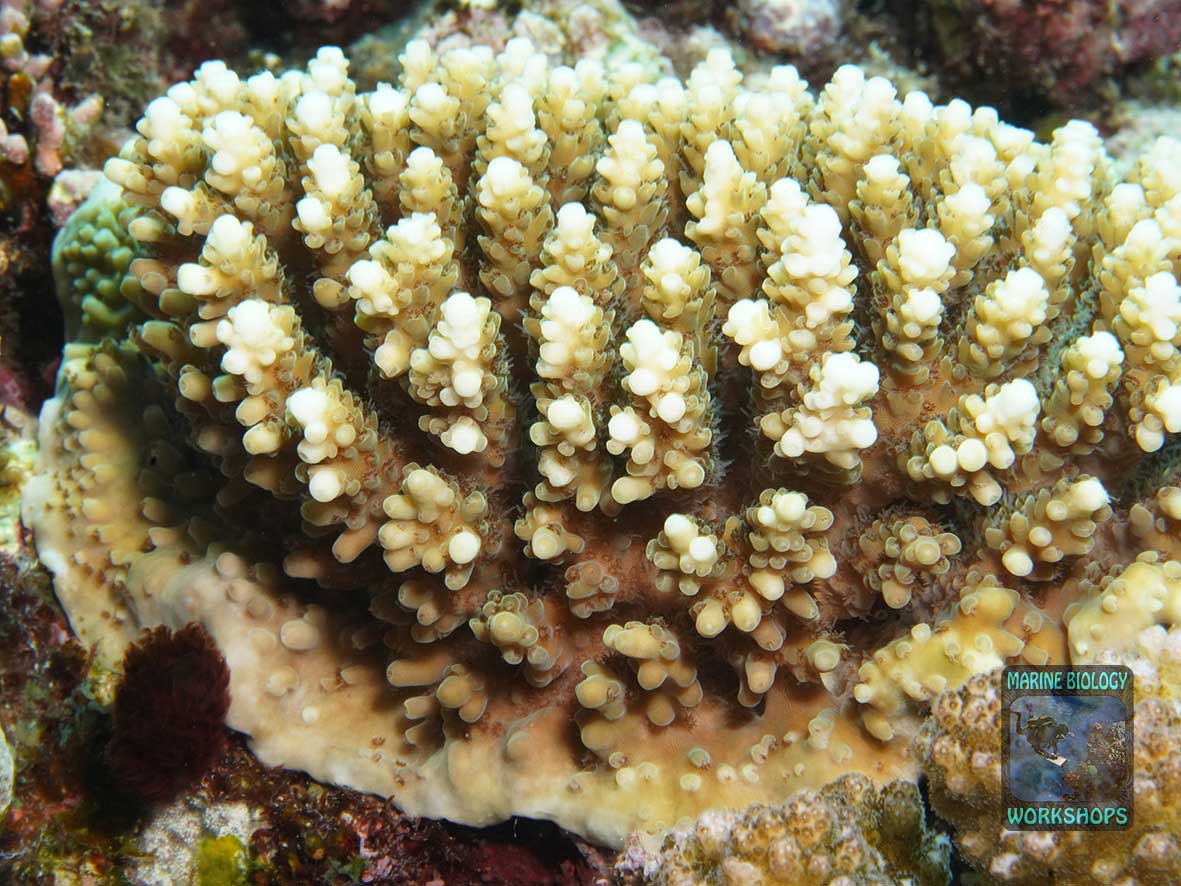
Recruitment of Acropora table coral
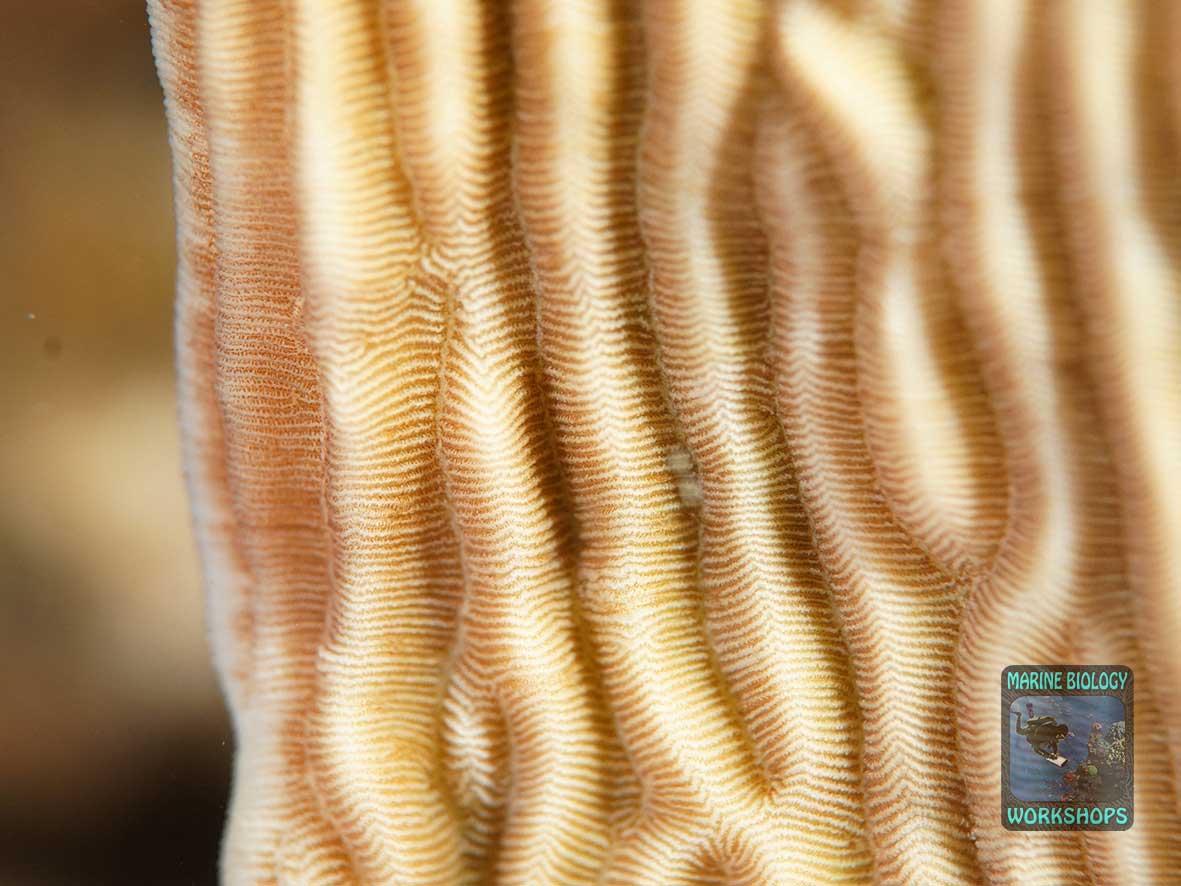
Pachyseris speciosa with polyps arranged in parallel valleys
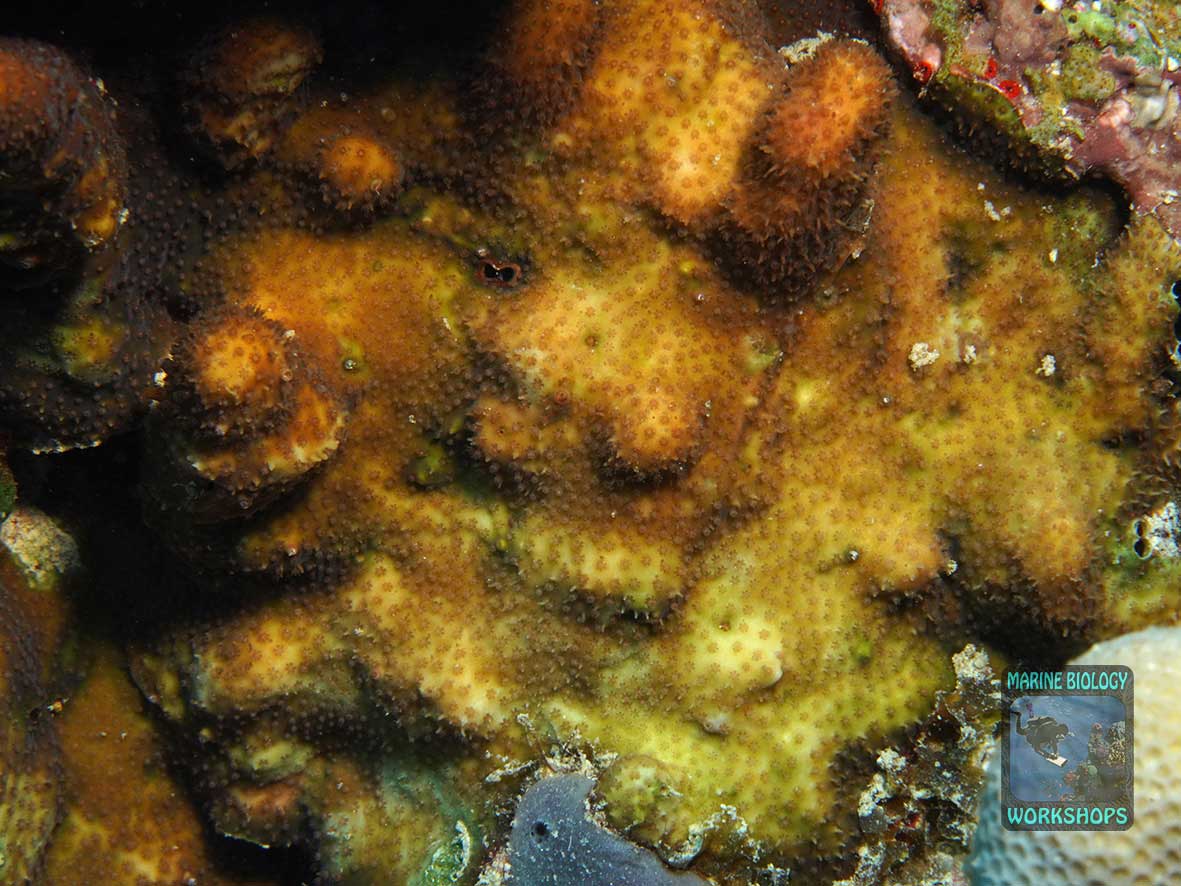
The rare stony coral Stylocoeniella
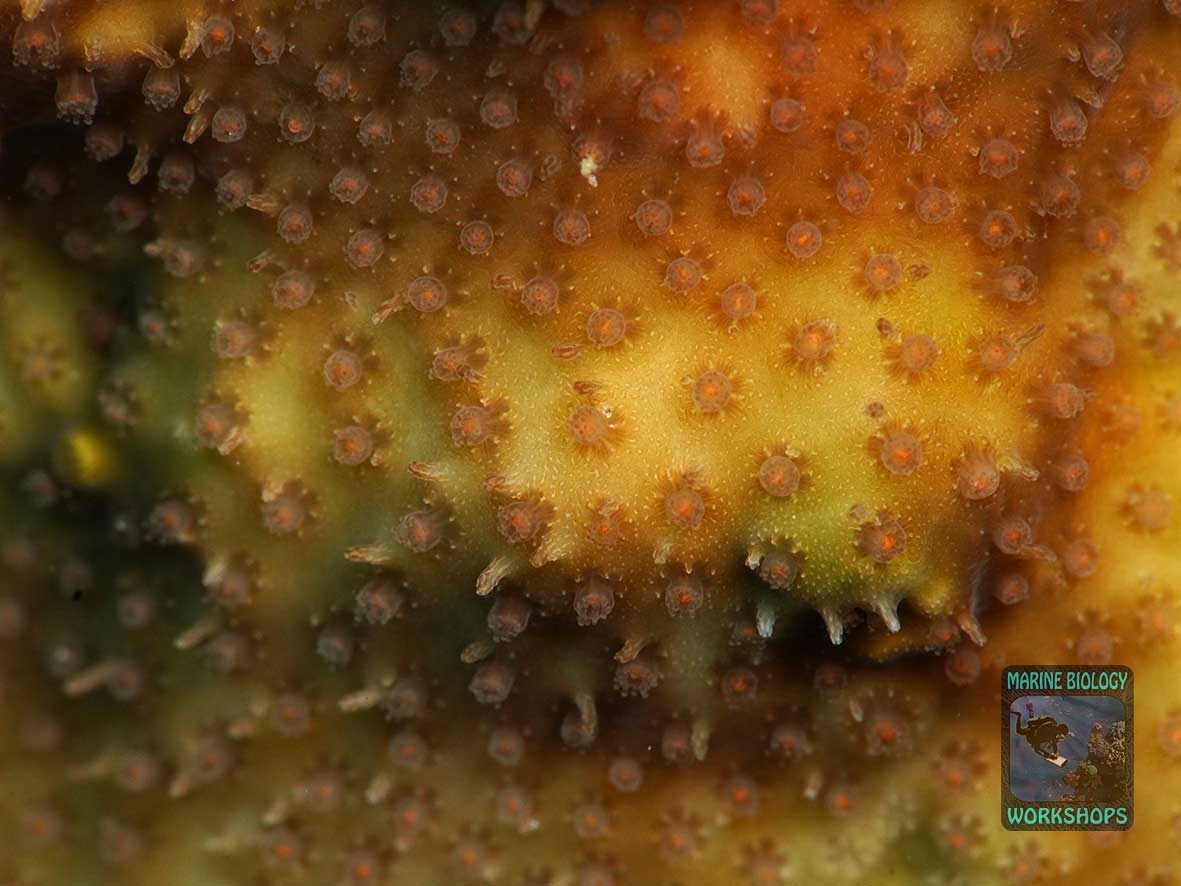
The rare stony coral Stylocoeniella
Soft Corals and Gorgonians – Octocorals
The group of soft corals (Octocorallia) is characterised by eightfold symmetry – their polyps always have eight tentacles, which are often pinnate. The Octocoral Finder has recently become available for identifying soft corals to genus level.
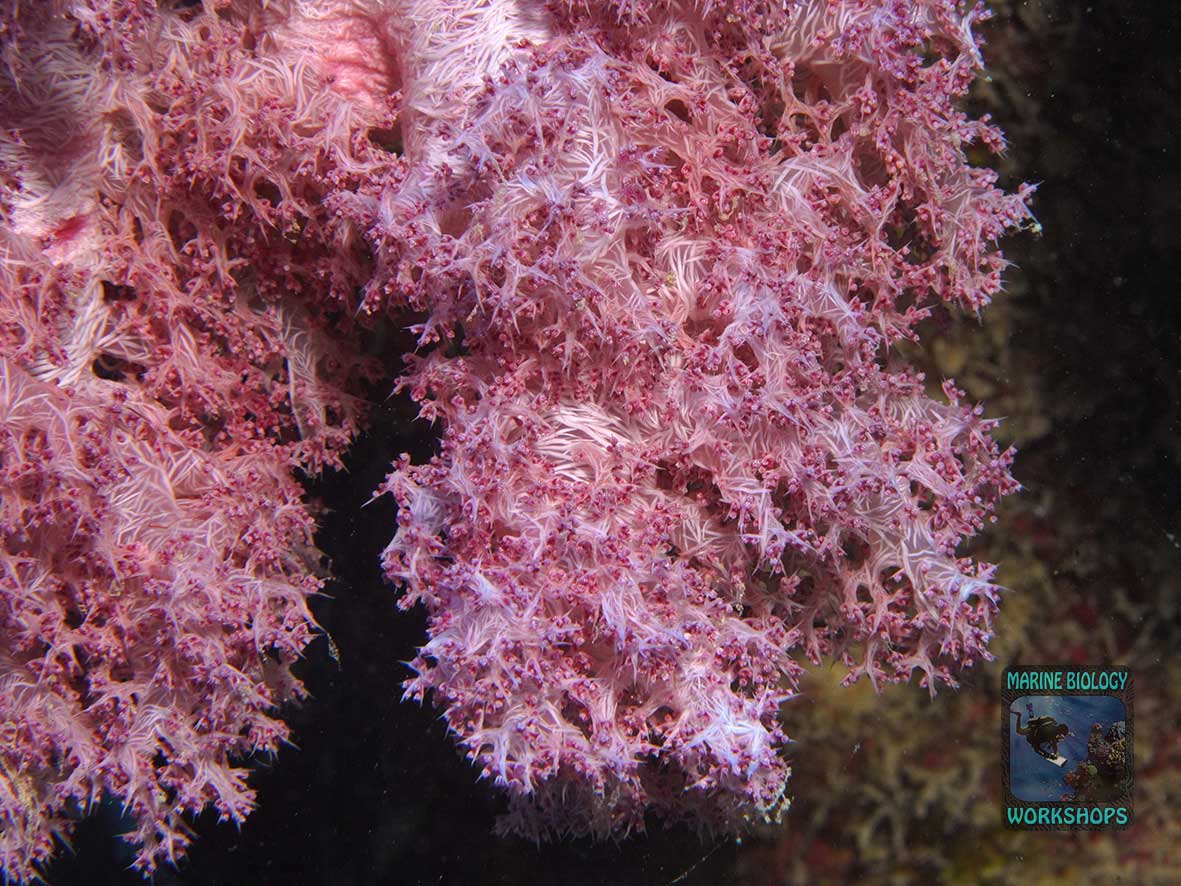
Colourful, azooxanthellate Dendronephthya soft coral
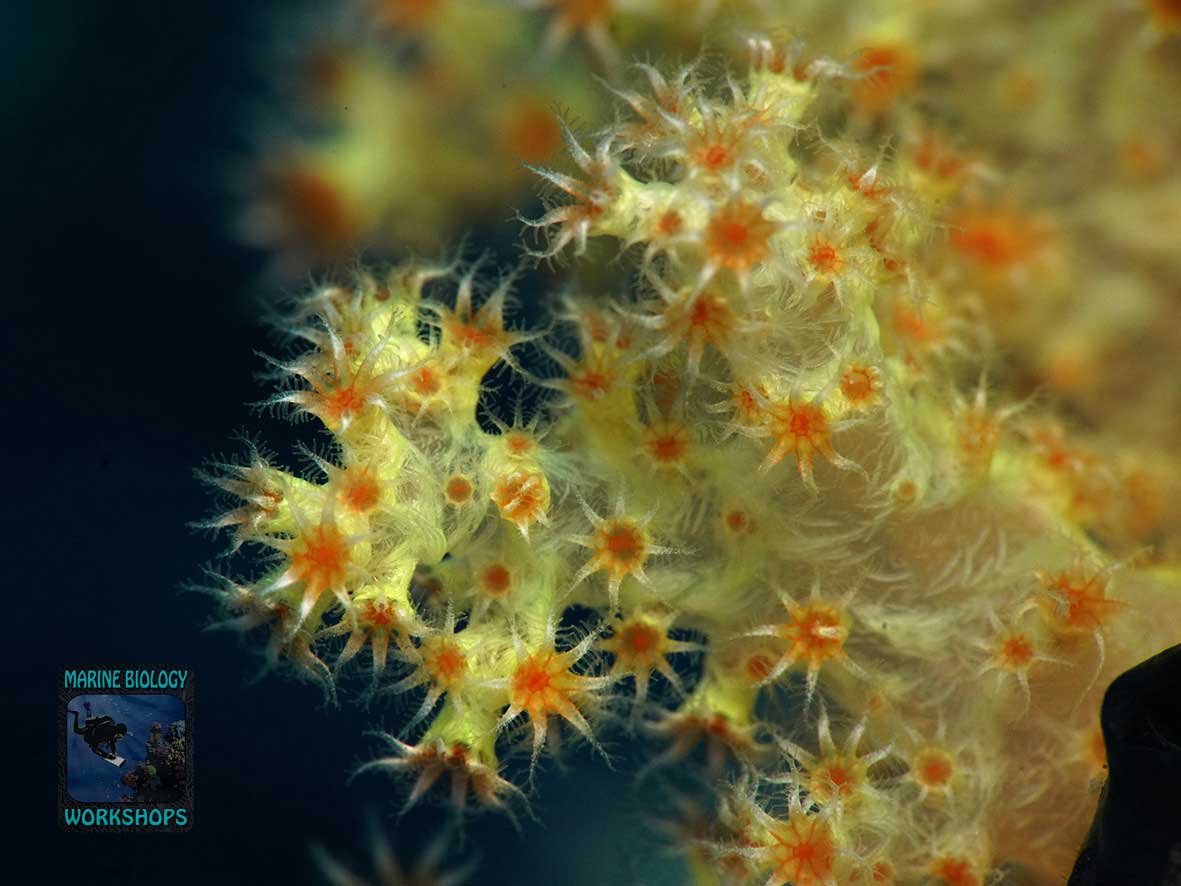
Colourful, azooxanthellate Rhytisma soft coral
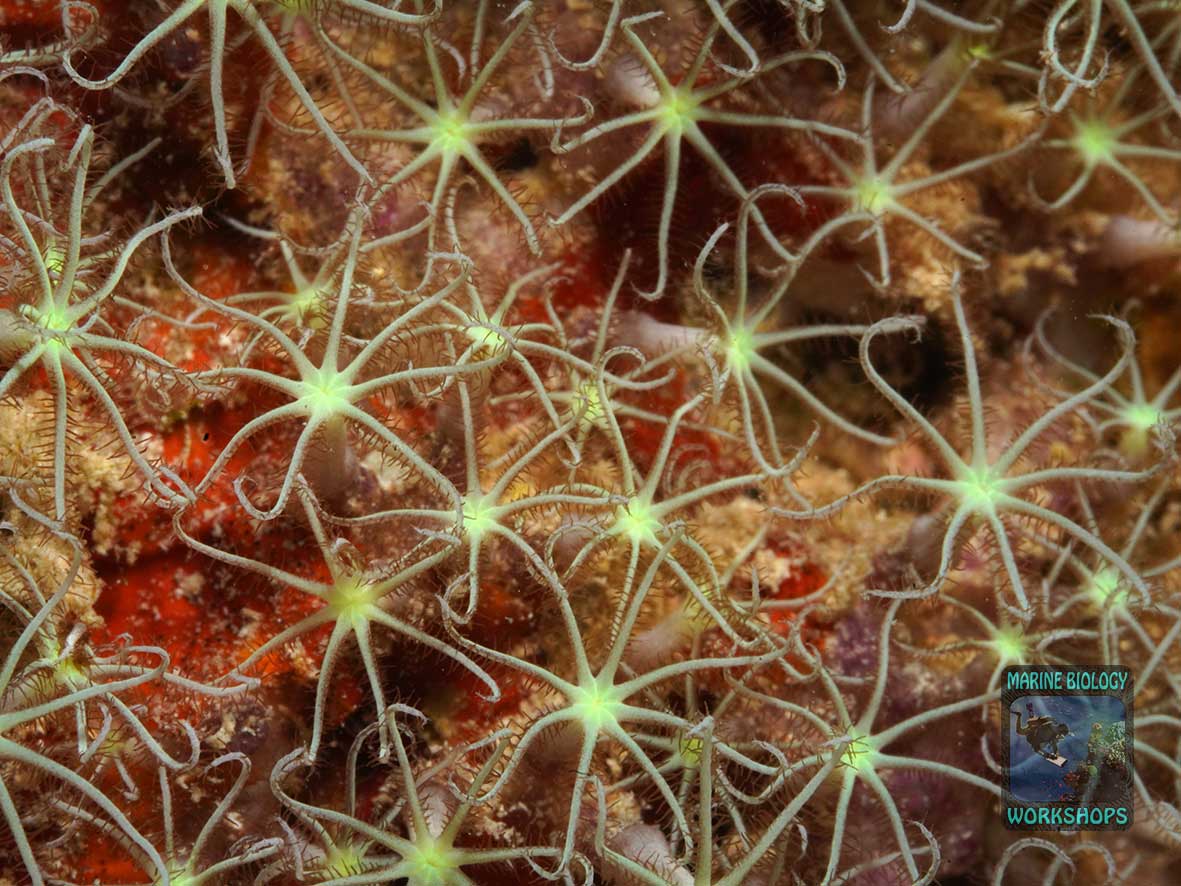
Briareum polyps with 8 feathery tentacles
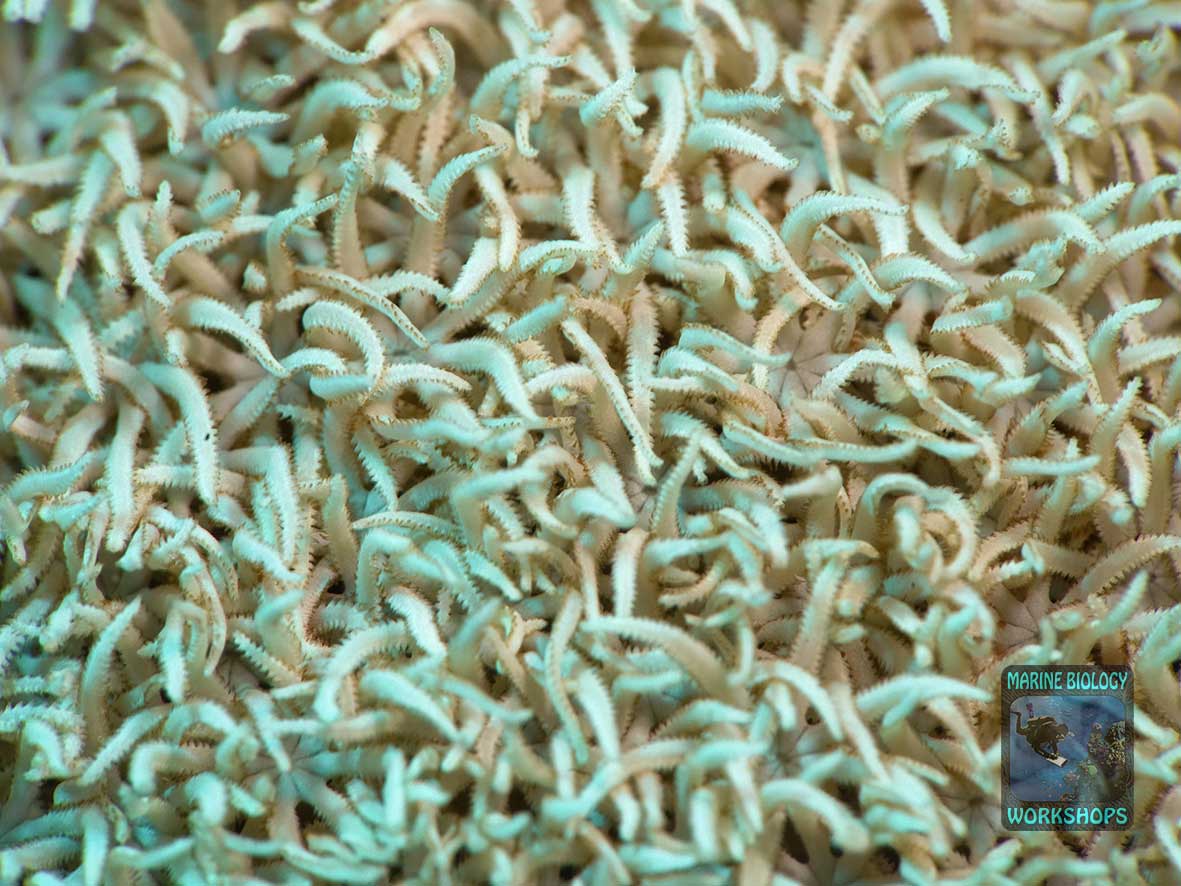
Tubipora polyps with 8 feathery tentacles
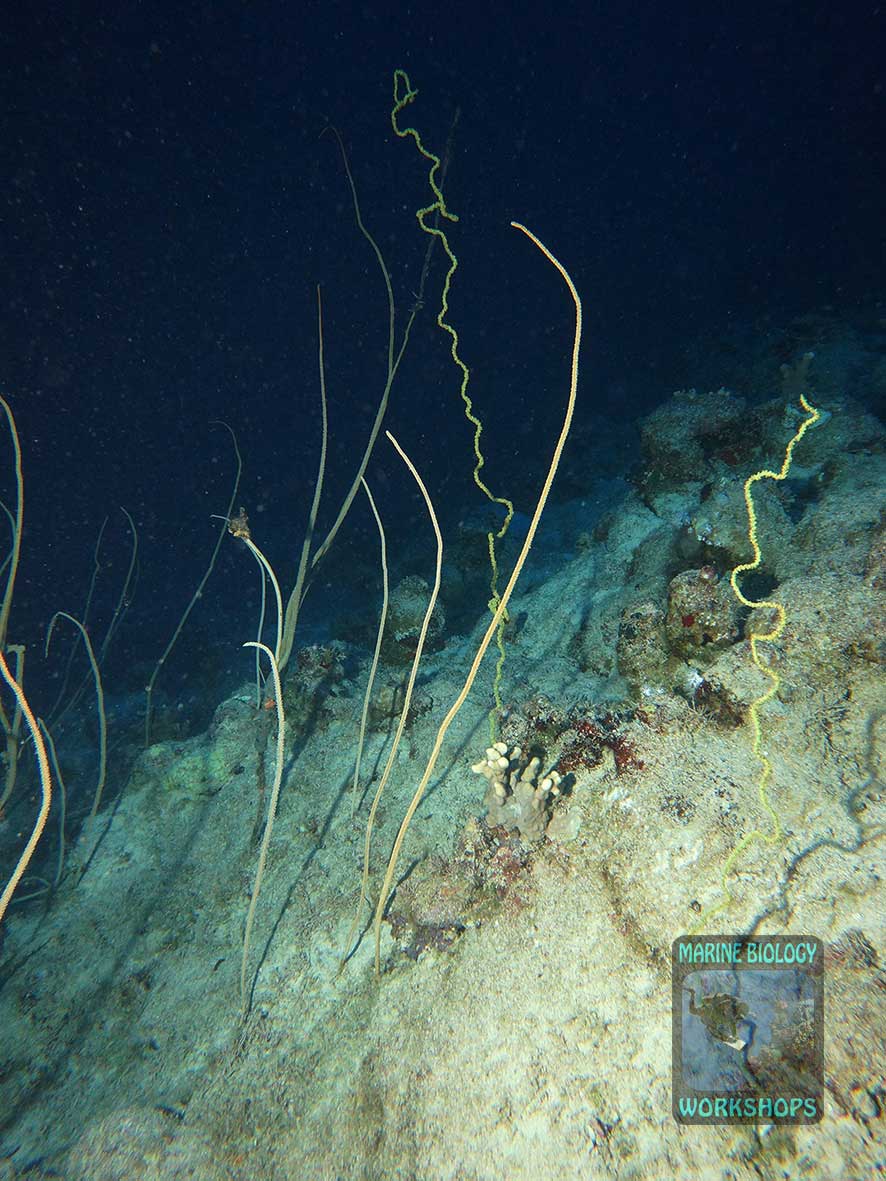
Sea whips during a deep dive in Marsa Shagra
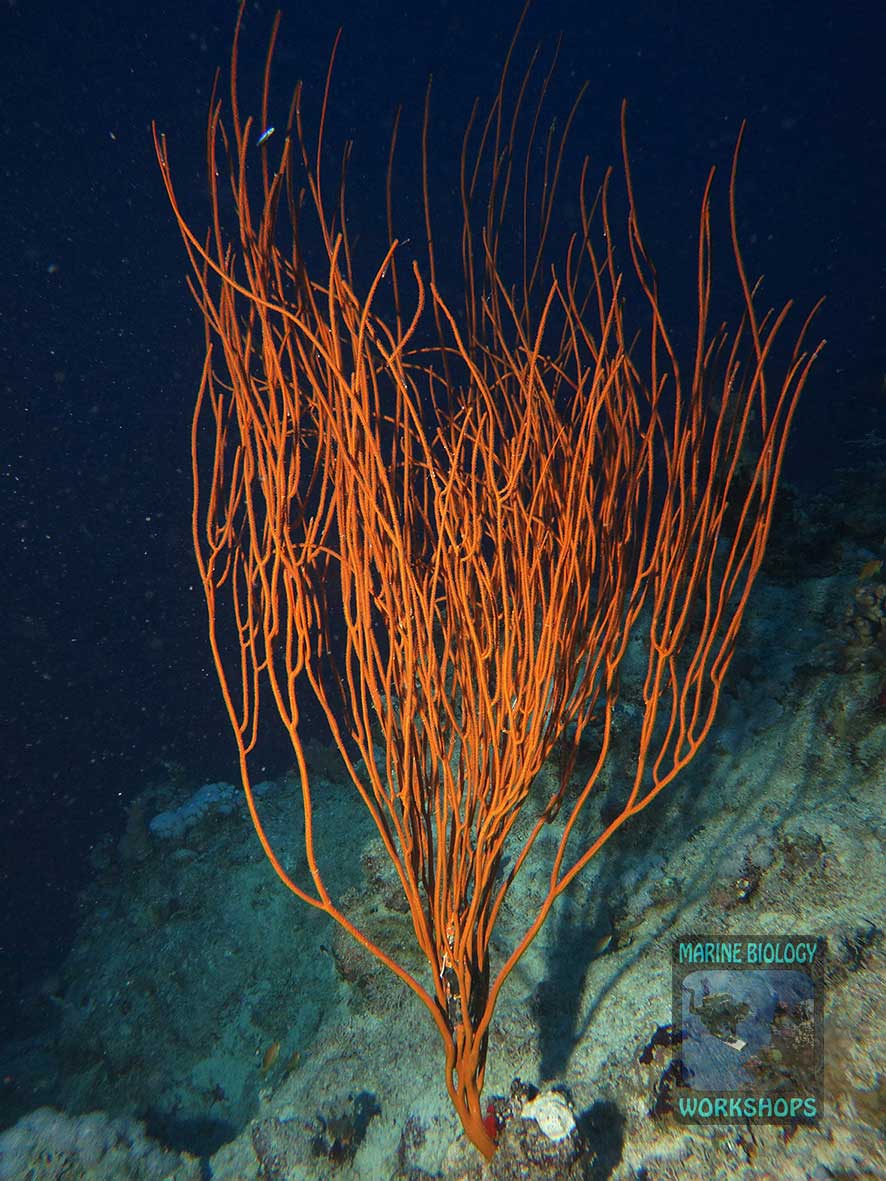
Gorgonian during a deep dive in Marsa Shagra
Corals and Their Relative Recovery Following the Fourth Global Coral Bleaching Event
Ocean warming severely damaged coral reefs worldwide during the fourth global coral bleaching event in 2023 and 2024. The impacts varied locally and regionally. Particularly in shallow and sheltered areas – such as on reef flats or in lagoons – many corals died completely or partially. The damage was also clearly visible at our survey sites. Alongside completely or partially dead corals, increased algal growth was observed, but at the same time there was also an increase in algae grazers such as surgeonfish, rabbitfish and parrotfish.
Around 20 months have passed since late summer 2024, and the reefs have been able to regenerate partially. Corals that had only partially died – for example, on their upper surfaces exposed to light – began to “grow back”. This was evident in healthy growth margins, vigorously regrowing new branches or raised ridges.
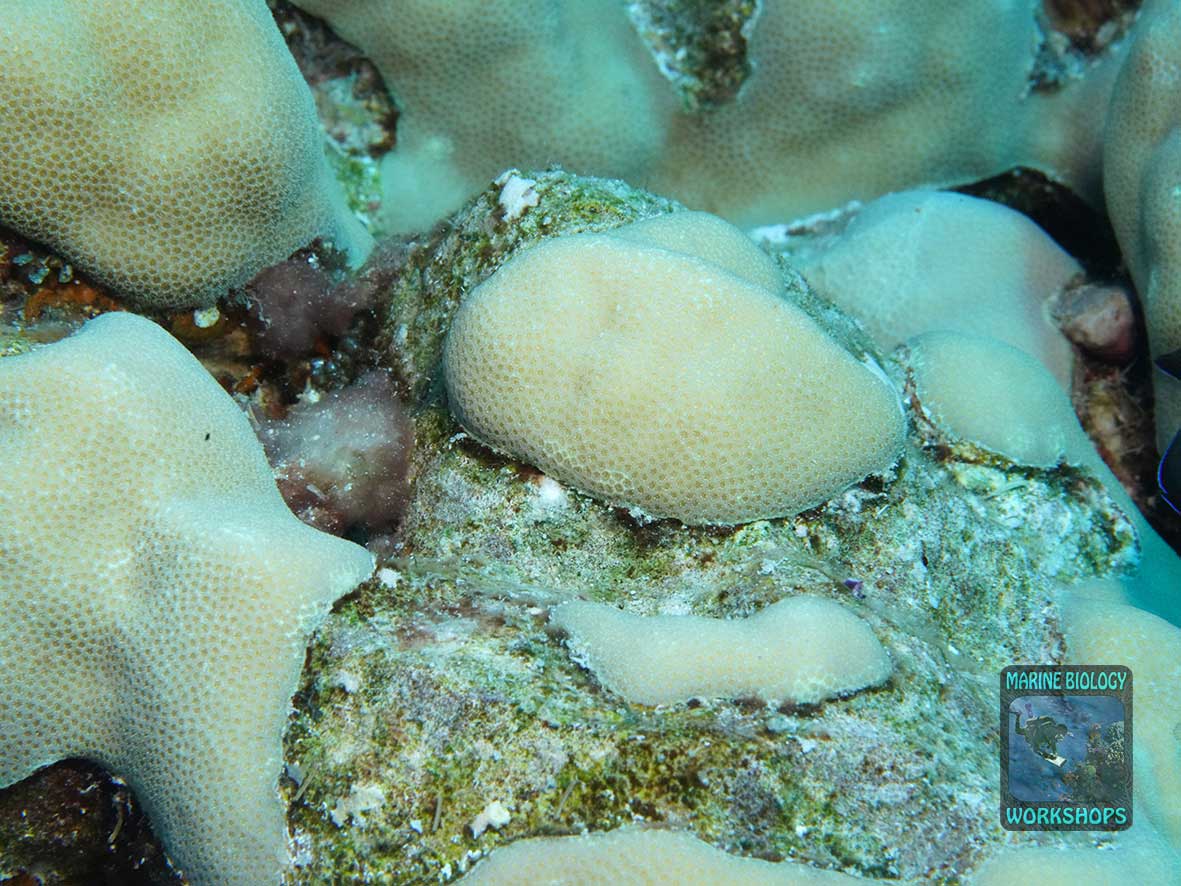
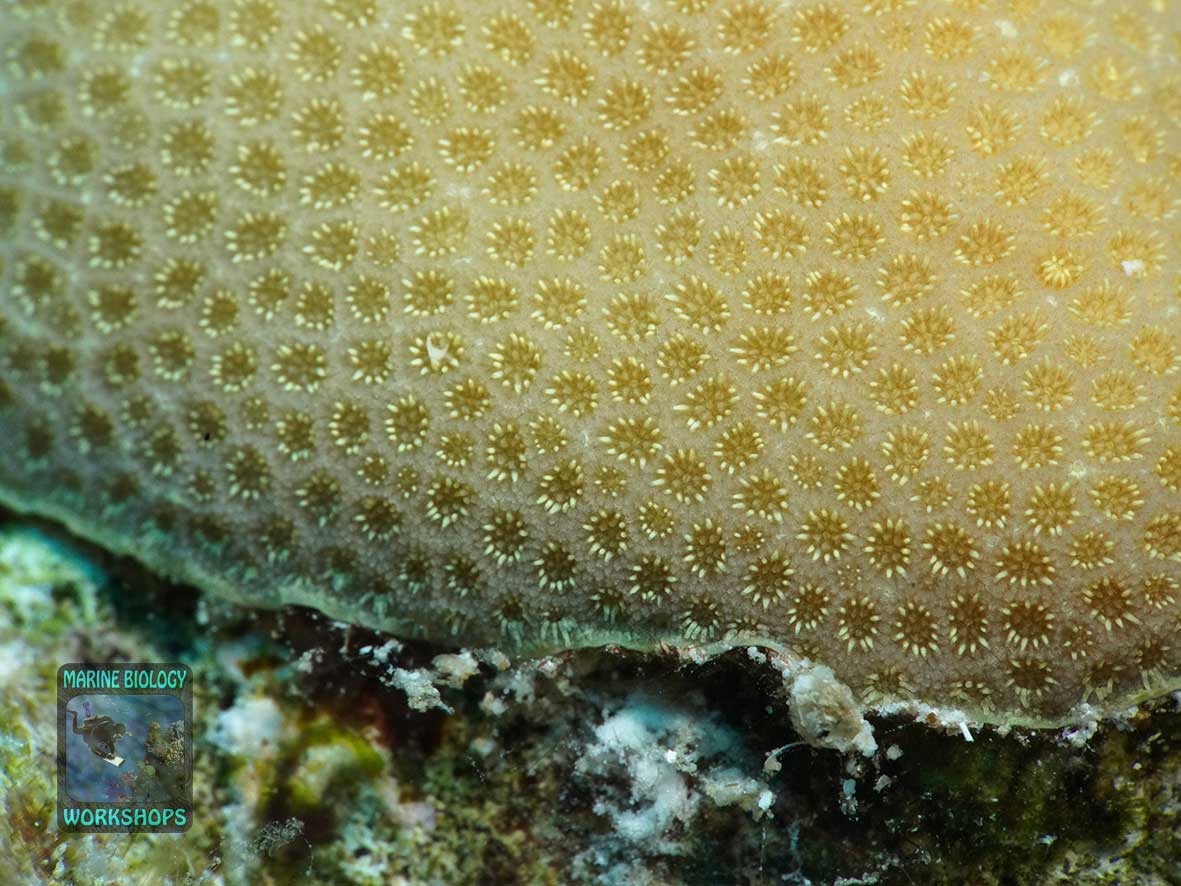
Damaged Porites coral
Regrowth of Porites coral with a growth bulge
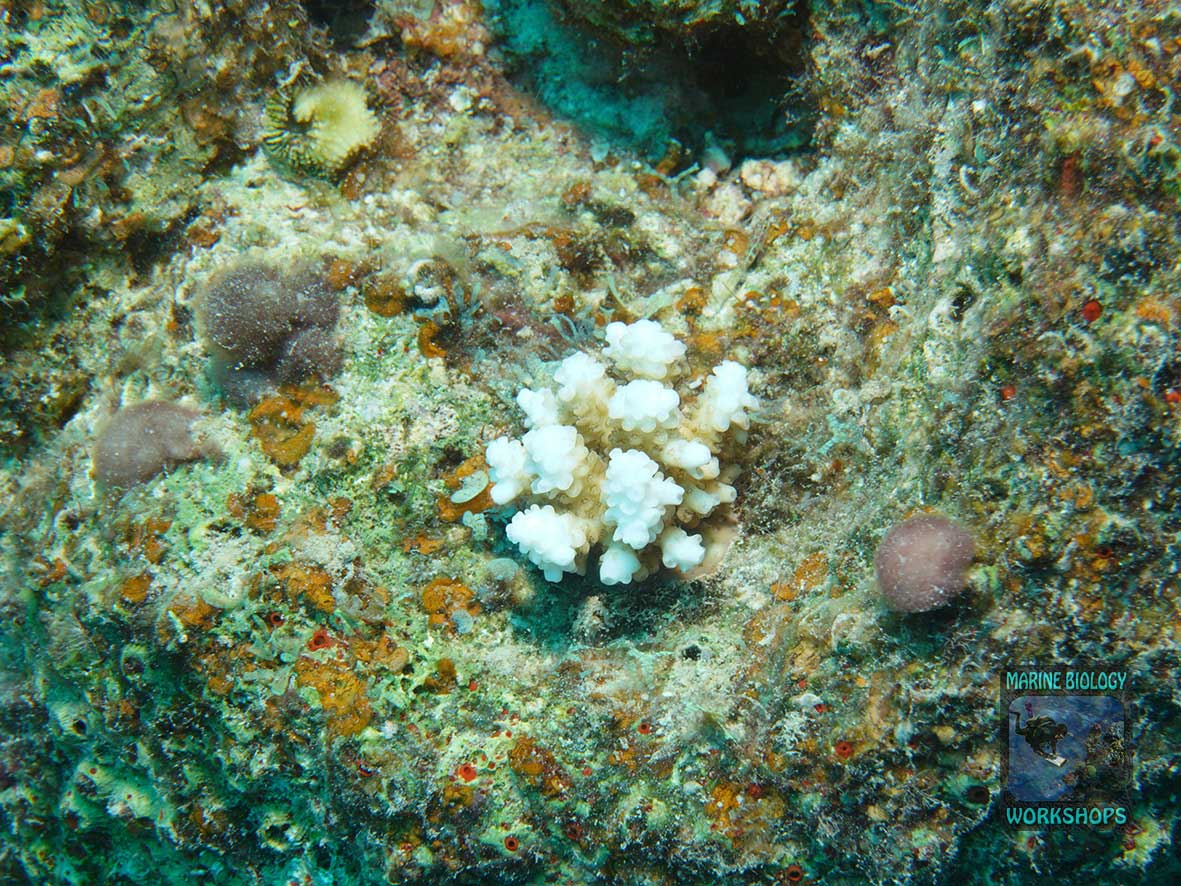
Re-colonization - young Acropora colony
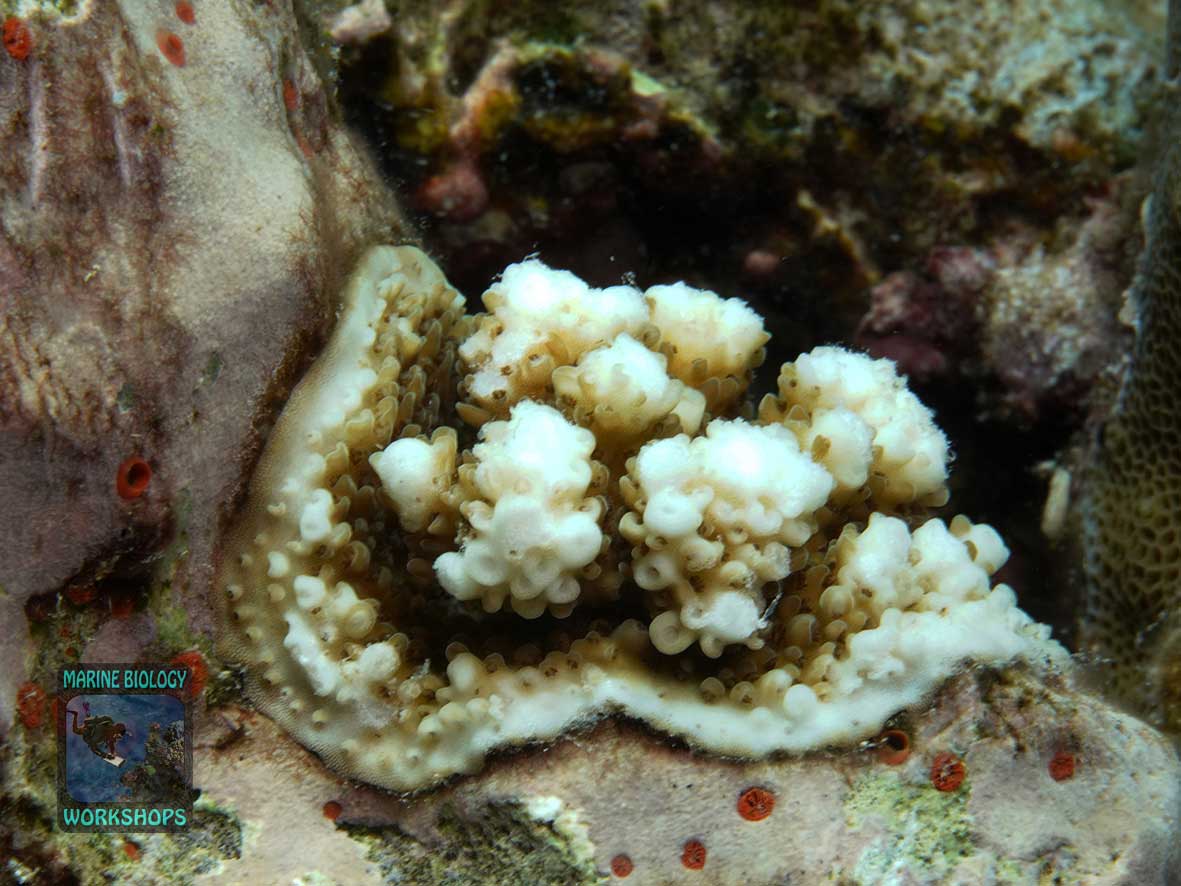
Re-colonization - young Acropora colony
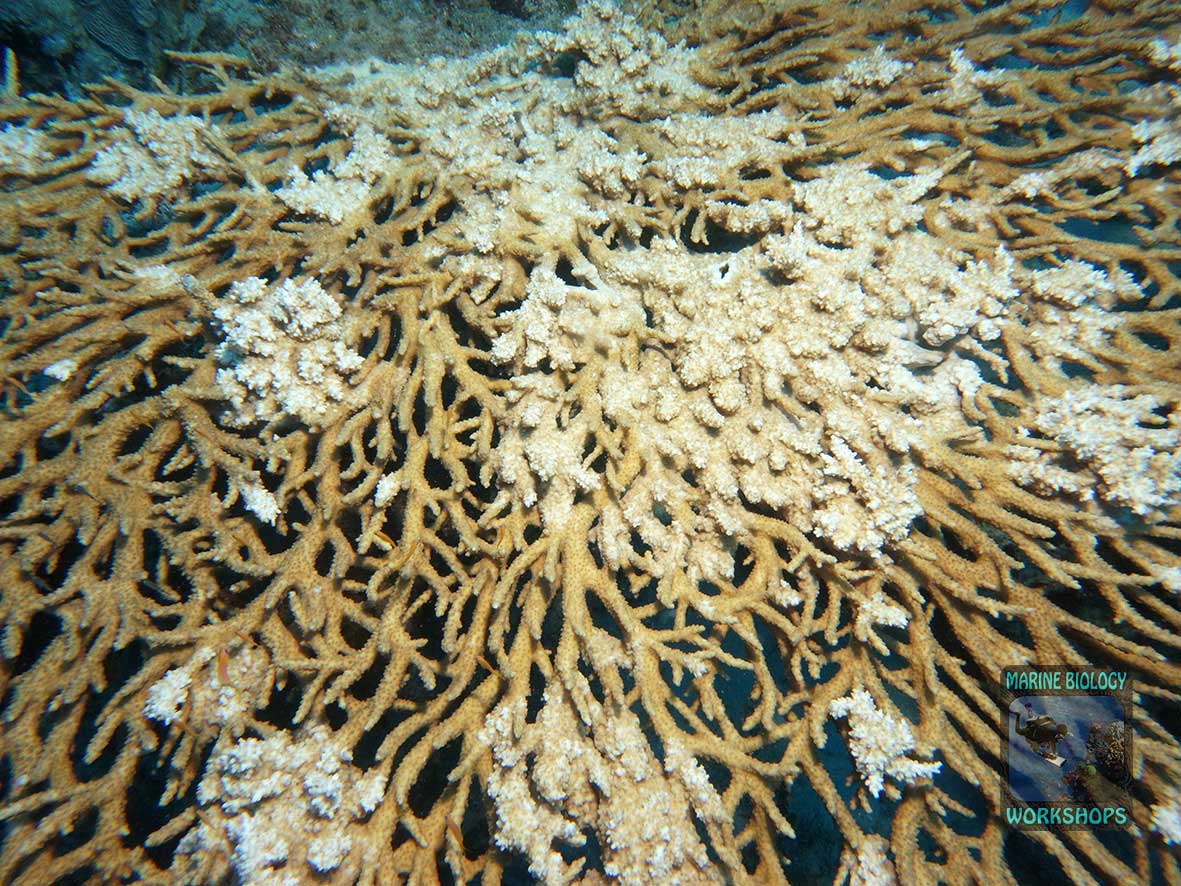
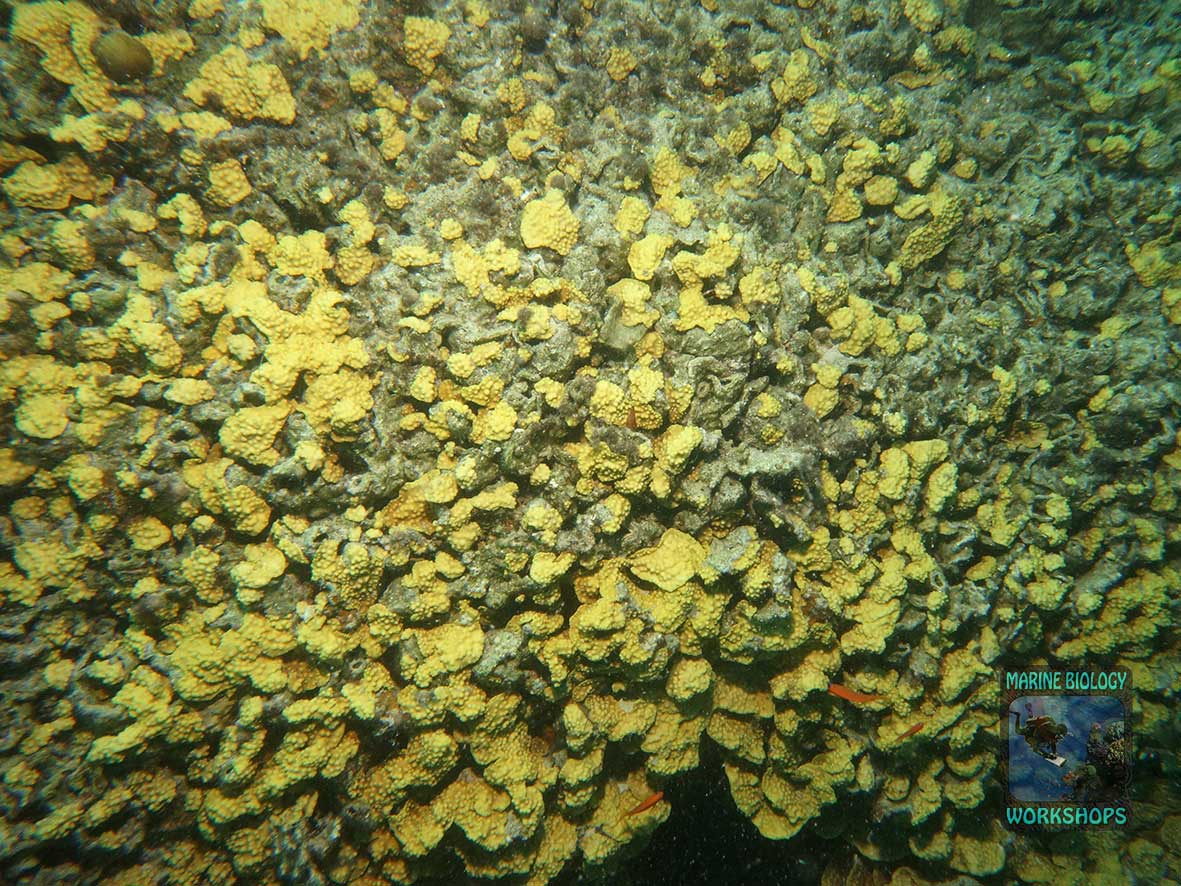
Growth Anomaly in Table Acropora
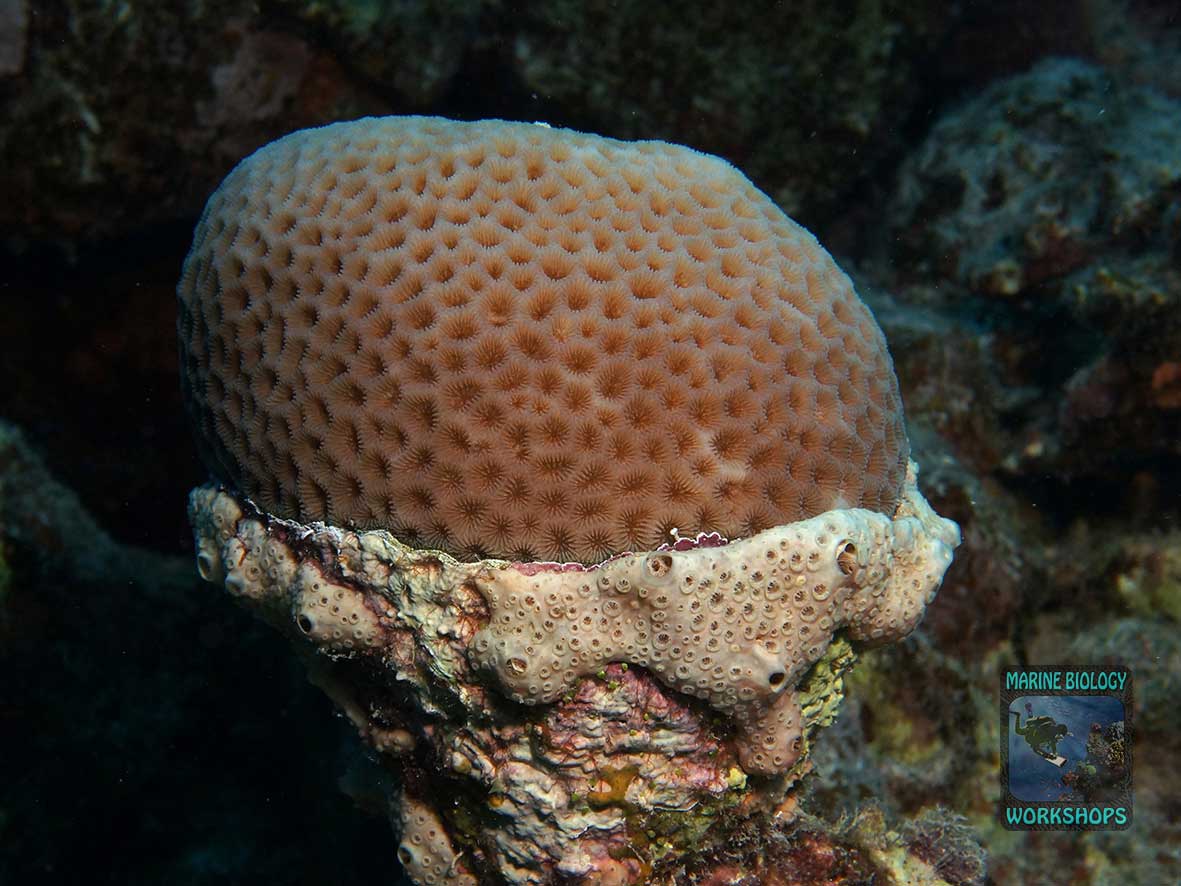
Competition: Stony Coral vs. Sponge (below)
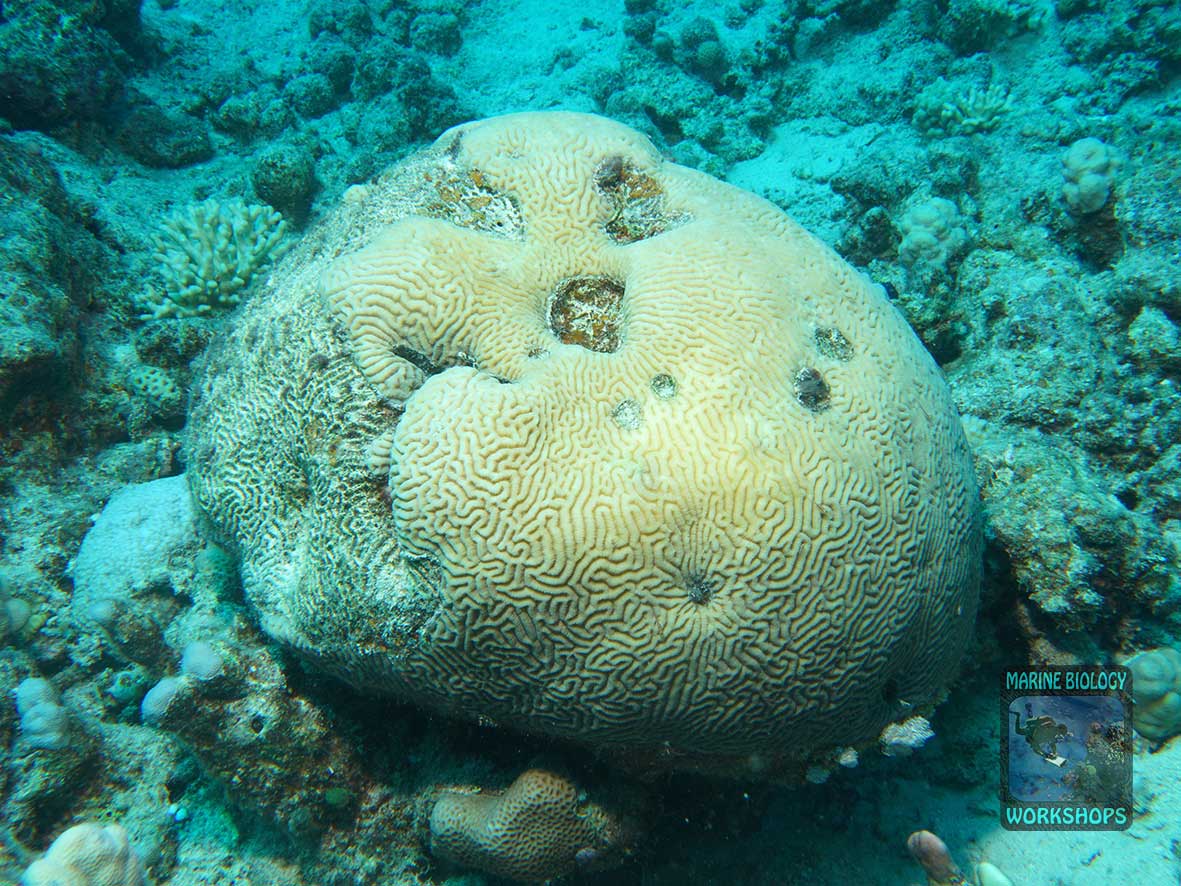
Damaged Platygyra brain coral
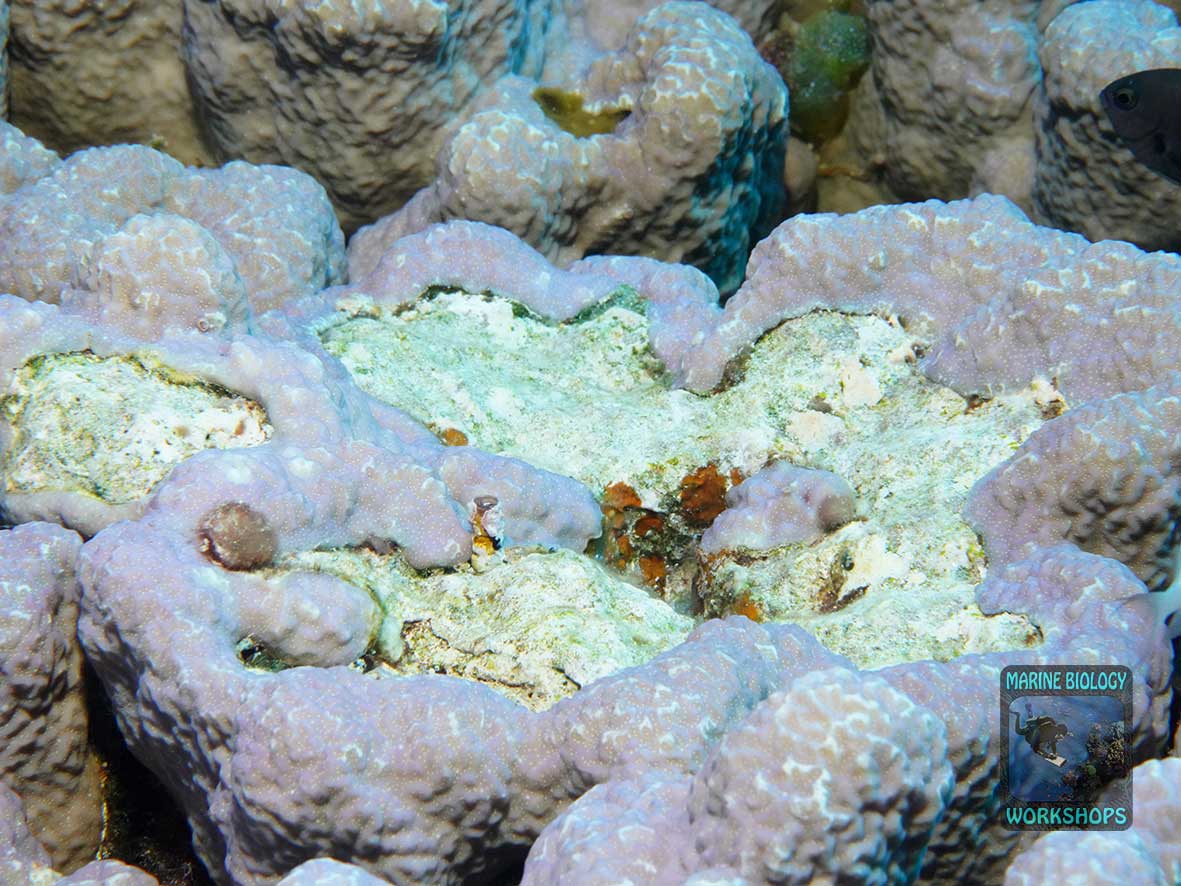
Damaged Turbinaria lettuce coral
Regrowth of Porites coral with a growth bulge
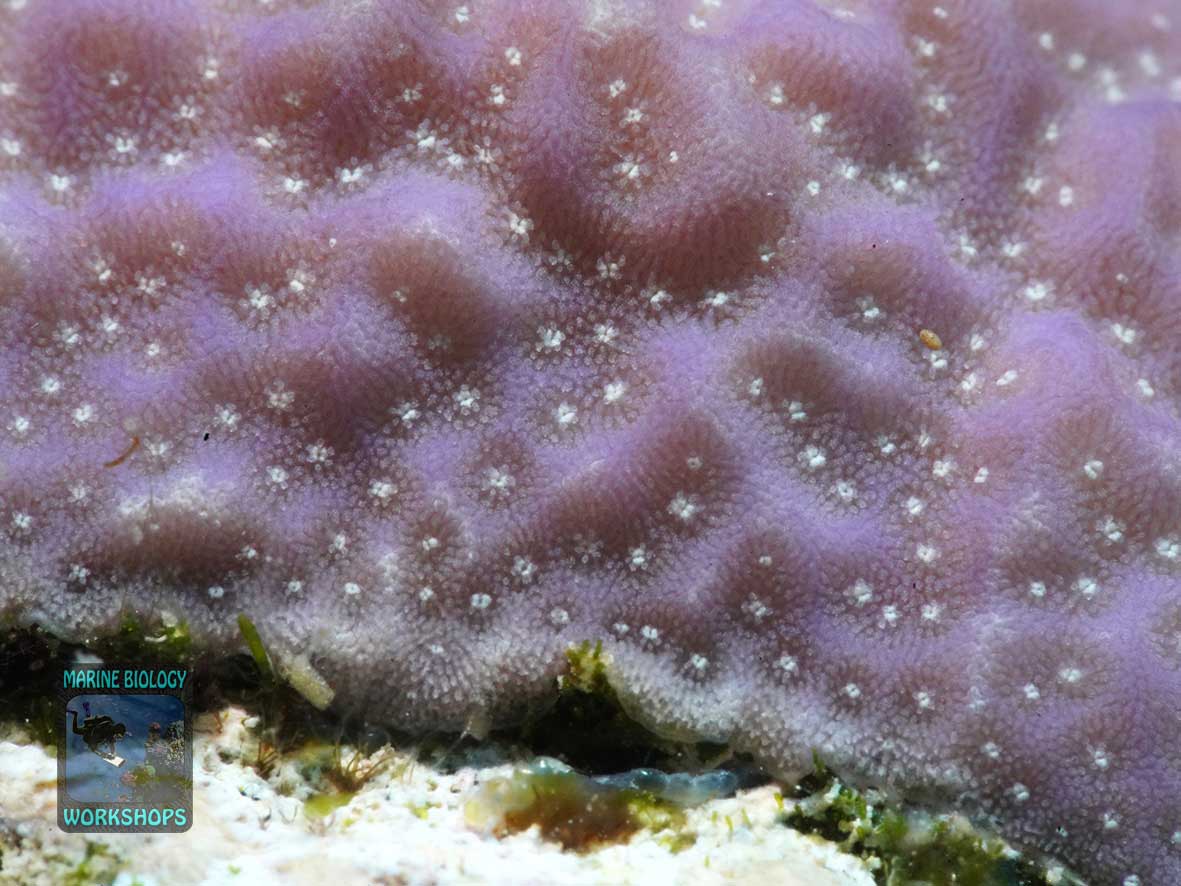
Regrowth of Porites coral with a growth bulge
Fascinating Night Dives around Marsa Shagra and Marsa Nakari
During our three weeks in Marsa Shagra, Marsa Nakari and Wadi Lahami, we were able to enjoy several exciting night dives. We entered the water at sunset, as the sun sets relatively late in July. Many reef fish court and spawn at dusk. Immediately after sunset, we were able to observe both the dusky angelfish (Centropyge multispinis) and the regal angelfish (Pygoplites diacanthus) courting.
Many invertebrates leave their hiding places in the reef to forage under cover of darkness – including the species we had surveyed during the Reef Check surveys, such as various sea urchins.
A particular highlight was the sudden encounter with a large Round ribbontail ray (Taeniurops meyeni). It is also extremely fascinating to observe snappers, lionfish, moray eels and groupers hunting at night.
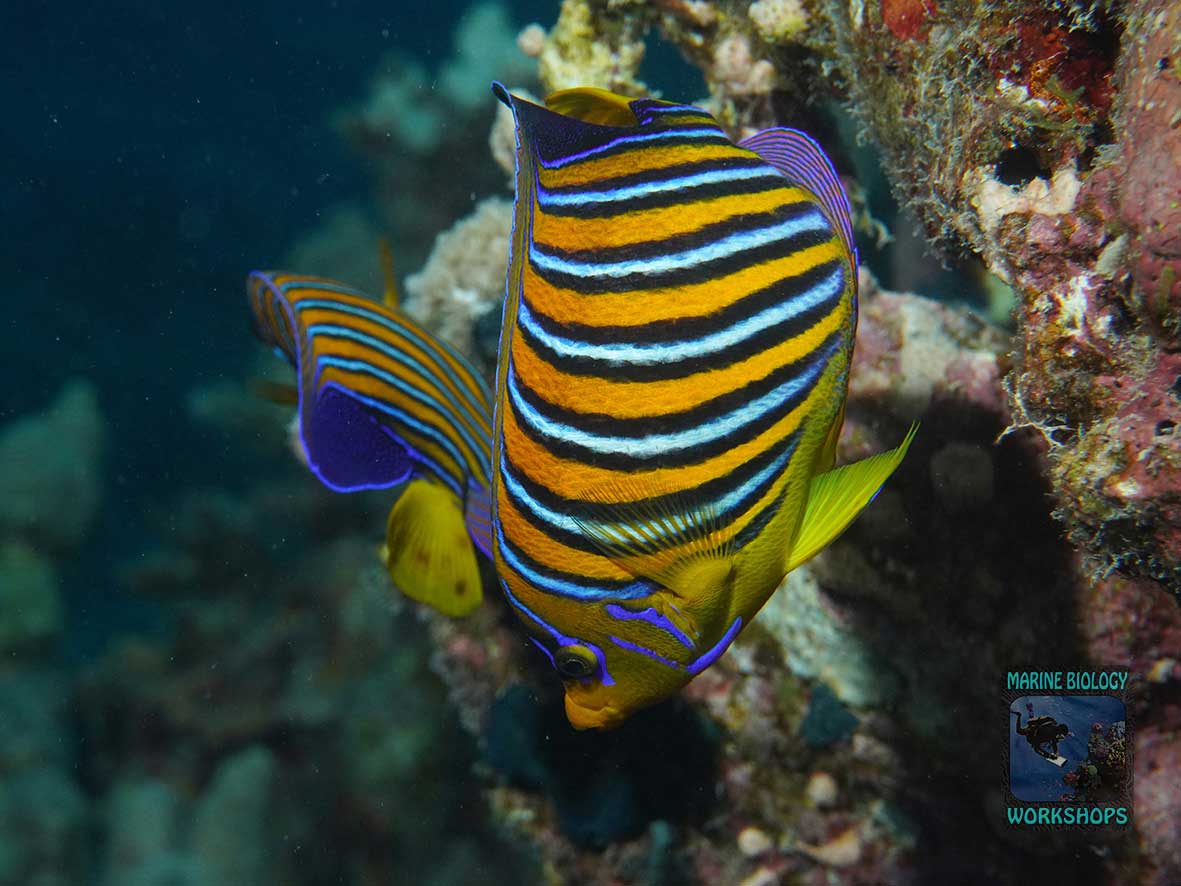
Mating angelfish after sunset
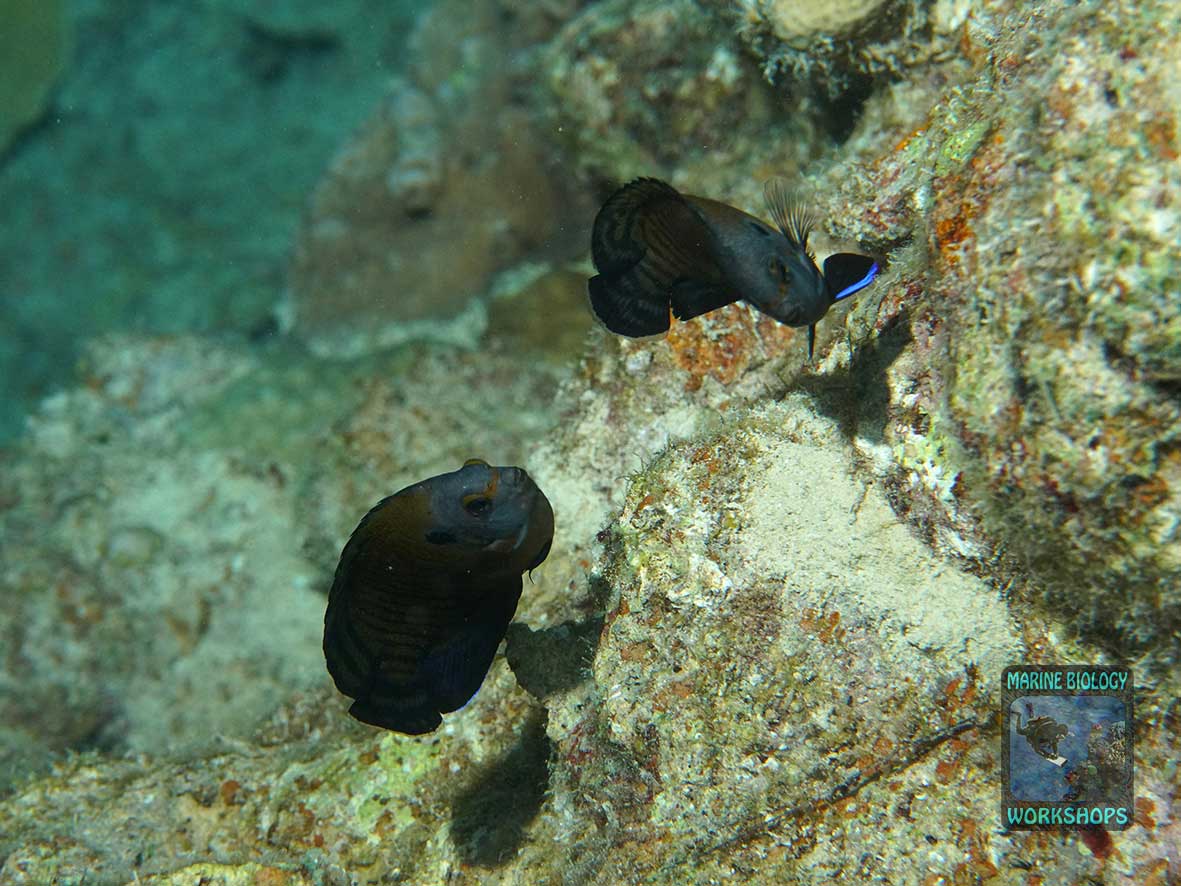
Mating dwarf angelfish after sunset
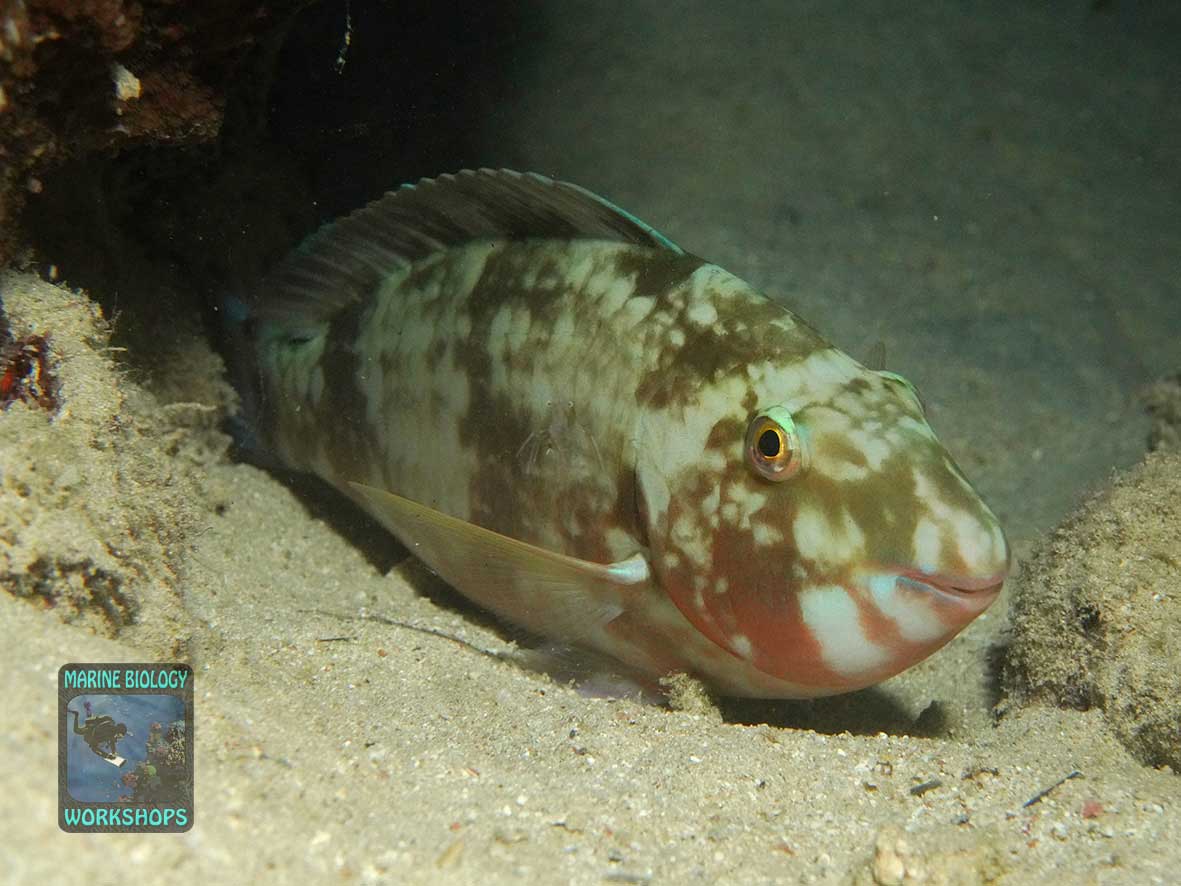
A Parrotfish Resting at Night
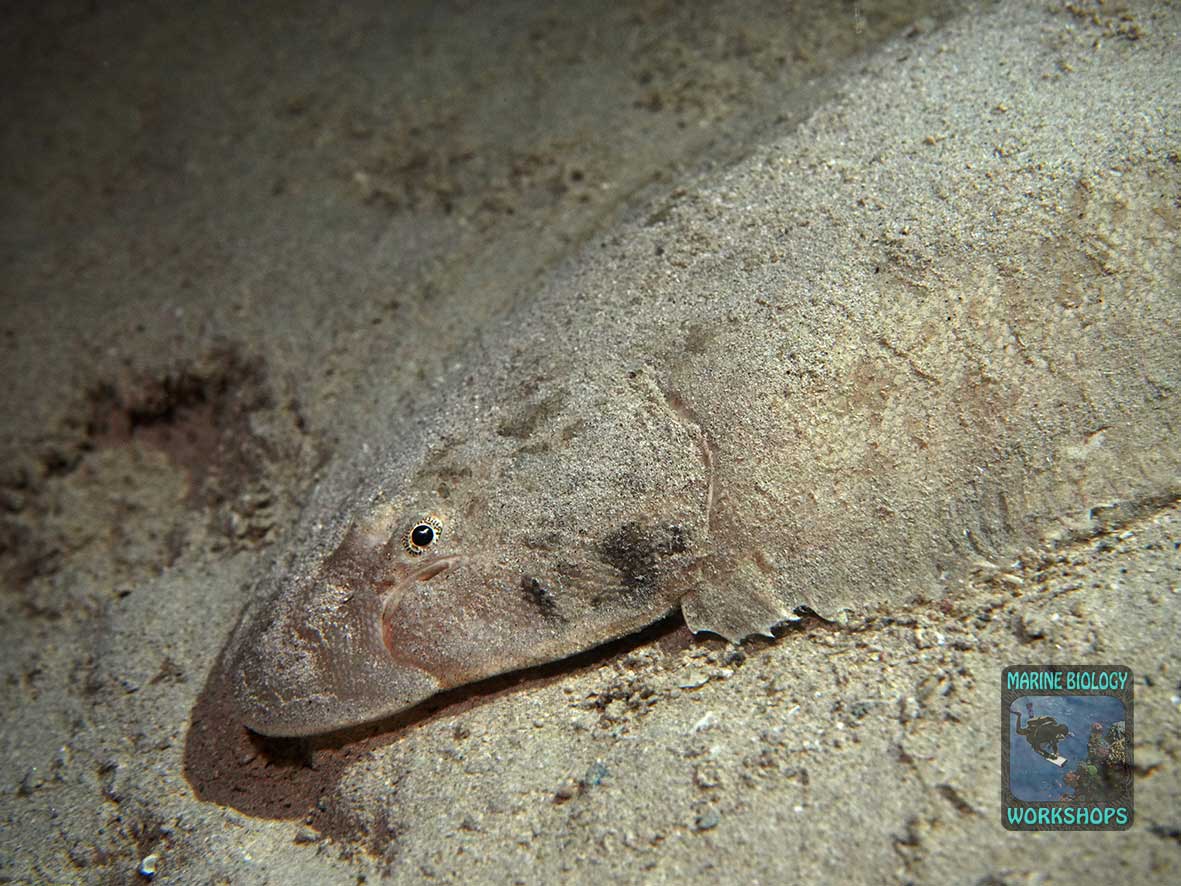
Sole on a sandy seabed at night
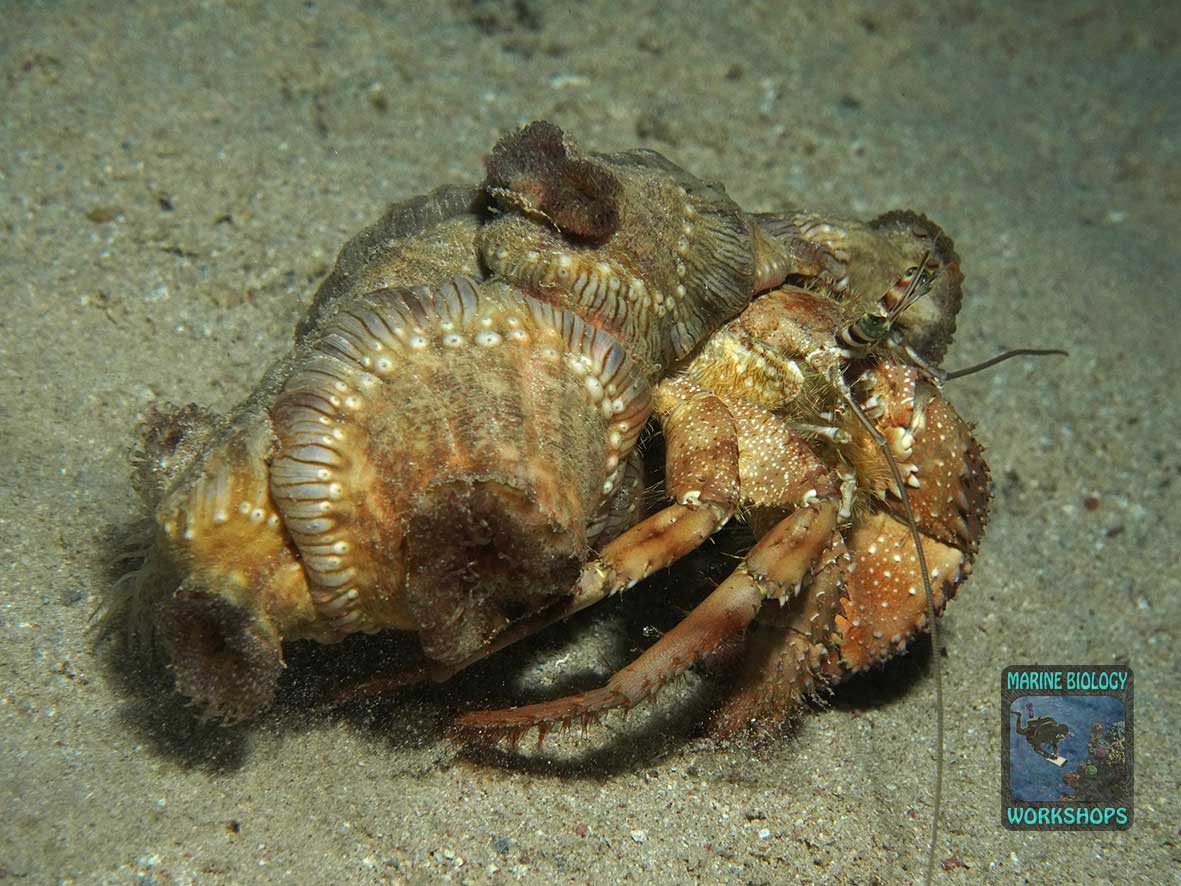
Hermit crab with a symbiotic sea anemone
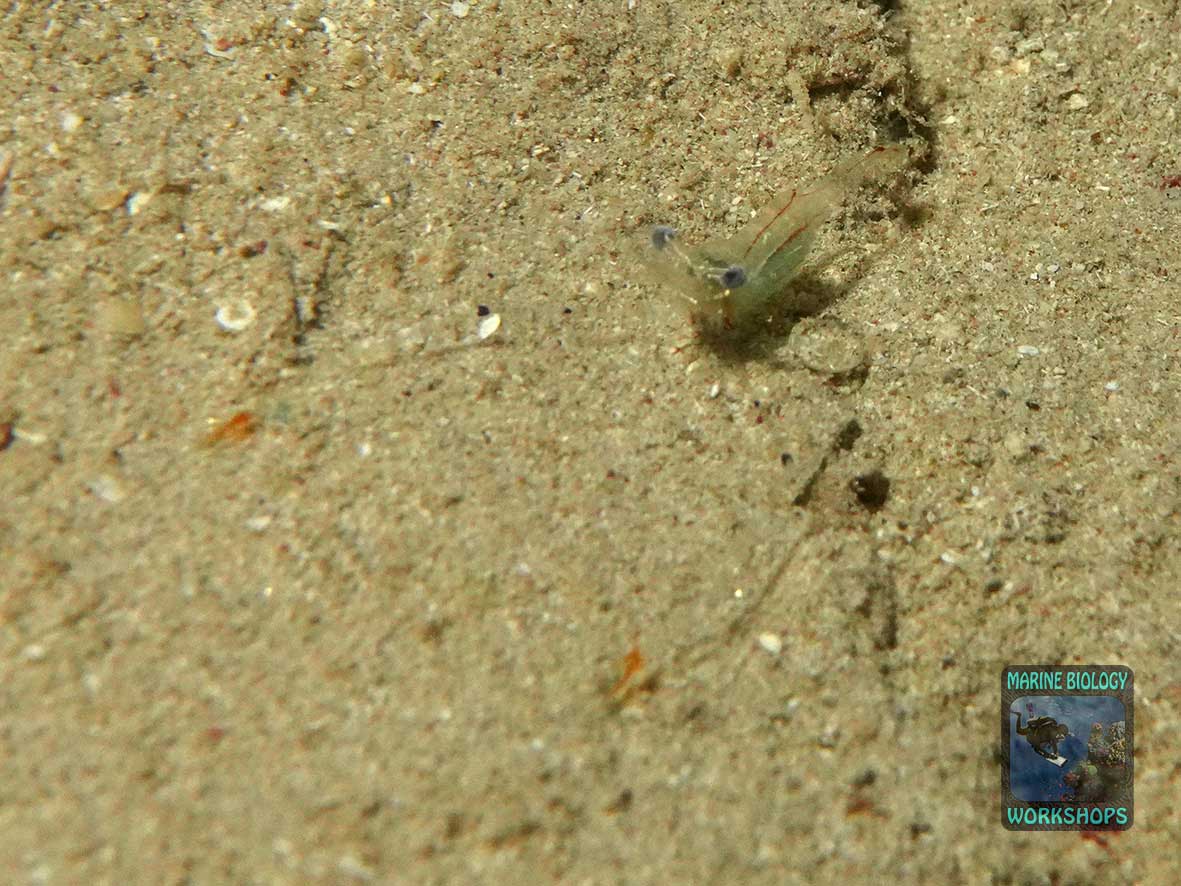
Shrimp on the sand bottom at night
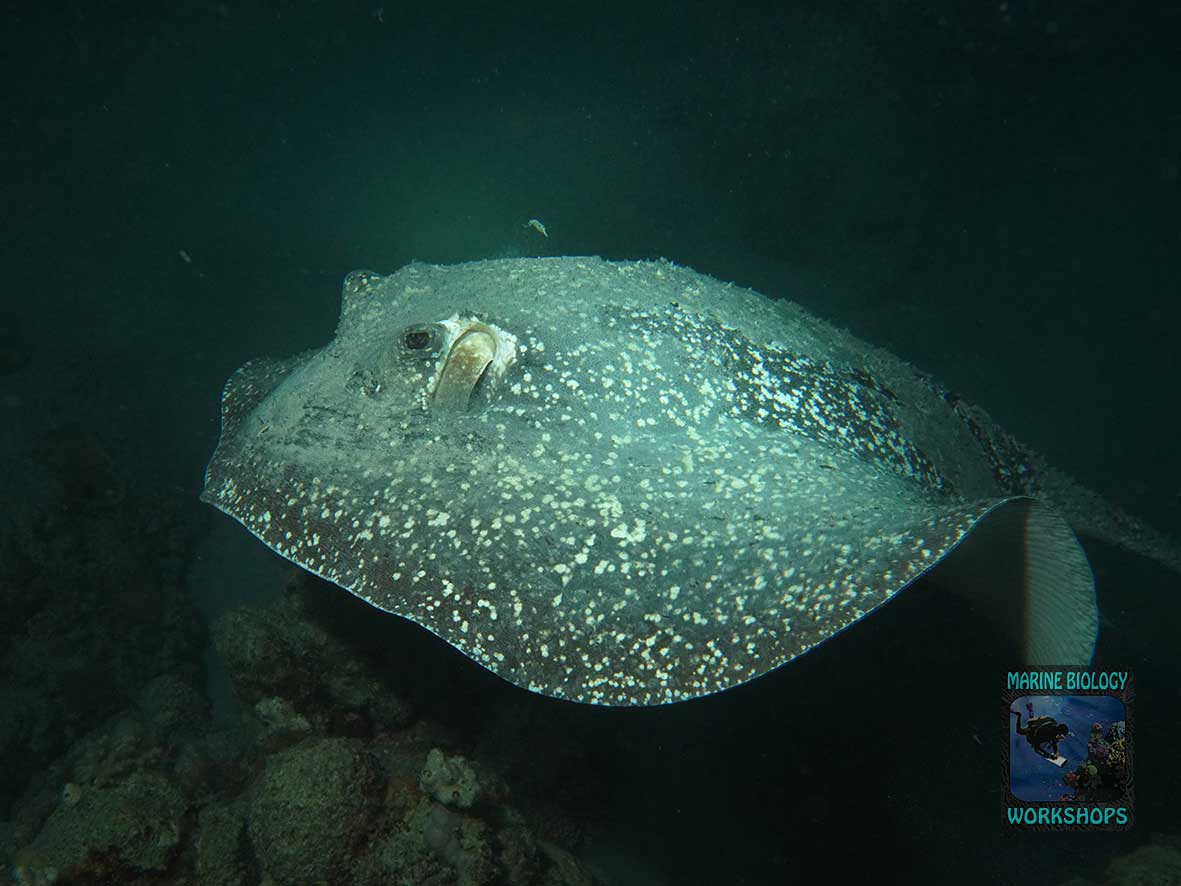
Stingray (Taeniurops meyeni) at Night
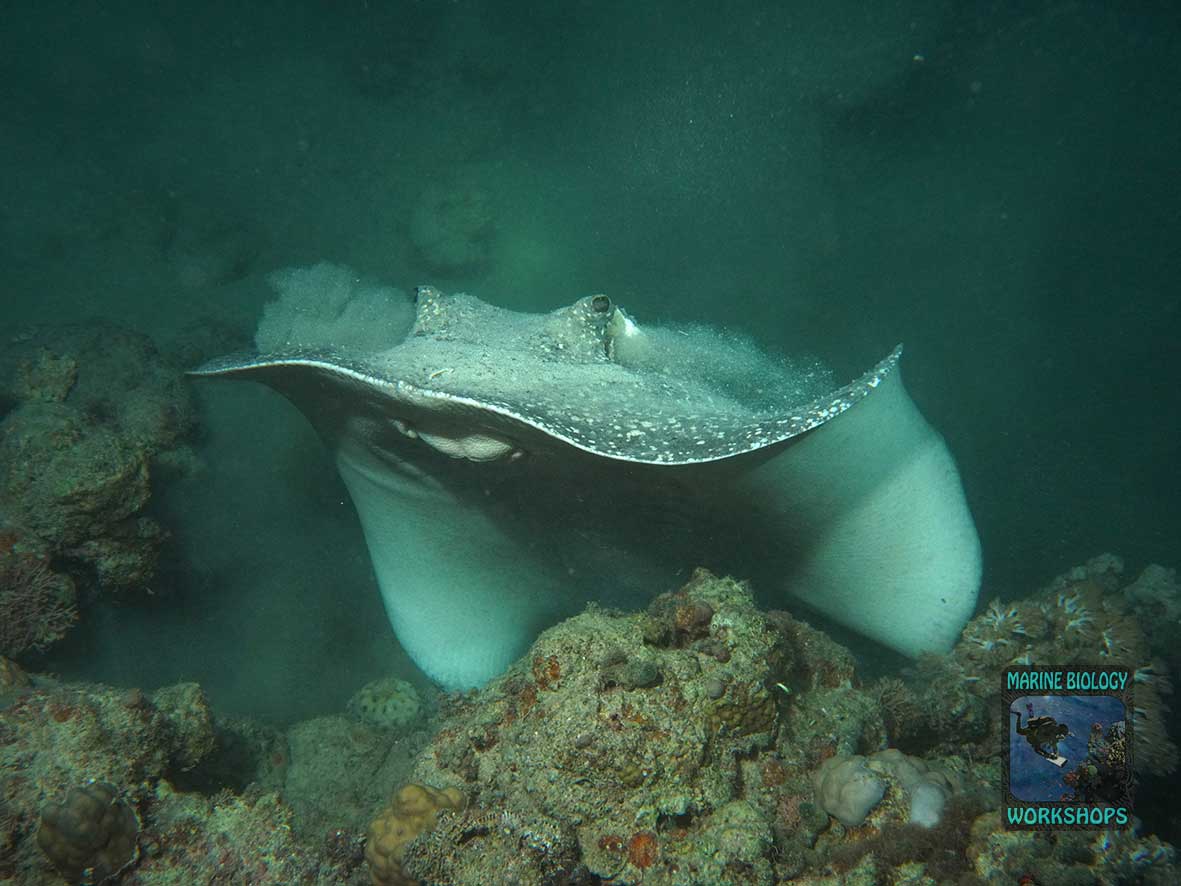
Stingray (Taeniurops meyeni) at Night
Exciting Dives at the Offshore Reefs of the Fury Shoals
In addition to the two surveys at the house reef, the programme therefore also included several further days of diving at the reefs of the Fury Shoals, including Shaab Claudia, Abu Galawa, Malahi, Angel, Shabrour and Daisy.
After four days in Wadi Lahami with dives at the reefs of the Fury Shoals, some of the group returned home. Stephan and Marlin returned to Marsa Nakari.
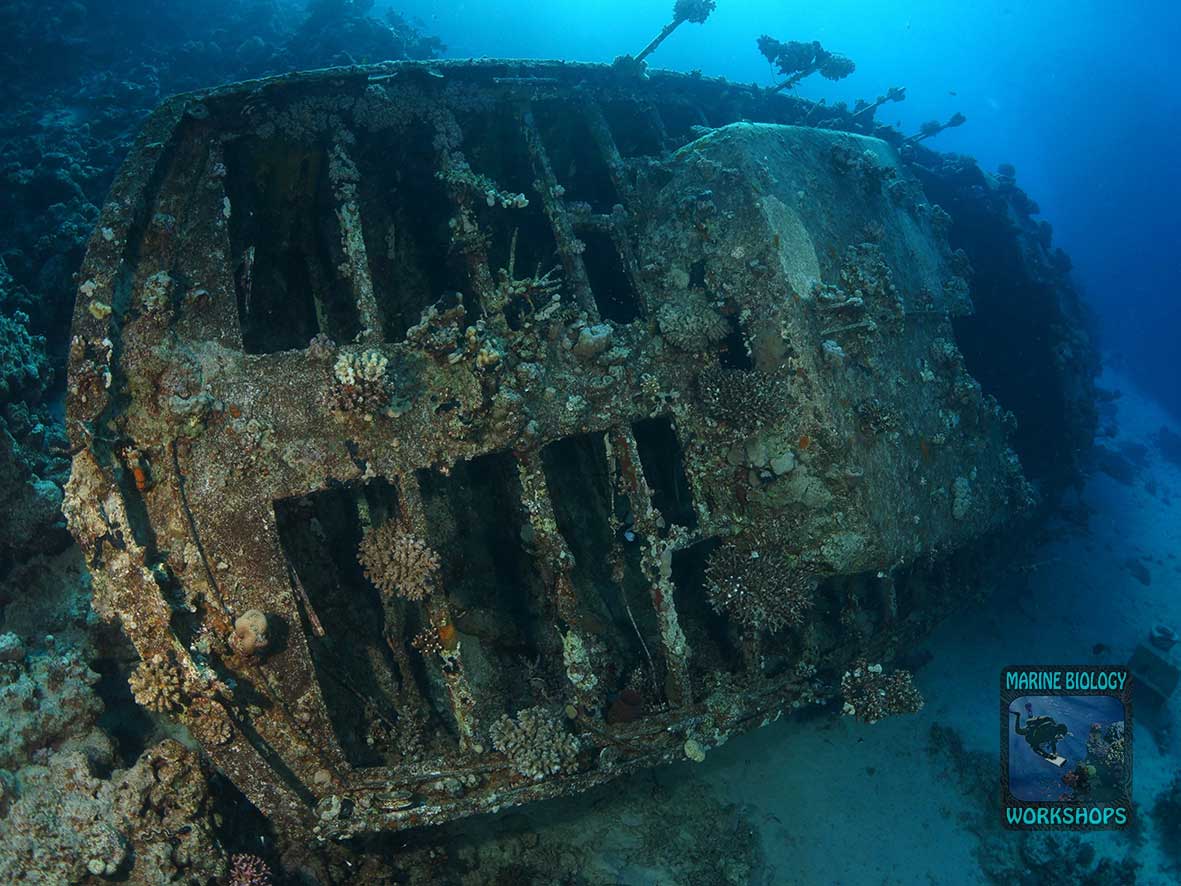
The Abu Galawa Wreck is a famous dive site in the Fury Shoals
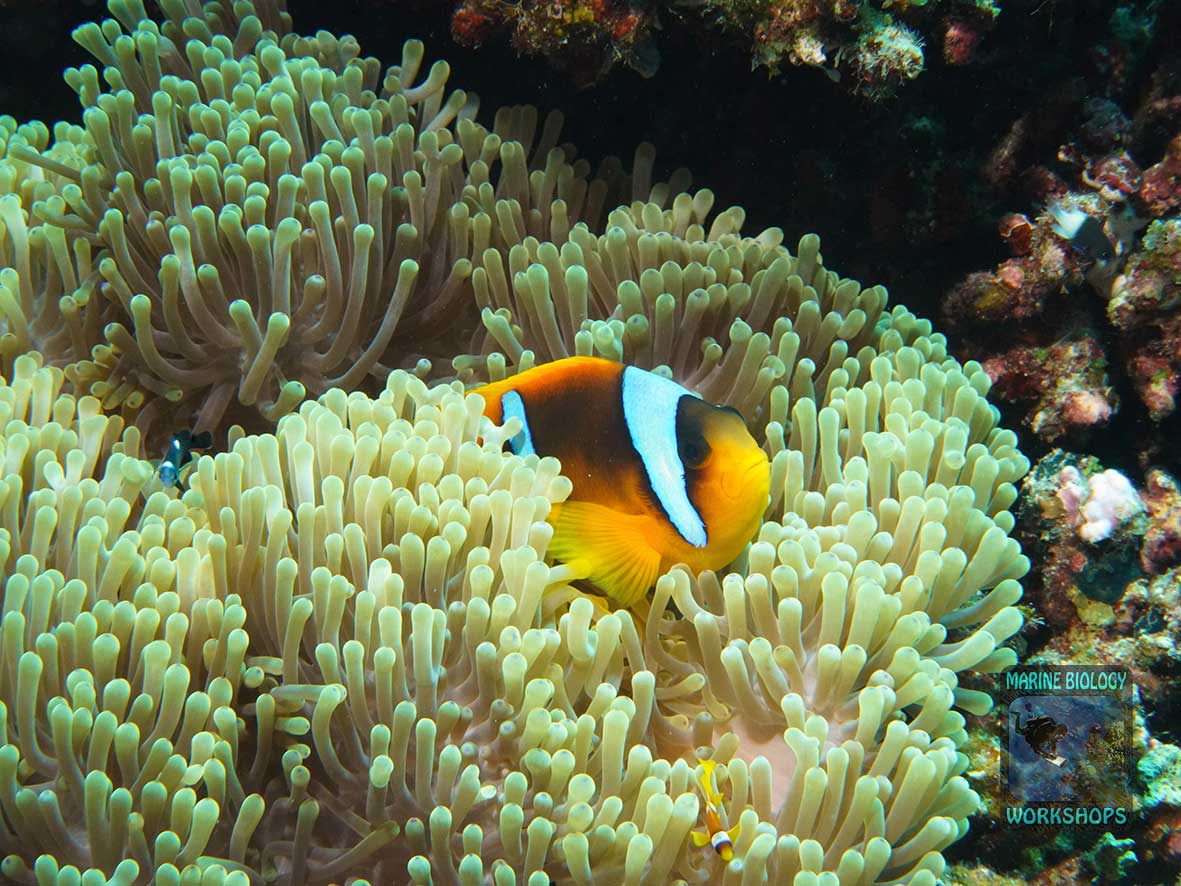
A Red Sea anemone fish at Malahi
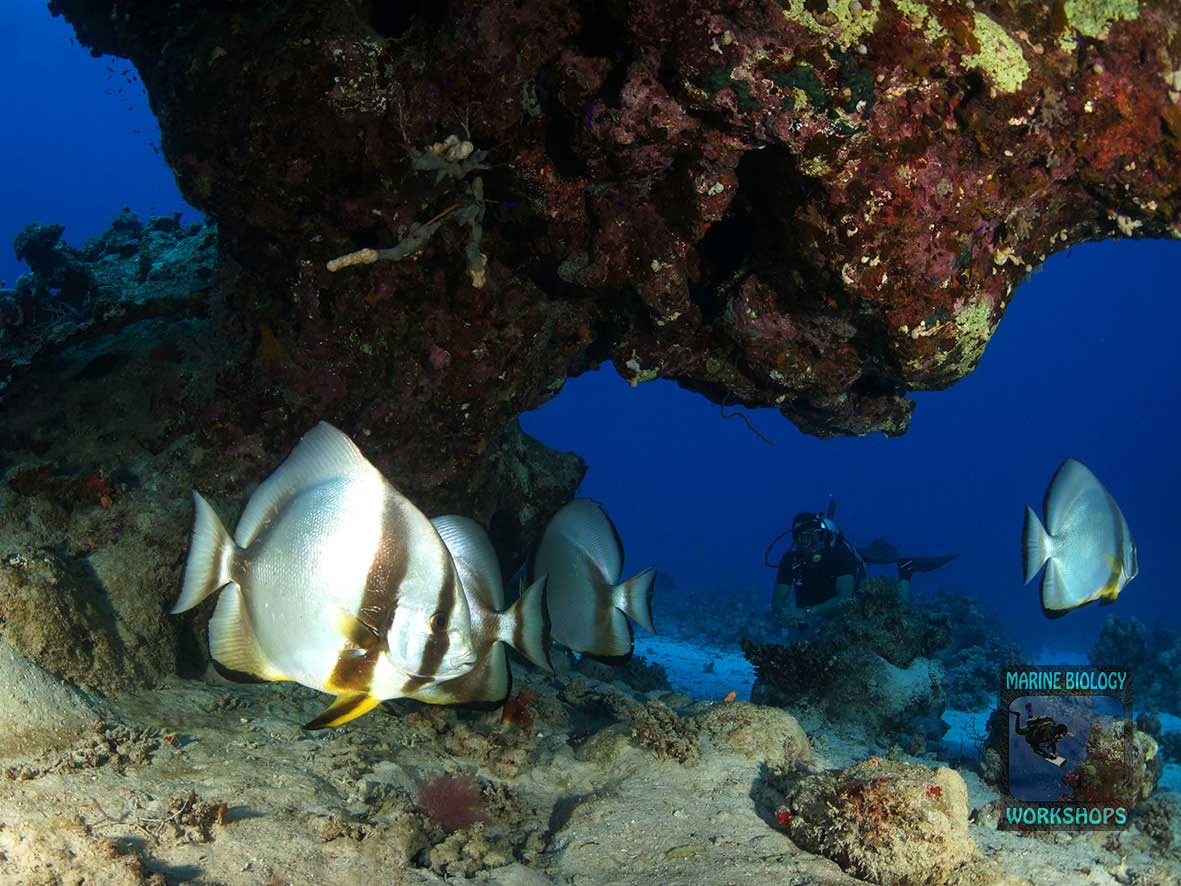
Batfish at Abu Galawa
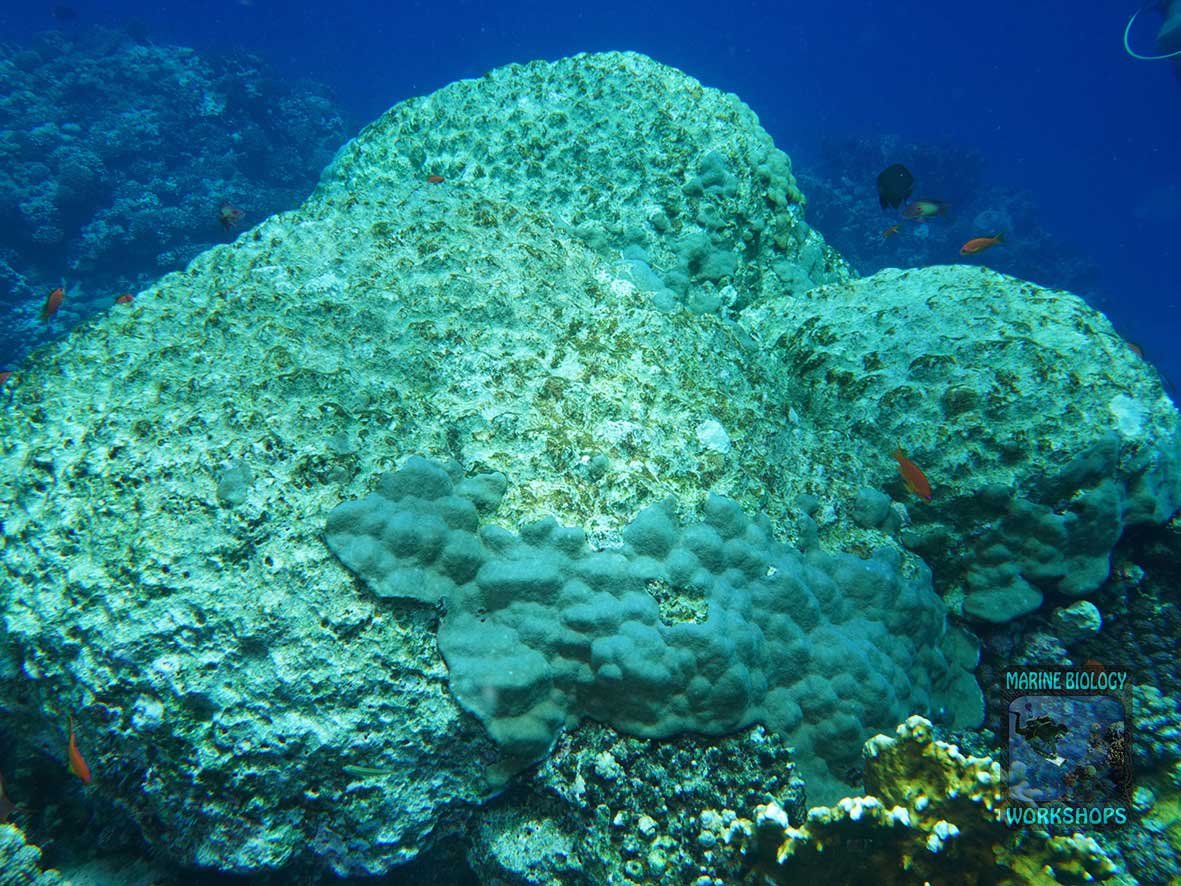
A damaged Porites coral at Shaab Marsa Alam
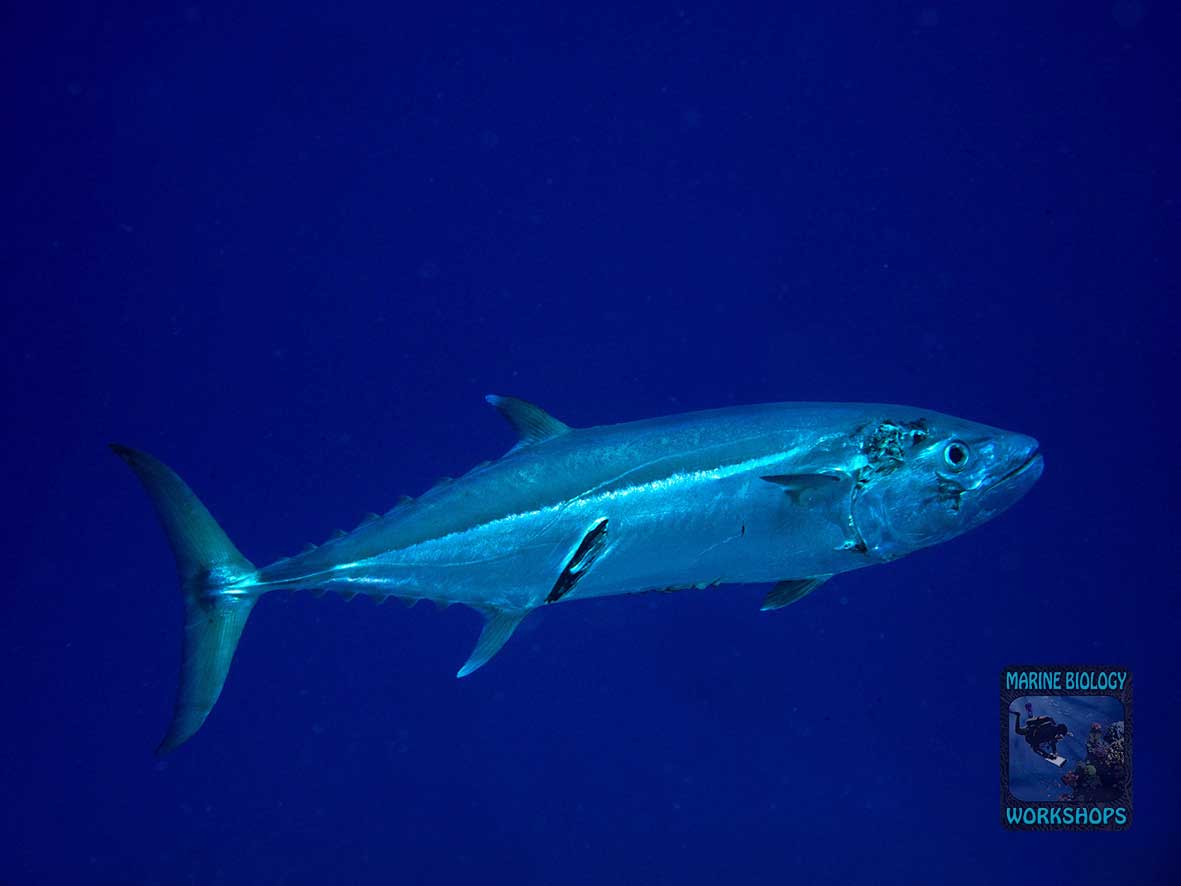
This injured dogtooth tuna narrowly escaped a predator
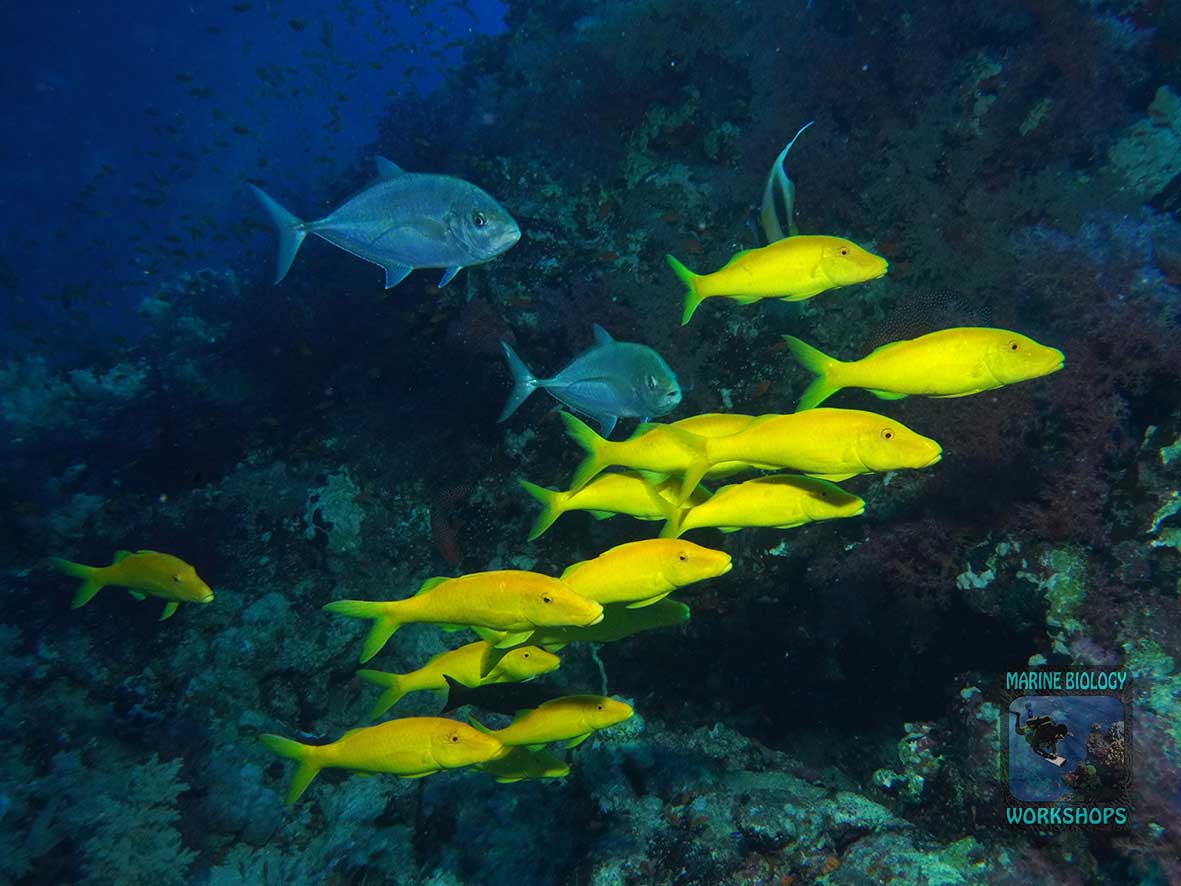
Juvenile mullets often swim alongside jacks
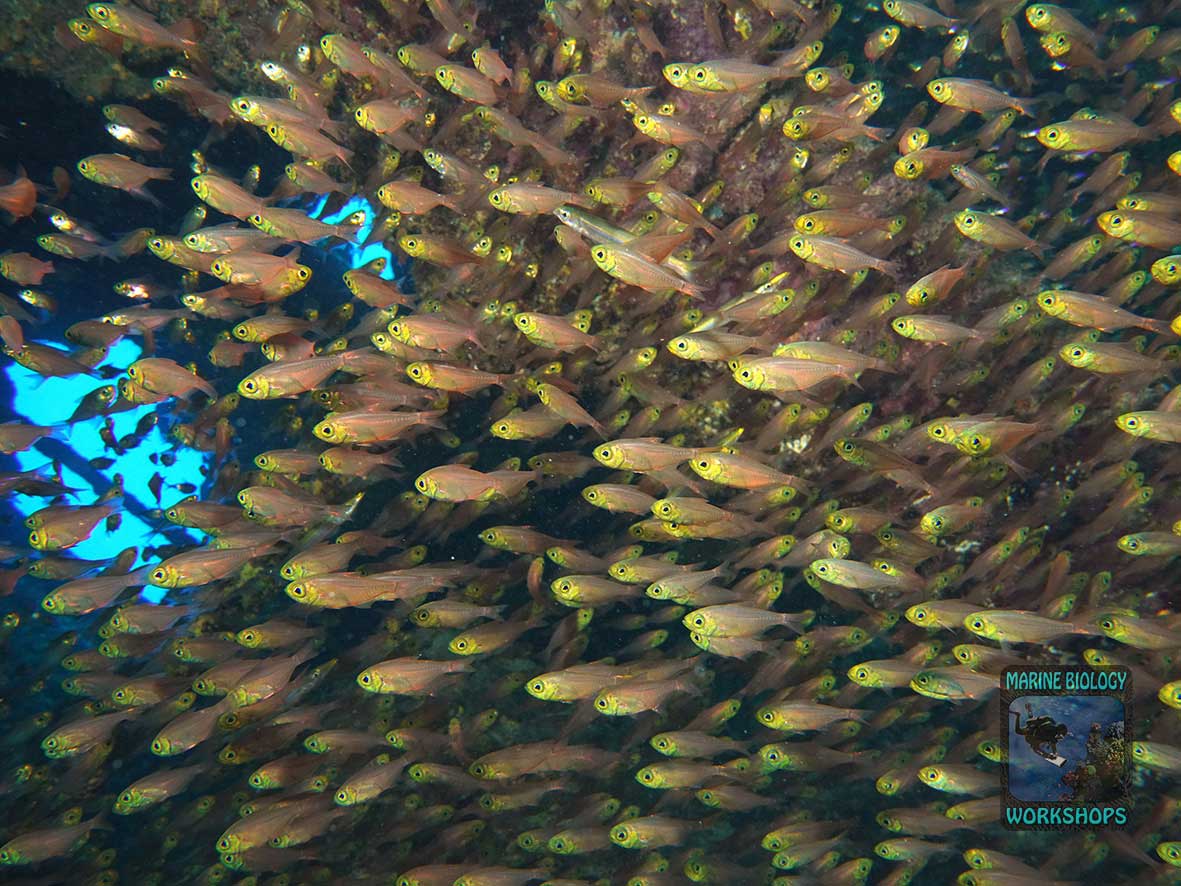
Parapriacanthus “glassfish” in the Abu Galawa wreck
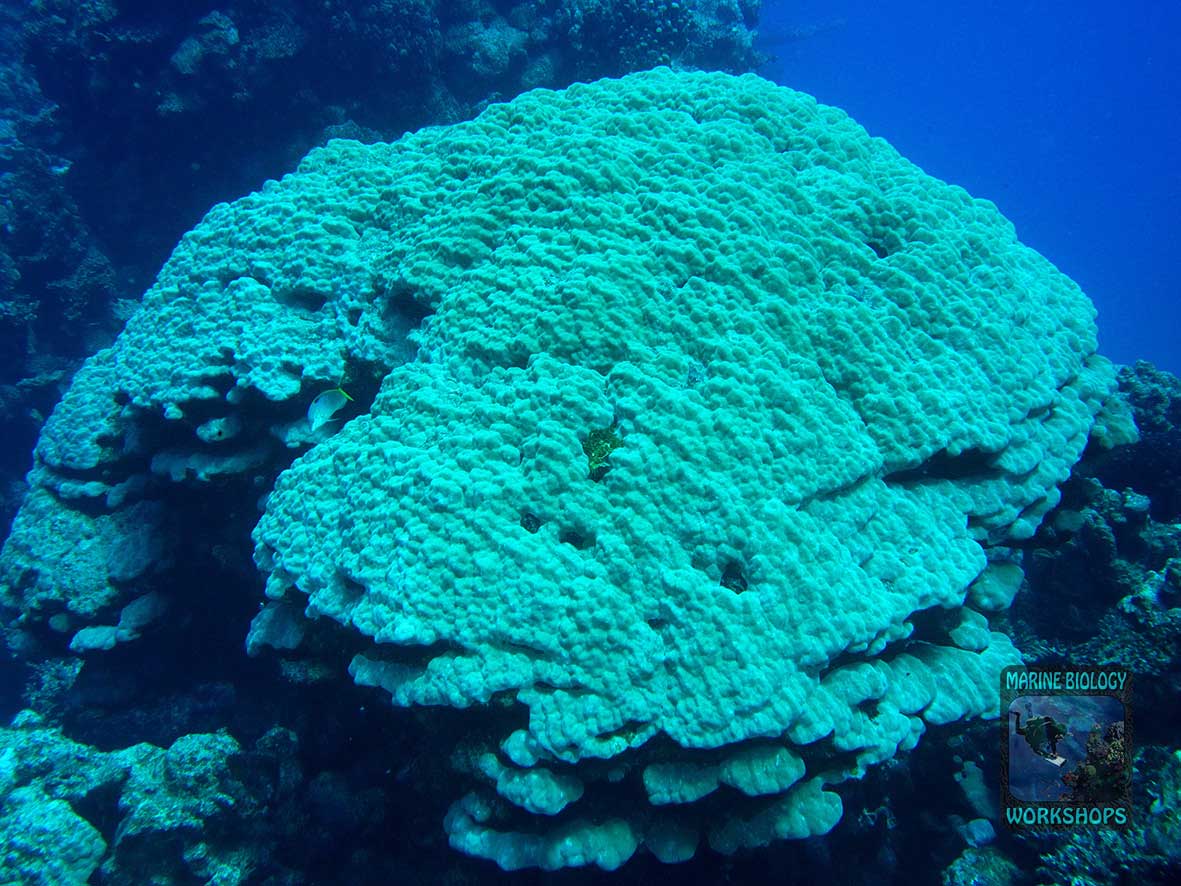
Massive, intact Porites block coral at Angel Reef
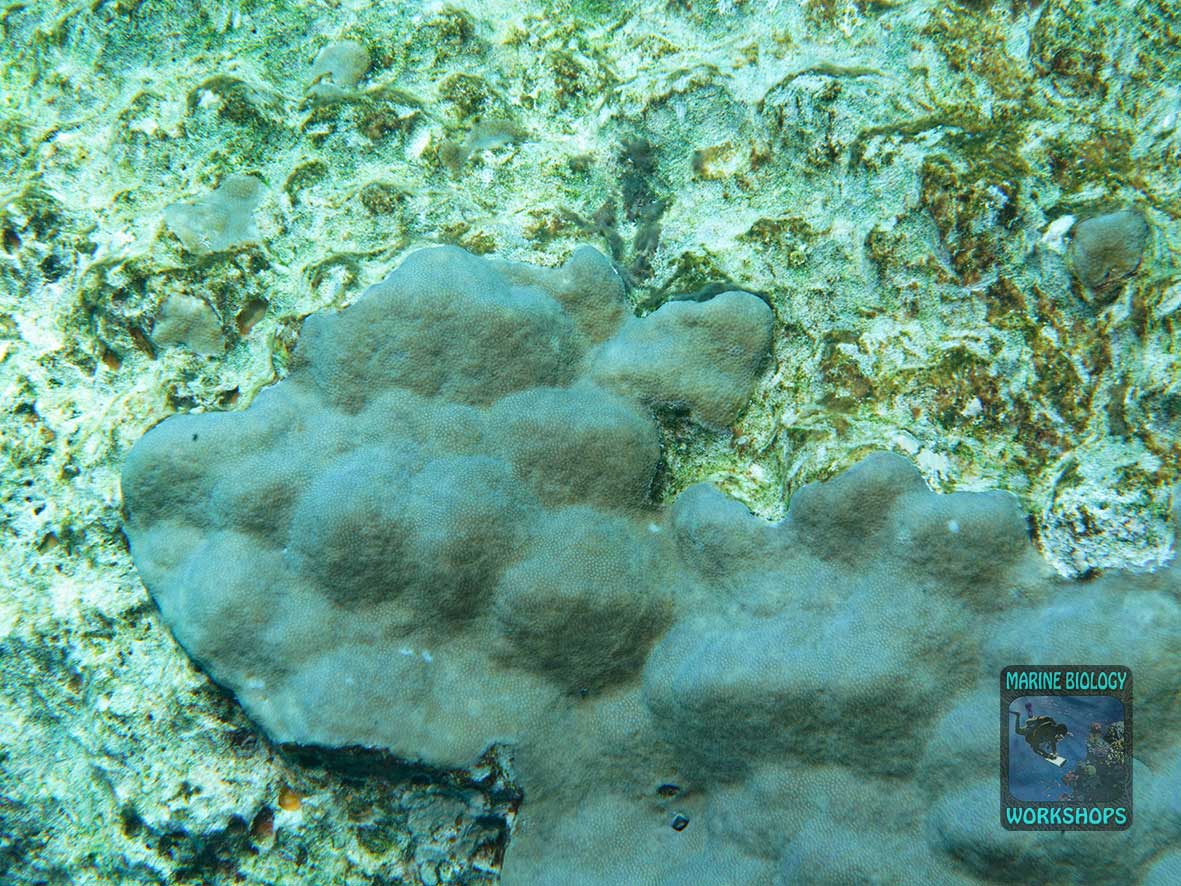
Porites coral regrowth at Shaab Marsa Alam
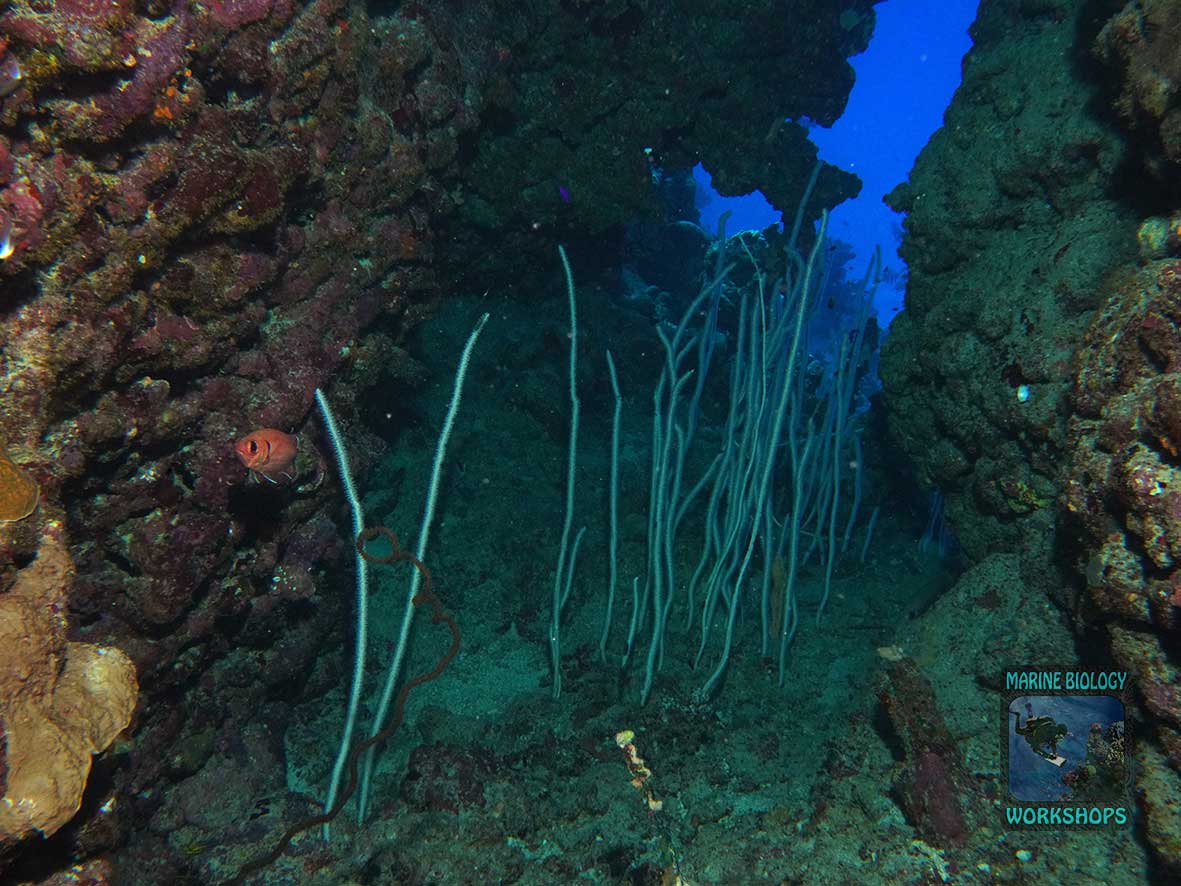
Sea whips at Shaab Nakari
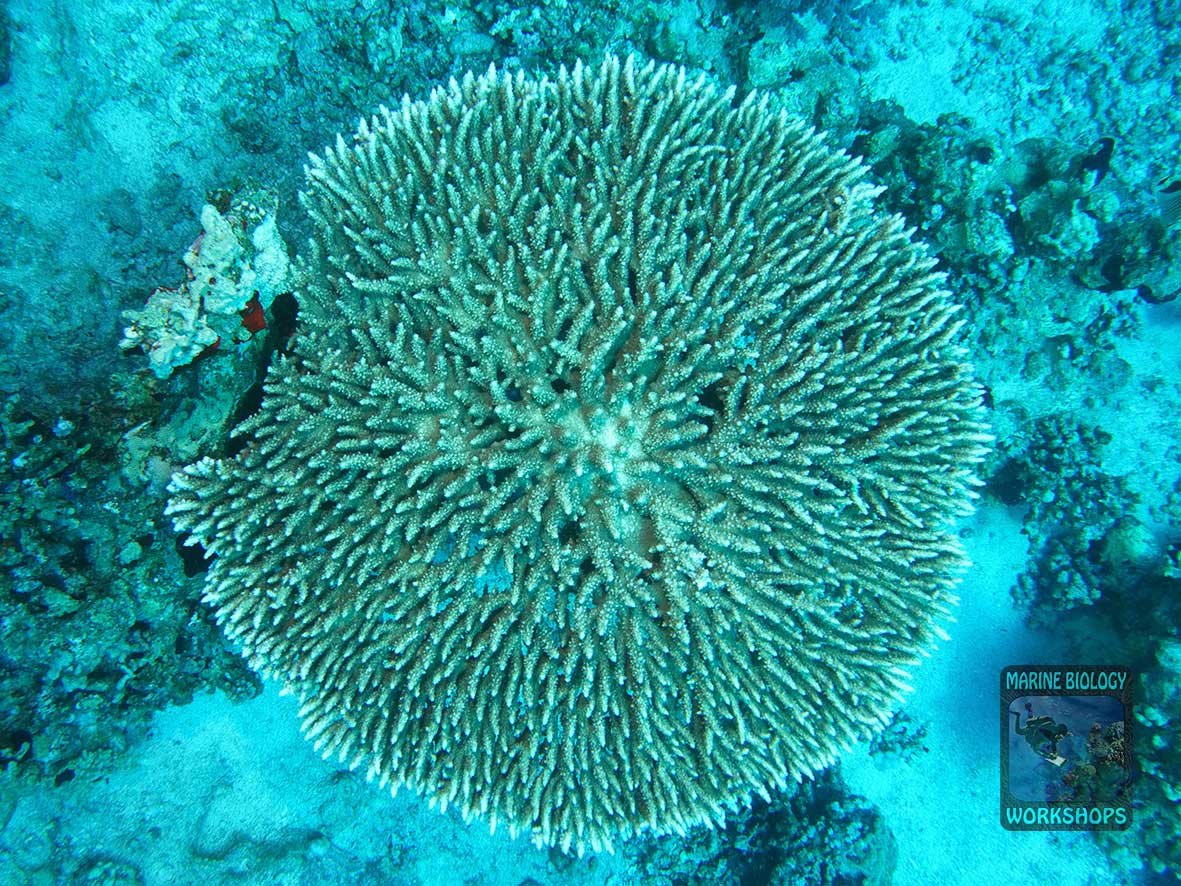
A perfectly round Acropora table coral reef at Shaab Marsa Alam
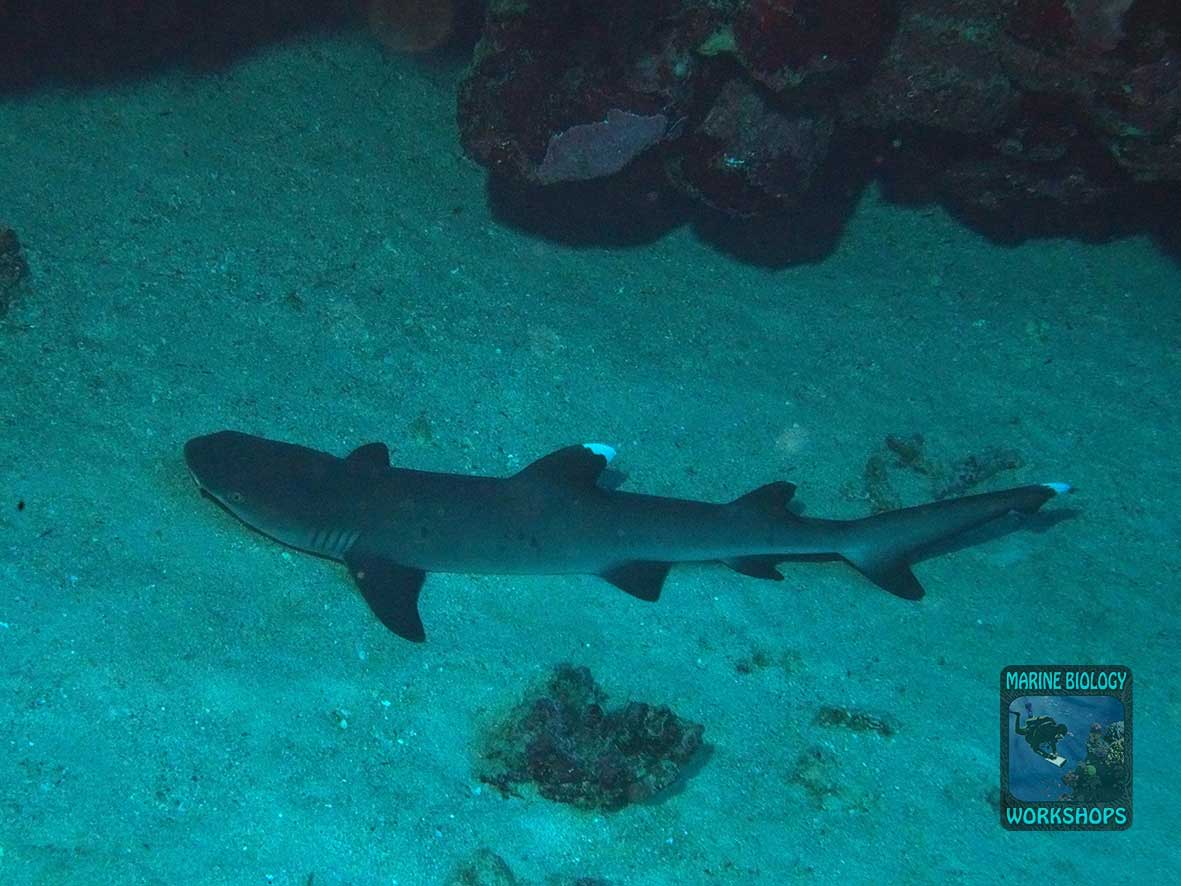
A resting whitetip reef shark at Malahi
Detailed Coral Monitoring at the Marsa Nakari House Reef
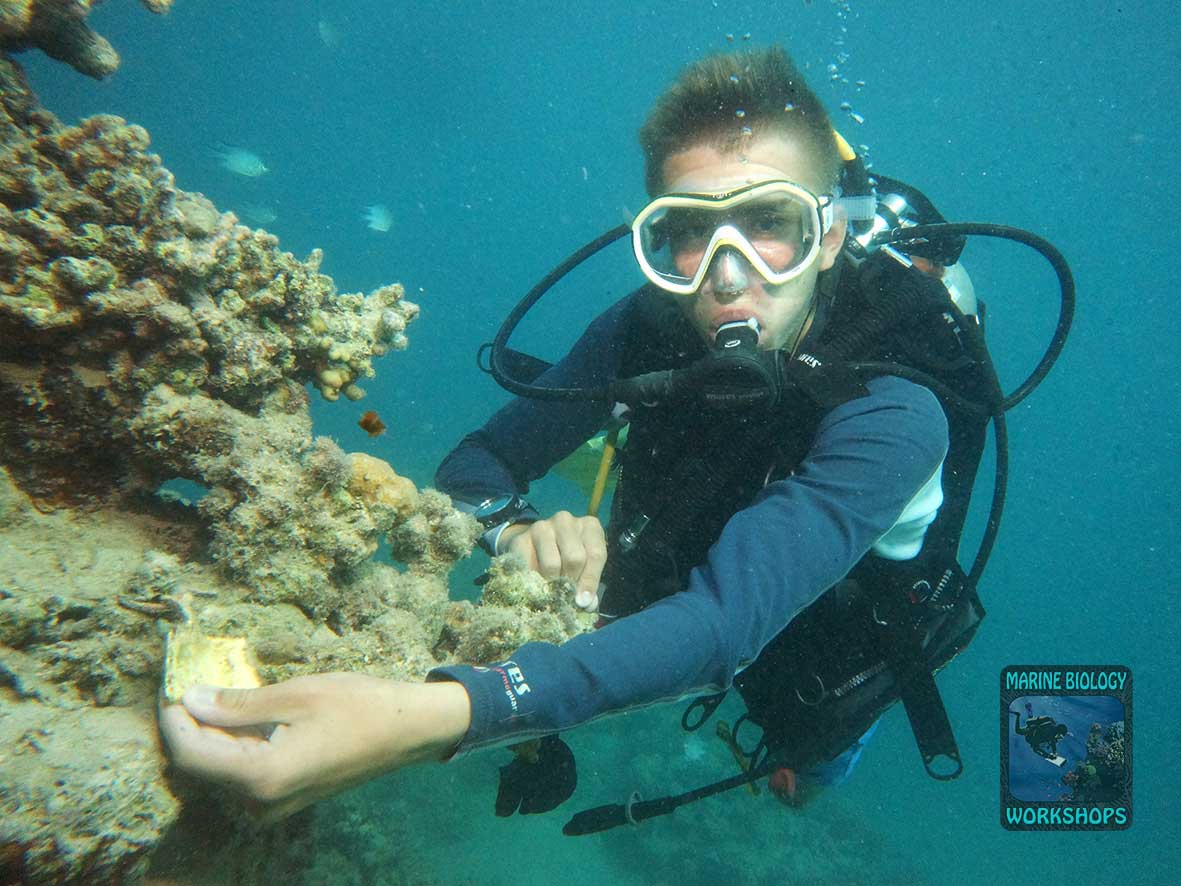
In the week following the Reef Check surveys, six additional detailed coral surveys were conducted at the Marsa Nakari house reef: Along 20 m transects, each 1 m wide, all stony and soft corals were identified to genus level, counted and recorded in seven size classes. Additional reef organisms, such as Tridacna giant clams, sponges, macroalgae and various algae grazers, were also surveyed to document shifts in the ecological community.
The transects were also documented photographically along the transect line using a camera frame.
Two transects were located on the fringing reef outside the bay, one on the north side and one on the south side. Four transects were located within the bay at varying distances from the shore.
The same method had already been used in July 2024.
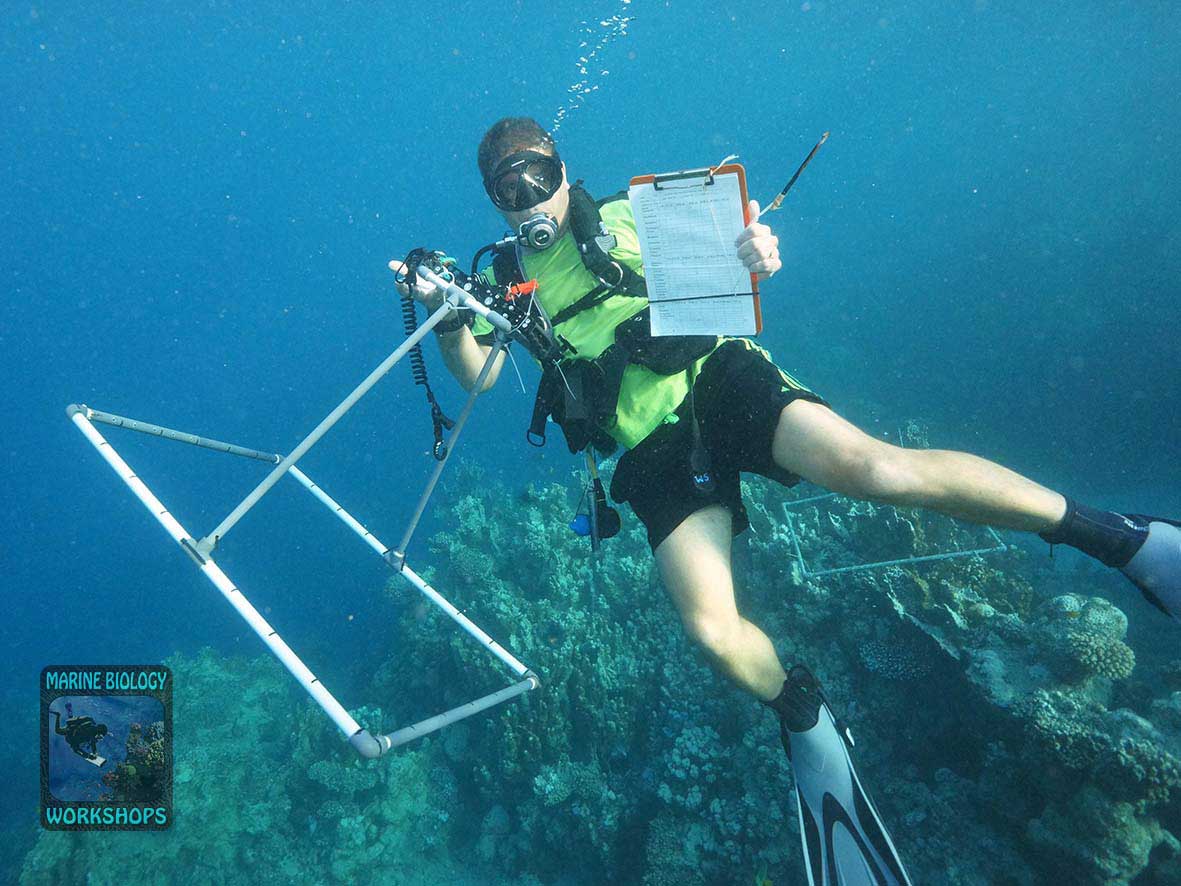
Stephan with a photo quadrat frame
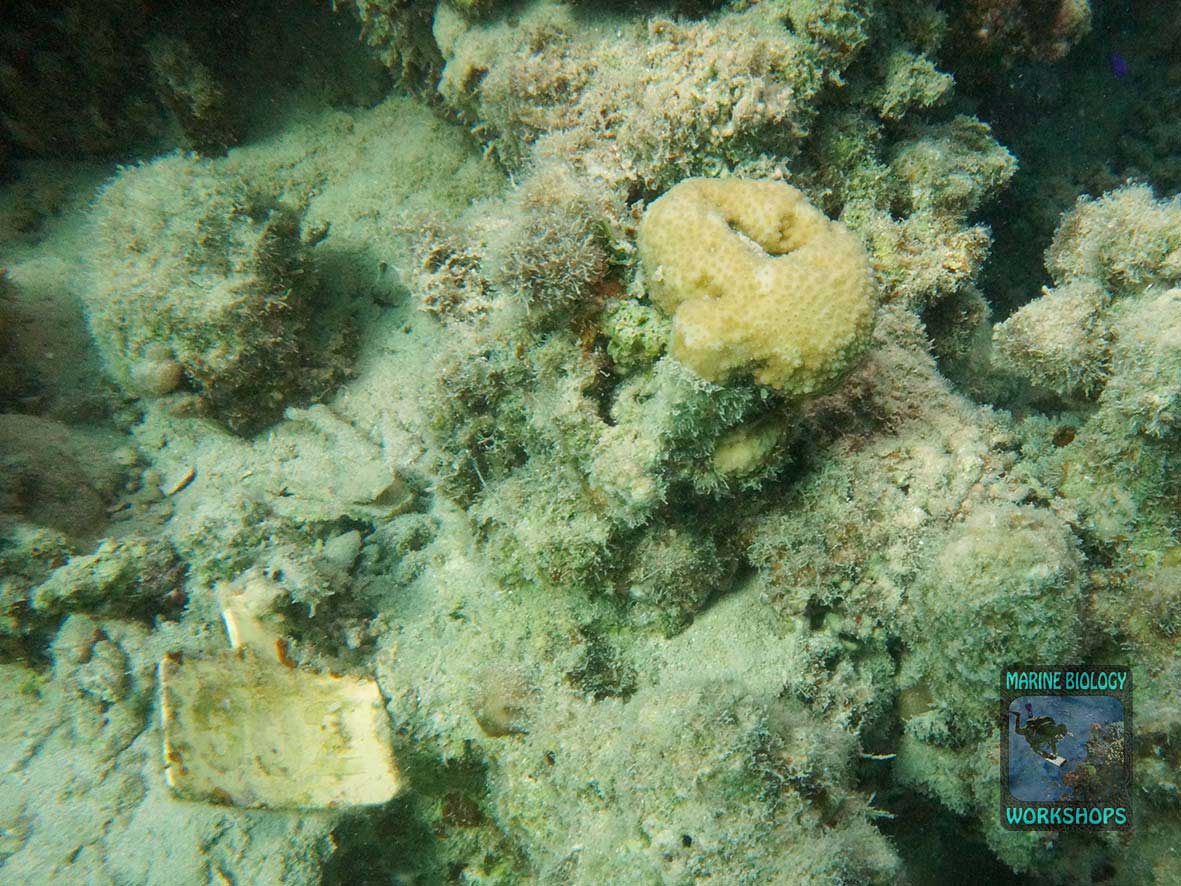
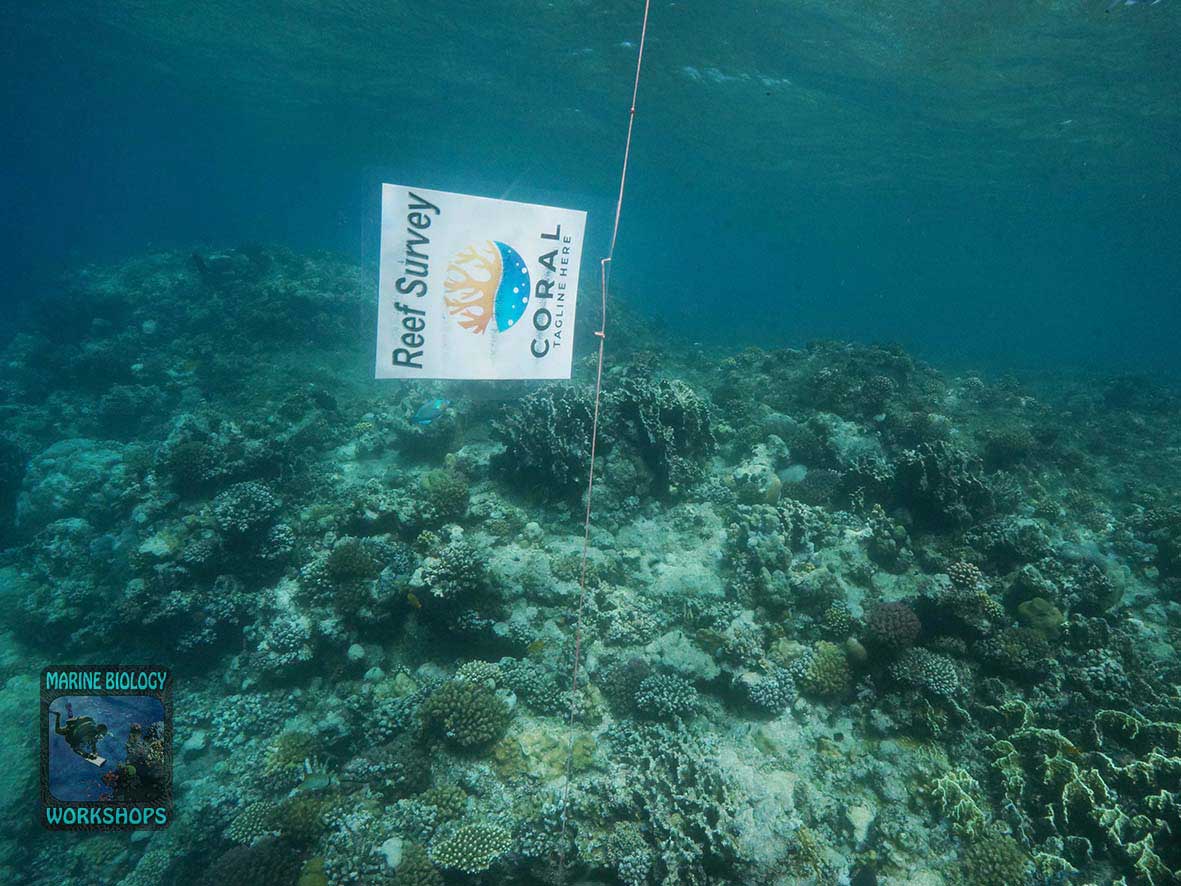
Start marker for Transect #2 at Marsa Nakari North
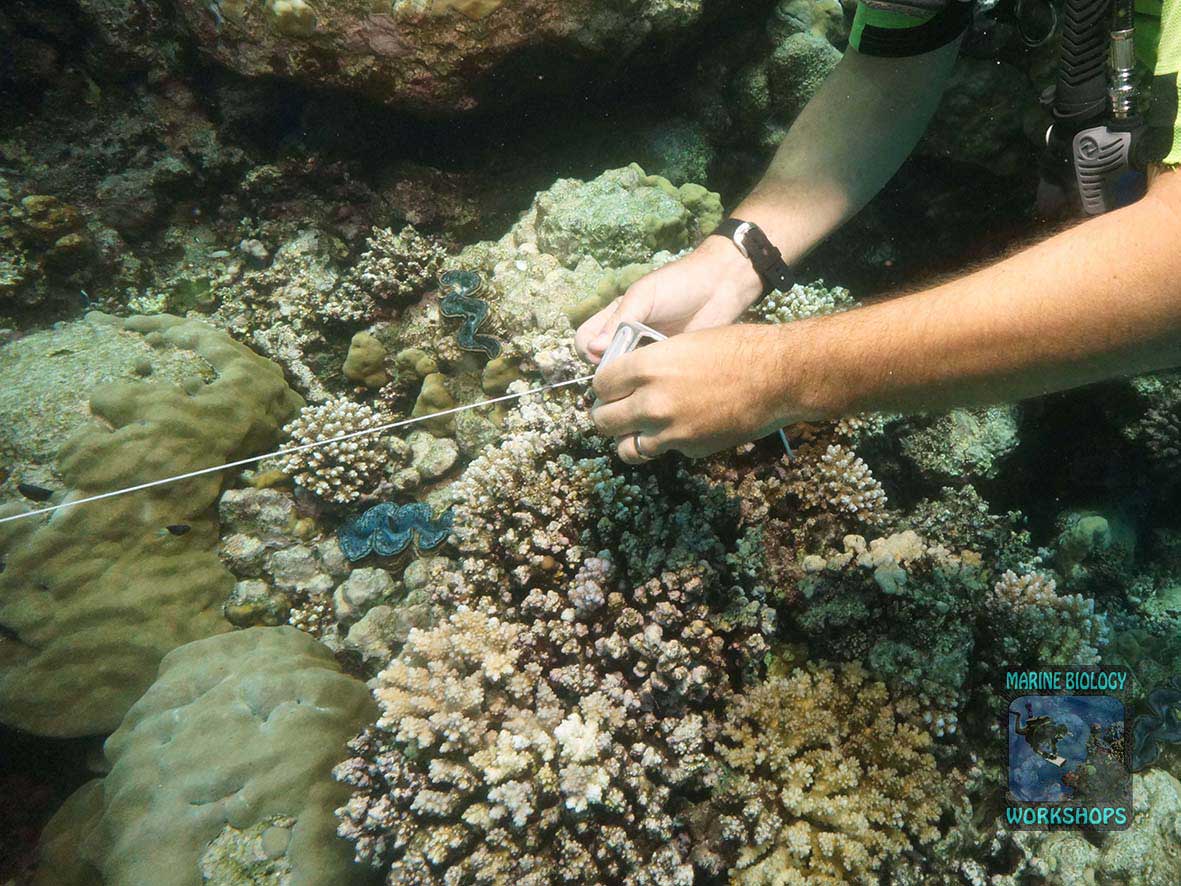
Laying out the transect line for the coral survey in Marsa Nakari
2026 coral survey at the house reef in Marsa Nakari
Start marker for Transect #2 at Marsa Nakari North
Start marker for Transect #6 at Marsa Nakari South
Retrieving the transect line after the coral survey in Marsa Nakari
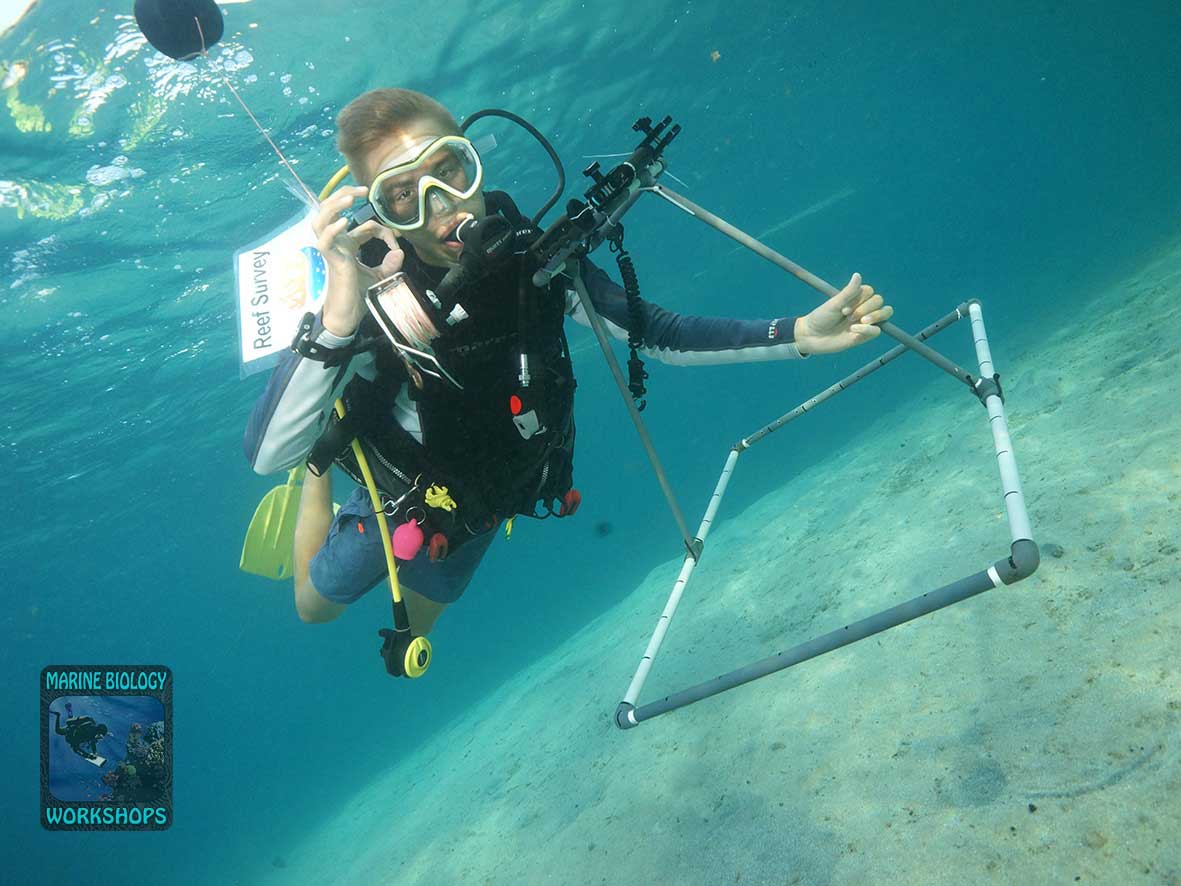
Marlin with a photo quadrat frame
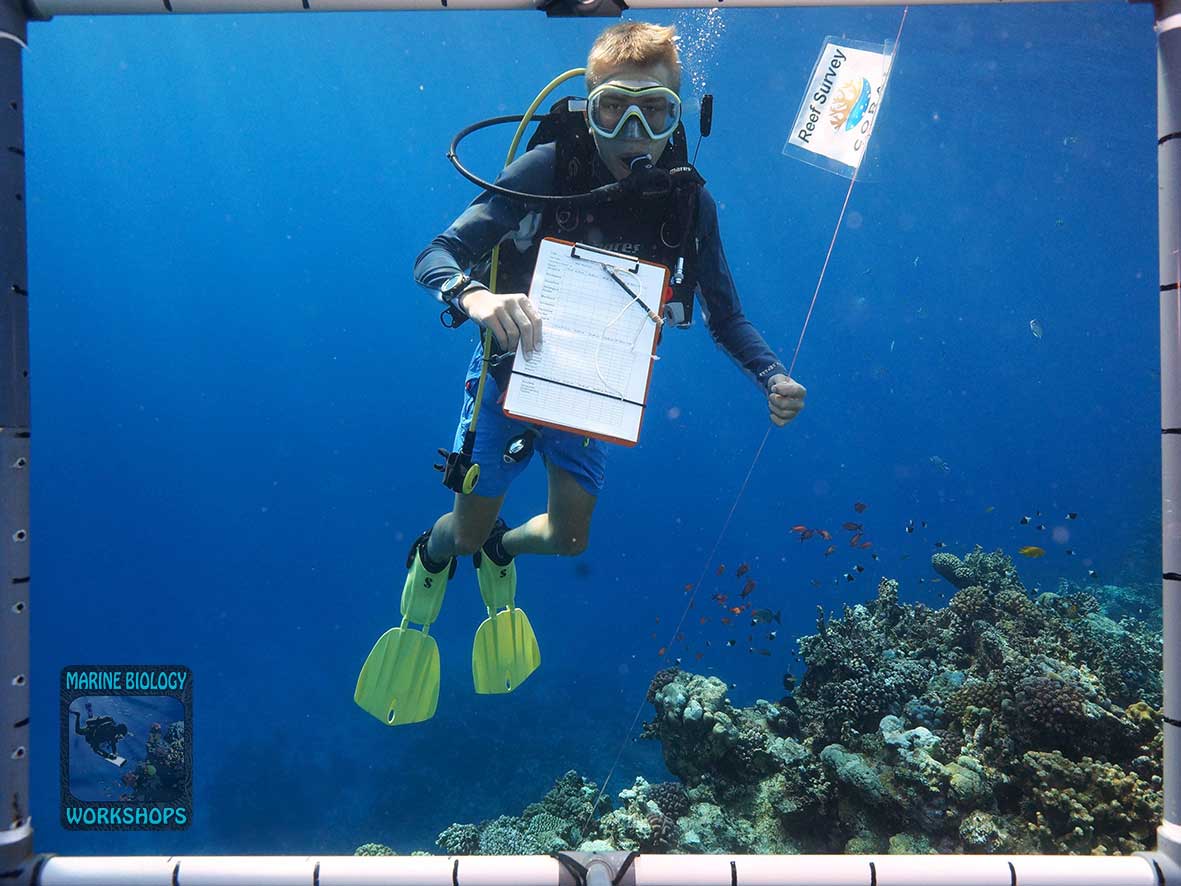
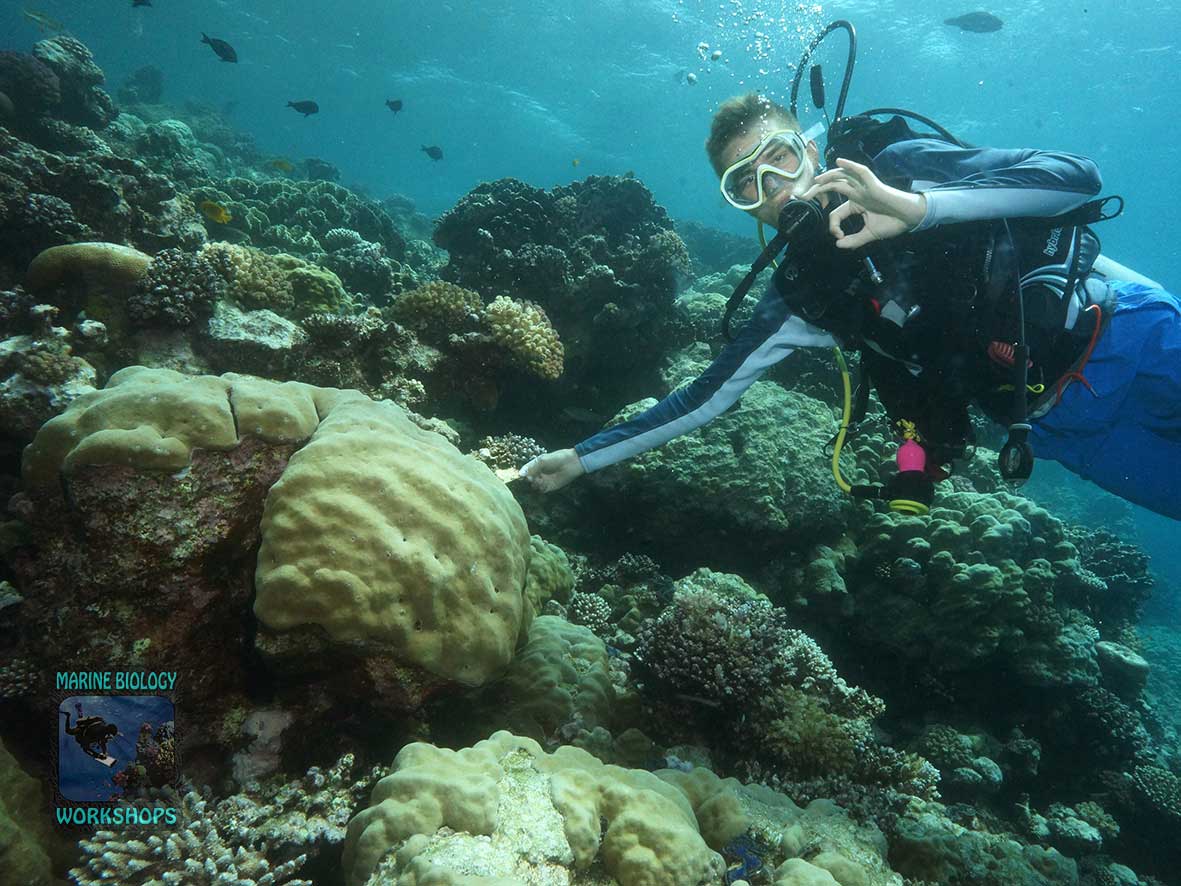
2026 coral survey at the house reef in Marsa Nakari
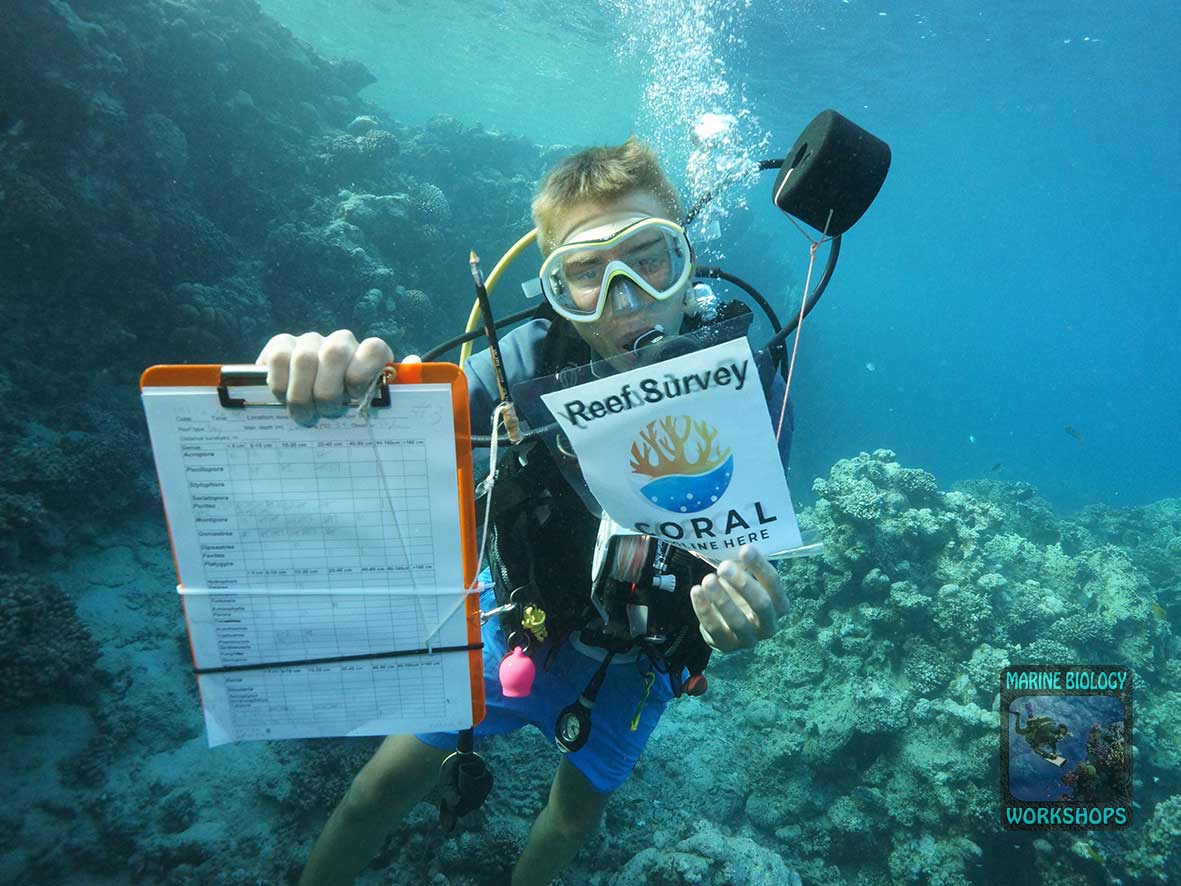
Marlin during the 2026 coral survey in Marsa Nakari
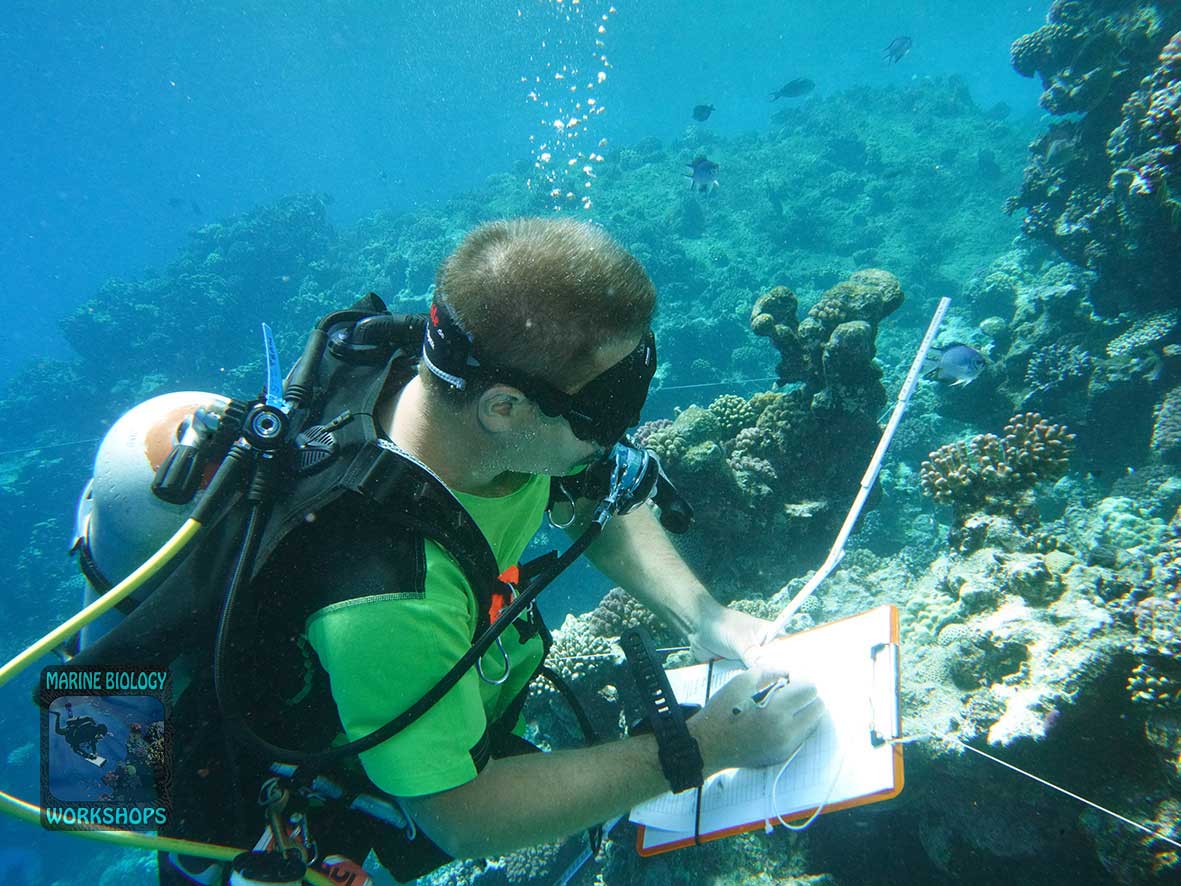
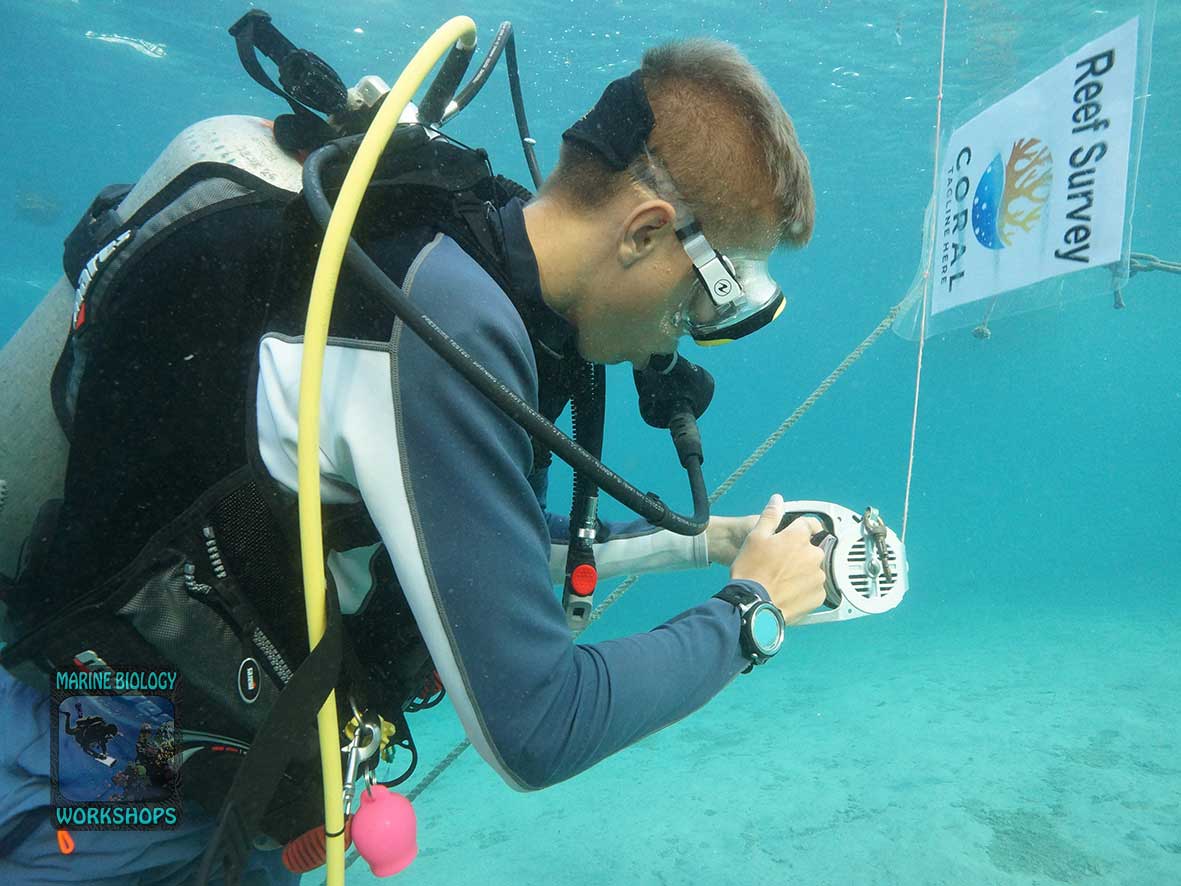
Stephan collecting data during the 2026 Coral Survey in Marsa Naka
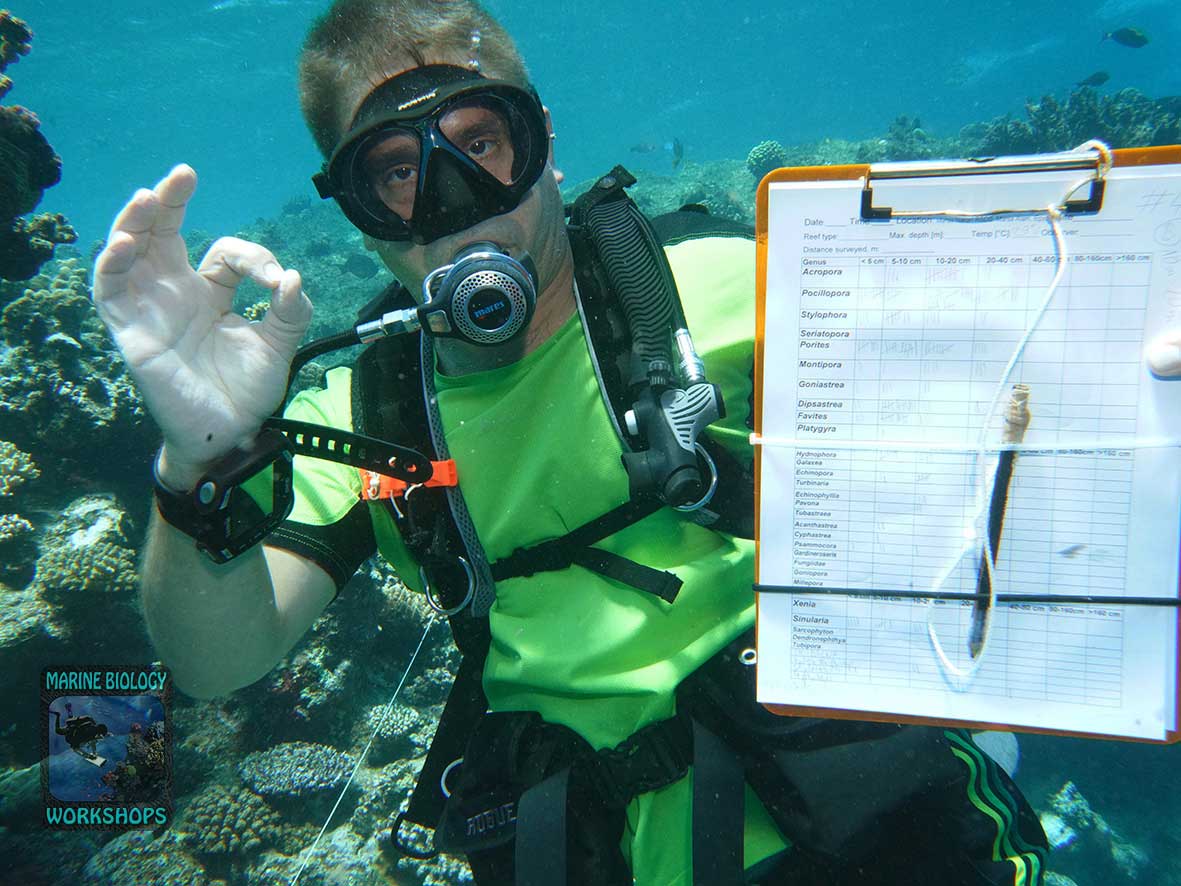
Stephan collecting data during the 2026 coral survey in Marsa Nakari
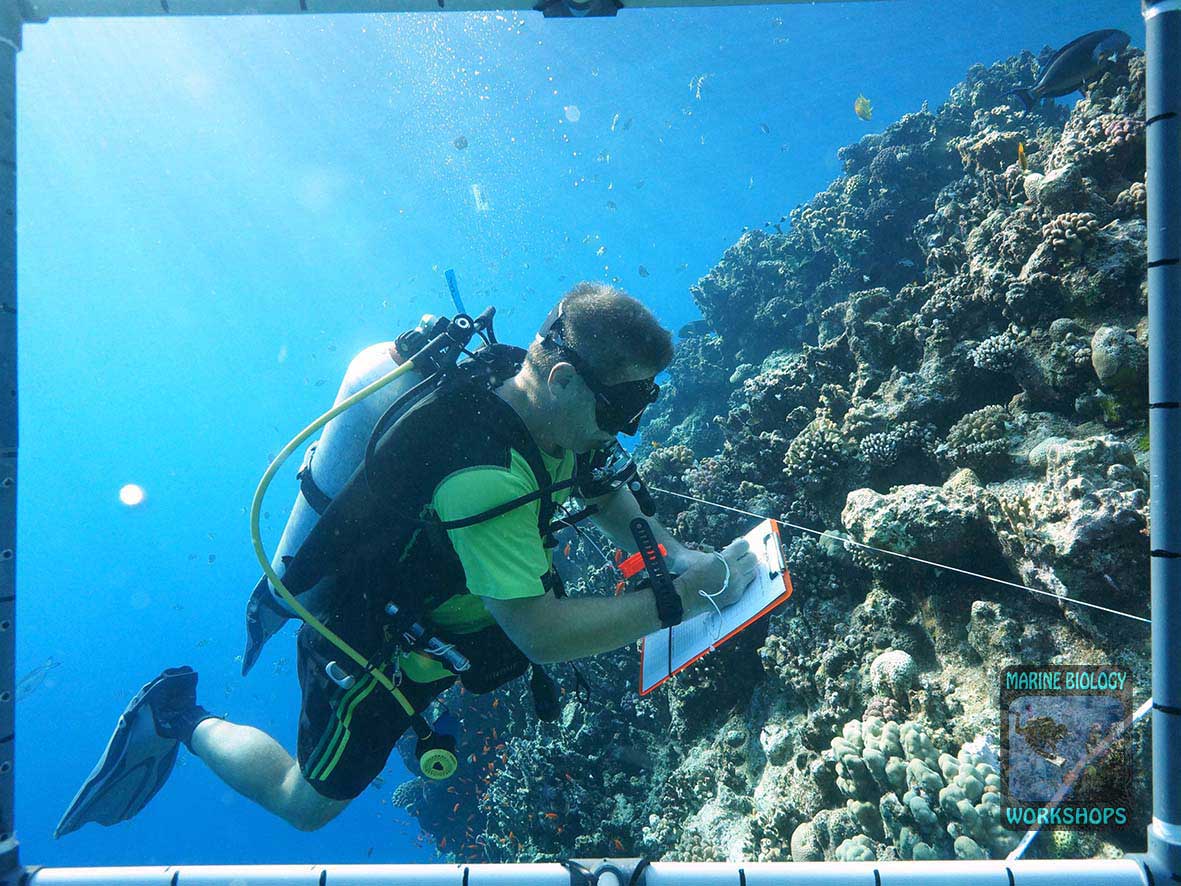
Stephan collecting data during the 2026 coral survey in Marsa Nakari
The aim was to document the condition and recovery of the house reef following several severe disturbances:
- In December 2023, the reef had been damaged by a freshwater flood with substantial sediment input. The northern reef was particularly severely affected.
- Added to this were the impacts of the fourth global coral bleaching event, which severely affected coral reefs worldwide in 2023 and 2024.
During the coral surveys, the condition and diversity of the corals were closely examined and documented. Comparison with the data from 2024 is intended to show how the reef is developing following the damage, what changes are occurring, such as shifts in species composition, and which areas are recovering.
The data provide valuable information about the resilience of the various coral genera and the regeneration of the entire reef system.
The results from both years, 2024 and 2026, will shortly be compiled in a report.
Together for the Protection of Coral Reefs
The Reef Check EcoDiver course and the subsequent surveys combine diving, environmental education and scientific reef monitoring. Participants not only learn to identify numerous reef organisms but also develop a sharper eye for changes, pressures and human impacts underwater. Many experienced divers said that their underwater perception had fundamentally changed.
After the course, they can help collect scientific data on the health of coral reefs.
Since the reef monitoring programme at Red Sea Diving Safari began in 2009, the reefs under investigation have been regularly surveyed using the Reef Check method. This provides a long-term time series of comparable data on reef health.
The results from 2026 were also submitted to Reef Check HQ and have already been incorporated into the international database. Every single survey thus makes an important contribution to the protection of coral reefs. Many thanks to everyone involved!
A big thank you goes to our partner Red Sea Diving Safari and its fantastic team for the excellent, long-standing collaboration!
The dates for 2027 have already been confirmed:
The EcoDiver course will take place once again in Marsa Shagra from 12–15 July. Afterwards, five Reef Check surveys at various reefs in the surrounding area are planned for 16–20 July. See you next year in Marsa Shagra!


